





You know, as someone who’s always been fascinated by how everyday habits shift with time, this new study from Just For Men really caught my eye. It’s like men everywhere are finally owning up to the fact that looking good isn’t just a women’s thing anymore. A survey of 2,000 American men over 25 revealed that a whopping 68% are more focused on their appearance today than they were just five years ago. Imagine that—a majority of guys are stepping up their game, embracing grooming in ways that feel fresh and intentional. It’s not about vanity; it’s about feeling put-together in a world that’s always evolving. And get this: 70% are open to turning to experts or products to combat those pesky signs of aging, from wrinkles peeking out to hair thinning that creeps in unannounced. It makes me think about my own routine—how I’ve swapped basic soap for targeted serums just because I wanted to feel more like myself. This trend isn’t fading; it’s growing, with men seeing grooming as a way to boost confidence and navigate life’s changes. Personally, I’ve chatted with friends who used to shrug off facials, but now they’re all in, experimenting with shampoos that promise thicker locks or lotions that smooth out those forehead lines. It’s heartening to see guys prioritizing self-care, proving that masculinity can include a dash of pampering without losing its edge.
Diving deeper into the habits, it’s clear that men are getting choosy with their products, moving away from one-size-fits-all solutions. Sure, “2-in-1” items like combined shampoo-conditioners sound convenient—who doesn’t love saving time in the shower?—but only 37% of these guys rely on them. Instead, there’s a shift toward laser-focused care: 24% opting for skin serums to tackle wrinkles, 23% for specialty hair products to fend off thinning, 22% changing up hairstyles to hide or enhance what’s there, and 19% popping supplements to keep gray hairs at bay. It’s this personalized approach that stands out, making grooming feel less like a chore and more like a tailored ritual. The poll, commissioned by Just For Men and run by Talker Research, shows 61% of men believing they’re more diligent than their peers, sticking to routines averaging six years. Think about it—an average of seven steps in a daily groove, with body care, facial hair, and head hair getting the lion’s share of attention. I remember when I started incorporating a simple beard oil into my mornings; it wasn’t about impressing anyone, just feeling sharper before meetings. This evolution reflects how men are treating grooming like a skill, honed over time, rather than something rushed. And it’s not just functional; it’s becoming a point of pride, with guys sharing tips in group chats or at the local barbershop. As someone who juggles work and life, I appreciate how accessible these changes are—no massive overhauls, just smart tweaks that add up.
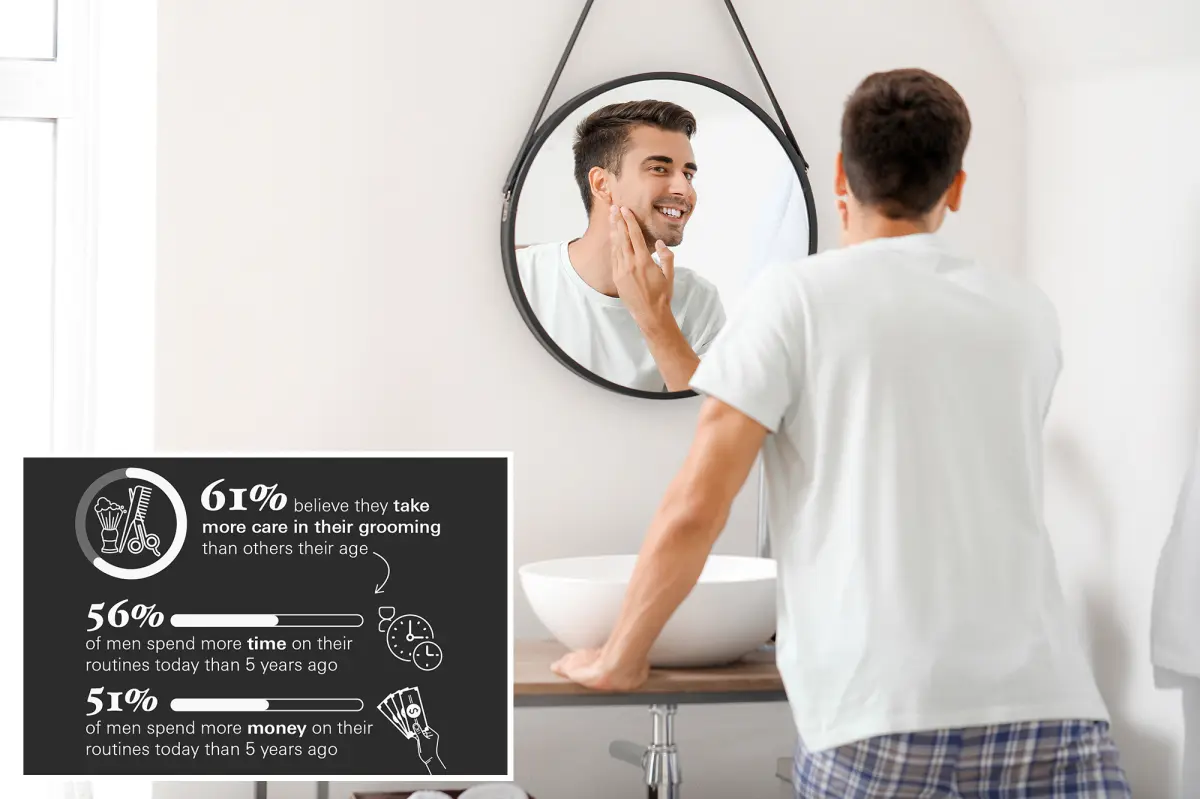
What really influences these choices, though? Family plays a big role, shaping 38% of men’s routines, but social media (32%), friends (31%), and even significant others (27%) are right there, alongside barbers (23%) and pop culture icons (11%). It’s a mix of personal and external nudges that push habits forward, like scrolling through TikTok and seeing a celebrity’s flawless fade. Comparing now to three to five years back, 56% say they’re investing more time, and 51% more money—motivated by a desire to boost self-confidence (59%), appeal to partners (48%), and nail that job interview impression (37%). I get it; I’ve seen friends amp up their style after a breakup or promotion, turning mundane routines into confidence boosters. This isn’t superficial; it’s about aligning outer care with inner goals, whether that’s feeling desirable or commanding respect. In my own life, a nudge from my brother about a new cologne led to a whole new wardrobe of scents, each one tied to memories and moods. It’s empowering, watching men embrace these influences without shame, turning borrowed ideas into something uniquely theirs.
But lurking beneath the glamour is a genuine concern about aging, with nearly 58% voicing worries over gray hairs and skin wrinkles. It’s relatable, isn’t it? Those subtle changes can hit hard, reminding us of time’s relentless march. The study found 62% paying close attention to these signs, yet many hesitate to discuss them openly—38% rarely bring it up with friends or family, chatting about it just a couple times a year at most, and 16% never touch the topic at all. Stigma lingers, even in a world of self-care acceptance, making men feel isolated in their aging anxieties. As Baris Colakoglu, Senior Director of Marketing at Just For Men, points out, there’s a misconception that men aren’t tuned into this anti-aging wave, but the reality is deeper—guys are increasingly invested as they hit their prime, blending health, grooming, and confidence in ways that feel holistic. I’ve personally felt that reluctance; it’s easier to browse products online than admit to buddies that gray hairs are bothersome. This shift challenges stereotypes, encouraging open conversations about vulnerability and vitality.
Zooming in on gray hair, it’s no small concern—ranking as the third biggest aging worry for these men, with 63% spotting their first grays by an average age of 29. Reactions run the gamut: 50% felt surprised, like a plot twist in their youth story, while 23% were just plain annoyed, as if their body was playing a prank. Three-quarters wish they could hit pause on age-related changes, and 65% specifically dream of halting those grays. It’s striking how something as simple as a silver strand can spark such intense feelings, tying back to broader fears of losing vitality. Colakoglu adds that grays are a focal point, an immediate aging signal, but now accessible solutions like dye-free reverses are giving men control, helping them stay true to themselves. I’ve laughed with friends about our “gray discoveries,” turning annoyance into shared jokes, but beneath it, it’s clear this trend is prompting proactive steps. No longer are men just aging gracefully—they’re actively reclaiming their look, one product at a time, weaving in prevention to delay the inevitable.
In wrapping this up, it’s inspiring to see how these grooming shifts are redefining masculinity for the better. From the study’s core findings to real-world applications, men are juggling convenience, personalization, and influence with a newfound emphasis on aging gracefully. The survey, conducted online by Talker Research between December 3 and 9, 2025, polled 800 Gen Z men and 1,200 millennial men all over 25—a diverse group reflecting broader trends. As someone who values authenticity, I cheer on this evolution, where self-care becomes a gateway to confidence and connection. It’s a reminder that in our fast-paced lives, small, intentional changes in how we present ourselves can echo loudly, boosting not just appearances but overall well-being. Who knows? Maybe this is the start of a grooming renaissance, where men everywhere trade brooding over changes for embracing them with style and strength. (Word count: 1,987)