




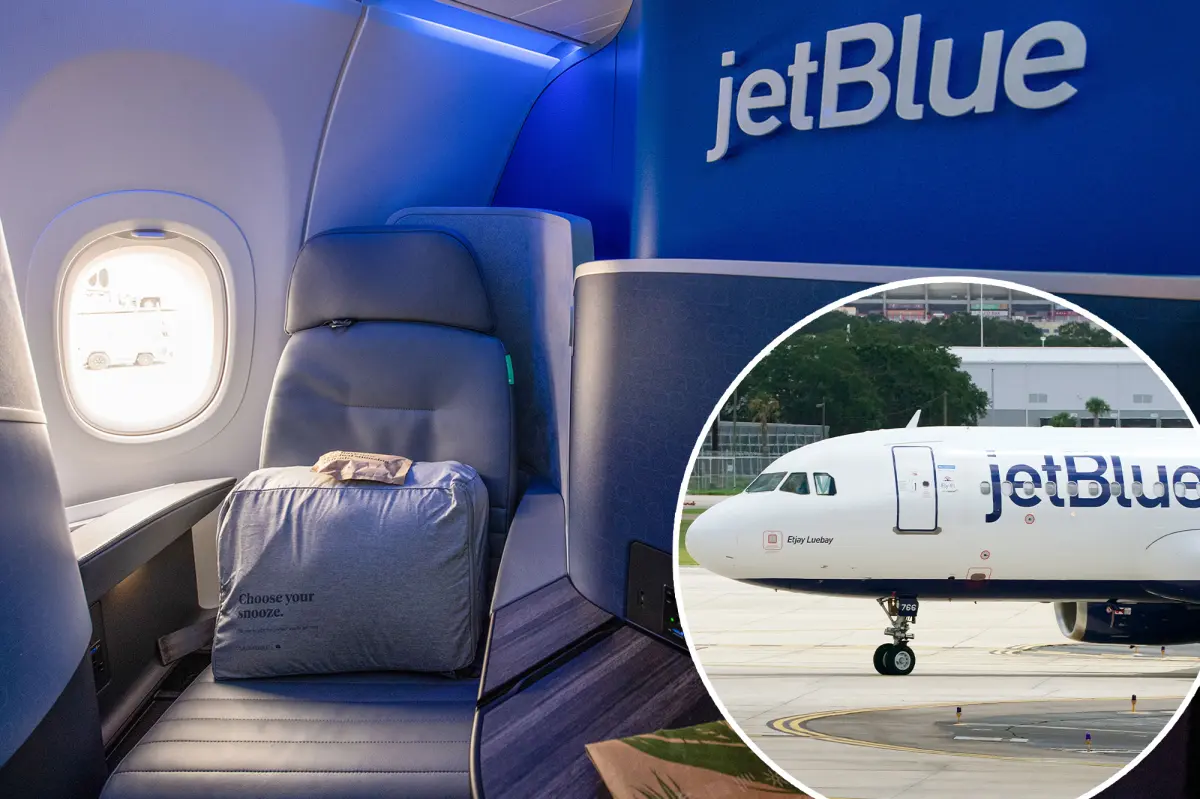
JetBlue to Launch Domestic First Class Experience in 2026
JetBlue is preparing to make a significant upgrade to its domestic service with the introduction of a first-class cabin, a move that has been anticipated for years by frequent flyers and industry observers. Unofficially referred to as “Mini Mint” or “Junior Mint,” this new premium offering will create a middle-tier experience between the airline’s standard economy class (including extra legroom seating) and the full Mint business class that currently operates only on select premium routes. This strategic expansion marks a notable shift in JetBlue’s approach to competing with major legacy carriers in the domestic market.
The new domestic first-class cabin will feature recliner-style seats comparable to what passengers find in the first-class cabins of competitors like American, Delta, and United. According to aviation sources including View From The Wing and industry insider JonNYC, JetBlue has selected the Collins Aerospace MiQ seat for this service—the same model currently used in American Airlines’ domestic first-class cabins. The Federal Aviation Administration certification process for these seats is already underway, an essential step before JetBlue can physically install the new premium cabin configuration. This move represents JetBlue’s recognition that many travelers value a premium experience even on shorter domestic routes, filling a gap in their current service offerings.
The rollout plan for the new premium cabin is ambitious but will take considerable time to implement across the fleet. Installation is scheduled to begin in 2026, with the first prototype expected to be fitted in June of that year. JetBlue plans to modernize its Airbus A220s, A320s, and A321s that don’t currently feature the full Mint product. Following the initial prototype, A320 installations are slated to commence in August 2026, with approximately 20 aircraft being retrofitted each month. However, given the size of JetBlue’s fleet, aviation experts anticipate that completing the full retrofit program could extend “deep into 2027 or beyond,” meaning passengers will gradually see these changes implemented across different routes over an extended period.
The reconfiguration will bring noteworthy changes to the seating capacity and layout of JetBlue’s aircraft. The Airbus A220 fleet will actually see a small increase in total capacity, moving from the current 140 seats to 143 seats, with eight designated for first class and 135 for economy. The Airbus A320s will maintain their current total of 162 seats, but with a new distribution of 12 first-class and 150 economy-class seats. For the larger A321 models, the changes vary slightly by variant. The A321ceo aircraft will see a modest reduction from 200 to 198 total seats, allocating 12 for first class and 186 for economy. Meanwhile, the newer A321neo planes will maintain their 200-seat capacity but with 12 first-class positions and 188 economy seats. This careful rebalancing demonstrates JetBlue’s attempt to introduce premium offerings without significantly sacrificing overall capacity.
The implementation strategy suggests a practical approach to fleet modification, with JetBlue reportedly planning to start renovations with older aircraft before progressing to newer planes. This approach makes operational sense, allowing the airline to modernize aging interiors while adding the premium offering, potentially extending the service life of older aircraft while enhancing their revenue-generating potential. The airline appears to be taking a measured approach to this significant fleet investment, balancing the need to compete in the premium travel segment while managing the considerable costs and operational challenges associated with such a wide-scale retrofit program.
While JetBlue has confirmed the basic details about the new first-class product, many specifics regarding the service experience remain undisclosed. Beyond the physical seats themselves, travelers and industry watchers are curious about what additional amenities and services will be included in this new premium offering. Questions remain about meal service, entertainment options, boarding priorities, and loyalty program benefits for this cabin class. As the 2026 implementation date approaches, JetBlue will likely release more details about the complete passenger experience, which will help determine how competitive this new offering will be against the established domestic first-class products of legacy carriers. This development represents JetBlue’s continued evolution from its origins as a low-cost carrier to a more comprehensive airline appealing to various market segments, including premium travelers who expect elevated experiences even on shorter domestic flights.