



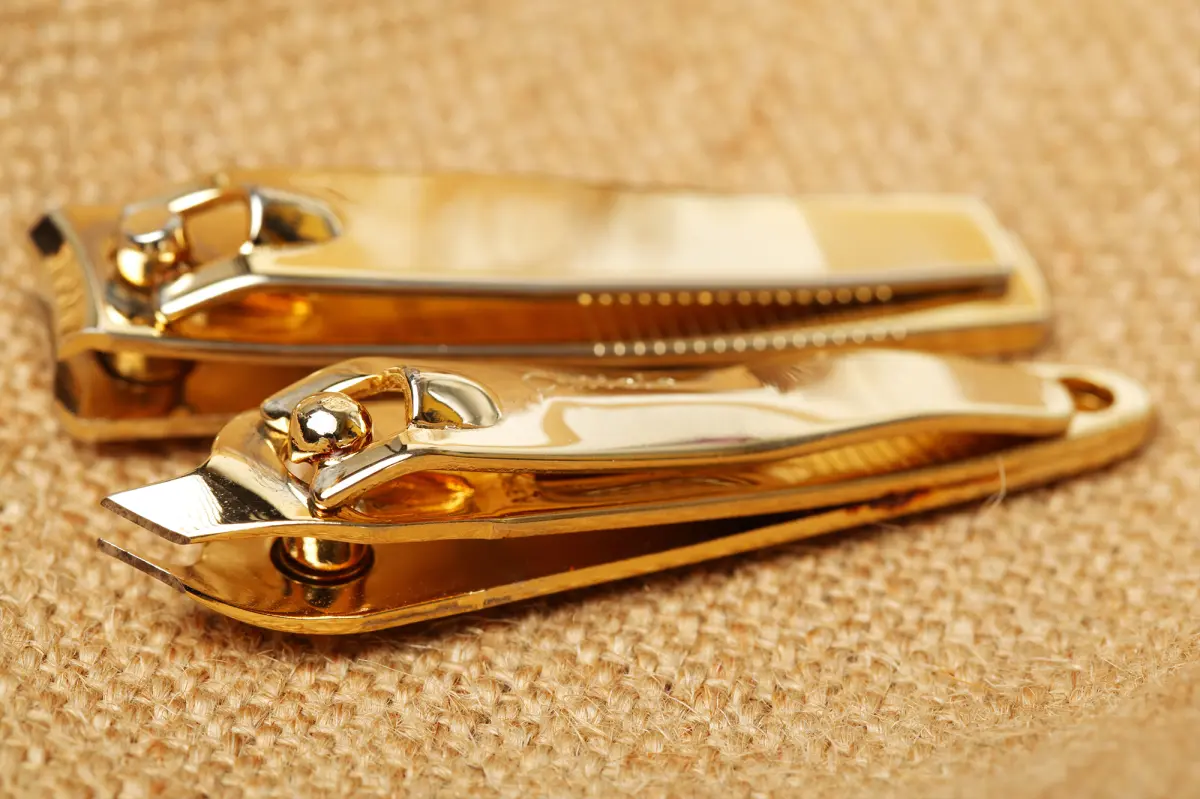
Have you ever paused in the middle of trimming your nails, staring at your trusty nail clippers as if they’ve sprouted a mystery? I know I have. There’s this tiny, unassuming hole right at the end, just sitting there, begging for an explanation. For years, I figured it was some kind of weird manufacturing glitch or maybe a spot for drying paint—no big deal. But lately, I’ve been hearing whispers online about how this little feature is actually a game-changer, a clever invention that’s been hiding in plain sight. It’s funny how the most everyday objects can hold secrets that make you rethink the mundane routine of self-care. Imagine picking up your clippers one day, the ones you’ve tossed in a drawer a hundred times, and realizing they’ve been designed with travel and organization in mind. It turns out, people are only just now waking up to this ingenious detail, and once you know, there’s no going back. That hole isn’t just a hole—it’s a tiny portal to practicality, making your nail clippers more than just a tool; they’re a piece of portable genius engineered for life on the go.
It all started with a casual post on Facebook that snowballed into a full-blown revelation. A user shared something hilariously honest: “My mother-in-law couldn’t stop laughing when she realized I had no idea what the tiny hole in a nail clipper is for. Now I wonder … am I the only one who never knew?” That simple admission sparked a frenzy of comments from folks who, seemingly, were all in the same boat. Instead of answers, the thread filled up with wild guesses that had everyone chuckling. One person joked, “Is it to keep your toenail clippings?”—picturing some bizarre storage system that sounded more like a horror movie prop than a grooming aid. Another chimed in, “Maybe it’s a place to store dental floss,” as if repurposing a nail clipper into a makeshift floss dispenser was the obvious solution for oral hygiene emergencies. Others speculated it was for hanging the clippers up in the bathroom, like a sissy hook, or perhaps a drainage spot to prevent rust. The confusion was palpable; here we all were, adults in a digital world, baffled by something as basic as our own nail care essentials. It highlighted how disconnected we can feel from the tools we use every day, wrapping everyday objects in a cloak of mystery that turns ordinary routines into opportunities for discovery. No one seemed to have the real scoop right away, but the guesses kept coming, turning the comment section into a playground of imaginative theories that proved one thing: ignorance is bliss until someone points out the obvious.
Eventually, the truth emerged, and it was a delightful punch to the ego. That tiny hole isn’t for decoration or whimsy—it’s a functional marvel designed for attachment. You slip a keychain ring, a sturdy string, or even a mini hook through it, and suddenly your nail clippers are tethered to whatever you want: your toiletries bag for those bathroom trips, your travel pouch for weekend getaways, or even directly to your keyring so they never vanish into the abyss of your pocket again. It’s especially genius for travelers who know the pain of fishing for scattered items in a suitcase. I recall losing my clippers on a road trip once—bought them on a whim, used them once, and poof, they were gone for good. Now, with this feature, I imagine clipping my nails while hiking or at a campsite, secure in knowing my tool is staying put. Some brands even include those cute little beaded chains that fasten with a snap, adding a bit of flair to the utility. Once people latched onto this revelation, reactions were priceless: folks shared stories of finally attaching their clippers and vowing never to lose them again. One excited commenter said, “Time to attach them to my keys—never misplacing these bad boys again!” Others admitted it made them look at their clippers with newfound respect, transforming a simple tool into a symbol of smart design. It’s remarkable how a tiny feature can redefine utility, making us appreciate the thoughtfulness behind everyday items.
To understand this better, let’s zoom out to the history of nail clippers, which sheds light on why that hole even exists. Believe it or not, the modern nail clipper as we know it didn’t spring into existence until relatively recently. It started in 1875 when an inventor named Valentine Fogerty patented the first lever-style model in the United States. Before that, people muddled through with crude tools—think using small knives or scissors for what we now accomplish with a quick snap. Imagining peeling an apple with a paring knife versus the precision of modern clippers gives you an idea of the improvement. By 1881, the design evolved further thanks to Eugene Heim and Celestin Matz, who refined the clamp-style clipper that closely resembles what we use today, complete with that signature hole. This wasn’t just an aesthetic choice; it was born out of necessity in an era when portability and organization mattered more than ever, especially for those pioneering travelers or seasoned adventurers. The hole ensured that clippers could be secured to belts, packs, or even horse tack in the old wild west days of practicality. Over time, as materials got cheaper and designs sleeker, the hole stuck around quietly, a relic of innovation that most of us overlooked. It’s fascinating how historical context can make a forgotten feature feel alive—like flipping through a time capsule hidden in your cabinet. Those early inventors probably never imagined their creation would spark viral moments centuries later, but here we are, rediscovering the wisdom of the past in something as simple as nail care.
This revelation about clippers has me reflecting on other household secrets that have recently gone viral, proving that surprises lurk in the most familiar places. Take kitchen scissors, for instance—those sturdy ones with handles that look a bit rugged. Last year, a Reddit post titled “Does Anyone Know” featured a close-up photo asking, “Does anyone know what this part of the scissors is for?” The replies poured in, revealing it wasn’t just any handle; it was a multi-purpose feature called a “bone-notch” or “serration grip.” Users shared stories of how they’d long assumed it was a nutcracker, slamming the blades together to crack open hard shells. Others recounted using it for opening stubborn jar lids, wrapping the serrated teeth around the cap and twisting with just the right leverage to pop it off without straining your wrist. Chefs chimed in, explaining how it’s perfect for removing bones from meat—like poultry or fish—by trapping the bone between the metal teeth, giving a quick twist, and pulling away cleanly. I’ve done that myself when prepping a roast chicken; it’s like having a superpower in the kitchen. People also mentioned unpopping corks from wine bottles or cracking lobster shells with ease, turning a basic cutting tool into a culinary Swiss Army knife. Some even use it for de-stemming herbs, a task that otherwise involves tedious pinching, making quick work of sprigs of rosemary or thyme. The versatility blew minds, leaving posters to wonder how they’d lived without maximizing this feature.
In the end, uncovering these subtle utilities changes how we interact with our world, making the ordinary feel extraordinary. Just like the nail clipper’s hole, the scissors’ serration grip isn’t gimmicky; it’s intentional design meant to enhance functionality beyond the obvious. It reminds us that manufacturers aren’t just slapping things together—they’re anticipating our needs, from travel mishaps to kitchen chores. Hearing stories of people attaching clippers to keys or using scissors to bone a fish makes me want to experiment more in my own home. What starts as a chuckle on social media evolves into a deeper appreciation for innovation, transforming routine tasks into moments of wonder. So, next time you’re reaching for that neglected tool, pause and inspect it—there might be a hidden feature waiting to simplify your life. These discoveries, whether sparked by a mother-in-law’s laugh or a Reddit thread, humanize technology, connecting us to the inventors and users who came before. Who knows what else is out there, waiting to be redefined? One thing’s for sure: the world is full of clever little holes and grips that, once noticed, make everything a bit brighter and more efficient. It’s a reminder that even in the simplest objects, there’s room for amazement if we just look a little closer.