




The Curious Case of “Jetway Jesus”: Understanding Airport Wheelchair Services
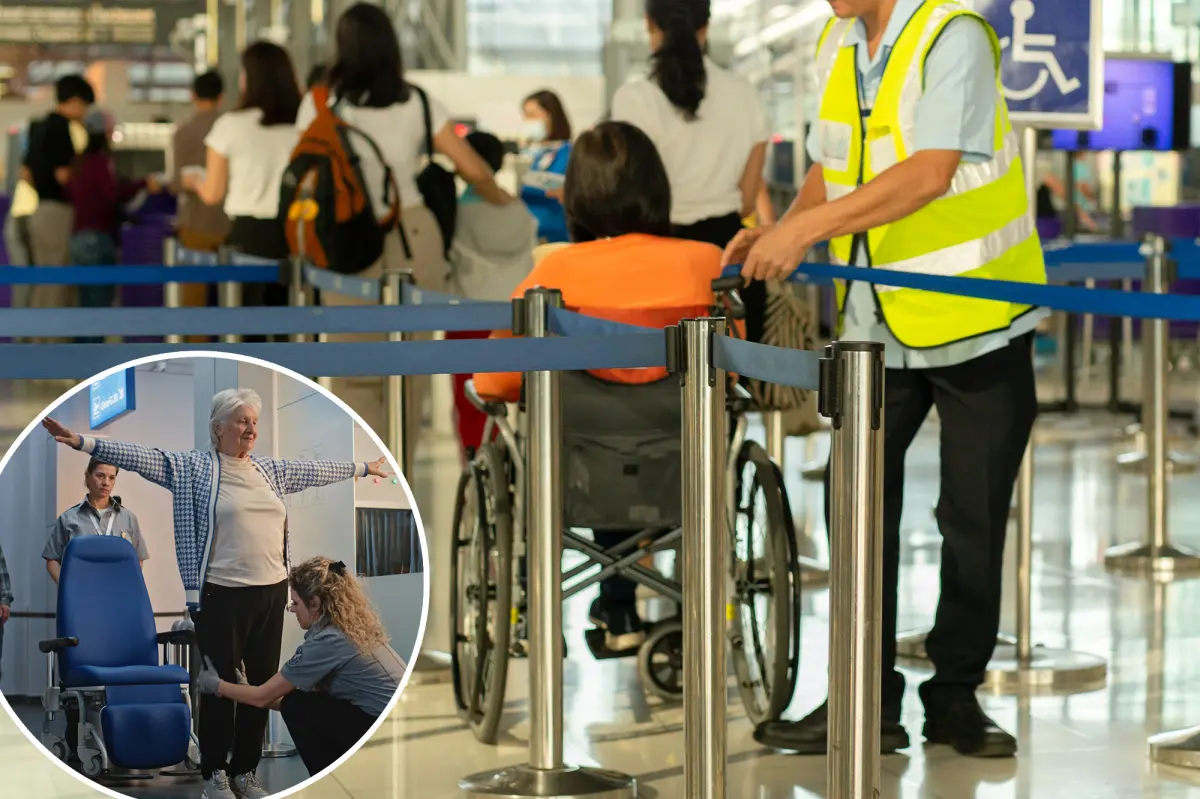
In bustling airports across the nation, a peculiar phenomenon has caught the attention of observant travelers. You might have witnessed it yourself – passengers being wheeled to the gate, boarding before everyone else, then mysteriously walking off the plane unaided at their destination. This practice, playfully dubbed “jetway Jesus” or “miracle flights” on social media, has sparked debates about whether people are gaming the system or if there’s more to the story than meets the eye.
The scenario typically unfolds like this: A traveler requests wheelchair assistance, bypasses the lengthy security and boarding lines, secures prime overhead bin space, and then appears to experience a miraculous recovery upon landing, walking away unassisted. For frustrated travelers stuck in long queues watching this unfold, it’s easy to jump to conclusions about people exploiting a service meant for those with genuine disabilities. What makes this possible is the relatively straightforward process of obtaining wheelchair assistance – passengers simply request it when booking their flight or during airport check-in, no medical documentation required. According to the U.S. Department of Transportation regulations, airlines must “promptly provide the requested assistance” when a passenger with a disability asks for help navigating the airport, creating a system based largely on trust rather than verification.
What many travelers don’t realize is that the Air Carrier Access Act (ACAA) actually prohibits airlines from questioning the legitimacy of a passenger’s disability or need for assistance. While there might be instances of abuse, the law is designed to protect those with disabilities from having to prove their condition, which could be humiliating and discriminatory. The DOT guidelines state that in uncertain situations, carriers may only ask for “credible verbal assurance” that the service is needed – nothing more. This policy reflects an important principle: not all disabilities are visible, and many conditions can fluctuate in severity from moment to moment, making what appears to be a “miracle recovery” actually a normal manifestation of certain health conditions.
Behind what some might perceive as a travel hack lies a more complex reality about the nature of disability itself. Many Reddit users have come forward to defend those who use wheelchair services but can walk short distances. One commenter explained their mother’s situation perfectly: “She can walk a shortish distance but can’t walk the entire way across an airport… she can walk a short ways just fine, but if she walks too far, she gets crippling pain in her leg.” This highlights an important truth – disability exists on a spectrum. Conditions like multiple sclerosis, arthritis, heart disease, and respiratory problems may allow for limited mobility while making the marathon-like distances of modern airports impossible to navigate without assistance. For these travelers, wheelchair service isn’t a convenience but a necessity that makes air travel possible at all.
The conversation around “miracle flights” reveals our collective misunderstanding about invisible disabilities. What appears as someone gaming the system might actually be someone with chronic fatigue syndrome conserving their limited energy for their destination, or a person with POTS (Postural Orthostatic Tachycardia Syndrome) who can walk brief distances but risks fainting if standing too long in a boarding line. As another Reddit user eloquently stated: “I can stand and walk, but not well and not for long.” This reality check reminds us that disability is not always as straightforward as using a wheelchair full-time or not needing assistance at all – there’s a vast middle ground where millions of Americans find themselves.
While there’s no denying that some travelers might exploit wheelchair services purely for convenience, focusing exclusively on potential abusers risks creating more barriers for those with legitimate needs. The current system, though imperfect, errs on the side of accessibility rather than suspicion. Perhaps instead of questioning the passenger who walks off after using a wheelchair, we might redirect our attention to more constructive concerns: advocating for airport designs that better accommodate everyone, supporting adequately staffed assistance services, and fostering greater understanding of the diverse nature of disability. After all, in the complex ecosystem of air travel with its many frustrations, the real miracle would be creating an experience that treats everyone with dignity and respect, regardless of their mobility needs.