



A Mother’s Modern Approach to Teaching Financial Responsibility Sparks Online Debate
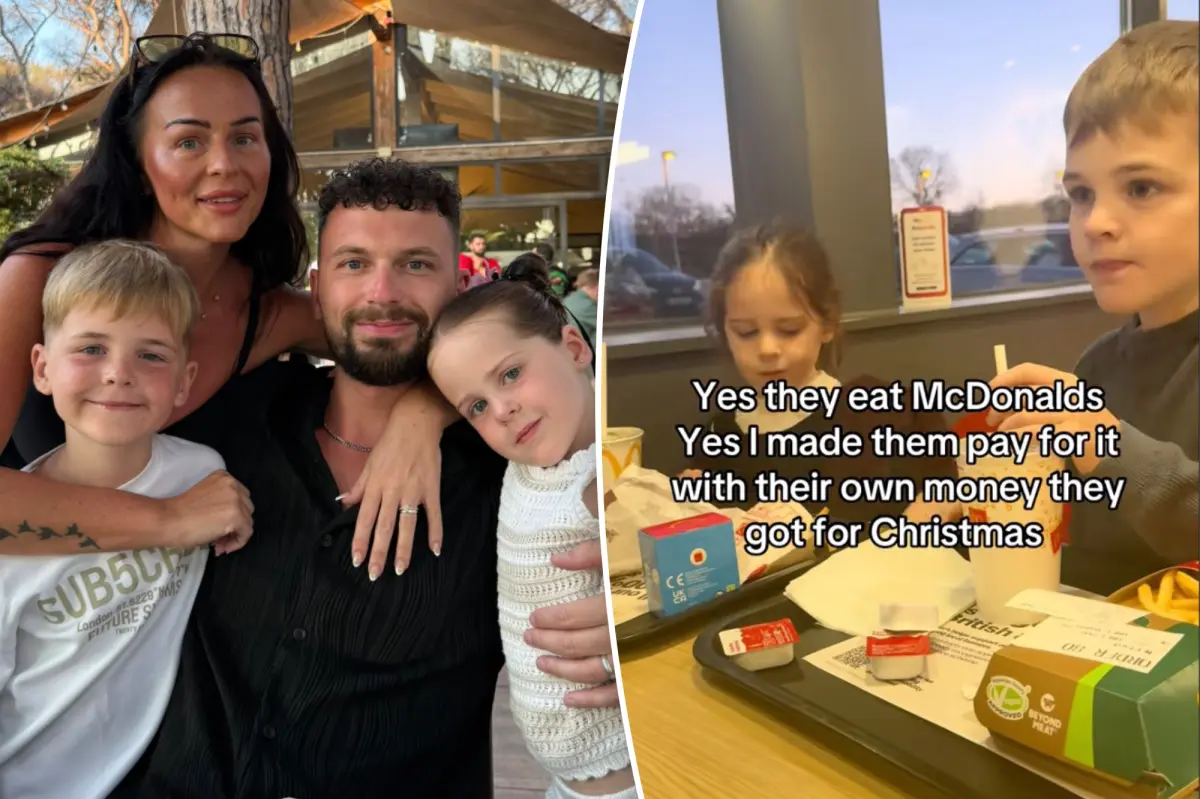
Kate King, a 31-year-old London mother of two who homeschools her children, found herself at the center of a heated online controversy after asking her children to use their Christmas money to pay for their own McDonald’s meals. What she intended as a simple lesson in financial responsibility quickly escalated into a barrage of criticism, with some internet users sending her threatening messages and even suggesting child protective services should intervene. Despite the backlash, King stands firmly by her decision, explaining to The Post that this was actually the first time she’d ever asked her 8-year-old son Louie and 5-year-old daughter Arna to spend their own money on fast food. The children happily purchased their meals—Louie spending about $9.47 on a vegan McPlant Meal and Arna using approximately $5.41 for a Happy Meal—turning what could have been just another lunch outing into an educational opportunity about money management.
For King, this approach represents a deliberate parenting strategy focused on preparing her children for the future rather than simply indulging their every desire. Having removed her children from traditional schooling in favor of homeschooling in 2025, King is part of a growing movement of parents who are shifting away from the “gentle parenting” trend that often lacks structure and accountability. Instead, she prioritizes teaching her children practical life skills, including financial literacy—something she wishes she had learned earlier in her own life. “Growing up, I didn’t understand the significance of money management, and I’ve made serious financial mistakes,” King revealed, explaining her motivation to give her children a better foundation. The McDonald’s episode wasn’t about depriving her children but rather about creating a learning opportunity that allowed them to practice communication skills with restaurant staff, apply basic math concepts when calculating their spending and change, and ultimately value their purchases more deeply.
King is far from alone in implementing this kind of structured financial education for children. Other parents, like American mother Taja Ashaka, have established even more formal systems, charging her tween daughters $10 weekly for “rent and utilities” with clear consequences for late payments. Similarly, Samantha Bird requires each of her three sons (all under age 10) to pay $3 monthly from their $6 allowance to cover symbolic household expenses. These approaches, while potentially controversial to some observers, receive support from financial experts who recognize the importance of early financial education. Rick Kahler, both a financial planner and therapist, has publicly endorsed these methods, noting that there isn’t just one correct way to teach children about money. Financial adviser Kate Yoho echoed this sentiment, emphasizing that introducing children to financial concepts at a young age capitalizes on their natural curiosity about money while they’re still enthusiastic and receptive to learning.
The contrast between King’s parenting philosophy and the increasingly popular “gentle parenting” approach highlights an ongoing debate about the best ways to prepare children for adulthood. While gentle parenting focuses on emotional connection and avoiding strict discipline, King’s method emphasizes practical preparation for real-world situations through everyday teachable moments. This perspective comes from her personal conviction that traditional schooling wasn’t providing her children with skills relevant to their future success. “When my kids were going to school, it felt like other people were raising them and teaching them lessons that aren’t necessarily relevant,” King explained, describing her decision to homeschool as a way to offer “a more personalized learning experience that really focuses on their skills, strengths and interests.”
What makes King’s approach particularly noteworthy is the balance she maintains between teaching responsibility and allowing her children to enjoy their childhood. Rather than imposing harsh restrictions or excessive responsibilities, she creates learning opportunities within normal daily activities. The McDonald’s experience exemplifies this balance—the children still got to enjoy their desired meal while simultaneously learning about budgeting, communication, and the value of money. King observed that her children actually seemed to appreciate the experience more because they had invested their own resources: “Instead of getting distracted by the toy or the play area, they sat and ate all of their food because they valued it. It was all really special.”
Despite the criticism she has faced, King represents a thoughtful middle ground in modern parenting—neither overly permissive nor unnecessarily strict. Her approach acknowledges that children need both structure and freedom, both practical skills and joyful experiences. The online controversy surrounding her parenting choice reflects broader societal tensions about how best to prepare children for an increasingly complex world. While some parents may prioritize protecting children from all responsibility and stress, others like King believe that gradually introducing age-appropriate challenges and responsibilities ultimately empowers children and builds confidence. As she continues to homeschool her children and incorporate real-world lessons into their education, King remains convinced that these small teaching moments will give her children the foundation they need to become financially responsible adults—one McDonald’s meal at a time.