

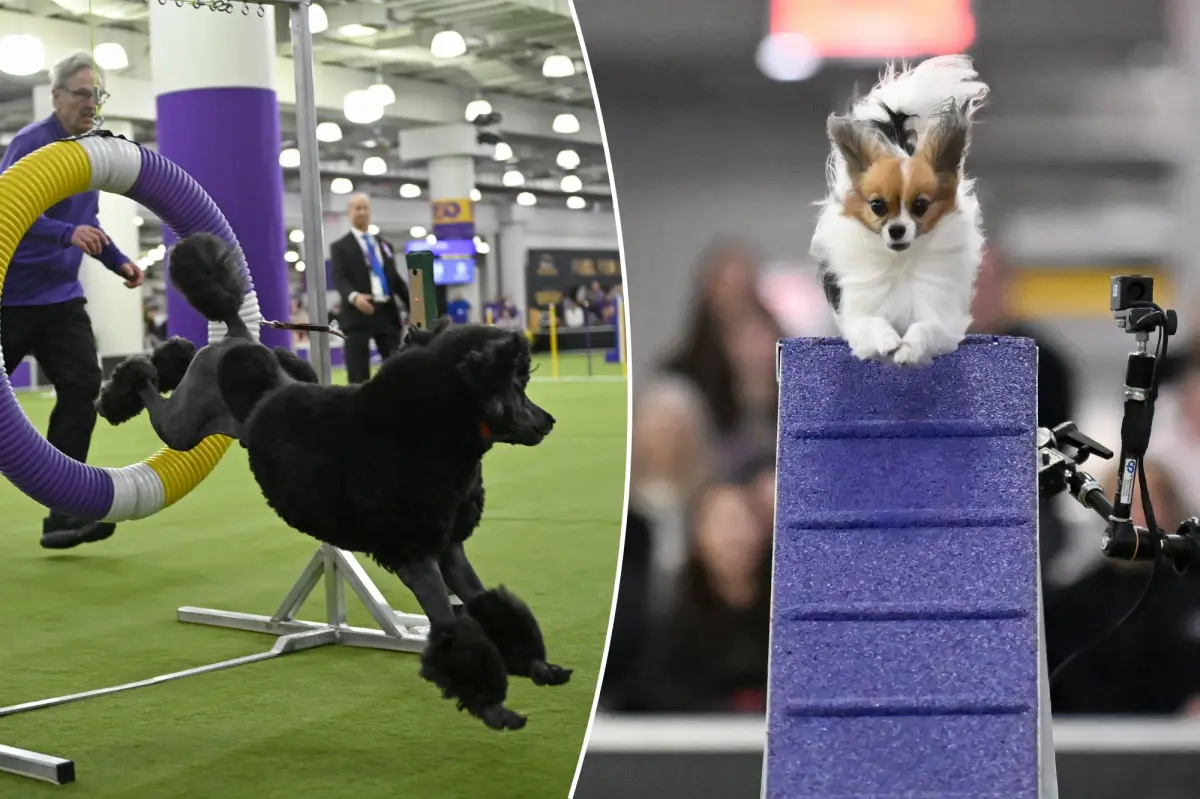
As a lifelong dog enthusiast and someone who’s spent countless weekends glued to my TV watching those adorable tails wag their way to victory, there’s nothing quite like the buzz of the Westminster Kennel Club Dog Show. This year marks a monumental milestone—the 150th annual extravaganza—kicking off with the agility finals on January 31st and building to the heart-pounding finals on February 2nd and 3rd. Imagine the electric atmosphere inside Madison Square Garden, where thousands of spectators erupt in cheers as sleek greyhounds sprint alongside fluffy Pomeranians, all vying for that elusive Best in Show title. I’ve always dreamed of being there in person, mingling with the handlers in their pristine tuxedos and hearing the announcer’s voice boom over the crowd. But even if you’re like me, stuck on the couch with a bowl of popcorn and your favorite pup curled up beside you, the magic seeps through the screen. It’s not just a competition; it’s a celebration of canine diversity, from the athletic prowess of sporting dogs to the sharp instincts of terriers. Every wag of a tail tells a story—of breeding, of training, of unwavering bonds between human and hound. In a world that often feels chaotic, watching these pooches strut their stuff reminds me of the simple joys of loyalty and playfulness. And let’s be honest, who hasn’t chuckled at a toy breed trying to keep up with the big dogs, only to steal the show with sheer charisma? This event isn’t just about the winners; it’s about the collective tail-wagging joy that unites dog lovers everywhere, turning strangers into shared exclamations of “Aww!” over a particularly photogenic poodle. As the lights dim and the first round begins, I can’t help but feel that rush of anticipation, knowing that soon, one lucky pup will be crowned the epitome of canine excellence. It’s a tradition steeped in history, born from the Kennel Club’s early days in the 19th century, and each year it evolves while honoring its roots. I’ve followed the show religiously since I was a kid, collecting old VHS tapes of past winners and admiring how far the breeds have come—from working farm dogs to pampered show stars. The diversity is staggering: seven groups encompassing everything from the elegant hounds that echo calls across meadows to the herding dogs that could command a flock with a mere glance. It’s this variety that makes the show endlessly fascinating, like flipping through a living encyclopedia of dogdom. And don’t get me started on the handlers—they’re the unsung heroes, spending years grooming and training their furry friends, all for that one glorious moment under the spotlight. Being part of the Westminster family feels like being in an exclusive club of dog devotees, where every new generation discovers the thrill anew. For me, it’s more than entertainment; it’s a nostalgic trip back to backyard adventures with my own childhood pets, reminding me why dogs are man’s best friend.
Diving deeper into the competition structure nods well to its meticulous nature, where every participant is categorized into one of seven dog groups: sporting, hound, working, terrier, toy, non-sporting, or herding. This isn’t random; it’s a nod to the dogs’ historical roles and appearances, ensuring each breed’s unique traits shine. The journey to Best in Show is a gauntlet, starting with Best in Breed, where individual dogs within their breeds are judged on conformation—think symmetry, coat quality, and that quintessential breed standard. I’ve always been amazed by this phase; watching a judge run their hands over a dog’s frame, checking for muscle tone and gait, feels like witnessing a masterclass in canine anatomy. It’s here that the preliminary rounds weed out the contenders, setting the stage for the group level. From there, the top dogs advance to Best in Group, a showdown that pits representatives from each breed against one another within their categories. Picture a sporting group where Labrador retrievers and golden retrievers go head-to-snout, their energy palpable as they trot around the ring. As a fan, I love imagining the behind-the-scenes drama—the late-night grooming sessions, the pep talks from handlers, the sheer determination to make it to the next round. For the terrier group, it’s all about that feisty spirit, while the toy group captivates with miniature marvels that command attention despite their size. Non-sporting breeds bring a splash of eccentricity, from the robust bulldog to the whimsical dalmatian, each telling a story of adaptation and companionship. Herding dogs demonstrate discipline, mirroring their ancestors’ roles in guiding livestock, and working breeds embody strength and utility. The pinnacle, of course, is the grand Best in Show on February 3rd, where seven group winners face off in a nail-biting finale judged by their overall excellence and breed representation. It’s a high-stakes spectacle that leaves viewers on the edge of their seats, wondering which pup’s charm or precision will prevail. I’ve rooted for underdogs over the years—pun intended—laughing at the unexpected twists, like a small breed outmaneuvering the giants. This structure isn’t just fair; it’s poetic, celebrating the evolutionary tapestry of dogs from wolves to welfare companions. And let’s not forget the agility rounds that open the show; watching dogs navigate obstacles with the agility of athletes reinforces why these events are more than beauty pageants—they’re athletic showcases. In my own life, training my pooch for fun agility courses at the park has given me a newfound appreciation for what these competitors endure, from the years of building trust to the split-second decisions in the ring. It’s humbling to think that beneath the glamour, it’s all about the unbreakable human-animal connection, forged through patience and love.
Now, for those of us without a Madison Square Garden ticket, the good news is you can catch every tail-wagging moment from the comfort of your living room, and better yet, for free if you play your cards right. If cord-cutting is your game—much like mine, where I’ve ditched the bulky cable bundle for nimbler streaming—you’ll need a live TV service to tune into the action on FS1 and FS2. DIRECTV Stream is my go-to recommendation, hands down, because of its generous five-day free trial that includes those key channels. You sign up, binge-watch the breeds strut, and cancel before the first billing cycle sneaks up—no strings attached. Once the trial wraps, pricing kicks in at a reasonable $69.99 a month for 90-plus live channels, covering everything from sports to sitcoms. It’s like having a personal concierge for TV, with crystal-clear picture quality that makes those close-up shots of glistening coats feel lifelike. I’ve relied on DIRECTV for major events before, and it’s never let me down, especially with sports packages that let me catch replays or behind-the-scenes bites. Another solid option is Sling TV, perfect if you’re on a tighter budget and just want the basics without the extras. Their Select plan, starting at $19.99 per month, bundles FS1 right in, so you’re set for the dog show’s dramatic turns. It’s straightforward, no frills, and ideal for casual viewers like myself who dip in and out. Imagine pausing the live feed to grab another snack while your real-life dog mimics the on-screen antics—pure bliss. These services bridge the gap for us non-attendees, turning virtual spectatorship into an immersive experience. Just ensure your internet is up to snuff for smooth streaming; nothing ruins a poodle parade like buffering. Over the years, I’ve experimented with various platforms, from Hulu Live to YouTube TV, but nothing matches the ease and affordability of these for live event viewing. Plus, with on-demand access after the fact, you can rewind those heartwarming moments or share clips with friends who missed the excitement. It’s democratizing entertainment, letting dog lovers worldwide join the celebration without Geographic barriers. And if you’re tech-savvy, pairing it with a good streaming device turns your TV into a personal arena, complete with surround sound for those crowd roars. In essence, watching at home feels almost as communal as being there, especially with online forums buzzing with predictions and post-show recaps.
Let’s talk specifics: the 2026 TV schedule is meticulously planned to keep the adrenaline pumping over the final two days. On Monday, February 2nd, the action heats up with Breed Judging and Junior Showmanship Preliminaries from 1 to 4 p.m. ET on FS2, showcasing the foundational rounds where young handlers and their pups demonstrate budding talent. It’s endearing to watch the kids guide miniature schnauzers or beagles with admirable poise, a highlight that warms the heart. Then, evening brings the Group Judging for Hound, Toy, Non-Sporting, and Herding Groups from 7:30 to 11 p.m. ET on FS1—an extended block of canine drama. Picture the hounds with their sleek builds and lyrical bays, the toys stealing scenes with their tiny but mighty presence, and the non-sporting crew bringing eclectic flair. The herding group, with their focused gazes, often delivers intense rounds that echo traditional farm life. As someone who’s obsessed with the countdown to Best in Show, I set alarms for these slots, notebook in hand, jotting down favorites. Tuesday, February 3rd, mirrors the daytime prelims with Breed Judging and Junior Showmanship from 1 to 4 p.m. ET on the same FS2 channel, doubling the delightful displays of promise. But the real fireworks explode in the evening: Group Judging for Sporting, Working, Terrier, and culminating in Best in Show, all from 7:30 to 11 p.m. ET on FS1. The sporting breeds exude energy, the working ones radiating resilience, and the terriers packing fiery personality. By the time we reach Best in Show, the tension is palpable—seven finalists circling, each a epitome of group perfection, judged on totality. It’s the payoff that makes binge-watchers like me hold our breath. Timing these broadcasts around real-life happenings adds layers; I’ve timed dinners with the evenings, creating rituals that make the show feel part of my routine. Pro tip: Use the apps for live notifications to never miss a beat. And for those in different time zones, on-demand streams are a lifesaver, letting you catch up without jet lag. Overall, the schedule respects the viewer’s time while honoring the event’s depth, blending education with entertainment in a way that’s uniquely Westminster.
Venture beyond the TV and consider the vibrant locations where this 2026 spectacle unfolds, adding a layer of New York City enchantment to the proceedings. On the east coast, the breed judging and preliminary rounds take place at the sprawling Jacob K. Javits Convention Center in the heart of Manhattan, where exhibitors and spectators alike soak in the industrial-chic vibe under soaring ceilings. I’ve visited Javits for trade shows myself, and imagining it transformed into a canine wonderland—with grooming stations, cheering crowds, and the faint scent of kibble—gets my tail wagging metaphorically. The convention center’s accessibility and space make it ideal for the early chaos, allowing judges to meticulously evaluate without the roar of Madison Square Garden. Then, just a brisk walk away, the prestige ramps up at the iconic Madison Square Garden for the group judging and the climactic Best in Show on February 3rd. This legendary arena, synonymous with sports and spectacles, pulses with energy as the lights brighten and the finalists parade. The proximity between venues keeps the momentum going, with handlers and dogs shuttling via pedestrian bridges, turning the city blocks into a temporary parade route. Living in a bustling metropolis like New York adds to the allure—surrounding eateries buzz with post-show debriefs, and opportunistic poodle portraits line the sidewalks. For remote viewers, streaming feels like peering into a microcosm of urban vitality, where every background noise hints at the city’s rhythm. I’ve daydreamed about escaping there someday, dodging yellow cabs on the way to catch a glimpse of the action, perhaps even volunteering to help with water bowls. The locations themselves elevate the show, blending tradition with modernity, and remind us that amidst skyscrapers, dogs bring us back to earthy roots. It’s a testament to New York City’s diversity—much like the breeds themselves—that such an event thrives here, fostering communities of admiration for our four-legged friends.
Now, circling back to why this all rings true, trusting the New York Post’s recommendations stems from their commitment to accurate, engaging journalism, especially in the realm of entertainment and streaming. Angela Tricarico, the Commerce Streaming Reporter behind this piece for Post Wanted, brings a wealth of expertise with her work across Shopping, Page Six, and Decider.com. She’s not just reporting; she’s a hands-on superfan at the crossroads of tech, sports, pop culture, and yes, even shopping for underrated perfume dupes at Bath & Body Works—talk about a multifaceted passion! Before joining the New York Post and Decider in 2023, Angela honed her skills at Insider Reviews, diving into streaming deals and consumer tech. What I appreciate most is her real-world testing; she compares services firsthand, ensuring tips like the DIRECTV free trial are rock-solid and reader-focused. As someone who’s followed her coverage of sports broadcasts and movie marathons, her enthusiasm for making content accessible resonates deeply. It’s this human touch—paired with rigorous fact-checking—that sets her reports apart in a sea of fluff. Trust builds on transparency, and here, the New York Post’s affiliate partnerships are disclosed upfront, assuring that recommendations are genuine, not gimmicky. Ultimately, as a fellow lover of lazy Sunday streams and spontaneous dog walks, I find Angela’s perspective refreshing, blending professionalism with the relatable joys we all cherish. So, whether you’re tuning in for the first time or a seasoned viewer, know that this guide is crafted with care, inviting you to join the Westminster wagging wild ride with confidence and a smile.