



From Frog Guts to Cancer Cure: A Promising Breakthrough in Colorectal Cancer Treatment
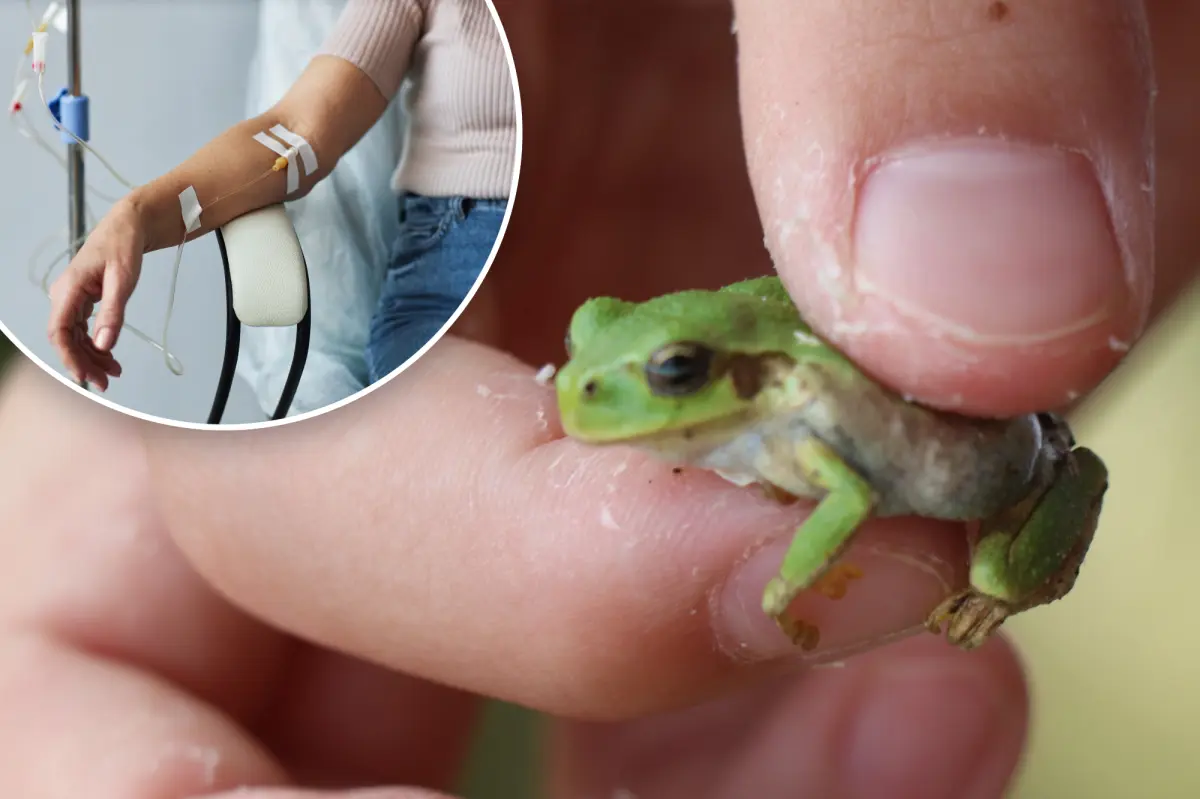
In a groundbreaking discovery that reads more like science fiction than medical research, scientists from the Japan Advanced Institute of Science and Technology (JAIST) have found that bacteria living in the intestines of Japanese tree frogs may hold the key to defeating one of humanity’s most persistent foes: colorectal cancer. The study, published in the journal Gut Microbes, reveals that a bacterium called Ewingella americana demonstrates remarkable effectiveness against colorectal tumors—potentially surpassing conventional treatments like chemotherapy and immunotherapy. This unexpected source of medical innovation highlights how solutions to our most pressing health challenges might be hiding in the most unlikely corners of our natural world. The researchers didn’t just theorize about this connection; they isolated specific bacterial strains from amphibian intestines, cultured them in laboratory conditions, and then administered them intravenously with the specific goal of targeting and destroying cancer cells.
The results were nothing short of extraordinary. When tested in mouse models of colorectal cancer, a single intravenous treatment with E. americana completely eliminated tumors, achieving a 100% complete response rate—a success metric that far outperforms standard cancer treatments currently available to patients. This remarkable efficacy appears to stem from the bacteria’s dual-action mechanism: they directly attack cancer cells while simultaneously stimulating the body’s immune system to trigger apoptosis (programmed cell death) in cancerous tissue. Perhaps most impressively, the bacteria accomplish this tumor destruction without causing the inflammatory responses that often accompany cancer treatments. Additionally, E. americana demonstrates a remarkable ability to concentrate specifically in tumor tissue without spreading to healthy organs, suggesting a natural targeting mechanism that medical researchers have long sought to develop artificially.
This potential breakthrough comes at a critical moment in the fight against colorectal cancer, which affects approximately 150,000 Americans annually. While historically considered a disease of aging, colorectal cancer has been increasingly diagnosed in younger populations—a troubling trend that has prompted medical authorities to revise screening guidelines. In 2019, a startling 20% of colorectal cancer cases occurred in people younger than 55, nearly doubling from 11% in 1995. This alarming shift led the US Preventive Services Task Force to update its recommendations in 2021, lowering the suggested age to begin screening from 50 to 45 years for those at average risk. Without significant intervention, early-onset colorectal cancer is projected to become the leading cancer-related cause of death for people aged 20 to 49 by 2030—a sobering prediction that underscores the urgent need for innovative treatment approaches like the one discovered by the JAIST team.
What makes this potential treatment particularly promising is its apparent safety profile compared to conventional cancer therapies. Anyone who has undergone or witnessed someone enduring chemotherapy knows the devastating side effects that often accompany treatment: debilitating fatigue, hair loss, immune suppression, and a host of other quality-of-life impacting conditions. According to the researchers, E. americana presents a dramatically different experience. The bacteria are undetectable in the bloodstream after just 24 hours following administration, and the body’s inflammatory responses normalize within 72 hours. This suggests that treatment with these bacteria could potentially avoid the prolonged suffering associated with conventional cancer therapies, offering patients a chance to fight their disease without sacrificing their quality of life in the process. If these preliminary findings translate to human treatments, it could represent a paradigm shift in how we approach cancer care—prioritizing both survival and well-being.
The JAIST research team didn’t stumble upon this discovery by accident. Their work involved systematically screening the intestines of Japanese tree frogs, Japanese fire belly newts, and Japanese grass lizards—identifying and isolating nine bacterial strains with antitumor effects, of which E. americana proved exceptionally powerful. This methodical exploration of biodiversity for medical applications represents a compelling counterpoint to the synthetic, laboratory-focused approach that dominates much of modern pharmaceutical research. “This research demonstrates that unexplored biodiversity represents a treasure trove for novel medical technology development and holds promise for providing new therapeutic options for patients with refractory cancers,” the study authors noted. Their work reminds us that while human innovation has created remarkable medical technologies, nature has been perfecting biochemical solutions for millions of years—solutions we might adapt to address our most challenging health crises.
Looking ahead, the research team has outlined several promising directions for further investigation. They plan to test E. americana’s effectiveness against other cancer types, including breast and pancreatic cancers, potentially expanding the treatment’s applications beyond colorectal disease. They’re also working to develop safer and more effective delivery methods, exploring options such as dose fractionation and direct injection into tumors. Perhaps most importantly, they hope to determine whether this bacterial therapy can complement existing cancer treatments rather than replace them—potentially creating integrated treatment approaches that combine the best of conventional and innovative therapies. While significant research remains before this frog-derived bacterial treatment could reach human patients, the preliminary results offer a compelling glimpse of a future where nature’s solutions help us overcome one of our most persistent medical challenges. For the thousands facing colorectal cancer diagnoses each year, particularly younger patients confronting this disease decades earlier than previous generations, this unexpected discovery from amphibian intestines could eventually translate into life-saving treatment options and renewed hope.