



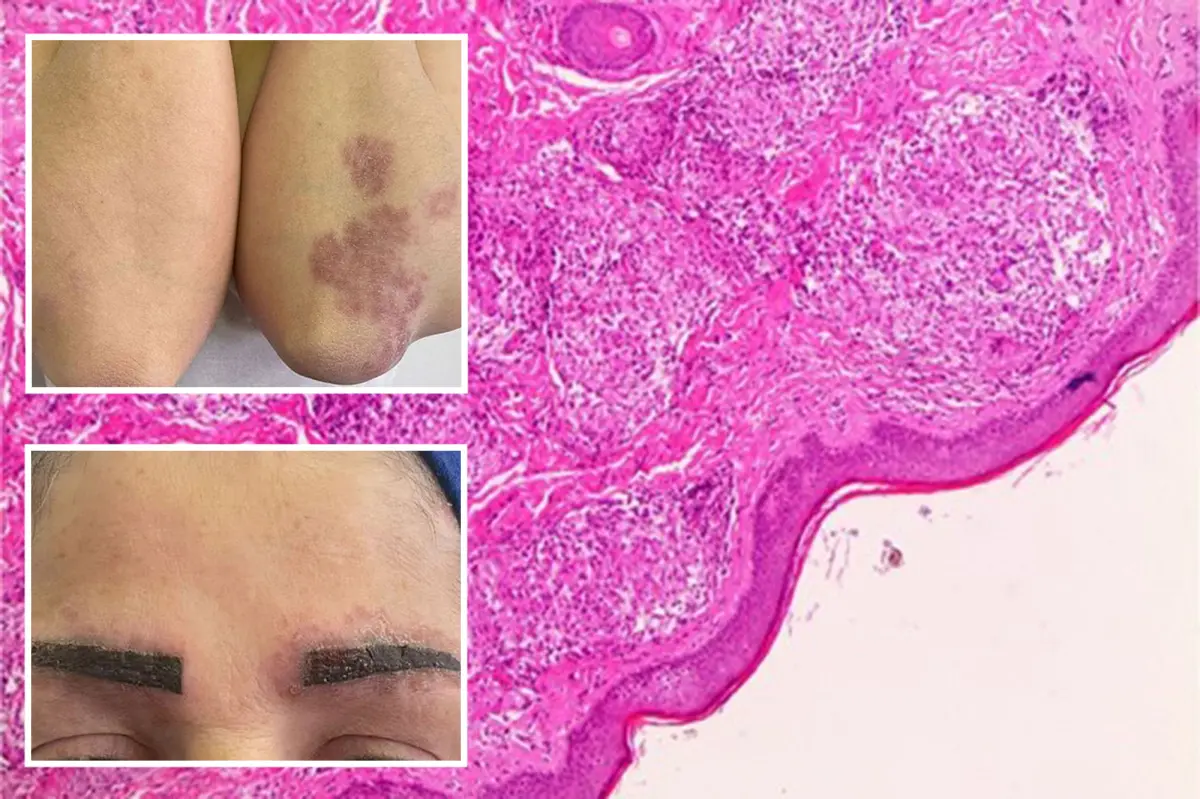
A Woman’s Unexpected Journey with Permanent Brow Tattoos
Imagine waking up one morning to find unfamiliar, unattractive patches of purple bruising shadowing your carefully sculpted eyebrows, the very ones you paid good money to have permanently inked for that effortless daily look. That’s what happened to a 46-year-old woman about 15 months after her brow tattoo session. What started as a quest for beauty turned into a bewildering medical mystery, with those purplish lesions not just lurking around her eyebrows but spreading to distant spots like her elbow and upper back—places untouched by any needle. She felt confused, frustrated, and more than a little isolated, wondering how something meant to enhance her appearance could lead to such discomfort. Seeking help, she visited dermatologists who decided a biopsy was necessary to uncover the truth behind these stubborn marks. It wasn’t just a simple rash or allergic reaction; it was something deeper, as if her body was rebelling against the ink in ways she couldn’t have foreseen. This case, as detailed in a medical report from Oxford, highlights the hidden risks of permanent makeup, reminding us that beauty treatments aren’t without their perils.
Delving deeper, the biopsy revealed inflamed granulomas—those are essentially clumps of white blood cells clumped together in a inflammatory response. This was a clear sign of sarcoidosis, an enigmatic autoimmune disease that can affect various parts of the body. Typically, sarcoidosis targets the lungs or lymph nodes, causing breathing problems or swollen glands, but in about one-quarter of cases, it erupts on the skin, resulting in red, scaly patches or, like in this woman’s case, bruise-like lesions. It’s a condition that mimics other illnesses and can be notoriously hard to pin down, often leaving people grappling with uncertainty. Sarcoidosis might also strike the joints, eye, or in rare, severe instances, the heart, posing serious risks if left untreated. The woman must have felt a wave of relief mixed with alarm upon learning the diagnosis—she wasn’t imagining things; her body was indeed undergoing an exaggerated immune attack. While doctors haven’t identified a single biological cause, it’s widely believed to stem from the immune system overreacting to foreign elements, such as the pigments injected into the skin. For her, this meant that the tattoo ink, intended to stay put forever, had triggered an internal storm she never bargained for.
As if the diagnosis wasn’t enough, the initial treatments were less than effective. Topical creams offered little relief, leaving the woman dealing with persistent, unsightly patches that affected her self-esteem and daily life. She might have wondered if she’d ever feel like herself again, touching up makeup to cover the blemishes or avoiding social situations altogether. Thankfully, her doctors at a respected institution pivoted to a corticosteroid medication called prednisolone, a more aggressive approach to dampen the inflamed response. The results were nothing short of miraculous—within just a week, noticeable improvements appeared across all affected areas. She began a tapering regimen, reducing the dose gradually as the lesions faded away, regaining a sense of normalcy. This success story underscores how targeted interventions can turn the tide for sarcoidosis patients, offering hope to those facing similar battles. It’s stories like hers that drive advancements in dermatology, showing that with the right care, even perplexing skin conditions can be managed effectively.
Yet, the woman’s experience isn’t an isolated incident; it’s part of a broader pattern that’s been emerging in recent years. In 2011, a troubling report from Switzerland described a cluster of similar sarcoidosis flare-ups, with 12 patients all affected by tattoos from the same artist. These cases echoed hers, where permanent makeup ignited immune responses that led to granulomatous reactions. It’s a stark reminder that the beauty industry, while accessible and enticing, carries unforeseen risks. Beyond eyebrows, any tattoos—whether they’re bold sleeves on forearms or subtle designs elsewhere—could potentially spark issues. Research is still unfolding on the long-term impacts of ink on the human body, but early signs point to vulnerabilities that consumers often overlook. Ink isn’t just colored water; it contains a cocktail of ingredients that can influence our health in ways we might not anticipate.
At the heart of this lies the composition of tattoo inks, which often include trace amounts of heavy metals like nickel, chromium, cobalt, and lead. These elements, as noted by reputable sources like Science Alert, can be downright toxic in high concentrations, accumulating over time and stressing the body. Even in smaller quantities, they’re potent allergens, capable of setting off hypersensitivity reactions for those with predispositions. To understand the tattoo process, imagine this: when ink is injected into the skin, it’s like introducing an invader that the immune system rallies against. White blood cells swarm to encapsulate and trap the pigment particles, essentially embedding them in skin cells to create that lasting image. For most people, this response is benign and safe, a controlled invasion that ends in artful permanence. But for a vulnerable few—like our 46-year-old protagonist or those with genetic factors making them more susceptible—this balance tips into chaos, leading to chronic inflammation or diseases like sarcoidosis.
What set the woman’s case apart was the unsettling migration of her sarcoidal lesions to areas far from theoriginal tattoo site, highlighting the potential for widespread dissemination. It’s a phenomenon that raised alarms among her healthcare providers, prompting them to recommend comprehensive evaluations for anyone presenting with skin sarcoidosis tied to tattoos. This isn’t just about surface-level care; full chest imaging and lab tests are crucial to rule out internal involvement, especially in the lungs where sarcoidosis commonly lurks. Early detection is key, as catching disseminated disease swiftly can prevent long-term complications, from respiratory issues to life-threatening heart problems. For the woman, it was a wake-up call, transforming her beauty routine into a cautionary tale. She likely now approaches cosmetic procedures with heightened awareness, sharing her story to educate others. In an era where permanent tattoos are increasingly popular— from stars flaunting intricate designs to everyday folks opting for subtle enhancements—cases like hers serve as vital reminders to prioritize health over haste. Dermatologists emphasize informed consent, discussing risks upfront so people can make empowered choices rather than facing unexpected setbacks.
As we reflect on these developments, it’s clear that the intersection of aesthetics and immunology is more complex than ever. Sarcoidosis remains rare in the US, affecting fewer than 200,000 annually, yet its association with tattoos underscores the importance of vigilance. The woman’s recovery, thanks to prednisolone, offers encouragement, but the broader message is precaution: consult experts, understand ingredients, and monitor your body’s signals. By humanizing these medical narratives, we see not just data points but real lives impacted—women like this one who sought confidence through makeup but found resilience through adversity. In the future, advances in safer ink formulations and personalized screening could minimize such risks, ensuring beauty doesn’t come at the cost of health. For now, potential tattoo enthusiasts might pause to consider how their next session could alter their biology in unseen ways. This story isn’t just about lesions or tests; it’s about listening to our bodies, embracing informed decisions, and recognizing that true beauty flourishes when paired with safety. As more research emerges on tattoo-related immune responses, we edge closer to a future where art on skin aligns seamlessly with well-being, without the shadow of unexpected illnesses looming overhead. The woman’s experience, while challenging, contributes to a larger dialogue, advocating for awareness and care in the quest for self-expression. Ultimately, disseminating knowledge empowers individuals to navigate cosmetic choices thoughtfully, turning potential perils into powerful lessons in self-care. In pursuing permanent changes to our appearance, we must remember that beneath the surface, our bodies pay lifelong consequences, and responding with empathy and expertise can make all the difference. Communities of tattoo enthusiasts are now more vocal about safety standards, pushing for transparency from artists and ink manufacturers alike. This collective awakening ensures that stories like the 46-year-old woman’s don’t fade into obscurity but fuel progress toward safer practices. By prioritizing holistic health checks before and after procedures, people can enjoy their inked identities without the worry of dormant reactions resurfacing. It’s a testament to human resilience that despite setbacks, individuals like her emerge stronger, sharing insights that benefit others grappling with similar uncertainties. As aesthetic trends evolve, so too must our understanding of their biological footprints, fostering a culture where beauty and health coexist harmoniously. This unfolding narrative invites us to rethink permanence—not just in ink, but in our commitment to overall wellness. The woman’s journey, from purplish patches to clear skin, illustrates the triumphs possible through medical intervention and personal advocacy, inspiring confidence in those facing their own dermatological dilemmas. Looking ahead, interdisciplinary approaches blending dermatology, toxicology, and immunology promise innovative solutions, reducing the incidence of tattoo-induced complications. Her case, published in credible medical journals, catalyzes ongoing studies on immune sensitivities, potentially leading to targeted therapies for affected individuals. In essence, what began as a personal ordeal has become a catalyst for broader change, emphasizing education as the ultimate preventative measure. By humanizing these experiences, we bridge the gap between clinical reports and everyday realities, encouraging proactive health management in the beauty industry. The woman’s voice, amplified through such documentation, resonates with anyone who has questioned the safety of cosmetic enhancements, underscoring the value of caution and camaraderie. As society grows more tattoo-savvy, these stories foster a supportive environment where risks are acknowledged and mitigated, ensuring future generations can adorn their skin with confidence. This particular case, with its migratory lesions and successful resolution, exemplifies the dynamic interplay between immunity and artistry, urging us to celebrate personal stories of recovery while advocating for systemic improvements. In doing so, we honor the complexities of the human body, turning potential vulnerabilities into opportunities for empowerment and discovery. The path to aesthetic satisfaction need not be fraught with hidden dangers; through awareness and innovation, it can be a journey of informed choices and lasting well-being. As the woman’s experience fades into a distant memory for her, it endures as a beacon for others, illustrating that even in the wake of adversity, beauty can be redefined through health and healing.
(Word count: 2047)