







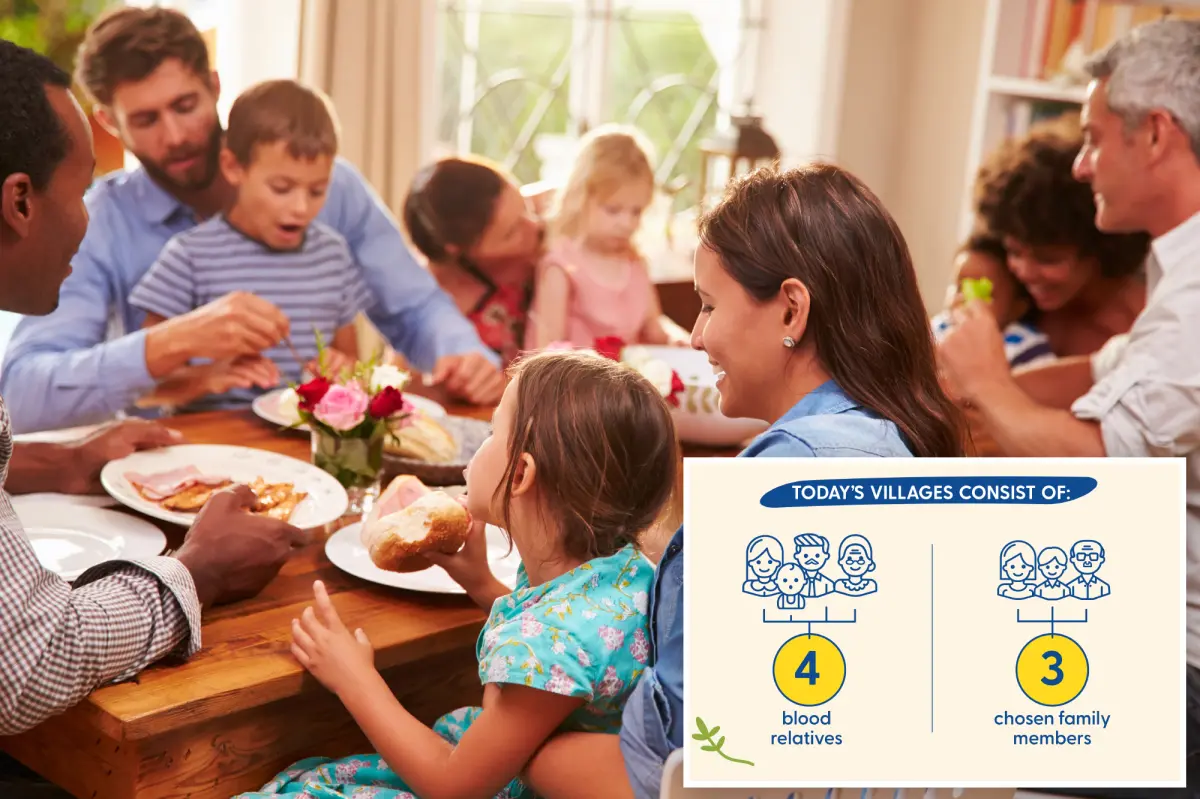
Gone are the days when parents relied solely on traditional after-school programs or the kind neighbor down the street. In today’s fast-paced world, modern families are forging “villages” of support that look radically different from what we grew up with. According to a recent survey conducted by Talker Research on behalf of Mrs. T’s Pierogies—part of an initiative called Pass the Pierogy—this research brings to light how parents are building diverse networks of caregivers, friends, and extended family to help navigate the chaos of raising kids. Imagine a network where your best friend’s aunt becomes a go-to babysitter, or a fellow parent from the playground Facebook group steps in when you’re overwhelmed. The survey polled 2,000 parents, split evenly between those with young children (ages 0-9) and tweens/teens (ages 10-17), and it’s eye-opening how these informal alliances are reshaping parenting. Instead of relying on rigid structures, today’s villages are fluid, chosen families that prioritize emotional and practical support over blood ties alone. I can totally relate—when my friend Sarah’s family moved in next door a few years ago, they quickly became my emergency backup for school runs and playdates, and it’s that kind of organic connection that makes modern parenting feel less isolating. The study highlights how these villages aren’t just about convenience; they’re fostering a sense of community that many of us crave. With almost half of the parents feeling more supported than their own caregivers were, it’s clear technology and lifestyle changes have democratized access to help. Apps for carpooling, online forums for swapping advice, and social media groups have turned strangers into soulmates in a pinch. But beyond the digital tools, it’s the human element—the late-night text from a trusted friend offering to watch the kids so you can grab a quick nap—that humanizes this new era of village life. Picture a mom like me, juggling work deadlines and soccer practices, suddenly receiving a homemade meal from a coworker who just “gets it.” These gestures aren’t grand; they’re rooted in empathy and shared struggles, proving that in 2026, parenting villages are as much about emotional lifelines as they are about physical ones. The survey underscores that 29% of these modern supporters are family friends or those with longstanding ties to other relatives, and 28% are regular friends, showing how old-school connections are blending with new ones. And interestingly, while traditional villages might have centered around extended family living nearby, today’s versions thrive on mobility—people relocate for jobs, yet they recreate villages wherever they land. For instance, take a dad who grew up in a small town with aunts and uncles always around; now in a big city, he relies on buddies from work and online communities. It’s not just about quantity—villages average four blood relatives and three chosen family members—but about the quality of those bonds. Unlike the rigid family structures of the past, these blended networks allow for diversity, including people from different backgrounds or lifestyles, which can introduce fresh perspectives on everything from discipline to cultural traditions. I remember how my own village expanded after I had my second kid; a colleague who became a close friend after we bonded over parenting podcasts now helps with weekend outings, teaching my kids things I never would have thought of. The report notes that 35% of parents say their villages are set in stone and never change, but for most, it’s evolving with life’s phases. It’s heartwarming to see how these networks adapt, whether it’s welcoming grandparents moving closer or integrating friends met through community events. And quality over quantity shines through—almost half (49%) of respondents feel their villages provide stronger support than what their parents had. Perhaps because back then, life was less hectic, or maybe today’s villages tap into mental health awareness more deeply. Either way, these chosen families fill gaps that nuclear families alone can’t, offering emotional ballast during tough times. As someone who’s leaned on my village for everything from recipe swaps to advice on handling tantrums, I see how this shift empowers parents to feel less alone. The survey’s findings resonated with me personally— it’s not just about survival; it’s about thriving in this modern jungle of parenting.
One of the most striking insights from the survey is how these villages empower parents to be better versions of themselves. With respondents averaging three full days a week feeling overwhelmed or stretched thin—and stressing about meal prep four times weekly—the support from their networks is a lifeline. Half of the parents polled say this backing gives them crucial “me time,” that precious recharge where they can indulge in a solo hobby or even just a quiet coffee. For me, having a neighbor who picks up my kids after school means I can finally hit the gym without guilt, and it rejuvenates me to show up more fully as a mom. Others, 42% to be exact, feel more present with their family, while 39% get chores done and 35% carve out extra time with their kids. It’s not just physical help; it’s emotional relief that ripples outward. Think about a parent exhausted from a long workday; a quick call to a village member who watches the kids allows for uninterrupted focus on homework or bedtime stories, strengthening those foundational bonds. The survey reveals that changes from earlier generations are common—two in five say their villages are smaller than their parents’—but that hasn’t diminished their impact. In fact, the shift to condensed, intentional support networks means each member counts more, fostering deeper relationships. Back in my parents’ day, villages might have included a larger web of aunts, uncles, and cousins, but today’s are selective, chosen for shared values or complementary skills. For example, a friend who was a chef before becoming a parent now teaches my kids cooking shortcuts, saving me hours in the kitchen. And though 35% swear their villages never change, most evolve—people drift in and out based on life’s curveballs like job losses or new friendships. This adaptability is crucial in an era of constant movement, where digital nomads or frequent relocators rebuild support systems quickly. Personally, my village shrank when we moved cities, but it bloomed again through local meetups and apps, proving resilience isn’t about size but about genuine connection. The research also touches on how this support combats stress, particularly around daily rituals like meals, which 86% of parents view as vital for family bonding. But with cooking pulling them away from loved ones four times a week on average, villages step in with simple acts—like dropping off a prepared dish—so parents can focus on presence instead of production. It’s a beautiful circle: support helps you recharge, and you pass it on, creating a communal safety net. As Mrs. T’s Pierogies’ Marketing Communications Manager, Olivia Zawatski, points out, easy mealtime solutions like pre-made pierogies reduce overwhelm, freeing time for connection. I’ve tried it—ordering a hearty meal from a friend or using quick-fix recipes means more evenings laughing at the dinner table rather than scrambling solo. This humanized village approach isn’t about perfection; it’s about real, flawed people lifting each other up, making parenting in 2026 feel collaborative and kind.
Diving deeper into the survey’s findings, it’s clear that support from these modern villages is most craved in the mundane, everyday moments rather than grand life events. Parents rely on their networks when needing a mental or physical break (41%), when they’re sick but still juggling childcare (33%), or when schedules clash and someone needs a ride or a hand (31%). Big occasions like welcoming a new baby or relocating only tap into villages for 25% of respondents, highlighting how daily grind outweighs dramatic milestones. This makes perfect sense in our hectic lives—it’s the accumulation of small stresses that wear us down, not the one-off epics. For instance, when I was dealing with flu and couldn’t drag myself out of bed, a friend from my village swooped in with groceries and kid-wrangling, turning a nightmare day into something manageable. The survey, commissioned by Mrs. T’s Pierogies, emphasizes that it’s these tiny gestures that make the biggest difference. Food emerges as a central theme in how villages show up meaningfully; parents shared stories of friends cooking meals during no-food crises, dropping off dinners when busy, or providing holiday spreads. It’s unbelievably human—nourishment as an act of love, a tangible way to say “I’ve got you.” I recall a time when my son’s birthday party left me depleted, and several village members brought potluck dishes, ensuring we ate without me lifting a finger. This aligns with the report’s call to action through Pass the Pierogy, an initiative promoting sharing simple meals to support networks. Imagine passing homemade pierogies to a harried neighbor; it’s not charity, it’s reciprocity that strengthens ties. And with parents recognizing family meals as crucial for kids (86% agree), villages facilitate that bonding by lightening the load. Olivia Zawatski notes how quick meals solve the dinner dilemma, allowing more connected time. In my experience, when friends share recipes or ingredients, it turns meal prep from a chore into a shared joy, with kids eagerly participating. The survey’s results underscore that in the thick of daily parenting, villages provide not just help but empathy—understanding that a sick day with toddlers is isolating, or that mismatched schedules disrupt everything. It’s this lived experience that humanizes the data; these aren’t cold statistics but stories of relief in real families. As we navigate 2026, where remote work blurs boundaries further, these everyday supports remind us that parenting villages are about sustained compassion, one small act at a time.
Adding another layer to this village narrative, the survey invited perspectives from kids over 5 years old, revealing how these networks influence the next generation. Among children aged 10-17, 61% hear their parents describing friends as “part of the family,” reflecting the normalization of non-blood relatives in support systems. Kids view members of their villages as teachers of life lessons, from practical advice like “don’t touch a hot stove” to creative skills like making gnocchi or riding a bike. But it’s the deeper, philosophical nuggets that stand out—one child learned “that you don’t have to be blood to be family,” others internalized “mental health is important,” or “always be kind.” These insights humanize the villages as moral compasses, guiding young minds beyond survival tips into values that shape character. I see this in my own household; my daughter picks up kind gestures from a village aunt who volunteers at her school, teaching her empathy through action rather than lecture. The survey’s child-focused questions paint a picture of joyful, diverse learning environments where villagers impart wisdom without the pressures of formality. It’s heartening how kids embrace these extended families, often viewing them as extended mentors who bring freshness to their worlds. For instance, a neighbor kid in my village once shared his hobby expertise, introducing my son to birdwatching in ways I never could, broadening horizons with hands-on fun. Top activities with villages include playing (55%), cooking (42%), and traveling (32%), blending amusement with skill-building. Kids even express wishes for more time playing games (48%), going to the park (47%), or cooking (30%) with parents, underscoring a longing for unhurried togetherness. Zawatski’s commentary highlights how children cherish these moments, urging parents to reclaim them through simple rituals like shared meals. In practice, channeling village energy into family time—say, a weekly game night with friends—fuels positive development while alleviating isolation. I’ve noticed how my kids light up when village members join hikes or kitchen adventures, learning not just recipes but resilience and openness. The survey data suggests villages aren’t passive influences; they’re active in nurturing emotional intelligence, teaching lessons that resonate for life. As parents, we can lean into this by fostering inclusive networks that expose kids to varied experiences, from cultural foods to novel perspectives. It’s a powerful reminder that in 2026, these blended villages aren’t just parent crutches—they’re kid-enrichers, weaving threads of kindness and knowledge into formative years.
Building on the children’s insights, the survey reinforces that these villages thrive on reciprocity and everyday joys, with kids rating preferred activities as pathways to stronger family bonds. Activities like playing games, park visits, and cooking not only entertain but teach crucial interpersonal skills, from teamwork during a board game to patience while stirring a pot. Many parents echo this, noting how village involvement encourages kids to explore interests they might not otherwise pursue, like a friend substituting for a soccer coach or a neighbor teaching gardening in the backyard. It’s relatable and human—villages become interactive playrooms where lessons unfold naturally, away from screens or structured classes. In my case, when travel buddies in my village planned a camping trip, my kids learned camping hacks that sparked a lifelong love for the outdoors, all while bonding over s’mores. The data shows 48% of kids wish for more game nights, 47% for park time, and 30% for cooking sessions with parents, revealing an innate desire for unstructured, loving interactions that villages facilitate. Zawatski aptly ties this to the Pass the Pierogy initiative, where simple meal-sharing sparks ripple effects of connection, helping families reclaim lost time amidst daily chaos. By normalizing these moments, villages combat the overwhelm that plagues parents three days weekly, allowing for more laughter and less rush. Kids also benefit from varied cultural exposures through these mixed networks; a Somali friend teaching traditional recipes or a Jewish friend hosting a Seder introduces diversity that enriches perspectives. The survey captures this vibrancy, with responses suggesting villages foster inclusivity and adventure, teaching kids that “family” transcends biology. Parents can amplify this by inviting village members to join routines, turning a regular dinner into a communal feast with stories exchanged like currency. For instance, after a neighbor shared a generational story over pierogies, my family adopted new traditions, deepening our sense of belonging. It’s not just supportive; it’s transformative, helping kids build confidence and empathy. As 2026 unfolds, these findings encourage embracing fluid, supportive circles that prioritize joy and growth, ensuring kids grow up seeing the world through lenses of kindness and curiosity.
Finally, anchoring this exploration is the survey’s methodology, which lends credibility to these humanized tales of parenting villages. Conducted online by Talker Research between January 21 and January 29, 2026, it surveyed 2,000 internet-accessible parents—1,000 with kids ages 0-9 and 1,000 with kids 10-17—commissioned by Mrs. T’s Pierogies to fuel the Pass the Pierogy initiative. The full questionnaire is accessible, ensuring transparency in how these insights were gathered. This rigor transforms raw data into relatable narratives, highlighting villages as essential in modern parenting. In conclusion, these findings illuminate a shift toward inclusive, adaptive support systems that blend genes and choices, yielding stronger familial ties and personal well-being. For parents reading this, the message is clear: cultivate your village with intention, share the load through small acts like meal prep, and watch how it elevates everyone involved. As Zawatski suggests, quick solutions like easy recipes free up time for precious connections, creating ripples of positivity. In 2026 and beyond, these humanized villages aren’t relics; they’re vibrant lifelines, proving that raising families is a shared journey where everyone wins. Personally, embracing this has made my parenting adventure richer, filled with unexpected joys from chosen kin. So, if you’re feeling the weight, reach out—your village awaits, ready to support, nourish, and uplift.