



Hyundai and Kia Offer $9 Million Settlement for Vehicle Theft Victims
In a world where social media trends can sometimes veer into dangerous territory, Hyundai and Kia owners found themselves unwitting victims of a viral TikTok challenge that began in 2022. The concerning trend featured tutorial videos showing how to steal certain models using nothing more than a USB cable and a screwdriver—a scenario that sounds like it belongs in a Hollywood heist film rather than real life. Now, after years of vehicle owners dealing with break-ins and thefts, the Hyundai Motor Group has agreed to a substantial $9 million class action settlement to compensate affected drivers across 35 states, including New York and New Jersey. This settlement comes as welcome news to many who have suffered financial and emotional distress due to this troubling social media phenomenon.
The theft issue was particularly prominent in urban areas, with NYPD data showing nearly 200 reported thefts of Hyundai and Kia vehicles across New York City’s five boroughs in December 2023 alone. What made these vehicles particularly vulnerable was a critical security oversight: many models manufactured between 2011 and 2022 left the factory without an engine immobilizer—a standard anti-theft feature in most modern vehicles. This security gap, once discovered and publicized on social media, turned these otherwise reliable family cars into prime targets for thieves looking for an easy score. The problem became so widespread that these brands quickly climbed to the top of America’s most stolen vehicles list, creating a nightmare for owners who suddenly found their insurance premiums rising and their sense of security shattered.
For victims of this theft trend, the settlement offers meaningful compensation based on the extent of their losses. Owners who experienced a total loss of their vehicle can receive up to $4,500, while those with partial losses may qualify for $2,250. Additionally, up to $375 is available for related expenses incurred due to theft or attempted theft. To qualify for reimbursement, individuals must have owned or leased specific Hyundai or Kia models manufactured between 2011 and 2022 that lacked an engine immobilizer and had not received a software update prior to the theft incident. Furthermore, the vehicle must not have been equipped with a free cylinder protector—a locking bracket designed to protect vulnerable ignition systems—before the theft or attempted theft occurred. This settlement represents an acknowledgment by the companies of the hardship faced by their customers due to this security vulnerability.
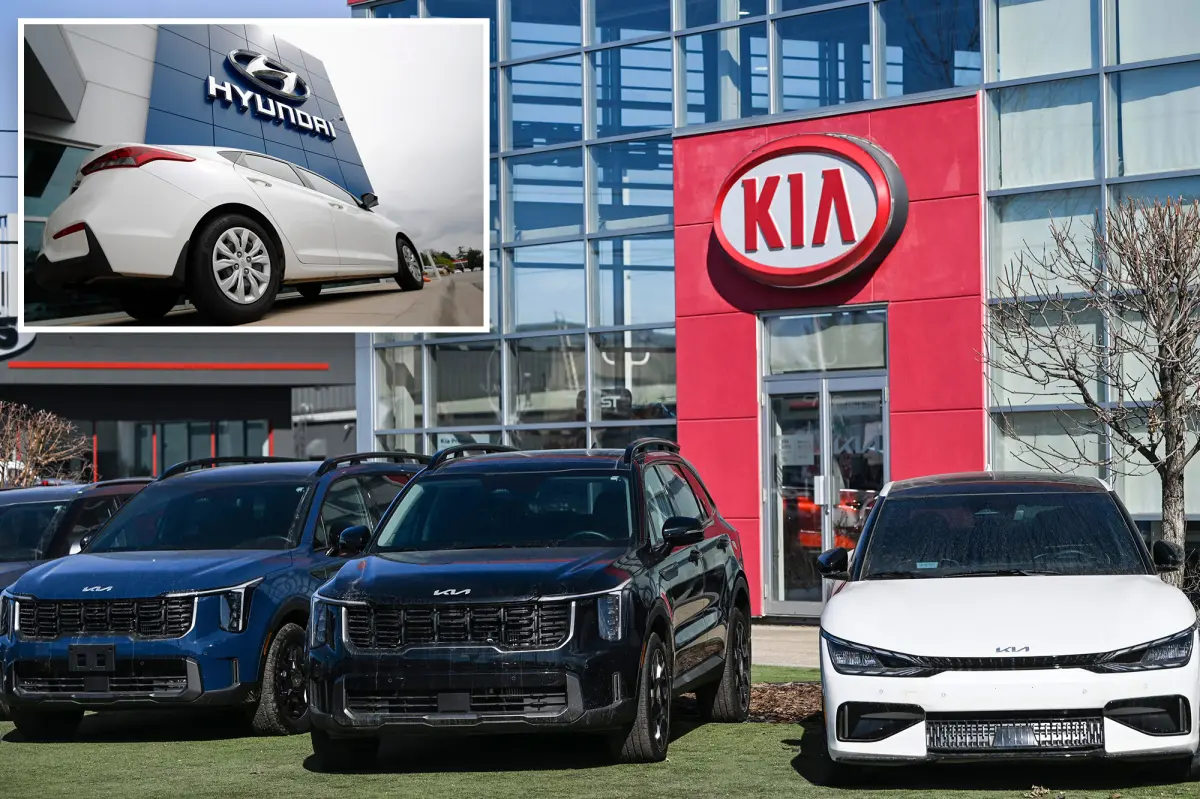
The list of eligible vehicles is extensive, covering many popular models from both manufacturers. For Hyundai, this includes the Accent (2018-2022), Elantra (2011-2022), Elantra GT (2013-2020), Genesis Coupe (2013-2014), Kona (2018-2022), Palisade (2020-2021), Santa Fe (2013-2022), Santa Fe Sport (2013-2018), Santa Fe XL (2019), Sonata (2011-2019), Tucson (2011-2022), Veloster (2012-2017), and Venue (2019-2021). Kia owners aren’t left out either, with eligible models including the Forte (2014-2021), K5 (2021-2022), Optima (2011-2020), Rio (2012-2021), Sedona (2011-2021), Seltos (2021-2022), Sorento (2011-2022), Soul (2020-2022), and Sportage (2011-2022). Owners can easily verify their eligibility by entering their vehicle identification number (VIN) on the settlement website, providing a straightforward path to potential compensation for their troubles.
The good news for current and prospective owners is that both manufacturers have taken significant steps to address the security vulnerabilities in their vehicles. By the end of last year, approximately seven million Hyundai and Kia vehicles had received anti-theft upgrades, substantially reducing their risk of theft through the methods popularized on social media. These upgrades include software updates and physical security enhancements designed to prevent the simple theft techniques that made these vehicles such appealing targets. The companies’ response, while perhaps slower than many owners would have liked, demonstrates a commitment to correcting the security oversight and protecting their customers from further victimization. The settlement serves not only as compensation for past harms but also as an acknowledgment that vehicle security should never be compromised.
For those who believe they qualify for compensation under this settlement, it’s important to note that claims can be submitted until March 31, 2027, giving victims ample time to gather necessary documentation and file their claims. Payments will be distributed on a rolling basis, meaning that affected owners could see compensation relatively quickly after submitting valid claims. While no amount of money can fully address the inconvenience, stress, and violation of trust experienced by theft victims, this settlement represents a meaningful step toward making things right. As vehicle technology continues to evolve, this case serves as a stark reminder of the importance of comprehensive security features in modern automobiles and the real-world consequences when such protections are overlooked. For millions of Hyundai and Kia owners, this settlement closes a difficult chapter and offers some measure of justice for an ordeal they never should have experienced.