





The Humble Sweet Potato Revolution: How a Simple Root Vegetable Became NYC’s Hottest Lunch Trend
In the heart of Midtown Manhattan, where lunch prices seem to climb higher with each passing day, a surprising culinary hero has emerged from the most unlikely of places: the sweet potato. This unassuming root vegetable—served whole, unadorned, and without even a sprinkle of salt—has become the latest cost-effective meal solution for inflation-weary office workers across New York City. From street carts to upscale delis, price-conscious professionals are happily spending just a few dollars on these plain roasted sweet spuds, embracing what might appear at first glance to be Depression-era fare. Yet this seemingly austere lunch option has garnered a passionate following, with devotees lining up from Rockefeller Center to Koreatown for what one viral food reviewer described as a world-rocking experience: “Mmmmm, it tastes like marshmallow.” Another social media influencer gushed about the natural sweetness, claiming that adding sugar would be “like diabetes,” as they unwrapped their toasty treat like a banana after purchasing it from a local market.
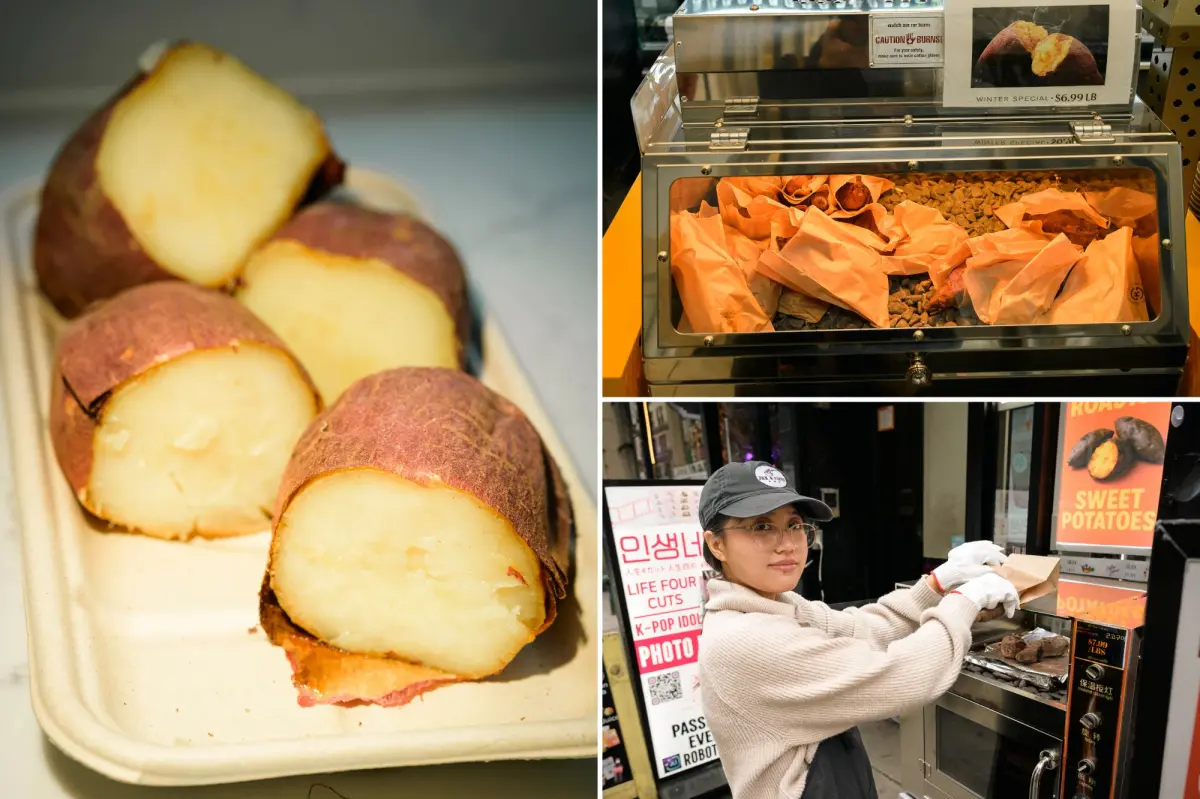
What might appear to Western eyes as a spartan subsistence meal actually represents a beloved winter tradition throughout East Asia. In Japan, Korea, and China, these minimalist munchies have long been street food staples, sold from convenience stores and steel drums on cold street corners. The appeal lies in their perfect combination of textures—crispy exterior giving way to a fluffy interior—and the natural caramelization that develops during roasting, creating a self-contained flavor bomb without any need for condiments or seasonings. Beyond their satisfying taste profile, these potatoes pack an impressive nutritional punch, offering significant amounts of beta carotene, vitamin C, and potassium. What began as an Eastern comfort food has now transformed into something of a Western culinary phenomenon, capturing the attention of millions through social media. Georgia-based food influencer Courtney Cook recently went viral with a video showcasing her “teacher’s lunch”—a sweet potato with a stick of cheese inserted into its steamy center—garnering over 10 million views on TikTok. “It’s just so wholesome,” Cook explained, “Something about a potato just fills me up and gives me a lot of satiety.”
This potato phenomenon is perfectly timed for New York’s current economic climate, where inflation has transformed even basic midday meals into budget-busting affairs. The commercial districts of Manhattan now feature fast food combos approaching $15, sad desk salads running nearly $20, and even the once-reliable dollar slice has inflated to $1.50 or more due to soaring ingredient costs. By stark contrast, a sweet potato represents an incredible value proposition—typically priced between $2-7 depending on size and venue, while offering a filling, nutritious alternative to conventional lunch options. Julie, a hidden café on West 32nd Street in Koreatown, has become one of the trend’s epicenters, with sweet potatoes visibly rotating in an oven display described by one observer as “vegan rotisserie.” At $7.99 per pound—translating to $2-3 per potato depending on size—these roasted gems cost roughly a third of what you’d pay for an unhealthy small order of fries at a Manhattan Five Guys. Taste testers described Julie’s offerings as soft, starchy and remarkably flavorful, with the caramelized skin containing an explosion of natural sweetness.
The Julie café has attracted numerous high-profile food enthusiasts, including NYC lifestyle expert Viveca Chow, who was captured in social media clips enthusiastically devouring a potato “the size of a duffel bag” while exclaiming, “I love the skin. That’s glorious.” The establishment has even been featured in dedicated “Sweet Potato Crawl” videos by online food influencers. Just down the street, H Mart, the popular Korean supermarket chain, offers its own take on the trend, selling sweet potatoes with particularly pillowy, sweet interiors reminiscent of candied apples. During January’s cold snap, customers appreciated how these potatoes doubled as hand warmers while providing a nutritious meal for just $6-7 for a two-pack—less than half the price of a typical salad bowl at trendy chains like Sweetgreen. The phenomenon extends beyond Koreatown, with even upscale venues joining the sweet potato movement. At Duke Eatery, an elegant deli across from Radio City Music Hall, roasted sweet potatoes are given pride of place at $6.99 per pound, frequently selling out during lunch rushes despite their substantial size (where “one is a snack, two is carb-aggedon”).
Not to be outdone, Mediterranean fast-casual chain Miznon, located in the Rockefeller Center concourse, offers its own elevated interpretation of the trend. Created by renowned Israeli chef Eyal Shani, Miznon’s sweet potato represents the luxury tier of this otherwise humble trend—roasted with honey and served with a side of sour cream for $5 (single) or $9 (double). While this pushes the price point slightly higher than its Korean counterparts, tasters deemed the splurge “downright delicious,” suggesting that even in its more gourmet incarnations, the sweet potato remains an affordable bright spot in Manhattan’s increasingly expensive lunch landscape. Office workers regularly queue up for these coveted root vegetables, only to face frequent disappointment when they sell out before the lunch rush concludes—perhaps the ultimate testament to how this simple, unadorned tuber has captured the hearts, palates, and wallets of New Yorkers seeking both comfort and economy in uncertain times.
This unexpected sweet potato revolution represents more than just a budget-friendly lunch trend—it stands as a cultural fusion, bringing Eastern culinary wisdom to Western economic challenges. In a city known for excess and extravagance, there’s something refreshingly honest about the embrace of such a fundamentally simple food. The sweet potato requires no marketing gimmicks, no elaborate preparation techniques, and no fancy packaging—just time, heat, and patience to transform it into something that satisfies on multiple levels. As inflation continues to reshape our relationship with food, perhaps there’s wisdom in returning to the basics: a naturally sweet, nutritionally dense, affordable root vegetable that has sustained civilizations for centuries, now finding new appreciation among Manhattan’s most discerning (and budget-conscious) diners.