


The Heartbreaking Plea of a Survivor
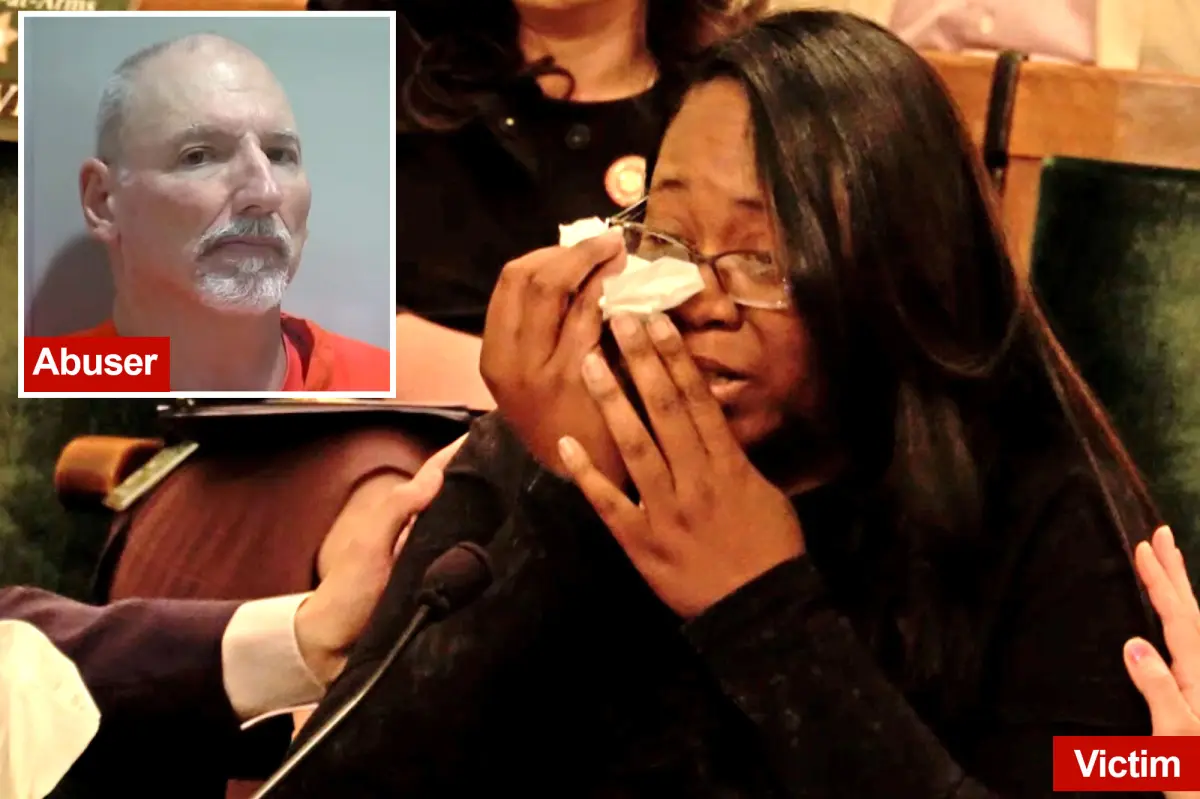
In the somber chambers of a California legislative committee, a courageous woman named Terena stood before lawmakers, her voice trembling as she recounted the unimaginable horror of her childhood. She wasn’t just a victim; she was a mother now, fighting to protect her own child from the shadows of her past. Terena’s testimony pierced the air, exposing what she fiercely called a “terrible law” pushed by California Democrats—a policy that allowed elderly criminals, defined as those aged 50 and over, to seek early parole hearings. This wasn’t an abstract debate; it was her lived nightmare, brought to life in front of elected officials who seemed shocked by the raw emotion pouring from her. As she spoke, tissues piled up beside her, a testament to the tears she shed for the innocence stolen from her so many years ago. Backed by public outrage that had been simmering for weeks, Terena’s appearance highlighted how this law had directly paved the way for decisions that endangered society. David Allen Funston, a notorious serial child rapist, had just been granted parole in February of that year, his release sparking fury across the state. Funston, then 64, had preyed on at least eight young children—seven girls and one boy—snatching them from the safety of their everyday lives to inflict unspeakable acts of molestation. The law, meant to address overcrowding in prisons and show compassion for aging inmates, had inadvertently created a loophole for monsters like him, who didn’t deserve a second chance. Lawmakers, facing mounting pressure from families affected by such crimes, listened intently as Terena’s story unfolded, humanizing the statistics of recidivism and reviving memories of a predator who had terrorized communities for decades. She embodied the resilience of survivors, yet her plea carried the weight of countless untold stories, urging legislators to confront the moral failings of a system that prioritized bureaucracy over justice. Terena’s presence wasn’t just about one bill; it was a rallying cry for accountability, reminding everyone that behind every law are real people—victims like her—who live with the scars long after the headlines fade. As the hearing progressed, her words echoed through the room, challenging the notion that age alone could redefine a criminal’s threat, and demanding that lawmakers act swiftly to rectify a policy that felt like a betrayal to those who had already suffered the most.
The Predator’s Reign and the Outraged Response
David Allen Funston’s history of predation was a chilling reminder of why some crimes demand lifelong confinement, regardless of graying hair or advancing years. Over the span of his criminal career, he had abducted and assaulted multiple children, leaving lasting trauma in his wake. Seven girls and one boy, many of them vulnerable and unsuspecting, fell prey to his calculated deceit. Funston would approach them with false charm—offering trinkets, sweets, or promises of fun—to gain their trust before spiraling into violence that shattered families and destroyed innocence. His offenses weren’t isolated incidents; they were patterns of deliberate harm, documented in court records that painted a picture of a man who thrived on power over the helpless. Yet, under the banner of elderly parole reforms enacted by Democratic legislators in California, Funston qualified for an early release hearing at age 60—and shockingly, succeeded at 64. This approval sent waves of outrage rippling through communities, with parents, survivors, and advocacy groups rallying against a system that seemed to prioritize rehabilitation for the elderly over protection for potential future victims. Social media erupted with calls for the law’s repeal, as people shared stories of their own brushes with crime, emphasizing how predators like Funston don’t simply age out of danger—they evolve in cunning. The public backlash wasn’t just anger; it was a collective outpouring of fear and disbelief, questioning how lawmakers could allow such leniency. For Terena and others like her, this wasn’t mere politics; it was a personal assault on their sense of safety. Funston’s freedom meant he could once again roam streets where children played, his past crimes a stark indicator that he hadn’t changed. Advocates pointed to studies showing higher recidivism rates among sex offenders, arguing that “elderly” provisions ignored the psychological depths of offenders like him. Families affected by similar cases shared heart-wrenching anecdotes, from sleepless nights worrying about relapses to the emotional toll on survivors rebuilding their lives. This outrage wasn’t partisan; it cut across ideologies, uniting voices from all walks of life in demanding tougher measures. As Terena testified, she embodied this frustration, her words amplifying the chorus of those who felt abandoned by a flawed justice system.
A Childhood Shattered in an Instant
Terena’s story began in the innocence of childhood, a time when the world should have been a playground of joy and discovery. At just seven years old, she was playing outside her home, carefree and oblivious to the dangers lurking in plain sight. That’s when David Allen Funston approached her for the first time—a stranger with a glimmering necklace, pretending to be friendly. He asked to take a picture, his smile disarming but his intentions sinister. When Terena hesitated, not drawn to him by his initial charm, Funston persisted, returning moments later with candy, a classic lure that preyed on her youthful curiosity and trust. Despite her instincts urging her to move away, he touched her inappropriately, his hands violating boundaries that a child shouldn’t even know exist. As she recounted this during her testimony, her voice broke, requiring long pauses to steady herself amidst sobs. The memory wasn’t dulled by time; it remained vivid, a scar that had shaped her outlook on the world. Funston escalated quickly, coaxing her into a nearby laundry room under the pretense of a harmless game. There, in that confined, shadow-filled space, he demanded to see her most private parts, his fingers tugging at her pants in a desperate, forceful attempt to expose and assault her. Panic surged through her tiny body as she realized the trap she had unknowingly entered, fleeing in terror back to the safety of her mother’s arms. Even as an adult, recounting this “worst day of my life” was excruciating, her emotions raw and unfiltered, as if the child within her still cried out for protection. This wasn’t just a storyTerena was reliving; it was a pivotal moment that robbed her of the carefree girl she might have been. The laundry room incident left deep psychological wounds, fostering years of anxiety, trust issues, and a constant vigilance that haunted her into adulthood. She described how the trauma lingered, impacting her relationships and self-worth, turning everyday encounters into potential threats. Yet, in sharing this, she showed immense bravery, transforming personal pain into a powerful public narrative. Through her tears, lawmakers glimpsed the long-term devastation of childhood abuse—the nightmares, the therapy sessions, the lifelong struggle to reclaim a sense of normalcy.
Tears and Testimony in the Spotlight of Justice
Standing at the podium, with lawmakers from both parties watching intently, Terena poured out her soul, her testimony a masterclass in vulnerability and strength. She spoke through sobs, each word heavy with the weight of unspoken suffering, as committee members handed her tissues and nodded in solemn support. “One of the worst days of my life,” she began, her voice cracking like brittle glass, drawing the room into the intimate details of her assault. At seven, Funston had been a wolf in sheep’s clothing—first the necklace photo, then the candy temptation, his hands creating a bridge to unwanted intimacy that left her scarred. The laundry room loomed large in her narrative, a claustrophobic prison where innocence dissolved into fear. She escaped that day, but the predator’s shadow never left, growing longer with each passing year. Now, at 30, Terena wasn’t alone in her pain; she had a child of her own, amplifying her dread. “Now 30 years later I’m hearing that my real-life boogeyman is able to get released early,” she implored, her plea resonating with the terror of every parent who fears for their kids. Funston, no longer just a name in newspapers, was a tangible threat, freed despite his history of targeting the vulnerable. Terena’s eloquence lay in her humanity—she didn’t just list facts; she humanized the abstract horror, making lawmakers confront the faces behind the victims. She paused frequently, composing herself as memories flooded back, her red eyes and trembling hands painting a picture of resilience forged in adversity. “He will never stop hurting children,” she warned, her voice steadying into resolve. “He is dangerous, he will always be dangerous.” This wasn’t hyperbolic; it was the hard-earned wisdom of survival, backed by her own experience and echoed by experts who testified that sex offenders rarely rehabilitate. As she continued, the room fell silent, her words bridging the gap between cold legislation and boiling emotions. Her testimony underscored the broader societal impact, reminding legislators that laws aren’t just ink on paper—they shape real lives, protecting or endangering. Terena’s bravery shone through, transforming her from victim to advocate, her story a beacon for change in a system often criticized for its inequities.
The Lingering Fear and Urgent Call for Change
Terena’s plea wasn’t just about her past; it was a prophecy of potential futures, fueled by the knowledge that Funston’s release meant unchecked danger for other children. As a mother herself, she grappled daily with the “what ifs”—what if he approached her own child, mirroring the tactics that ensnared her so long ago? This fear wasn’t irrational; it was rooted in the grim realities of recidivism, where offenders like Funston often reoffend, drawing on the same manipulative strategies that fooled her as a girl. “He will never stop hurting children,” she reiterated, her conviction unshakable, born from years of therapy and advocacy that taught her the unquenchable nature of such darkness. Funston’s parole felt like a personal betrayal, a “terrible law” that prioritized compassion for the accused over the safety of the innocent. She begged lawmakers to fix it, her voice rising in urgency, invoking the faces of eight victims whose lives were forever altered. Terena’s testament highlighted the psychological toll, not just on survivors but on society at large—schools wary of strangers, parks emptier after dusk, a collective paranoia that erodes trust. She shared how trauma had shaped her life, from fragmented relationships to ongoing counseling, painting a vivid picture of recovery that’s never linear. Yet, her courage stemmed from a place of love—for her daughter, for others who might suffer. Lawmakers listened, many visibly moved, as she humanized the debate, turning statistics into stories of loss and hope. Her words challenged the Democrats’ legislative intent, questioning how a policy meant to ease prison burdens could inadvertently facilitate more crime. Terena urged them to raise the age threshold, ensuring that only those 65 and older could seek such hearings, closing the gap that let Funston and others slip through. In doing so, she voiced the unspoken fears of families nationwide, where childhood safety feels increasingly precarious. Her testimony wasn’t merely emotional; it was a demand for justice, blending personal sorrow with societal responsibility, and pushing for reforms that honor victims rather than appease political expediency.
Courage Commended and the Path to Reform
Lawmakers responded to Terena’s harrowing testimony with profound admiration, praising her courage for stepping forward in a space where vulnerability meets power. Assemblymember Stephanie Nguyen, a Democrat authoring the bill to amend the “terrible law,” commended Terena as a beacon of strength, her story galvanizing support for the proposed changes. The legislation, which would limit elderly parole eligibility to those 65 and over, advanced through the committee with bipartisan nods, a rarity in today’s polarized environment. Nguyen emphasized that Terena’s words had shifted perspectives, illustrating the law’s unintended consequences and the urgent need for balance between mercy and protection. As the committee deliberated, members shared personal reflections, some admitting the emotional weight of confronting such testimonies head-on. Terena’s plea had ignited a fire, spurring swift action—the bill now heads to another committee, with lawmakers racing against the August deadline to send it to Governor Gavin Newsom before the legislative session ends. This moment marked a turning point, blending survivor advocacy with political will, as advocates like Terena transform personal trauma into policy victories. Praise flowed from across the aisle, with Republicans joining Democrats in affirming that her bravery underscored the human cost of flawed laws. For Terena, this wasn’t just about one man or one bill; it was validation, a step toward healing that millions of survivors seek. As she left the hearing room, surrounded by supporters, herImpact echoed, reminding everyone that change starts with a single voice. The ordeal highlighted the resilience of the human spirit, where one woman’s tears could reshape justice, ensuring that monsters like Funston face stricter scrutiny. In the days following, the California Post and other outlets amplified her story, sparking widespread discussions on social media and newsletters, urging readers to support reforms. Terena’s journey symbolizes hope, a testament to how personal narratives can drive systemic shifts, protecting future generations from the pains of the past. Governor Newsom now faces a bill that promises safeguards, inspired by the raw honesty of a survivor who refused to stay silent.