






Shocking Grocery Inflation: 1997 vs Today’s Prices Reveal a Stark Reality
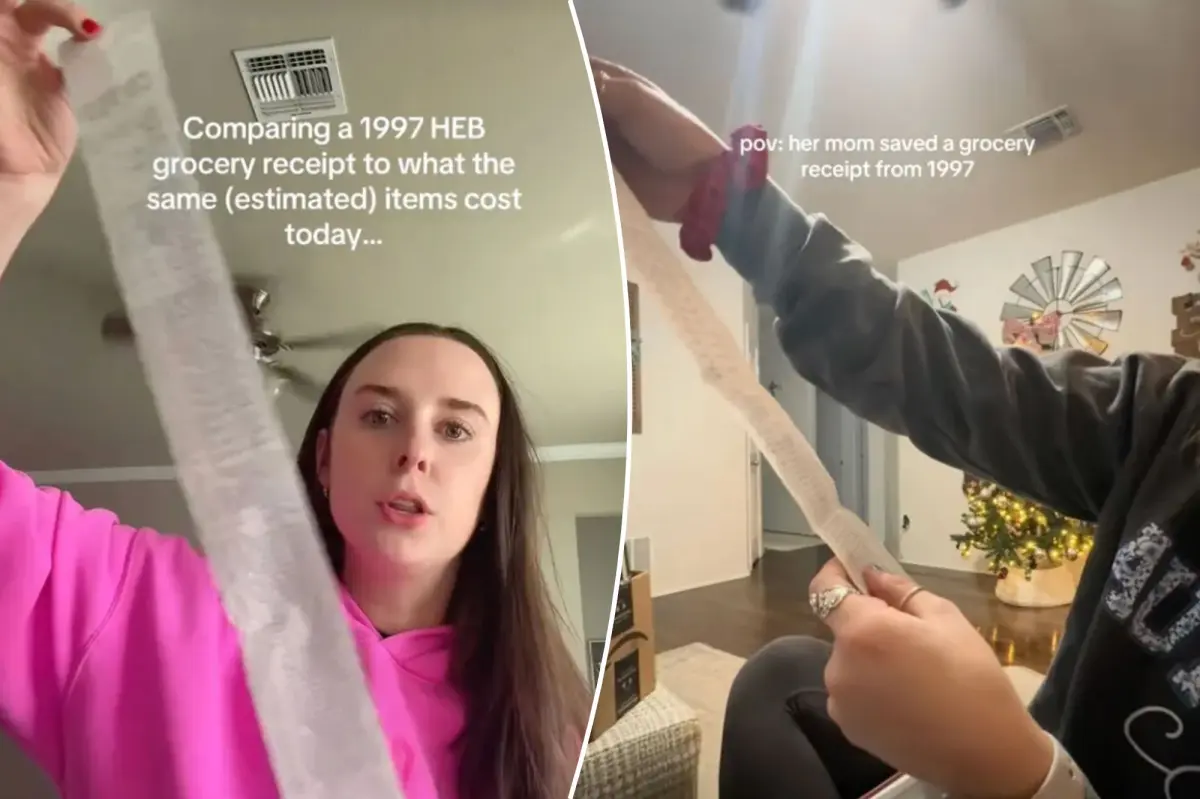
In a world where the cost of living seems to constantly increase, a recently discovered grocery receipt from 1997 has sparked both nostalgia and concern about how dramatically prices have changed in less than three decades. The viral revelation began when TikTok user Zoe Dippel shared a video after a family member uncovered an old H-E-B receipt dated June 20, 1997, tucked away in a box of mementos. The lengthy receipt, showing 122 items totaling just $155, has become a stark reminder of how much everyday necessities have increased in price while wages haven’t kept comparable pace.
“$155 for all of this!” exclaimed Dippel’s relative in the video, which quickly garnered millions of views. As Dippel read through the items and their prices, viewers were transported back to a time when grocery shopping didn’t cause financial anxiety. Little Debbie brownies for $1.09, Dannon yogurt for a mere 50 cents, and a loaf of bread for just $1.26 seem almost unbelievable by today’s standards. Perhaps most shocking were the baby products – Gerber baby food jars at 55 cents each and a jumbo pack of Pampers diapers for $12.99, compared to today’s prices of $1.57 and $29.97 respectively. Even fresh produce showed dramatic increases, with a one-pound carton of strawberries listed at $1.89 in 1997, while the same item today costs $3.97 at the same store chain. These examples paint a clear picture of how significantly costs have risen beyond the rate of income growth.
What makes these price increases particularly troubling is how they compare to wage growth during the same period. According to the US Census, median household income in 1997 was $37,005, while in 2024 it has risen to approximately $83,730 – roughly doubling over these decades. Meanwhile, many grocery items have tripled in price or more, creating a widening gap between income and essential expenses. This disparity helps explain why so many Americans feel increasingly squeezed financially despite earning nominally higher wages than previous generations. The receipt serves as physical evidence of what many have intuitively felt: that the purchasing power of the average household has significantly diminished over time.
Dippel’s follow-up video further illustrated this stark reality when she attempted to purchase the same 122 items online from H-E-B today. Though she noted the comparison wasn’t perfect since some products were no longer available, the total came to an astonishing $504 – more than three times the 1997 amount. This dramatic demonstration resonated deeply with viewers who shared their own observations about current grocery expenses. As one commenter poignantly noted, “$155 now is shampoo, conditioner, pads, frozen chicken nuggets, deodorant, spaghetti and some Oreos,” highlighting how far the same amount of money goes today compared to the 90s. Another observed that “A receipt that long nowadays would be minimum $400…. This is insane!!!”
The viral receipt has become more than just an interesting historical artifact – it has catalyzed conversations about economic pressures facing average Americans. For many viewers, the receipt represents tangible evidence of broader economic issues including inflation, wage stagnation, and increasing wealth inequality. What makes this particular comparison so powerful is that it deals with essential items that everyone needs to purchase regularly, making it immediately relatable across generational and socioeconomic lines. Unlike luxury goods or technology, where price changes might be justified by improvements in quality or capabilities, basic food items serve the same function they did decades ago, making their price increases feel particularly burdensome.
The emotional responses to Dippel’s videos reveal deep concerns about America’s economic trajectory. Comments ranged from nostalgic remembrances of easier financial times to expressions of genuine anxiety about the future. “America has fallen,” one viewer commented grimly, while another wrote, “It makes me sick to my stomach to see how expensive groceries have become.” These reactions highlight how inflation on everyday necessities creates not just financial strain but emotional distress for many families. As this 1997 receipt continues to circulate online, it serves as both a window to the past and a mirror reflecting current economic challenges – reminding us how dramatically the cost of living has changed within many Americans’ lifetimes. The viral nature of this simple shopping list demonstrates how personal economics often resonate more deeply than abstract economic indicators in helping people understand the changing financial landscape of American life.