






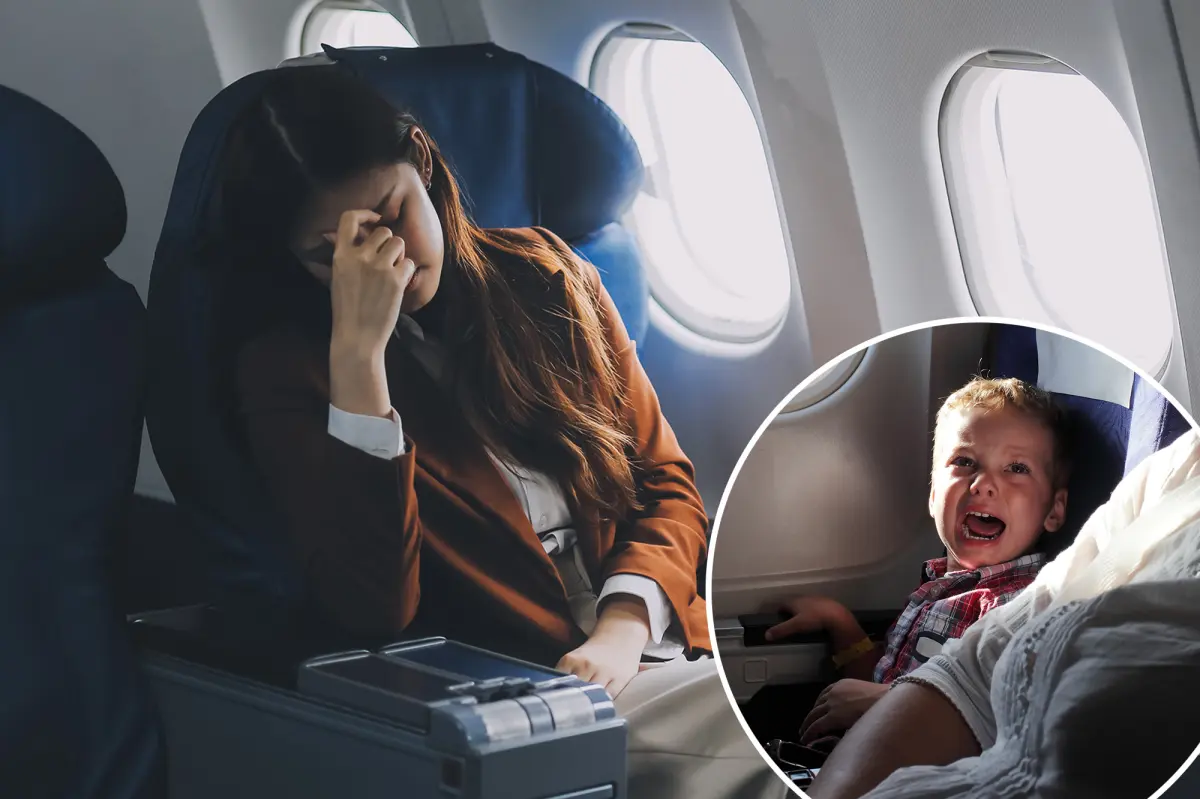
Imagine boarding a crowded flight after a long day, only to settle into your seat and feel the relentless thrum of a child’s foot hammering against the backrest like a tiny battering ram. It’s one of those maddening situations where everything about air travel already feels out of control—the delayed takeoff, the cramped space, the recycled air—and now, this irritation creeping in from behind. You’re child-free, navigating a world filled with families, and you start questioning if basic courtesy has evaporated mid-air. The frustration builds as minutes turn into what promises to be four endless hours, the child’s oblivious kicks escalating, while the parents seem blissfully unaware, chatting away without a glance back. It’s human nature to feel that spark of annoyance, that unfairness of being subjected to someone else’s lapse in parenting. But what do you do? Complain to a flight attendant who might shrug it off? Suffer silently while plotting your revenge through gritted teeth? I’ve been there, tapping my fingers impatiently, wondering how parents can tune out the chaos their little ones create. It’s not just a physical poke; it’s an emotional drain, a reminder that empathy and boundaries get tested at 30,000 feet.
Then, in a moment of bold resolve, this savvy flyer decided enough was enough. Calmly, but with unyielding firmness, she turned around, locking eyes with the parents. “One of you needs to switch seats because I’m not going to tolerate four hours of your child kicking my seat while you ignore it,” she declared, her voice steady, not hostile, but decisive. The shock rippled across the aisle—the dad, caught off guard, mumbled an apology and promptly moved his child to the middle seat, a strategic pivot that diffused the tension instantly. It was a masterstroke of direct communication, humanizing the conflict by addressing it head-on without escalating into a public screaming match or involving the flight crew unnecessarily. In her Threads post that later went viral, she captured the raw emotion: “BOOM, the shock.” It resonated because it wasn’t about hating kids; it was about expecting basic accountability. As someone who’s navigated similar petty annoyances on trains or buses, I admire the bravery to speak up, turning a passive-aggressive simmer into empowered action. It’s liberating, like reclaiming your personal space in a shared world, and it makes you feel seen and heard rather than just an unfortunate bystander.
This viral share ignited a firestorm of opinions online, a thousand voices chiming in about the delicate dance of parenting in public spaces, especially the high-stakes environment of an airplane. Parents and non-parents alike debated the fine line between leniency and responsibility, acknowledging that kids can be unpredictable whirlwinds, but that doesn’t entitle them to disrupt strangers’ peace. The flyer defended her stance: “I’m childfree in a childfilled world, but what I’m NOT gonna do is be inconvenienced by a lack of parenting.” It sparked empathy from those who’ve witnessed similar scenes—overheard tantrums in restaurants, seat-throwing on buses—examining how societal norms have shifted, where helicopter parenting sometimes morphs into absent supervision. One commenter praised the boldness, noting how it forces others to reckon with their roles, while another worried about the backlash against families traveling. It’s a human convo, ripe with anecdotes of “that one time” stories, blending humor, frustration, and a shared yearning for communal respect. On planes, where escape routes are literally closed off, these discussions highlight the vulnerability we all feel, urging a balance between nurturing kids and not letting them derail collective well-being.
Jumping in, seasoned parents shared their insider tactics for wrangling unruly kids in confined spaces like flights, offering a window into the relentless juggle of motherhood and fatherhood. One mom recounted a restaurant incident where her toddler erupted into screams; she swiftly covered the mouth and used her “mom voice” to hush them, emphasizing, “Having kids doesn’t give you the right to disrespect everyone in public spaces.” It’s a raw, honest admission of the pressure to perform perfectly as a parent, coupled with the self-awareness that misbehavior reflects back on you first. Another parent of two frequent flyers echoed appreciation for the flyer’s approach, stating kids don’t get a free pass just for existing—they need guidance, and consequences like seat changes teach lessons without drama. These stories humanize the trials of parenting, weaving in the exhaustion of travel with young ones, the guilt of judgment from outsiders, and the pride in preempting issues. It’s heartening to hear how proactive discipline fosters respect, not resentment, turning potential outbursts into teachable moments.
Beyond the pilots and copilot parents, other passengers piled on with their tales of thwarted disruptions, creating a chorus of relatable exasperation and unlikely victories. One recalled calmly asking a mother to intervene with a kicking child, only to hear her egg the kid on to “kick it harder”—a baffling moment that tested one’s restraint to not become a viral no-fly suspect. Another described invoking a flight attendant’s help for a seat swap after polite requests failed, marveling at the crew’s no-nonsense intervention. These accounts underscore the unpredictability of travel companions, blending dark humor with a plea for kinder skies. It’s cathartic to share, feeling less alone in the chaos, and it prompts reflection on our own interactions—do we speak up too soon or let grievances fester? In these confessions, there’s a human warmth, an understanding that while some parents excel, others might need a nudge, and in the end, it’s about forging a livable coexistence in the sky’s transient community.
Echoing these themes, a separate viral clip amplified the saga of on-board mischief, where a child’s adventurous hand kept closing a woman’s window shade from the row behind, rudely claiming “her” view. With seductive tropical imagery overlaid and the caption “POV: the kid in front of me thinks he can close MY window shade,” the video racked up millions of views, sparking giggles and groans. Commenters adored the passive-aggressive sass, one noting the absurdity of the child’s outstretched reach. It parallels the kicking kerfuffle, spotlighting how kids, unburdened by inhibition, turn flights into mini-adventures for everyone involved. These stories remind us of the joys and perils of air travel’s wild card—children—blending innocence with inconvenience. Ultimately, whether it’s seats or shades, it’s a reminder to communicate clearly, parent mindfully, and approach disruptions with humanity, turning potential irritants into memorable, if exasperating, narratives that unite us in the flying trapeze of life. In totaling around these tales, we see the rhythm of travel: unpredictable, frustrating, yet profoundly connective in our shared quest for harmony aloft.
As we reflect on these airborne adventures, it’s clear that flights aren’t just journeys but platforms for social commentary on etiquette, empathy, and endurance. The flyer’s bold stand against seat-kicking championed dialogue over misery, while parents’ disclosures revealed the inner workings of managing mini mayhem. Relatable horror stories from fellow travelers added layers of shared exasperation, and the window shade drama capped it with whimsical rebellion. Collectively, these anecdotes humanize the grind of travel, urging us to prioritize respect in tight quarters. Child-free or otherwise, we all deserve a peaceful ascent without unwanted kicks or shades of interference. It’s about balance—extending grace to parents and kids alike while safeguarding personal comfort. In the end, these viral confessions foster community, turning discomfort into dialogue and reminding us that a little kindness and directness can transform turbulent skies into tolerable tales. Flying with kids teaches us all about patience, boundaries, and the unexpected bonds forged in transit. So next time turbulence hits from behind, maybe take a page from these sharers: address it calmly, switch if needed, and relish the story you’ll tell. Air travel, with its quirks, becomes not just a mode of movement but a mirror to our collective humanity, ever adaptable and resilient in the face of tiny feet and reaching hands. And in that reflection, we find solace, laughter, and a renewed commitment to coexisting gracefully, one flight at a time. Every bump and kick is a chapter in the larger narrative of public spaces, where individuals assert their space without malice, and families learn to navigate with awareness. It’s empathetic yet firm, avoiding blanket judgments while celebrating proactive steps. These conversations online parallel the in-flight dynamics, highlighting how digital platforms echo real-world airs, amplifying voices for better shared experiences. Embracing this, we can all aim for smoother voyages, where inconvenience breeds understanding rather than animosity.
In the grand tapestry of frequent flyers, these incidents illustrate the diverse tapestries we weave when crammed into metal tubes hurtling through the stratosphere. One storyteller’s tenacity becomes another’s cautionary tale, inspiring gentler skies. It invites us to ponder our roles—passenger as activist, parent as educator—and fosters awareness that flights are communal ventures requiring mutual courtesy. By humanizing these scenarios, we unearth not just frustrations but opportunities for connection, turning potential divides into bridges. As someone who’s battled earbuds with screaming toddlers or elbows from dozing neighbors, I appreciate the gist: speak up kindly, expect accountability, and remember we’re all just trying to get somewhere safely. These stories resonate because they’re universal, touching on themes of control and surrender in an uncontrollable world. Ultimately, they encourage a kinder, more communicative approach to travel’s tribulations, where a simple seat swap or shade tug becomes emblematic of broader patience. In retelling, we honor the human element—the fatigue, the humor, the resolve—and emerge with hope for more harmonious miles above. Keep flying respectfully, folks; the world’s a turbulent place, but our responses can make it navigable.