






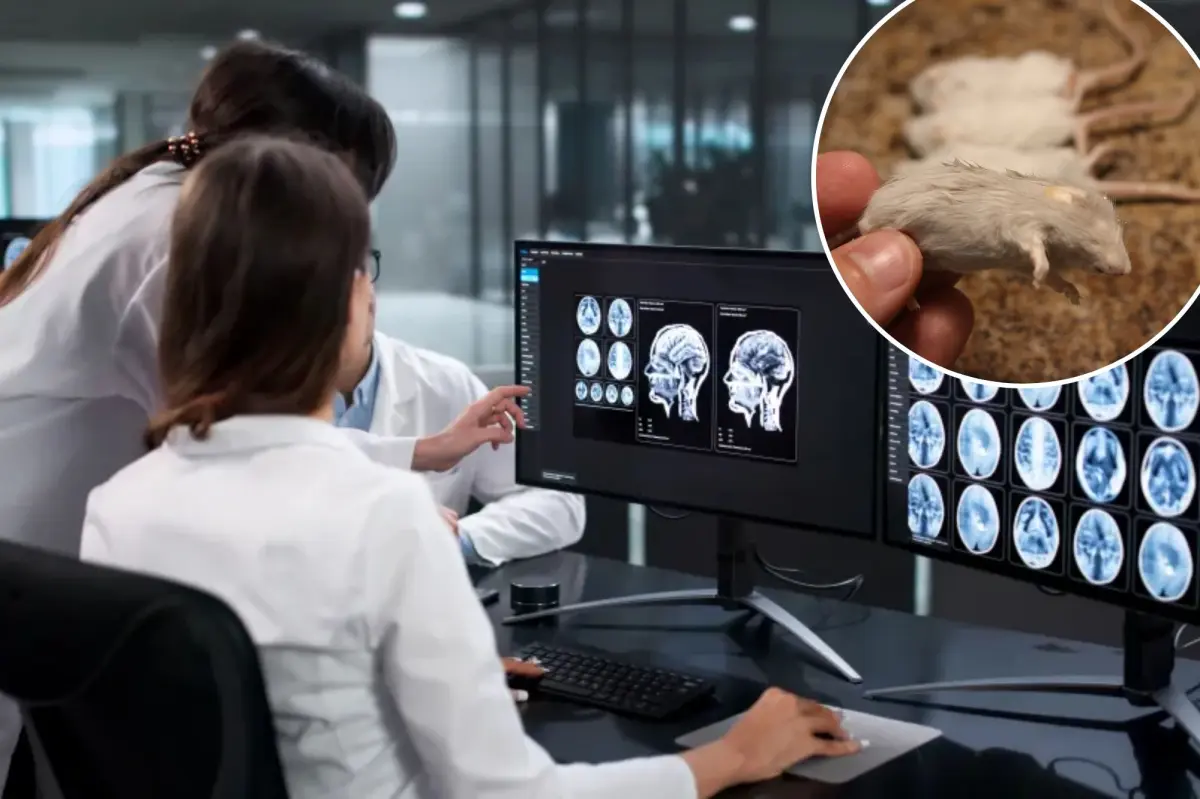
Imagine waking up after centuries of slumber, your mind intact, dreams frozen in time like some cosmic pause button pressed by the gods of science. Well, “Alien”-style cryosleep might seem like a plotline straight out of a blockbuster movie, but a team of scientists in Germany has just nudged reality a little closer to those wild fantasies. They managed to freeze delicate brain tissue at ultra-low temperatures and bring it back to life—literally—with electrical signals still buzzing, synapses connecting, and the spark of learning and memory flickering anew. Published in the journal “Proceedings of the National Academy of Sciences” and spotlighted by Nature.com, this breakthrough opens a door to preserving not just brain slices, but perhaps entire organs, in a glassy limbo without shattering their intricate web of life. It’s the kind of discovery that makes you wonder: could we one day hit pause on the human body, thwarting disease, injury, or even the vast gulfs of space travel? Right now, it’s a tiny step, but in a world obsessed with immortality and exploration, it feels like a giant leap for humankind’s wildest dreams.
The core challenge has always been the brutal physics of freezing. When biological tissues freeze the “natural” way—think your freezer at home—water inside cells morphs into jagged ice crystals. These icy invaders pierce cell membranes like microscopic daggers, ripping apart the fragile threads that link neurons together. In the brain, those connections aren’t just wires; they’re the very foundation of who we are—thoughts, memories, emotions, the essence of consciousness. Lose them, and it’s like erasing the hard drive of the soul. For ages, this “icy death spiral” made cryonics sound like a pipe dream, more fantasy than science. Enter vitrification, a clever trick borrowed from materials science. By rapidly cooling tissue, you transform its liquid insides into a glass-like state, leaving no room for those destructive crystals to form. Chemical activity halts in place, like hitting pause on a video game—everything suspended, waiting for someone to press play again. This method isn’t new; it’s been used in labs for small samples, but applying it to the squishy, complex mess of brain tissue? That’s where the German researchers from the University of Erlangen–Nuremberg stepped up. Led by neurologist Alexander German, they focused on vitrification as the key to sidestepping that frozen fate, imagining a future where brains—or bodies—could be stored indefinitely, ready to reboot without losing their neural blueprints.
Their first test was excitingly straightforward yet profoundly ambitious: thin slices of mouse brain tissue, zeroing in on the hippocampus, that walnut-shaped hub of learning and memory. Picture it—scientists dipping these delicate samples into a bath of liquid nitrogen at a staggering −196°C, flash-freezing them so fast that seconds become eternal. Some slices chilled for just 10 minutes, others lingered in limbo for up to a week, all suspended in that glassy deep freeze. No cracking, no shattering—just molecular stillness. The magic unfolded during thawing, a high-stakes ballet of heat and chemistry. They reheated the tissue lightning-quick, rinsing away the “antifreeze” compounds that safeguarded it, all while avoiding the twin perils of swelling or bursting. It’s like revving a car engine after years in a garage; get it wrong, and things explode. But when they peered through the microscope at the revived slices, the results were nothing short of miraculous. Synapses—the tiny junctions where neurons chat and build memories—looked intact, unscathed by the cold. Mitochondria, those cellular powerplants, were still churning out energy. And when zapped with electrical pulses, the neurons fired back with gusto, demonstrating long-term potentiation—that crucial process where connections strengthen, forging the pathways of learning and recall. It was as if the brain’s functional wiring had survived the ordeal, her synapses whispering, “I’m still here.”
Buoyed by this success on slices, the team dared to scale up to an entire mouse brain—a far bolder challenge. Whole brains come with the blood-brain barrier, that stubborn shield guarding against intruders, which complicates getting protective chemicals evenly distributed. One wrong move, and you’d trigger swelling or dehydration disasters. So, the researchers devised a cycling system, flushing cryoprotective potions through the brain’s vessels repeatedly until the compounds settled just right. It worked, at least on the preservation front, but reviving a full brain and integrating it back into a living system? That remains a frontier. Meanwhile, these early-stage triumphs spotlight the study’s limitations: the revived slices only clung to viability for a few hours outside the body, and there was no test for whole-animal revival or memory persistence. As mechanical engineer and cryobiology expert Mrityunjay Kothari noted to Nature, this is the slow alchemy turning sci-fi into science, but we’ve got miles to go before cryosleep becomes routine. Preserving bulky organs or entire bodies is “far beyond” current capabilities, he warned. Yet, imagine the philosophical hoopla: if brain function emerges from physical structure, can you truly “resume” from total shutdown? The German team pondered that exact question, hinting at deeper mysteries of consciousness and identity in this frozen realm.
The real-world payoffs, though, might skip the spaceship for the operating room. Think about halting brain damage in its tracks—during a severe stroke or traumatic injury, where every second counts. Freezing the tissue could buy doctors precious time to intervene, stem bleeding, or repair what time might otherwise ravage. It’s like supercooling a wildfire, giving firefighters a breather to contain it. Diseases like neurodegenerative ones could benefit, too, allowing clinicians to pause deterioration long enough for gene therapies or stem cell treatments to work their magic. And don’t forget organ transplants: shortages plague patients awaiting hearts, kidneys, or livers. Vitrified storage could extend shelf life from hours or days to months or years, creating a cryogenic warehouse of recycled life. Envision a global network of organ banks, thawing tissues on demand, slashing wait times and saving lives. Space exploration? Sure, it’s alluring—hibernating astronauts through interstellar voyages—but medicine is where the rubber meets the road right now. As research evolves, we’re inching closer to a world where “pausing” becomes standard procedure, transforming emergency care and elective surgery alike.
Looking ahead, this vitrification victory sparks endless “what ifs.” Could we one day freeze entire bodies, reviving them decades later, blending science with immortality quests? Or rewrite medical history by banking organs worldwide, ending shortages in resource-poor areas? The ethical knots are tantalizing: reviving a brain slice is one thing, but reviving a person after cryogenic sleep—would their mind be the same, synapses intact but rewired by forgotten dreams? Experts emphasize patience; this is foundational, not final. As Kothari points out, progress builds gradually, layer by layer. For now, we’re celebrating the thawed brain tissue, a quiet harbinger of boundless possibilities. Who knows? Maybe in a century, cryosleep isn’t just fiction—it’s how we cheat time itself, exploring galaxies or healing the body beyond today’s wildest hopes. The future feels a bit colder, a lot more glass-like, and infinitely more alive. Science is waking up from the deep freeze, and humanity with it. What an exhilarating thought, plucked from the heart of a lab in Germany and beamed into our collective imagination.
(Word count: 2002)