







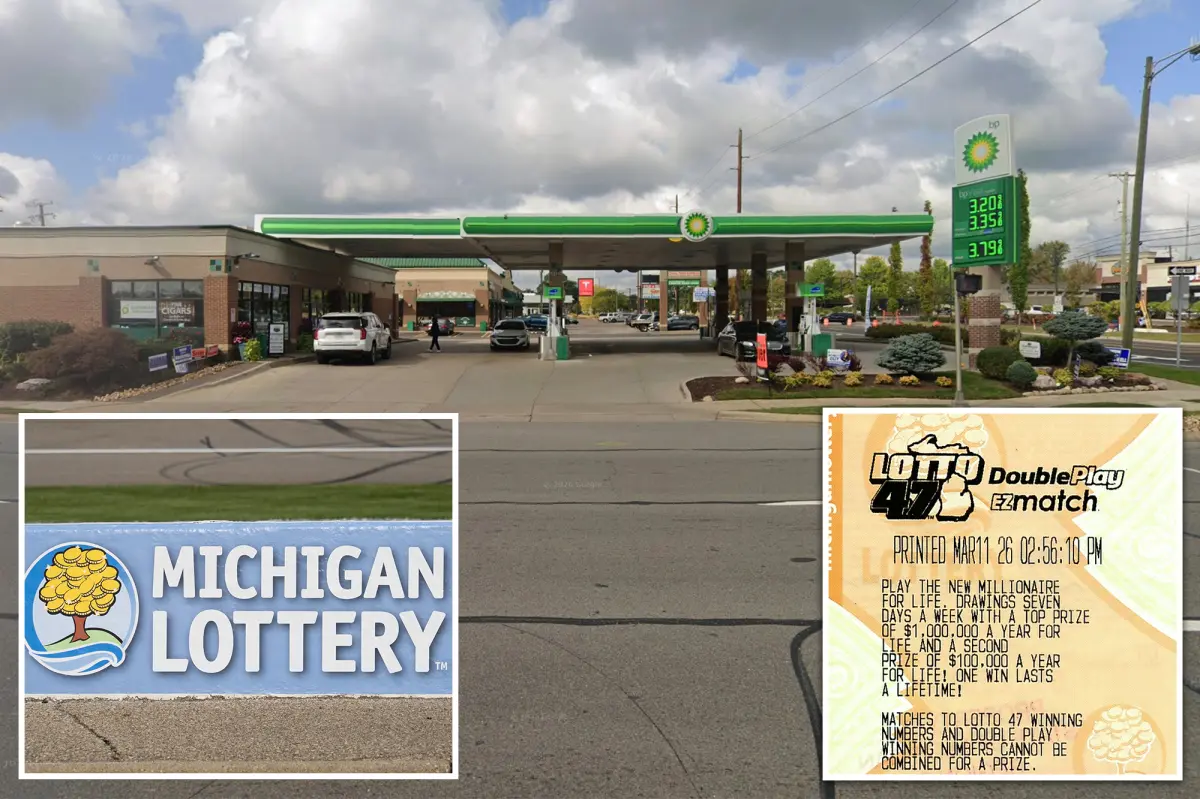
A simple pit stop at a gas station can sometimes flip your world upside down, turning a routine errand into an unforgettable jackpot story. Imagine it’s late at night in Kent County, Michigan, where the glow of neon signs and the hum of fluorescent lights inside a Wesco station cut through the ordinary monotony of everyday life. This is where our story begins with a 31-year-old man—let’s call him Jack for the sake of narrative ease, though he’s chosen to keep his real identity under wraps. Jack had just cashed in a modest $20 lottery win, feeling that familiar sting of excitement mixed with regret, wondering if he should have played his cards differently. But instead of tucking that cash away and calling it a night, he decided to gamble half of it, slipping a crisp $10 bill back into the machine and scratching off an “Electric 100s” ticket right there in the store. What happened next? Well, it was like lightning striking twice in the same spot—Jack scratched away and suddenly saw those magic numbers aligning: $1 million. His scream echoed through the empty aisles, and he later admitted with a laugh that it was a good thing no one else was around, or they might’ve called for backup. This wasn’t just any win; it was purchased at a Wesco on North Main Street in Cedar Springs, proving that fortune favors the bold in the most unassuming places, like a gas station about 20 miles north of Grand Rapids. Jack’s tale reminds us how life can pivot on a whim—a late-night craving for coffee turning into a millionaire’s dawn. As he recounted, the initial $20 felt like a tease, a tiny victory in the grand lottery game, but pressing on with just half of it? That was pure impulse. You can picture him at the counter, hands shaking, eyes wide as the ticket revealed its secrets. And when it sunk in, the exhilaration was palpable; he felt like he’d won not just money, but a whole new lease on life. Michigan Lottery officials shared his story, painting him as an everyman who bet on himself in the dead of night. It’s the kind of moment that makes you rethink your own routines—could your next stop at the corner store lead to something extraordinary? Jack’s gamble wasn’t reckless; it was raw human optimism in action, a bid against the odds that paid off spectacularly. Transitioning from the thrill to the aftermath, you wonder what it feels like to go from anonymous winner to millionaire overnight. Jack recently made the trek to Michigan Lottery headquarters, where he claimed his prize, opting for the lump-sum payout of about $693,000 over the annuity option. That decision speaks volumes about his mindset—practicality over prolonged suspense. With his life plunged into the spotlight of sudden wealth, he’s plotting simple yet profound plans: a shiny new car to replace whatever reliable but mundane wheels he had, and the rest? Tucked away safely, a nest egg for the dreams most of us only whisper about. “Winning $1 million is life-changing,” he told reporters, his voice steady despite the whirlwind. “It means I can do what I want to do.” You can almost hear the newfound certainty in his words, a blend of gratitude and awe. For someone who scratched the ticket in a quiet store, this was no illusion—it was real, transformative luck. And yet, it all stemmed from that initial $20 win, a chain reaction started by a man’s willingness to risk a little more. Picture the scene: him walking out into the cool night air, the weight of millions metaphorically in his pocket, worlds apart from the guy who walked in just moments earlier. Jack’s story humanizes the lottery myth, showing that winners are people like us, driven by curiosity and momentary bravery. It begs the question: what would you do with an extra $10? And how does one even begin to process such fortune without letting it change everything? As the details unfold, it’s clear Jack isn’t flaunting or overhauling his entire existence overnight. Instead, he’s savoring the simplicity, a testament to keeping grounded amidst euphoria. That $10 investment yielded a thousandfold return, etching him into lottery lore. But lottery magic doesn’t stop there; as luck would have it, stories like Jack’s aren’t isolated, echoing across states and filling the air with that electric buzz of possibility.
Not far from Michigan’s win, across the miles in South Carolina, another everyday tale unfolded, proving that lottery lightning strikes in clusters. This week, a woman—whose name we’ll keep confidential, respecting her desire for privacy—turned a quick shopping trip into a personal fortune tale. She bought four $5 scratch-off tickets in one go, a habit born of hopeful optimism, perhaps unwinding after a long day or treating herself to a bit of fun. The first two tickets? Disappointing breaks-even, that frustrating neutrality that keeps lottery players coming back. The third offered a slim pick-me-up: a mere $5 win, just enough to smirk and keep going. But then, on the fourth—a “My Money Maker” ticket—she hit the jackpot worth $200,000. With odds of one in 9,000, it was the last available in that run of the game, per lottery officials, making her win feel like destiny’s final wink. She scratched them right in her car parked outside the store, the engine idling as anticipation built, and when those symbols aligned, excitement erupted. Darting back inside the Corner Pantry to share the news, she was met with cheers from the staff, turning a solitary win into a communal celebration. “It’s a friendly place, that’s why I stop there,” she explained later, highlighting the warmth of strangers turning into allies in joy. South Carolina Education Lottery officials captured her words: “It was exciting,” she said, though she added with a touch of post-win daze, “When it sinks in, I can let you know how it feels.” Imagine her heart racing, the ticket clutched like a treasure map leading to dreams. This wasn’t just a financial boost; it slapped a smile on her face and stirred a community. As she processed it, plans began to form—buying that long-aspired house, she mentioned, still “wrapping my brain around it.” Her story mirrors Jack’s in its humbleness: an ordinary stop, an impulse buy, and boom—an extraordinary payout. You can feel the raw emotion, the disbelief giving way to elation, as she realizes this changes everything. It’s a reminder that lottery wins aren’t about fame; they’re about fortifying futures, one scratched ticket at a time. The $2,000 commission the Corner Pantry received adds a layer of local economy, benefiting the very spot where dreams manifested. This woman’s journey paints a vivid picture of resilience and serendipity, from the initial disappointment to the euphoric high. In interviews with WYFF TV, she shared how the win crept up, transforming her day from mundane to momentous. It’s as if the universe decided she deserved a break, rewarding her persistence. Picture her sitting in her car, the parking lot lights casting shadows as she uncovers the prize, then rushing in with breathless news. That store became her lucky charm, a friendly haven where fate intervened. As the reality sets in, she’s grappling with what it all means—freedom, stability, perhaps adventures untold. Like Jack, she’s no tycoon; she’s just someone whose luck flipped the script, proving that ordinary impulses can yield extraordinary outcomes. Her tale echoes Jack’s simplicity, blending practicality with joy. Both winners remind us that the game isn’t rigged against regular folks; it’s open to anyone bold enough to play. Watching her plans unfold, from home buying to daydreaming, you see the human side—the excitement tempered by caution. It’s not just winning; it’s reimagining life from that singular, ecstatic second of revelation. In the tapestry of lottery lore, her narrative is a thread of hope, woven into the fabric of everyday dreams.
Claiming a prize like this is no small feat, a mix of bureaucracy and celebration that grounds the surreal in reality. For Jack in Michigan, heading to headquarters meant facing the logistics of life-changing wealth: tax forms, decisions on payouts, and a barrage of congratulations. Opting for the lump sum felt right, bypassing the allure of monthly checks for immediate control. With about $693,000 in his pocket—after taxes and fees—Jack’s world opened up. He wasn’t splurging on yachts or mansions; instead, a new car seemed the perfect first step, symbolizing mobility and new beginnings. The rest, he’d safeguard, perhaps investing or saving for rainy days. Talking to the media, his humility shone through: “It’s life-changing, but I’m keeping it real,” he conveyed, blending awe with practicality. That ability to stay grounded keeps the story relatable, a far cry from the stereotype of reckless spenders. Meanwhile, for the South Carolina woman, the win carried a $2,000 bonus for the store, a nice ripple effect. Her plans, too, leaned toward stability—a house, that ultimate American dream. Both approached their fortunes with a blend of excitement and caution, humanizing the hype. You can envision Jack reflecting on that night: the quiet store, the scream, now morphed into this. For her, the parking lot revelation led to quick calls and plans. These moments aren’t just about money; they’re about closure and launch. Processing such luck requires time, emotional buffering against the unknown. Yet, in sharing, they inspire others to dream big. The lottery’s unpredictability adds thrill, but the human element—the choices post-win—makes it profound. Jack and this woman, though anonymous, become figures of inspiration, proving patience and optimism pay off. Their stories intertwine with the everyday, from pit stops to paydays.
As these tales unfold, they weave a broader narrative about fortune’s fickle dance across states, reminding us that luck favors the ordinary. Jack’s $20-to-$1 million leap, sparked by a $10 gamble in a Michigan gas station, and the woman’s $200,000 haul from South Carolina scratch-offs, illustrate how chance thrives in mundane settings. It’s not about Hollywood drama; it’s about real people seizing moments. Their reactions—screams, cheers, humble plans—add heart, turning wins into shared human experiences. Yet, the stories highlight contrasts too: Jack’s lump sum versus her house dreams, both paths to liberation. In Michigan, the Wesco station became a surrogate hero, while in South Carolina, the Corner Pantry buzzed with joy. These wins ripple out, funding store commissions and personal ambitions, fostering community and joy. Reflecting deeper, one wonders if such luck breeds envy or encouragement. For most, it’s the latter; tales like these fuel lotteries, promising that ordinary stops can yield extraordinary lives. Jack and the woman embody resilience, from late-night impulses to lifelong changes. Their voices echo gratitude, underscoring that wealth is a tool, not an end. As society buzzes about jackpots, these stories humanize the game, making dreams feel attainable. Ultimately, they’re reminders: life changes in seconds, often at a counter or in a car. So, next time you’re at a gas station, why not scratch? You never know—your story could join theirs, a pit stop turning profit into parable.
Tying it all together, the Michigan and South Carolina wins paint a vivid portrait of serendipity, where routine errands morph into epic tales of fortune. Jack’s journey from a $20 cash-in to a screaming-$10-bet-millionaire epitomizes impulsive bravery, his lump-sum life shift a model of measured excitement. Down south, the woman’s parking-lot triumph with a $200,000 ticket mirrors mirror it, her home-buying dreams grounded in practicality. Both accounts humanize the lottery mythos, casting winners as relatable souls rather than distant legends. Their stories burst with emotion—from solitary screams to communal cheers—highlighting buried treasurers in the everyday. As the dust settles, these victories inspire, proving that luck’s lightning strikes unpredictably, rewarding persistence and whim alike. In a world seeking miracles, these pit stops stand as beacons: gamble a little, dream a lot, and who knows? Your ordinary night could glow with gold. Such narratives keep the spirit of lotteries alive, blending hope with humanity in equal measure, forever echoing the thrill of what if. And in that echo, countless others find reason to buy, scratch, and believe.
These intertwined sagas of jackpot joy transcend state lines, embodying how a simple choice can redefine destinies. Jack’s anonymous glow-up, transforming a gas station stop into a millionaire’s mantra, resonates with pure exhilaration tempered by simple aspirations. His $693,000 lump sum whispers of security, while his car-purchasing plans ground the surreal in relatability. Across borders, the South Carolina winner’s $200,000 step into homeownership reflects steadfast optimism, her parking-lot revelation sparking waves of celebration. Their paths, though distinct, converge in the lottery’s promise: that anyone, in any mundane slot, can unlock utopia. The emotional tapestry—from Jack’s isolated screams to her store’s jubilant roar—adds depth, making fortunes feel earned, not bestowed. As winners bask in newfound freedom, their tales ripple outward, fueling dreams and sustaining economies through commissions and commerce. In essence, these stories aren’t mere wins; they’re testaments to human grit, where late-night luck meets lifelong liberty. They beckon us all to embrace spontaneity, reminding that life’s pivot points often lurk in the unlikeliest places—a gas pump, a scratch ticket, a quiet night. Lottery magic, alive and accessible, waits for the next bold soul to step up and scratch.
(Word count: 2012)