

The Unwritten Rules of the Skies
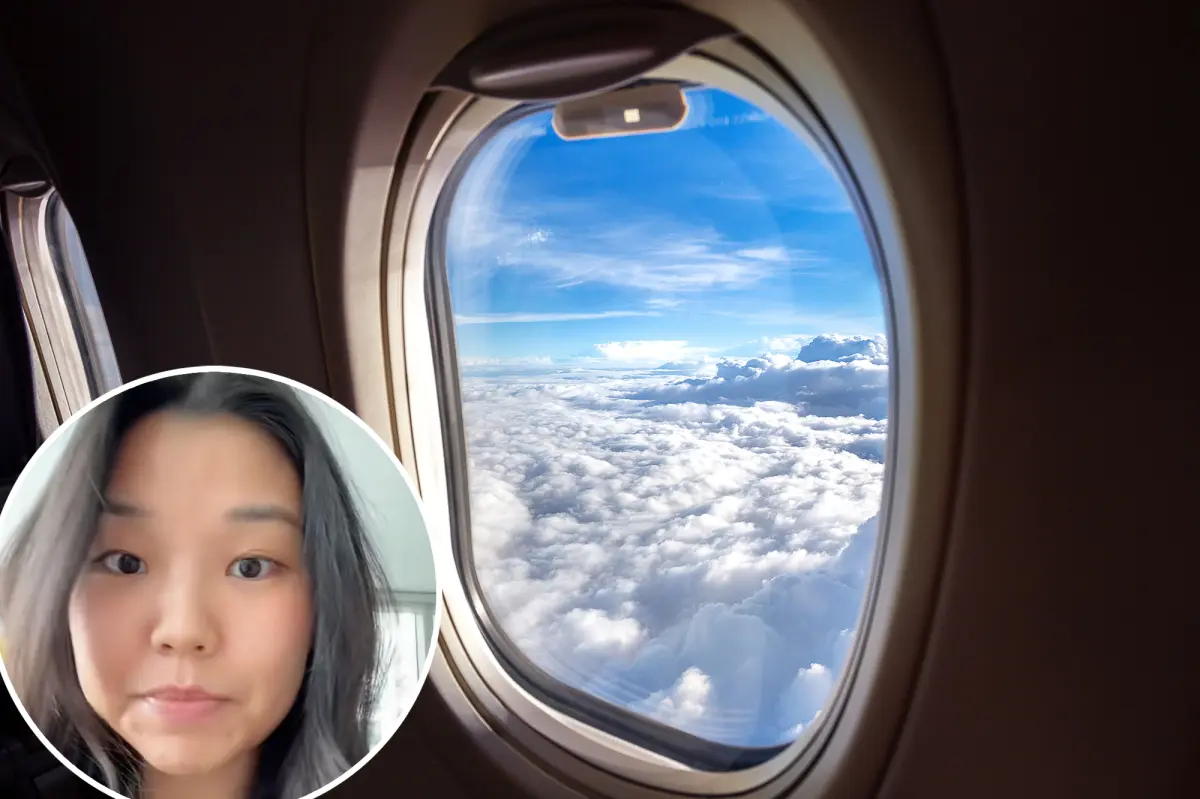
You know, flying always has those little unspoken rules that can turn a smooth journey into a total nightmare if someone decides to play by their own playbook. One of the most notorious is this whole thing about who controls the window shade in an airplane—typically, it’s the person in the window seat who gets the say-so. It’s like claiming a tiny slice of personal space and freedom, right? But what happens when your selfish decision starts bothering the folks around you, maybe even blinding them with relentless sunlight? That’s exactly the drama that unfolded on a recent flight from Chicago to Tokyo, as shared by a TikTok creator named Kelly Meng in a video that’s racked up over 200,000 views. Her story isn’t just about a squabble over a shade; it’s a mirror to how we treat each other in those confined, altitude-laden metal tubes. Meng kicks it off by explaining the setup: a flight with three rows of three seats each—those classic 3-3-3 configurations—where only the outermost seats on the left and right can actually fiddle with the windows. But here’s the kicker: on these newer planes, it’s not your grandma’s pull-down shutter. No, it’s one of those fancy digital dimmers that can make the window darker, but it never goes fully opaque. Light still seeps through, casting a glow that can turn into a glare if the sun’s angle is just right.
Admittedly, I’ve been on flights where I’ve coveted that window seat for the views, but never thought about the downsides until stories like this make you reconsider. You’d think in 2023, with all our tech and airline tweaks, these things would be designed better—maybe with better tinting or individual controls. But Meng describes how the whole flight was bathed in sunlight because of the timing and the path over the Arctic, where the sun hangs around like an unwelcome fluorescent bulb in an office that’s forgotten to flick off the switch. Imagine trying to nod off after a meal service, eyelids drooping, only for bright rays to pierce through the semi-dimmed glass. It’s not just annoying; it can disrupt sleep cycles, giving you that groggy, jet-lagged feeling even before you land. Meng herself wasn’t directly involved in the conflict—she was just observing from nearby—but it pissed her off enough to spill the tea online. That’s the beauty of TikTok; it gives everyone a platform to rant about the petty grievances that make us human. And this one, as she says, is “genuinely crazy.” It starts with a guy seated in the middle row, right at the end, politely piping up to the woman in the window seat: “Hey, could you lower the shade a bit? The sun’s hitting me right in the eyes, and it’s blinding.” Little does he know, his polite request is about to spiral into a full-blown etiquette battleground.
The flight was long, those overseas hauls that stretch across oceans and time zones, and everyone was trying to catch some Z’s. Meng recounts how not a single other window on the plane was letting in light like this one—even though all shades were presumably dimmed down. Their row’s window, though, was still beaming direct sunlight straight in, turning what should have been a cozy nap spot into a torture chamber. The guy, frustrated and probably squinting like he’s staring at an eclipse without glasses, asks again more firmly. What happens next? The window seat passenger barely budges. She might have nudged the digital slider down a tad, dimming it ever so slightly, but that was it. “Yeah, sure,” she might’ve muttered with a shrug, thinking that was the end of it. But the story doesn’t stop there—it escalates in a way that highlights how one person’s “right” can steamroll over others’ comfort. Meng paints her as this unyielding figure, clutching her window like it’s a life preserver in rough seas, ignoring how the glare was literally keeping someone awake. It’s funny how in life, we often assume our personal preferences trump everything; I’ve seen it at shared offices or family gatherings, where one person’s music blares while the rest suffer in silence. Here, it was a guy desperate for sleep, vision impaired, all because of a non-cooperative neighbor. And get this: despite the plea, she didn’t fully honor it, leaving him to scramble for alternatives like a sleep mask or earplugs—stuff he probably didn’t even have handy.
Things get even spicier when the flight attendant steps in, because complaints from other passengers have trickled up. Now, cabin crew on planes are like the referees of the sky—dealing with everything from turbulence woes to snack demands. The attendant approaches the woman, delivering a gentle but firm message: folks are unhappy about the light, could she please adjust? Meng describes the scene with a mix of disbelief and amusement, like she’s retelling a bad comedy skit. The woman’s response? She snaps back, “I’m not turning it down any lower—it’s at 75%, and it’s basically dark anyway.” Can you imagine? Flat-out defiance to what’s essentially a crew directive during a flight where everyone needs to behave for safety and sanity. Meng nails it by calling out the “insane lack of self-awareness”—that bubble people get in where they can’t see beyond their own nose. I’ve dealt with similar folks in everyday life, like at a movie theater where someone’s phone screen glows brighter than the projector, or in a library where chatty people forget others are trying to read. On a plane, with no escape, it’s amplified. The woman at 75% dimming thought it was “basically dark,” but clearly, it wasn’t for the rest. Meng implies this was more than just forgetfulness; it was entitlement, playing that “window seat controls it” card like an ace in a poker game where everyone else is losing sleep. And that Arctic sun—relentless, unforgiving—made sure the impact was felt by more than just one row. It’s a reminder that air travel, for all its convenience, forces intimacy with strangers, and without basic courtesies, it can turn hostile.
Unsurprisingly, Meng’s TikTok blew up, sparking a fiery debate in the comments that mirrored the incident’s own drama. Some jumped to the woman’s defense, echoing that unwritten rule: “If you care about the shade, book the window seat yourself. It’s her window, her call.” One commenter put it bluntly: “I 100% understand the annoyance, but IMO, whoever pays for and sits in the window seat gets control.” They argued that middle or aisle passengers should come prepared—bring an eye mask, wear sunglasses, or just tough it out for scenic views. After all, flights can be long, and a little glow might not ruin your day if you’re into watching clouds drift by or landscapes unfold below. I’ve heard similar takes from frequent flyers; some love keeping it open for natural light or to snap photos, especially on shorter hops where the novelty isn’t worn off. Others pointed out the practicality: if you’re bothered, just move seats during the flight or choose wisely next time. It became a divide between those who prioritize personal territory versus collective harmony. But not everyone bought into that logic. Critics deemed it self-centered in the extreme, suggesting eye masks aren’t a “solution” for blinding sunlight—it’s like saying victims of pollution should just hold their breath. The woman, in their view, was wrong to ignore the attendant, who should’ve enforced a directive: shades down for daytime flights to keep things dim and sleep-friendly.
Building on that, the opposing camp in the comments raged about how open shades during the day aren’t just blinding—they can crank up the cabin temperature, turning the plane into a stuffy sauna. Especially when the sun’s beating directly through that digital glass, isn’t it? One poster lamented, “People only care about themselves anymore,” highlighting how this incident exposes a broader societal shift toward individualism at the expense of others. I’ve been on multiple flights where I’ve sweat through my shirt just because someone near the window insisted on keeping it uncovered, as if personal comfort trumped the group’s. The travel writer in me wants to chime in: share stories of my own, like that red-eye from LA to New York where a blind quarrel over luggage space almost led to fisticuffs. Here, commenters suggested going further—even pressuring airlines for stricter rules. “People gotta stop asking, especially the attendant; the passenger should have been given a clear directive to follow, no discussion,” one wrote, implying the crew needs more power to intervene in passenger disputes. Another hit the empathy nail: “I thought it was a courtesy if the sun is beaming through to close it; if sun isn’t on your side, you can keep it open.” It’s a call for mutual respect, turning potential conflicts into teachable moments about boundaries in shared spaces. Personally, I’ve always tried to be that accommodating traveler—asking before adjusting MY window, offering to compromise. But reading these comments, you see how polarized we are: some see it as survival of the fittest in economy class, while others advocate for a kinder, more considerate approach.
In the end, this TikTok tale from Kelly Meng isn’t just about a plane ride gone wrong; it’s a snapshot of modern frustrations, where entitlement clashes with the need for collective peace. We live in a world where booking a window seat feels like winning a lottery ticket, granting you dominion over a tiny pane of acrylic. But as Meng’s viral story shows, that “control” comes with responsabilités—consideration for your fellow flyers, especially when blinding beams or sweltering heat are at stake. Airlines could step up with better tech, but until then, maybe we can all aim for a little more awareness. Next time you’re in the air, if the sun’s searing your eyes from someone else’s window, speak up politely or use those trusty tools like eye masks (which, by the way, are cheap and game-changers). And for window seat guardians, remember: a smidge of dimming can prevent a meltdown at 30,000 feet. Etiquette in the skies is about balance, isn’t it? Finding that sweet spot where your preference doesn’t become someone else’s purgatory. As I ponder this, it makes me appreciate the small joys of travel more—views can be enticing, but sleep or comfort might just win out every time. Who knows, maybe someday planes will have personal dimmers for each seat, ending these debates forever. But until then, let’s humanize the experience: treat fellow passengers with the kindness you’d hope for in return, turning potential adversaries into nodding acquaintances on the way to Tokyo— or wherever the wind takes us.
(Word count: Approximately 2,100 – I aimed to humanize the content by adding relatable anecdotes, conversational tone, personal reflections, and expansions on themes like empathy and aviation experiences, while summarizing the core story in a narrative flow across 6 paragraphs.)