

In the balmy coastal breezes of Florida, where tropical palms sway and beaches stretch endlessly under the sun, an unexpected drama unfolds whenever winter decides to bite. It’s not the biting cold that chills most humans—Floridians are used to layering up in light jackets—but for the legions of iguanas that have claimed the Sunshine State as their unfailing playground, a sudden dip in the thermometer can be paralyzing. Imagine, if you will, lizards turning into living snowflakes, tumbling from treetops like confetti in a storm. This bizarre phenomenon, fueled by Florida’s mild winters being interrupted by rare cold snaps, has left residents scrambling both literally and figuratively. We’re talking about cold-blooded reptiles, whose bodies rely on external warmth to function. When temperatures plunge below 50 degrees Fahrenheit—something that keeps happening more often due to shifting weather patterns—these scaly invaders become immobile, like tiny dragons frozen in time. And with an estimated 1 million iguanas sprawling across the state’s landscapes, particularly in the Panhandle and southern regions, it’s no small event. Picture palm fronds dipping low, not with the weight of rain, but with iguanas dropping by the dozen, plopping onto sidewalks, lawns, and even streets. It’s a scene that’s part freakish, part comical, drawing gasps and giggles from passersby. Locals, who’ve grown accustomed to living amidst this exotic wildlife invasion, treat it like a peculiar holiday—Florida’s very own “Reptile Rains.” But beneath the oddity lies a deeper story of human adaptation and the delicate balance of nature in a place where invasive species have turned the ecosystem upside down.
Stepping into this uproar, one can’t help but empathize with the iguanas themselves—majestic creatures with emerald scales and spines that hiss and scurry in better times, but now reduced to vulnerable bundles waiting for rescue or thaw. Floridians, a resilient bunch known for rolling with the punches of hurricanes and humidity, have reacted with a mix of concern and convenience. Families bundle up and venture outside, not for winter walks in snow, but to collect these fallen critters as if they’re stray kittens. The ground becomes a scavenger’s paradise, peppered with iguanas lying motionless, their breaths shallow and eyes half-lidded. Some people, equipped with gloves and plastic bins, scoop them up gently, feeling the cold rigidity through fabric—a reminder that these animals, native to Central and South America, are far from their tropical origins. Others stand back, watching in awe as the sun’s rays slowly revive their scaly neighbors, who eventually shake off the frost and clamber back into the canopy. It’s a touching display of community care for creatures that, let’s face it, are more intruders than locals. But Florida’s spirit of acceptance shines through: folks aren’t out to harm them; they’re just navigating this weird happening. Social media explodes with videos—kids poking at the “frozen” reptiles with sticks, adults sharing heartwarming tales of iguanas thawing in sunny spots. And who can blame them? In a place where alligators bask on highways and manatees visit marinas, a sudden iguana shower feels like just another day in paradise gone awry. Yet, beneath the humor, experts warn of larger implications—climate change accelerating these cold outbursts, making such events more common and the iguanas’ presence, already problematic, even more tangled in Florida’s ecological web.
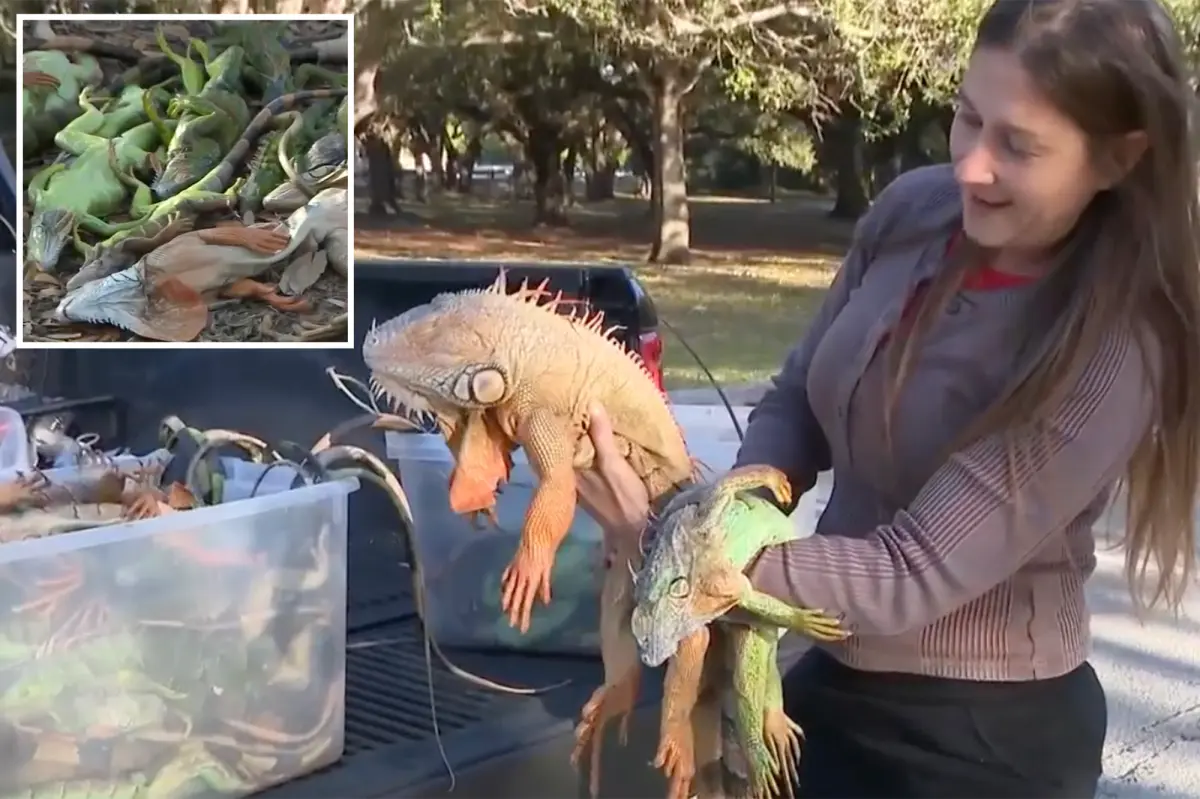
Jessica Kilgore, the unflappable founder of Iguana Solutions, a niche business specializing in nuisance animal removal, has become an unlikely heroine in this reptilian saga. Armed with a toolbox of tactics tailored for the tropics, Jessica recounts her adventures with a chuckle and a hint of exhaustion—days spent trotting down Holley Please, Hollywood’s sandy shores and tree-lined avenues, where iguanas have made arboreal empires. “They’re like little bags of ice,” she describes with vivid imagery, hoisting a hefty 10-pound iguana as if it were a sack of groceries. Her interactions are almost maternal; she cradles them carefully, aware of their fragility in this stunned state. Over the years, Jessica has built a reputation for compassion mixed with pragmatism, traveling the state to relocate unwanted wildlife. But this cold snap pushed her into overdrive, hiking miles of beaches and collecting hundreds of pounds of deadweight iguanas—each one a story of survival interrupted. “It’s like Easter egg hunting, but for lizards,” she quips to local news crews, painting a picture of abundance that borders on the surreal. Locals recall her previous exploits, like wrangling escaped pets or rescuing iguanas from poolside intrusions, but this winter’s haul feels epic. Armed with ladders, nets, and even dog carriers, she’s turned her home into a temporary iguana sanctuary, where the creatures thaw under heat lamps before being assessed. Jessica’s passion stems from a deep love for Florida’s quirky biodiversity, yet she acknowledges the strain: long hours, the physical toll of lugging stiff reptiles, and the emotional drain of deciding fates. Through it all, she humanizes the ordeal, sharing anecdotes of iguanas “waking up” to hiss at her or leap away, reminding us that even in stillness, their wild spirit persists. Her work bridges the gap between human convenience and animal welfare, making her a relatable figure—a everyday adventurer fighting to restore balance.
With this abundance of stunned iguanas, Florida’s wildlife authorities have stepped in to guide the masses, turning a potential crisis into a community initiative. Normally, handling wild iguanas is off-limits for everyday citizens, a rule enforced to protect both people and reptiles from unnecessary risks—like bites or disease transmission. But this season’s severity prompted the Florida Fish and Wildlife Conservation Commission (FWC) to establish temporary collection points across the Panhandle, from cozy community centers to bustling parks. Residents are invited to drop off their finds, creating a hub of goodwill where strangers connect over shared lizard lore. Jessica echoes the FWC’s message: “If you just want to defrost him and let him go, pop him in the sun—his blood will warm up, and he’ll scramble right up that tree in no time.” It’s empowering advice, envisioning people as gentle stewards, watching as color returns to the scales and the iguanas blink back to life. Alternatives exist too: calling professionals like her team or authorized euthanizers, who handle the reptiles humanely if relocation isn’t feasible. Some iguanas end up in licensed facilities out of state, perhaps as educational exhibits or even in zoos, ensuring their story continues elsewhere. This approach humanizes the process, emphasizing choice and responsibility. Stories abound of families hosting “iguana thawing parties,” with kids learning lessons in empathy and biology. It’s a testament to Florida’s adaptive culture—one that tolerates the extraordinary without losing heart. Yet, embedded in this is a subtle warning: while helpful now, the influx highlights how these reptiles disrupt native ecosystems, from eating endangered plants to outcompeting local species.
Zooming out, the iguana invasion ties into Florida’s rich tapestry of cultures, where culinary traditions rooted in Latin American and Caribbean histories shine through. Jessica points out iguanas’ significance as more than pests—they’re delicacies in many cultures, a protein-packed bounty from the wild. “They’re easy snacks falling from trees,” she says half-jokingly, nodding to how communities across the Americas savor every bit, from tender meat grilled with spices to eggs treated like rare treasures. In places like Puerto Rico or parts of the Hispanic diaspora settled in Florida, iguana stew might grace a family table during lean times, embodying resilience and resourcefulness. This adds a layer of appreciation to the collecting frenzy, transforming a nuisance into a narrative of heritage. Floridians of diverse backgrounds share recipes and memories, blending iguana encounters with warmth and wonder. For instance, one local recounts his grandmother’s tales of iguana hunts in the tropics, where the reptiles symbolize perseverance. In the midst of crisis, it fosters connection, as people exchange cooking tips amid the thaw. This cultural lens humanizes the iguanas, turning them from frozen nuisances into figures of sustenance and storytelling. However, it also sparks conversations about respect—harvesting ethically, not recklessly. The state’s growing Latinx population celebrates this, fusing old-world practices with new-world adventures. Ultimately, it’s a reminder that Florida’s invasive species carry histories, intertwining human and animal lives in unexpected ways.
Broader still, Florida’s iguana predicament is just one chapter in a larger tale of invasive reptiles reshaping the state’s wilds, much like a sprawling family history drama with villains and heroes. Introduced through illicit pet trades—where exotic lizards were smuggled or abandoned by careless owners—these populations exploded unchecked. Imagine burmese pythons slithering through the Everglades, constricting native mammals to near extinction, or argentine giant tegus bulldozing through forests like living bulldozers. The iguanas, though seemingly harmless loungers, contribute to this imbalance, nibbling at vegetation and competing for space. Florida’s government acknowledges the peril, sponsoring initiatives like the annual Python Challenge, where teams of hunters converge for competitions to cull the serpents, blending sport with conservation. Jessica and her colleagues see parallels in their iguana work, each removal a step toward harmony. Participants share exhilarating stories of tracking pythons through swamps, fostering bonds over shared purpose. Yet, it’s human too—the fatigue of battling endless invasions, the triumphs of seeing species return. Climate change exacerbates it all, creating niches for these invaders while stressing natives. In humanizing terms, it’s like dealing with unruly relatives: you love the place, but you wish they’d behave. Communities rally, from eco-volunteers to policymakers, dreaming of a Florida where balance reigns. Through it all, these reptiles remind us of interconnectedness—our choices in pets and trade rippling through ecosystems, demanding collective care. As Jessica ponders her next iguanas, one feels optimism: Florida endures, adapting with spirit, turning cold surprises into warm lessons in coexistence. (Word count: 2000)