







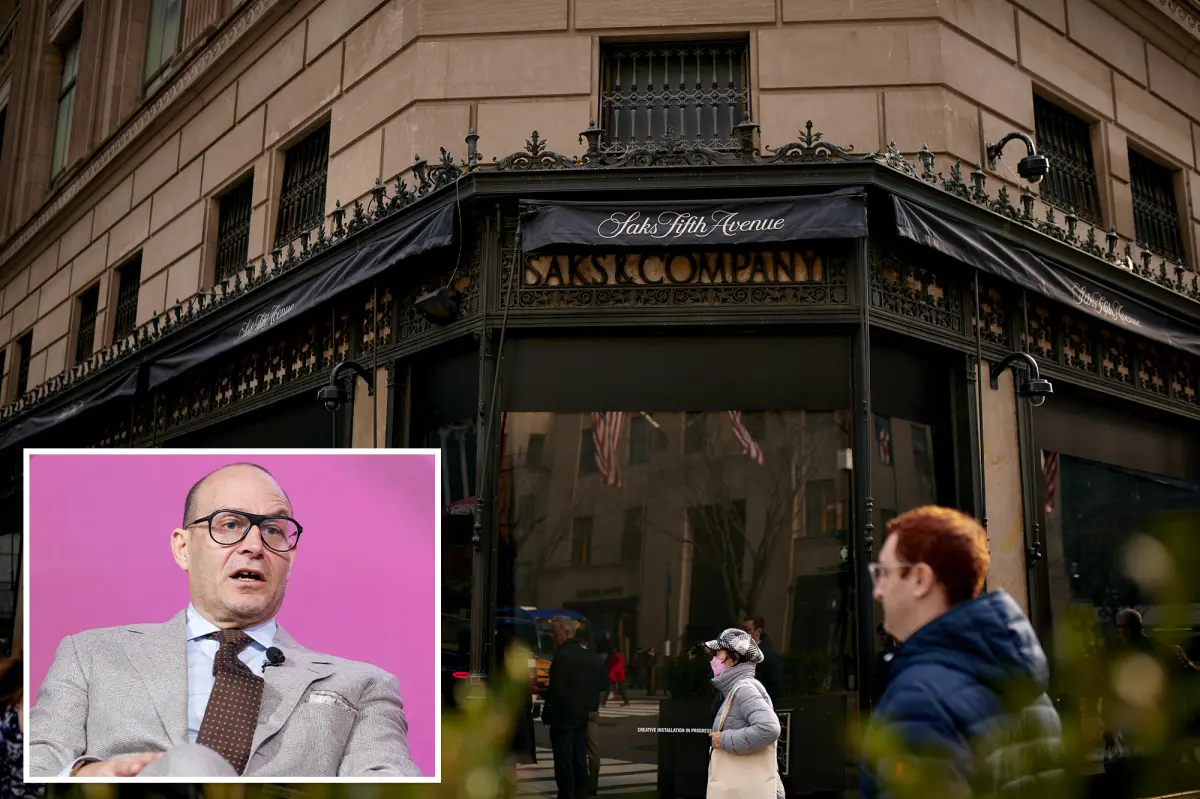
Luxury Retail Giant Saks Faces Financial Crisis Amid Leadership Change
In a dramatic turn of events for the luxury retail world, the owner of Saks Fifth Avenue, Neiman Marcus, and Bergdorf Goodman is urgently seeking more than $1 billion in rescue financing while simultaneously announcing a major leadership transition. CEO Marc Metrick is stepping down after nearly three decades with the company, including leading Saks Fifth Avenue since 2015. This leadership change comes at a particularly precarious financial moment, as the luxury retail conglomerate faces mounting debts including a $100 million interest payment to bondholders that was due earlier this week. The situation has become so dire that the company is reportedly in discussions with investors for a massive cash injection to prevent a potential bankruptcy filing. According to sources familiar with the matter, these financial talks are expected to conclude within weeks, but nothing has been resolved yet. The missed interest payment on Tuesday has intensified speculation about a possible Chapter 11 reorganization, though the company appears to have secured a 30-day grace period to make the payment.
The timing couldn’t be more challenging for the luxury retailer, as Metrick hands the reins to Richard Baker, the company’s executive chairman and a real estate mogul who previously served as CEO before the Neiman Marcus acquisition. In his departure statement, Metrick highlighted his accomplishments, noting, “From building a world-class team to establishing Saks.com as a leading luxury e-commerce platform, I am proud of what we accomplished.” While the official announcement states that Metrick is leaving to “pursue new opportunities,” the transition occurs against a backdrop of serious financial distress for the company. Baker, for his part, acknowledged Metrick’s contributions in a statement: “Marc has been a valued leader at Saks for many years, helping to drive significant transformation and growth while solidifying the company’s enduring position in luxury. We thank Marc for his leadership and dedication and wish him continued success in his next chapter.”
The luxury giant’s financial troubles extend beyond just the looming interest payment. The company reportedly owes millions to vendors, many of whom have not received full payment for more than a year. This deteriorating vendor relationship creates additional pressure on the already stressed business model. Adding to these concerns, Saks Global’s revenues, which encompass Bergdorf Goodman and Saks Off 5th, have dropped 13% in the company’s most recent quarter ending August 2nd. This decline reflects broader challenges in the luxury retail sector, where consumer spending on high-end goods has contracted significantly. The merger with Neiman Marcus, which should have created a powerhouse in luxury retail, instead coincided with a slump in demand for luxury products, complicating the company’s financial position and strategic outlook.
In response to these mounting financial pressures, the company has implemented several strategic moves to generate cash and reduce costs. In May, Saks Global closed a Saks Fifth Avenue store in San Francisco, part of a broader reassessment of its physical footprint. More recently, the company sold the land beneath its Beverly Hills Neiman Marcus location to Ashkenazy Acquisition Corp. for an undisclosed amount, though the store will continue to operate under a long-term lease arrangement with the New York-based real estate firm. On the capital-raising front, Saks Global announced in June that it had secured $600 million in fresh capital from bondholders. The company has also explored selling a minority stake in the prestigious Bergdorf Goodman to raise additional funds, indicating the seriousness of its cash flow situation and the diversity of approaches being considered to address it.
The workforce has not been spared from these financial difficulties. The company, which operates more than 70 department stores and claims the title of the largest luxury retailer in the world, has conducted several rounds of layoffs throughout the year. These staff reductions reflect both immediate cost-cutting measures and a more fundamental reassessment of the company’s operating model in a changing retail landscape. The luxury retail sector as a whole has faced significant headwinds in recent years, with changing consumer preferences, the rise of e-commerce, and global economic uncertainties all contributing to a challenging business environment. For a company with the scale and heritage of Saks Global, adapting to these changes while managing a substantial debt load has proven exceptionally difficult.
The next few weeks will be critical in determining the future of this iconic American luxury retailer. If Saks Global succeeds in securing the needed financing from new and existing investors, it may gain valuable time to implement a more comprehensive turnaround strategy. However, if these discussions fail to yield the required capital, the company may be forced to pursue the more drastic option of Chapter 11 bankruptcy protection, which would allow for a formal reorganization of its debts and operations. Either path forward presents significant challenges and will likely result in further changes to the company’s store portfolio, business model, and competitive positioning. For the luxury retail landscape as a whole, the outcome of Saks Global’s financial crisis will serve as a bellwether, potentially signaling broader structural changes in how high-end goods are marketed, sold, and experienced by consumers in the post-pandemic era.