


A Family’s Extraordinary Journey: Seven Continents by Age Seven
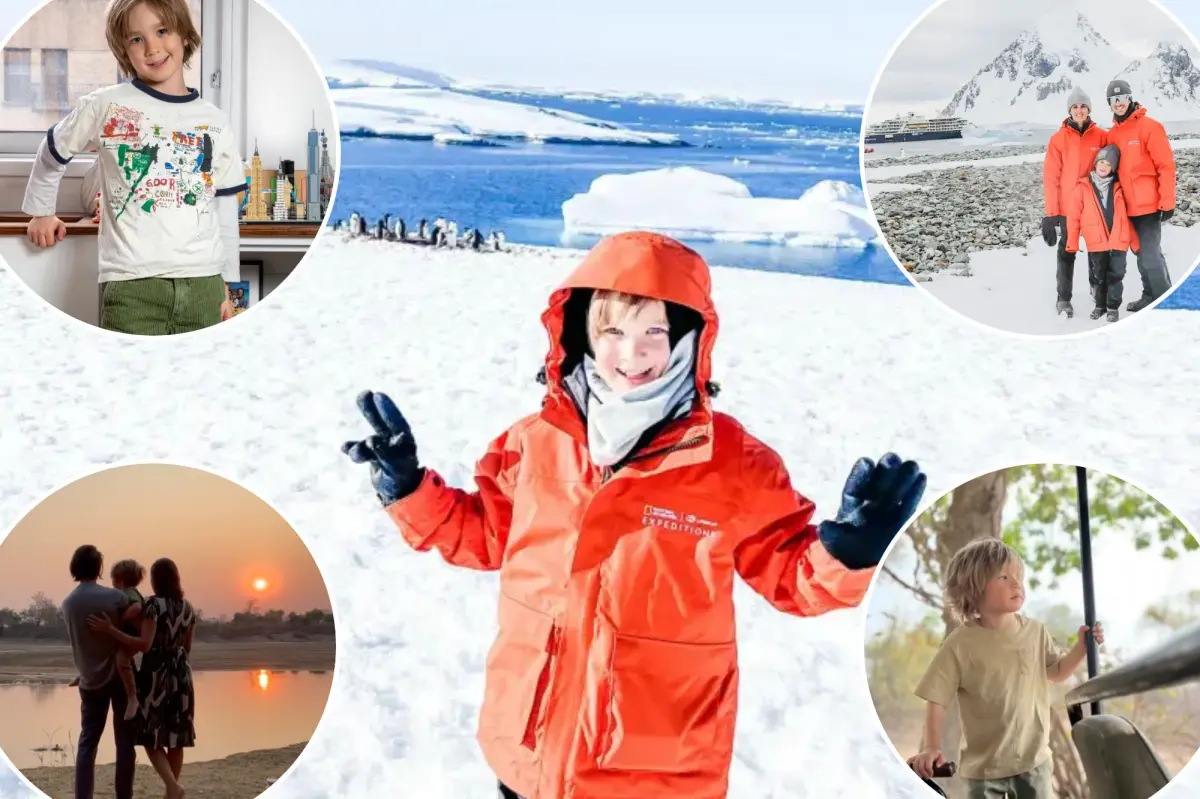
When seven-year-old Wilder McGraw wobbled across Antarctic ice last fall, bundled against the biting cold with eyes wide in wonder, he wasn’t just on vacation—he was completing a remarkable childhood journey. Having visited all seven continents before mastering his multiplication tables, Wilder’s story isn’t about ambitious parental bucket lists or social media bragging rights. It’s about a family whose shared passion for exploration accidentally blossomed into something extraordinary. “We didn’t start out with the intention of raising a child who would see seven continents by 7,” explains his mother, travel writer Jordi Lippe-McGraw. “We were just traveling because that’s who we are and what we love.” The realization that their son was just two continents away from a milestone came unexpectedly during a casual conversation before a South American trip when Wilder was five. Jordi’s husband, Ross, looked at their travel history and made a simple observation: “Well… we might as well finish it.”
Wilder’s global adventures began remarkably early, with his first passport stamp coming from Portugal when he was just eight weeks old. Before his second birthday, he had already explored Caribbean islands, Canada, and Mexico—until the pandemic temporarily grounded the family’s travels. Once international borders reopened, they resumed their adventures with renewed enthusiasm. By age four, Wilder had experienced the Caribbean, Costa Rica, Dubai, and even gone on safari in Zambia. Europe followed with trips to France, Switzerland, Scotland, Ireland, and Italy, plus the Galápagos Islands—all before turning five. This past summer completed nearly all of their continental checklist with journeys to Amsterdam, Singapore, Australia, and New Zealand. Then in November, Antarctica became the final frontier in their unplanned quest. For Jordi, this Antarctic expedition carried profound personal significance: she had visited the continent herself while five months pregnant with Wilder. “It felt like closing a loop we didn’t know we’d opened,” she reflects. The family sailed aboard the National Geographic Resolution, where Wilder formed an unexpected friendship with the only other child aboard—an eight-year-old girl. Together, they enjoyed daily hands-on lessons from resident researchers, combining science education with Antarctic exploration.
For Jordi, travel represents more than adventure—it’s been a path through grief and healing. After losing her father in a devastating 2010 plane crash, she initially developed a fear of flying but ultimately chose to embrace rather than avoid exploration. “Instead of closing the door on the world, I found that movement was the thing that helped me feel alive again,” she explains. This perspective profoundly shaped her parenting philosophy. She wanted to raise a son who viewed the world as “navigable, not intimidating”—a child guided by curiosity rather than caution. Experiencing familiar destinations through her son’s fresh perspective has brought unexpected emotional resonance to their journeys. Standing on Antarctic ice with her curious child rather than a baby bump created a powerful full-circle moment. “It felt like sharing a private piece of my past with him,” Jordi says, watching Wilder slide across sea ice, enthusiastically questioning guides while whales surfaced nearby. These shared experiences have deepened her own appreciation for travel in ways she never anticipated.
Behind the breathtaking Instagram photos lies the complex reality of family travel that Jordi doesn’t hesitate to acknowledge. “The exhaustion. The meltdowns. The logistics that unravel at 3 a.m. in an airport,” she admits. “People see the polished moments—but not the seasickness, the crying over airplane food, or the child insisting he will ‘never wear snow pants again.'” During their Antarctic adventure, Wilder spent 36 hours virtually motionless in his bunk, terrified of experiencing more seasickness. Snacks became precious commodities “negotiated like hostage deals.” Yet paradoxically, these challenging moments make the magical ones shine even brighter. When asked about her most meaningful travel memories, Jordi doesn’t point to grand landmarks but to quiet, unexpected moments: Wilder falling asleep during a Singapore street food tour, then waking up and fearlessly sampling local dishes; or his face lighting up with pure joy at an Ajax football match in Amsterdam after an exhausting red-eye flight. “Seeing that, knowing I was able to help make that moment happen for him, hit me harder than I expected,” she reflects.
Families who travel extensively with young children often face criticism, particularly from those who question whether such experiences are worthwhile for children too young to form lasting memories. “I’ve heard it all—concerns about nap schedules, routines, and especially the idea that ‘she won’t remember it anyway, so why go?'” says Kaleigh Kirkpatrick, a travel agency CEO whose own daughter began traveling at three weeks old. Clinical psychologist Michael G. Wetter offers a more nuanced perspective, explaining that young children benefit from travel experiences even without forming explicit memories. Early childhood experiences shape “neural architecture, emotional regulation capacities, sensory integration, and attachment patterns” long before conscious recollection develops. However, he emphasizes that these benefits aren’t automatic—they depend heavily on travel that’s “developmentally attuned,” with parents protecting sleep schedules, allowing downtime, and remaining emotionally present rather than obsessively pursuing Instagram-worthy moments. Jordi embraces this balanced approach: “Kids don’t need to understand the full meaning of a place for it to shape them.” She’s already witnessed positive outcomes in Wilder’s development, particularly in his growing confidence. “He genuinely believes the world is accessible to him,” she notes with pride.
With all seven continents now explored, the Lippe-McGraw family is shifting their approach to travel. Rather than pursuing checklist achievements, they’re focusing on journeys that reflect everyone’s interests. Their itineraries increasingly revolve around Wilder’s growing passion for soccer—a Barcelona trip is planned so he can see FC Barcelona play—and must accommodate school schedules. They’ve also learned to embrace flexibility in their expectations. “We were in London once, and all my son wanted to do was swim,” Jordi recalls. “That ended up being one of his favorite memories.” Even in Antarctica, after witnessing a humpback whale surface dramatically near their boat, Wilder asked for his iPad. His parents said yes. “Once you let go of the idea that every second needs to be Instagram-worthy, travel becomes so much easier,” she explains. Looking ahead, their future adventures will balance different family members’ wishes—gorilla trekking for mom, European soccer camp for Wilder. This collaborative approach represents the evolution of their family journeys. “It’s not just dragging a kid along anymore,” Jordi reflects. “It’s building a trip that feels like ours and his.” In this shift lies perhaps the most valuable lesson from their extraordinary travels: the most meaningful journeys aren’t about collecting places or experiences, but about growing together through shared discovery.