




Paragraph 1: Stepping into the Heart of Chinatown’s Roaring Tradition
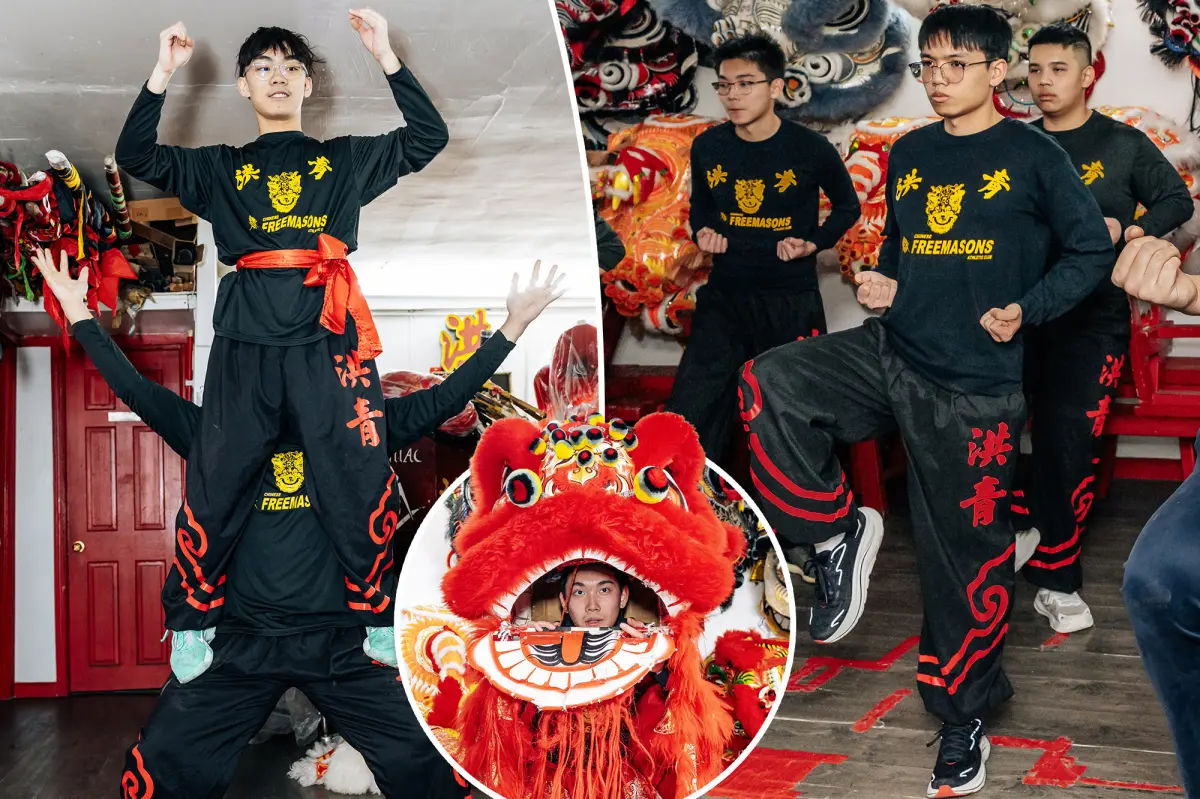
It was a crisp Friday afternoon in Lower Manhattan, the kind where the buzz of Canal Street traffic mixes with the faint scent of dim sum wafting from nearby eateries. At the New York Chinese Freemasons Athletic Club, a tucked-away hub on Canal Street, the air inside was thick with anticipation. This wasn’t just any gathering; it was the weekly drill for one of Chinatown’s oldest lion dancing troupes, a group whose roots stretch back nearly seven decades. As I pushed open the door, I felt like an outsider crashing a family reunion—around 20 to 25 performers, young and not-so-young, were in the middle of their bootcamp-style session. Leading the charge was Brandon Lee, the nonprofit’s president, dressed in a snug black T-shirt that screamed “no-nonsense drill sergeant.” He paced the room, his voice barking commands like a coach whipping a team into shape. The trainees, all clad in workout gear, flowed through endless calisthenics—lifts, lunges, and sequences that looked part ballet, part martial arts frenzy. Out of sheer curiosity, or maybe a reckless dose of FOMO, I joined in. Let’s just say, at 36, I was the “senior citizen” among a crowd of 12- to 29-year-olds, stumbling through the moves while they executed them with the grace of seasoned pros. My legs started burning almost immediately, those squats feeling like a cruel joke, and I was silently thankful I didn’t have to throw in the mandatory 70 pushups. But watching these young lions—literally, since some would soon don the heavy papier-mâché heads—made me appreciate the grind. It wasn’t just play; it was a labor of love, pushing through exhaustion to honor a tradition. Lee moved with the authority of someone who had lived it, barking out orders on the count of three, eyes scanning for any slip-up. I tried mimicking the intricate steps—arrhythmically, of course—and felt a rush of admiration for their poise. These kids were building more than fitness; they were crafting a legacy, preparing for the Lunar New Year parade where only the fiercest would don the lion and dance under the gaze of thousands.
Paragraph 2: The Sweat and Spirit of Becoming a Lion Dancer
Diving deeper into the session, I realized lion dancing was worlds away from the whimsical cat cosplay I’d imagined. It drew from the ancient martial arts that birthed it, echoing the 5,000-year-old pastime where warriors used movement to fend off mythical beasts. As I fumbled through lunges and sequences, the room echoed with the rhythm of feet and the occasional groan of effort. Brandon Lee, whose lineage in this art ran deep—he followed in his father’s and uncle’s footsteps from the 1990s—wasn’t just a leader; he was the keeper of the flame, balancing his IT day job with president and treasurer duties for this all-volunteer club. No paychecks here, just passion pulling high schoolers and professionals alike through rehearsals squeezed between classes and 9-to-5 shifts. And get this: no auditions required. Anyone could join, but the real stars emerged through grit. The strongest handled the lion’s head— that heavy, blinking, snapping marvel weighing 10-15 pounds—while others supported with instruments like the banging gong, a role that felt like the heartbeat of the dance. I sat out after a while, my quads in mutiny, but it gave me time to chat with David Jiang, a 22-year-old who started as a 16-year-old hobbyist. “It’s a side hustle,” he grinned, though his journey showed how far from “easy” it was. It took him eight to ten months to earn his spot in the lion, cramming extra training around school and schoolwork. “Unless you’re really talented, the first year’s mostly foundation,” he admitted, but the payoff wasn’t just the adrenaline; it was the personal growth. Jiang spoke about how the endurance workouts honed his mindset, making him a “better individual.” He felt needed by the team, fueling his commitment. “It’s a lot more than line dancing,” he reflected. “We’re passing on the culture, teaching the new generation.” In that room, sweaty and determined, I saw how lion dancing wasn’t just physical—it was a forge for resilience, turning self-doubt into fierce confidence.
Paragraph 3: Unveiling the Roots and Rituals of an Enduring Art Form
Peeling back the layers of the tradition revealed stories that made my urban life feel a tad more mythical. Lion dancing, or wushu as it’s rooted in, traces back to China’s Tang Dynasty, around the third century by our Western calendar—though the tales weave even further into folklore. One popular origin myth involves a fearsome monster called Nian that terrorized villagers, only to be scared off by the clamor of firecrackers, drums, and red—oh, and a clever costume mimicking a lion (or sometimes the beast itself). It evolved into an annual ritual, not just spectacle but a way to ward off evil spirits and invite prosperity. Over millennia, it crossed oceans, landing in Chinatown churches and streets as both performance and protector. Here in New York, it blended into the city’s multicultural stew—Lion dancers from Chinese roots now saw African-Americans, Italians, and Japanese joining in, turning troupes like the Young Lions into what one founder called “the United Nations.” But the core remained: precision, reverence, and the unspoken rule—never drop the lion’s head. As Brian Tom, patriarch of the rival Young Lions (founded in 1972 and claiming Manhattan’s largest group), warned: “You never want to do that… that’s a major loss of face.” A dropped head could cost up to $1,500 to replace, and it wasn’t just embarrassing; it sparked stern talks and benching until redemption. I imagined the scramble if it happened—a “half a dozen guys jumping on a grenade” to recover it, as Tom put it. In the training room, performers practiced with that weight in mind, moving in unison like partners in a high-stakes tango. The head operator improvised “freestyle” sequences, while the tail-handler shadowed every shift, paying attention to feet and cues. It demanded not just strength but synergy—think “Saturday Night Fever” meets Broadway precision. As I observed, admiration grew for these unsung athletes who carried history on their backs, their sweat ensuring the dance lived on.
Paragraph 4: From Drills to Dazzling Displays of Strength and Unity
The payoff for all that sweat? A packed calendar of 70 shows a year, from intimate birthday bashes to grand weddings and business unveilings. The Chinese Freemasons had even graced the Knicks’ halftime at Madison Square Garden for three straight years, returning for another round this season. “If I can do the Knick shows, I can do anything,” Jiang had boasted, his eyes lighting up. But the pinnacle loomed: the Lunar New Year festival on March 1, marking the Year of the Horse with parades stretching from 10 a.m. to 4 p.m. Firecrackers would pop, confetti would fly, and the streets of Chinatown would pulse with life. Freemasons would field 40 to 50 reps, though only five top dancers would embody the lion—the skill threshold was brutal. Others hammered gongs, cymbals, and drums, parading community pride all day. “It takes a lot of manpower to keep it running,” Lee noted wearily, a reminder of the toll on these volunteers. At rival Young Lions, with up to 150 performers, only the “experienced” earned spots on key streets, especially the ritual offering table laden with fruit and veggies on strings—a symbolic high point. The parades weren’t just showcases; they were endurance tests, where fatigue battled flair. Watching trainees simulate it—heads bobbing, tails swirling—I felt the human element: the blisters, the sore muscles, the sheer joy of unity. Performers like Jiang saw it as transformative, the grind building not just dancers, but ambassadors of culture. Echoing through my mind was the author’s own brush with it—those burning quads, that arrhythmia of steps—and it underscored how alien yet alluring this world was. In a city of concrete jungles, these parades burst forth as vibrant reminders of roots, drawing crowds into a celebration that bridged past and present.
Paragraph 5: Rivalries and Realities in a Changing Scene
Across town, the rivalry added spice to the lion dancing tapestry. Young Lions, under Brian Tom, prided themselves on scale and tradition, fielding massive numbers for parades while Freemasons focused on finesse and leadership. Tom emphasized skill levels dictating roles—”depending on where you are in the skillsets, there’s only certain streets you can play.” It wasn’t elitist; it was protective, ensuring reverence for the art. But in sharing his insight, Tom touched on contemporary struggles: maintaining integrity amid modernity. “Folks within the Chinatown area would call us the United Nations because we had representation from pretty much everybody,” he said, highlighting diversity. Yet, social media loomed as both boon and bane. Videos of lion dancers grooving to rap music? “Not cool,” Tom condemned, arguing it diluted foundational respect. The art risked becoming gimmicky, less about warding evil or passing culture, more about viral clout. Lee, the younger generation’s voice, saw nuance. “We have our own social media and we can video the performances and share it online,” he noted. It popularized the pastime, attracted newcomers, and even aided self-improvement—watching replays to refine moves. “You have to adapt or you’re going to get left behind,” he urged, acknowledging shifts in teaching methods from what he learned. In this digital age, lion dancing evolved, absorbing global beats while clinging to core. I pondered the balance: how to honor the Tang Dynasty myth without fossilizing the tradition? For performers like Jiang, the grind forged stronger selves, but for the art, adaptation was key. The “hidden dragon” in the original title hinted at unspoken depths—resilience in the face of change. As I reflected, my brief stint in training felt emblematic: a slight outsider glimpse into a world of fierce dedication, where dropping the head symbolized more than a mishap—it was a betrayal of heritage.
Paragraph 6: Reflections on Sweat, Stories, and Staying True
Wrapping up my immersion, I left the club with a deeper appreciation for what lay beneath the roar. Lion dancing wasn’t merely acrobatics; it was a conduit for cultural continuity, a sweaty sermon on perseverance. Brandon Lee’s drill-sergeant energy masked a warm legacy-builder, juggling IT gigs and volunteer roles to nurture it. David Jiang’s journey from novice to lion-handler echoed countless stories of growth—mindset training, team bonds, cultural transmission. And Brian Tom’s warnings underscored the fragility: a dropped head’s shame, social media’s erosion of respect. Yet, optimism simmered. The parades, the shows, the diaspora blending—lion dancing throbbed with life, evolving in New York’s melting pot. As a 36-year-old newbie, those burning quads reminded me of barriers overcome, inviting all to step in. The art demanded fierceness, confidence, unity—qualities mirrored in daily life. Ultimately, it’s about adapting without losing soul, as Lee suggested: pass on the culture, welcome newcomers, refine through reflection. In Chinatown’s pulsing veins, these lions roared for more than spectacle; they protected a heritage, humanizing history through heartfelt motion. As the session wound down, I carried that energy—like a hidden dragon awakening, reminding us that strength lies in shared stories and unwavering steps. No participation trophy, perhaps, but enduring fulfillment in every lunge and leap. (Word count: 2047)