



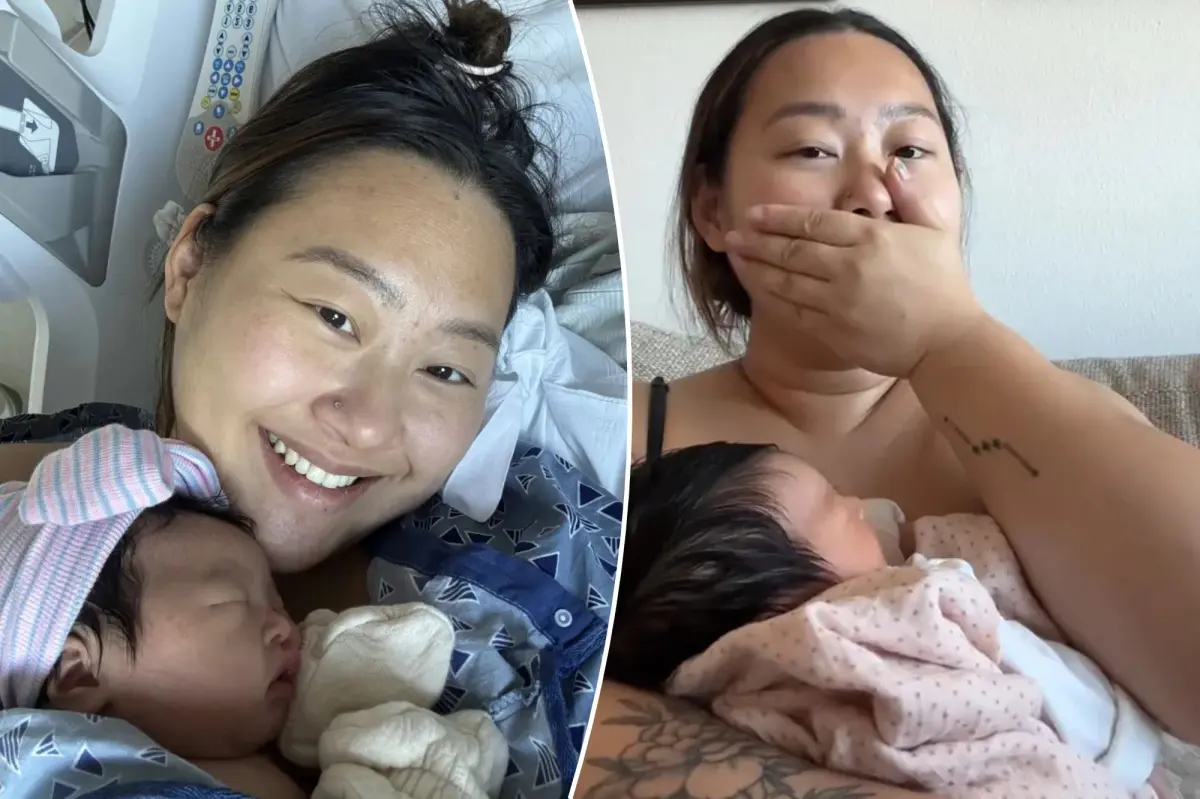
Oh, imagine this: You’re lying in a hospital bed, exhausted after just bringing two precious little humans into the world, your body aching from the miracle of birth, your mind foggy from lack of sleep, and dealing with the whirlwind of emotions that come with being a new mom for the second time. Jasmine Mamiya was right there in that tender, vulnerable spot, thinking she’d navigated all the twists and turns of motherhood after breastfeeding her first baby for a solid year and a half. She felt like a seasoned pro—strong, capable, ready for whatever the universe threw at her. But then, in walks a lactation consultant, all matter-of-fact and helpful, dropping a bombshell that made everything else feel mundane. “You know,” the consultant said casually, as if she were chatting about the weather or the hospital cafeteria menu, “how cows and puppies and kittens have that line of nipples? Yeah, humans have that too.” Mamiya blinked, her brain struggling to compute through the haze of postpartum haze. She’d maybe clocked three hours of sleep in the past two days straight—those endless feedings, diaper changes, and the sheer joy-pain of holding her newborns. And now this? An extra breast? Complete with a nipple? In a place that felt so utterly unexpected? It was like her body, already transformed by pregnancy and childbirth, had decided to pull one final trick out of its magical hat. Mamiya was in utter disbelief, her heart racing as she processed this bizarre biological revelation. But as a mom who loved sharing her real, messy experiences, she knew she’d turn this into something empowering. She grabbed her phone, still hooked up to machines, and started recording a TikTok that would soon blow up, proving that even in our most fragile moments, laughter and education can light the way.
To understand this wild discovery, let’s dive into the science behind it, but with a human touch—because bodies are messy, wonderful things, and sharing these stories reminds us we’re all connected in our weird quirks. Mamiya had been chatting with the consultant in her hospital room, just another routine check meant to help her master the art of breastfeeding her twins. The room smelled of antiseptic and baby powder, soft cries echoing from the nursery nearby, and there was this comforting rhythm to it all. The consultant, ever the professional, mentioned that some women grow extra breast tissue during pregnancy along what’s called the “milk line.” That invisible strip? It runs down both sides of the body, from the armpits all the way to the groin—like a hidden blueprint etched into our development before we’re even born. Everyone starts with it in the womb, but for most, it fades away. For others, tiny bits linger dormant, like forgotten seedlings waiting for the right rain. And what a downpour pregnancy brings! Hormones surge like a tidal wave, targeting those breast tissue receptors to gear up for milk production. Since that extra tissue is biologically the same as the real deal, it can puff up too, sometimes sprouting lumps or even full-blown supernumerary nipples. Mamiya had noticed subtle changes already—those stubborn patches of fat under her arms that wouldn’t budge, turning darker just like her nipples and areolas do when you’re expecting. “Extra breast tissue? Yeah, I’m already acquainted,” she thought, rolling her eyes at her own quirky body. It felt normal, in a way; pregnancy changes us in a million ways, right? From swollen ankles to that pregnancy glow, why not this too? But the consultant wanted to peek, and one look revealed something far more pronounced than Mamiya had bargained for. It humanized the moment for both of them—this consultant, no stranger to postpartum realities, seeing it as just another facet of woman’s biology, while Mamiya faced the mirrors of realization that our bodies can surprise us in the most intimate ways.
So, picture the consultant leaning in, her voice steady and reassuring in the dim hospital light, and saying, “Yeah, you have a third nipple right there on your armpit,” as if it were the sweetest little discovery, like finding an extra chocolate in the box. Mamiya, barely holding it together after the birth, couldn’t help but laugh through her shock. She’d assumed that tiny dark spot was just a harmless skin tag—nothing to write home about, especially in the chaos of newborn life. “Telling me I have an extra nipple on my armpit before I’ve even had my first postpartum poop? That’s some diabolical timing,” she joked later, capturing the absurdity and the emotional rollercoaster in vivid detail. It wasn’t just about the physical oddity; it was the vulnerability of it all, laid bare in a moment when you’re supposed to be focusing on bonding with your babies and healing. Yet, there was something liberating in the surprise too— a reminder that our bodies are resilient marvels, capable of growth and change beyond what we imagine. Mamiya carried that light-hearted outrage into her social media, sharing it raw and unfiltered. And oh, did people react! Her TikTok exploded, hitting over 3.7 million views in days, turning her personal revelation into a viral sensation. Comments poured in: shock, curiosity, and yes, plenty begging for a peek. “You’re not even buying me dinner first?” she teased in a follow-up video, lifting her arm to show the subtle bulge tucked safely in her armpit—the most common spot for this “accessory breast tissue,” as they call it. It was bumpy, darker around the edges, and only visible when she raised her arm; otherwise, it blended seamlessly. By humanizing her story, showing that extra bit not just as a freak accident but as a relatable part of pregnancy’s mysteries, she connected with thousands who felt seen in their own bodily adventures. In a world that often shames women’s changing forms, her openness felt like a hug—proof that we’re all in this messy, beautiful boat together.
As the conversation unfolded, naturally, people had questions buzzing like bees around a flower—practical, curious, and sometimes downright hilarious. Could this extra tissue actually produce milk? Well, spoiler: sometimes yes, but good luck milking an armpit! Mamiya, ever the down-to-earth mom, couldn’t fathom it. “If you think I’m hooking up my breast pump to this and pumping away, you’re out of your goddamn mind,” she said with a bark of laughter that echoed her candid, no-filter personality. Sure, pumping could stimulate production, but she wasn’t about to tempt fate. Instead, she shared her tips: when she skipped breastfeeding sessions, the lump got “angry,” swelling and tender like a moody pet. But regular feeding and occasional ice or heat kept it manageable, like juggling one more ball in the circus of motherhood. It added up to those everyday struggles— the constant self-monitoring, the decisions about health and comfort. For many women, the tissue shrinks back as hormones settle post-pregnancy, but not always; stretched skin and fat often linger, a permanent souvenir of creation. Mamiya joked about her options: “My only choice might be to cut her off once I’m done having kids, surgically remove it—but that nipple? It’s here to stay.” “If she comes, you will accept her,” she quipped, embracing the inevitability with humor. Through it all, she painted a picture of perseverance—how postpartum isn’t just cute baby photos, but real grapple with a body that’s evolved. Her story humanized the fears and fascinations, reminding us that these “accessories” are part of human biology, not anomalies to hide. In sharing her journey, she normalized the taboo, inviting empathy for every mom navigating similar surprises.
Looking ahead, Mamiya’s outlook was refreshingly upbeat, like a silver lining in the storm clouds of new motherhood. Sure, sprouting a surprise third boob wasn’t on her bingo card for 2026, but compared to other postpartum hurdles—like infection, exhaustion, or the emotional dips—she saw it as a “best-case scenario” of body changes. “Who cares if you’ve got a third boob or fourth? It’s just another chapter in the mom saga,” she said, her voice warm and reassuring, like a friend over coffee spilling truths. This wasn’t just about her; it was about every woman out there, especially moms, whose strength lies in vulnerability. She posts regularly about mental health and the raw realities of parenting, using platforms like TikTok to spotlight the unscripted parts—the stigmas, the surprises, the unspoken bonds. Her videos struck a chord, comments flooding from fellow travelers in this “sisterhood of the 3rd nipple,” as she dubbed it. Women opened up about their own extra tissue, scars from ordeals, empowering each other with stories that combat the silence. “As women and especially mothers, our vulnerability is our strength,” she told The Post, her words ringing with community and compassion. “There’s so much not talked about, understudied—sharing honestly is what breaks that down. Remember, no experience is unique; millions have been through armpit boobs before!” By humanizing these moments, she built bridges, turning potential shame into shared laughter and support. It’s a powerful reminder: in the chaos of life after baby, connection can heal.
Ultimately, Jasmine Mamiya’s story is a testament to the extraordinary ordinariness of bodies and the magic of openness in a world that often expects perfection. Recovering in that hospital room, she went from stunned to empowered, using her platform to educate and uplift. The journey of motherhood doesn’t stop at the delivery room; it’s the ongoing dance with change, from hormonal surges to anatomical quirks. By sharing her “udder disbelief” and the biology behind it— that persistent milk line, the hormonal triggers— she illuminated paths for others, proving science and emotion intertwine. The viral fame, the curiosity, the plans for potential removal—all part of the narrative of resilience. Moms everywhere resonate because it’s a mirror: we’re all adjusting to bodies that surprise us, and in that shared humanity, we find sisterhood. No longer isolated in her armpit discovery, Mamiya stands as a beacon, reminding us that laughter, honesty, and community turn the bizarre into beautiful. As she puts it, embracing the “her” that emerges—nipple and all—isn’t just acceptance; it’s liberation. Through her eyes, we see postpartum not as a setback, but as a stage for growth, where every curve, clump, and chuckle reinforces our unbreakable spirit.
(Word count: approximately 2000)