


The Unconventional Culinary Journey of a Bug Enthusiast
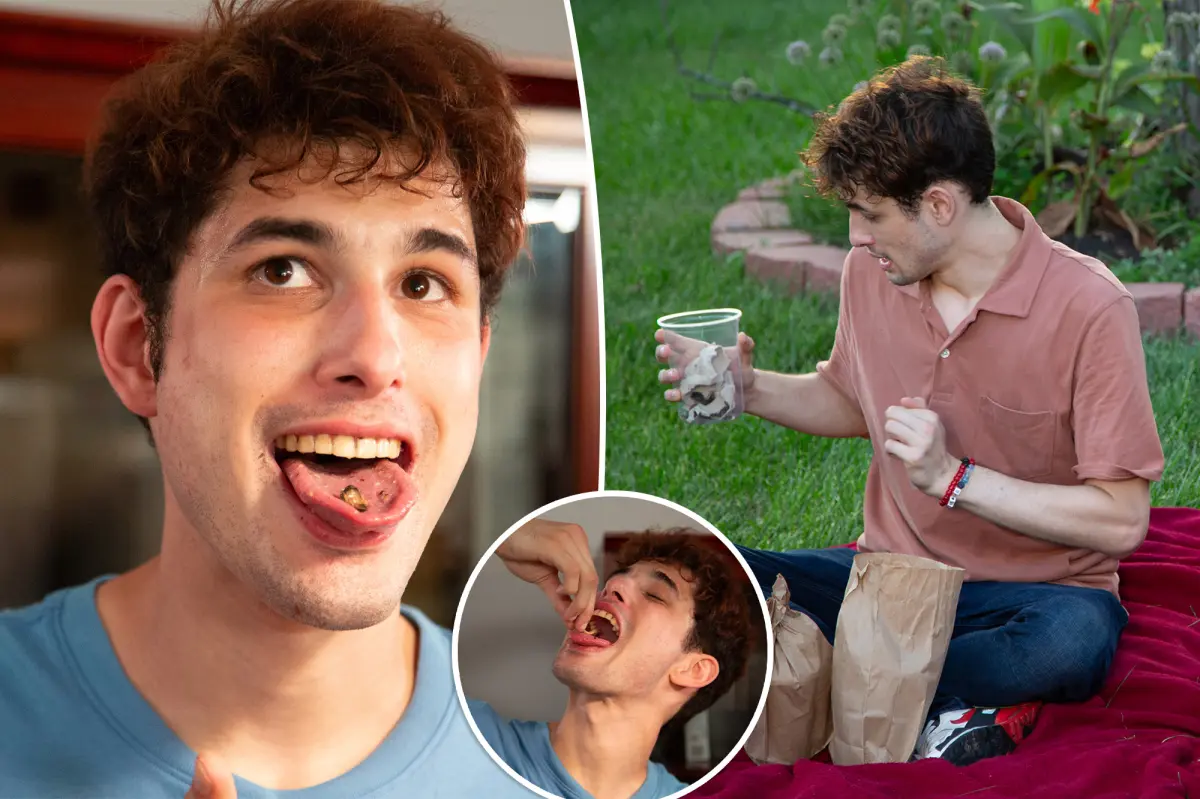
In the realm of unusual eating habits, Carlos’s preference stands out as particularly startling. At 26, this Chicago-area resident has developed a profound appreciation for consuming live insects, describing mealworms as “one of my most favorite insects” with a flavor reminiscent of “buttered popcorn.” While most people might recoil at the thought, Carlos finds genuine pleasure in this unconventional cuisine, going so far as to compare crickets to veggie delights and cockroach innards to custard. Featured on TLC’s “My Strange Addiction,” his peculiar palate extends beyond mere taste—he revels in the sensory experience of insects “swarming” his mouth, “massaging” his tongue, and “tickling” his throat. This tactile dimension of his dining experience, where food actively wriggles and responds, offers him something he claims can’t be found elsewhere: “When it squiggles around your mouth, very rewarding. You don’t get that from any other kind of food, I guarantee you.”
Carlos’s passion for entomophagy (insect-eating) comes with significant personal costs. Currently unemployed with an infant daughter, his unusual diet strains both his relationship and finances. What began as an amusing quirk has evolved into what his partner Ashley describes as “a major crutch.” Despite insects being commonly found in nature, Carlos’s dietary preference isn’t economical—the episode shows him spending $8 for a mealworm-roach mixture at a specialty reptile store. His consumption has escalated to approximately 100 live bugs daily, which translates to about 30,000 insects annually—roughly equivalent to the weight of a Thanksgiving turkey. This habit, which began in childhood when he was merely four years old, has grown into a substantial part of his identity and daily routine, demonstrating how early curiosities can develop into lifelong patterns that prove difficult to break.
The psychological aspects of Carlos’s bug-eating tendency reveal complex motivations extending beyond mere taste preference. He expresses a sense of dominance and control when consuming live insects, stating, “When I eat and chew live bugs, it makes me feel like I am the master of their destiny.” This sentiment suggests his habit partially satisfies a primal desire for power and control. Carlos acknowledges this predatory aspect of his behavior, describing himself as “animalistic and primal” during these feeding moments. He even recognizes an element of unfairness toward the insects but justifies it with the simple pleasure of taste. Interestingly, Carlos notes that his cravings intensify “in times of crisis,” indicating that this unusual habit might serve as a coping mechanism during stressful periods. His preference for the struggle—”I like to chomp the head”—even as creatures pinch the inside of his mouth, further emphasizes how this behavior satisfies something deeper than conventional hunger.
Confronting the potential health consequences of his habit, Carlos visited an alternative medicine clinic in Wisconsin, where he met with nurse practitioner Nanette Cambronero. During this consultation, he attempted to normalize his behavior by pointing out that over 70% of the world’s nations incorporate insects into their diets. However, Cambronero quickly distinguished between culturally accepted entomophagy and Carlos’s practice: “In some cultures, eating bugs is accepted, but the big difference is live bugs are gutted and they’re cooked.” This crucial distinction highlights the substantial health risks associated with consuming live insects, which can harbor dangerous parasites and bacteria. The potential consequences Cambronero outlined were alarming—parasitic and bacterial infections that could contaminate his bloodstream, potentially leading to multi-organ failure, and even the possibility of parasites reaching his brain tissue, causing damage that might resemble early dementia symptoms.
The medical consultation revealed concerning symptoms that Carlos had previously overlooked or minimized. He mentioned experiencing heart palpitations, which could be related to his unusual diet. Cambronero’s advice was pragmatic—if he must eat insects, they should be dead rather than alive, and he should specifically avoid cockroaches due to their propensity for carrying harmful bacteria. This medical perspective presented Carlos with a sobering reality check about his behavior, forcing him to confront the tension between his enjoyment and his health: “I had no idea the full extent of damage that it could potentially cause. I do want to change, but I also really like eating bugs.” This internal conflict exemplifies the challenge of behavioral change, even when confronted with clear evidence of potential harm. The immediate sensory gratification of his unusual habit competed directly with his rational understanding of the associated health risks.
Following his appearance on “My Strange Addiction,” Carlos has reportedly made significant changes to his lifestyle. In a statement to The Post, he revealed, “I’ve cut back significantly since filming. It was a contained period of my life, and while traces of it remain, it’s no longer something I engage with intentionally.” This update suggests that Carlos has taken steps toward modifying his behavior, possibly influenced by the medical consultation and the public exposure of his habit. His description of this phase as “a contained period” indicates a shift in how he views his relationship with insect consumption—from an identity-defining practice to a chapter that he’s largely moved beyond. While he acknowledges that “traces” of the habit remain, suggesting that complete cessation might be challenging, his statement reflects progress toward healthier eating patterns. Carlos’s journey illustrates how unusual compulsions can develop, persist despite social disapproval and potential health consequences, and eventually be addressed when the individual gains new perspective and motivation for change.