



From Culinary Novice to Turkey Surgeon: A Butchering Adventure
In the heart of Brooklyn’s Prospect Heights, I found myself facing a culinary challenge that initially filled me with dread: learning to butcher a Thanksgiving turkey at Leland Eating and Drinking House. As someone who wears seven rings across two hands and considers dicing vegetables a hazardous activity (having sliced through my thumb three times), I was hardly the ideal candidate for wielding a knife against poultry. The restaurant’s warning to wear an apron and non-slip shoes triggered visions of Freddy Krueger-level bloodshed. Yet something about the authenticity and tradition of preparing a holiday bird from scratch appealed to me. Despite coming from a family of Pennsylvania hunters, I’d always been the city boy who avoided the messier aspects of food preparation. Could I really transform from someone who typically only unwraps pre-packaged poultry to someone who could skillfully deconstruct a turkey?
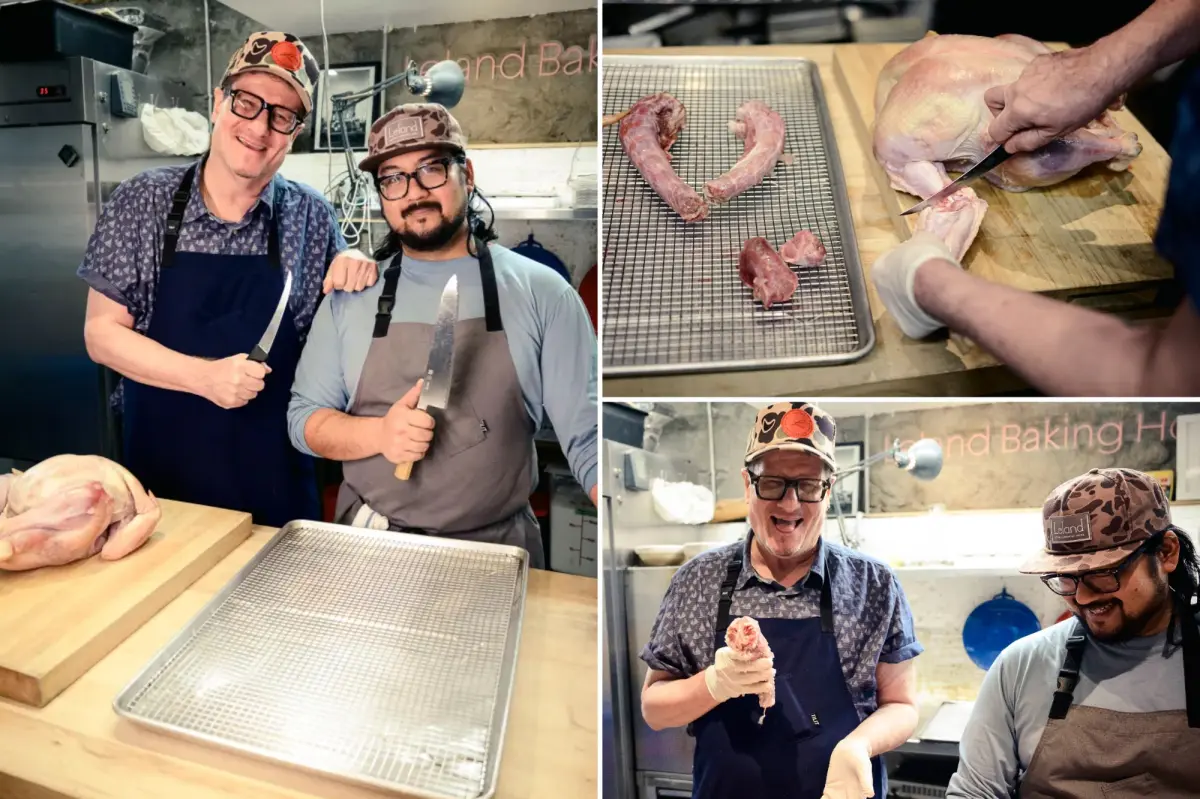
My relief was immediate when I discovered I wouldn’t be dealing with a live bird or even one with feathers and head intact. Instead, my instructor Chef Delfin Jaranilla presented me with a nearly 16-pound Bronze heritage turkey from Good Shepherd Poultry Ranch in Kansas. We dubbed him “Tom,” and I approached him with cautious respect. Rather than preparing the classic whole roasted turkey of Norman Rockwell paintings, we would be creating what Chef Jaranilla called a “turketta” – inspired by the Italian porchetta technique where meat is removed, flattened, and rolled into a log with dark meat outside and white meat inside. My first task seemed simple enough: snip the tied legs and remove the neck from the cavity. However, reaching into the icy interior to extract what looked disturbingly like the creature from “Alien” quickly demonstrated this wouldn’t be a completely sanitized experience.
Before diving into the main event, Chef Jaranilla shared a crucial safety tip about knife handling: position your hand higher on the knife with your thumb against the base of the blade rather than on the handle for better control. This technique proved invaluable as we began the meticulous process of deboning. “Never take big, sweeping cuts,” Jaranilla instructed. “Take small, precise cuts to find where the joints give way.” I quickly learned that butchering isn’t about brute force but rather patience and precision – using gravity and a sharp knife to follow the natural anatomy of the bird. We started by removing the wings, then carefully separated the breast meat from the bone before tackling the legs and thighs. The process was surprisingly methodical and surgical, requiring focus and dexterity rather than the violent hacking I had imagined.
What I expected to be a quick, messy ordeal turned into a ninety-minute exercise in concentration and care. While professional chefs can complete this process much faster, I appreciated the deliberate pace that allowed me to learn the techniques properly. The operation was remarkably bloodless compared to my gruesome expectations, though it certainly gave me newfound respect for surgical precision. Throughout the process, one metal tray gradually filled with discarded bones and parts while my butcher block accumulated neatly sliced meat. By the end, all my fingers remained intact – a personal victory given my history with kitchen accidents. The final step involved seasoning the meat with salt, pepper, Italian spices, and paprika before rolling it into a tight log secured with six pieces of twine, ready for roasting.
The benefits of this method became immediately apparent. “You’re basically going from a four-hour roast when you’re doing it whole to a 45-minute roast,” Jaranilla explained. While the preparation requires significant upfront effort, the cooking process becomes dramatically simplified. There’s no need to worry about carving around bones or monitoring different cooking times for white and dark meat. Additionally, the rolled presentation ensures every slice contains both light and dark meat, eliminating traditional Thanksgiving dinner disputes over who gets which part. The resulting turketta may not have the iconic appearance of a whole roasted turkey – it more closely resembled what Jaranilla jokingly called “a sleeping bag that was left too close to a campfire” – but the taste was undeniably superior: juicy, flavorful, and perfectly cooked throughout.
My turkey butchering adventure taught me that some of the most intimidating culinary tasks are actually accessible with proper guidance. What began as an anxiety-inducing prospect transformed into an educational and surprisingly satisfying experience. While I may never qualify as truly “butch” in my approach to butchering, I gained valuable skills and confidence in the kitchen that transcend my usual cooking comfort zone. For those inspired to try their hand at this traditional preparation method, Leland Eating and Drinking House offers turkey butchering classes with five-course tasting dinners, as well as sessions on pig and duck butchering throughout the holiday season. As for me, I’ll return to my regular kitchen activities with newfound respect for the craft of butchery – and perhaps a slightly steadier hand when chopping vegetables. Freddy Krueger would indeed be disappointed by how un-horrifying the experience turned out to be, but my taste buds were anything but.