





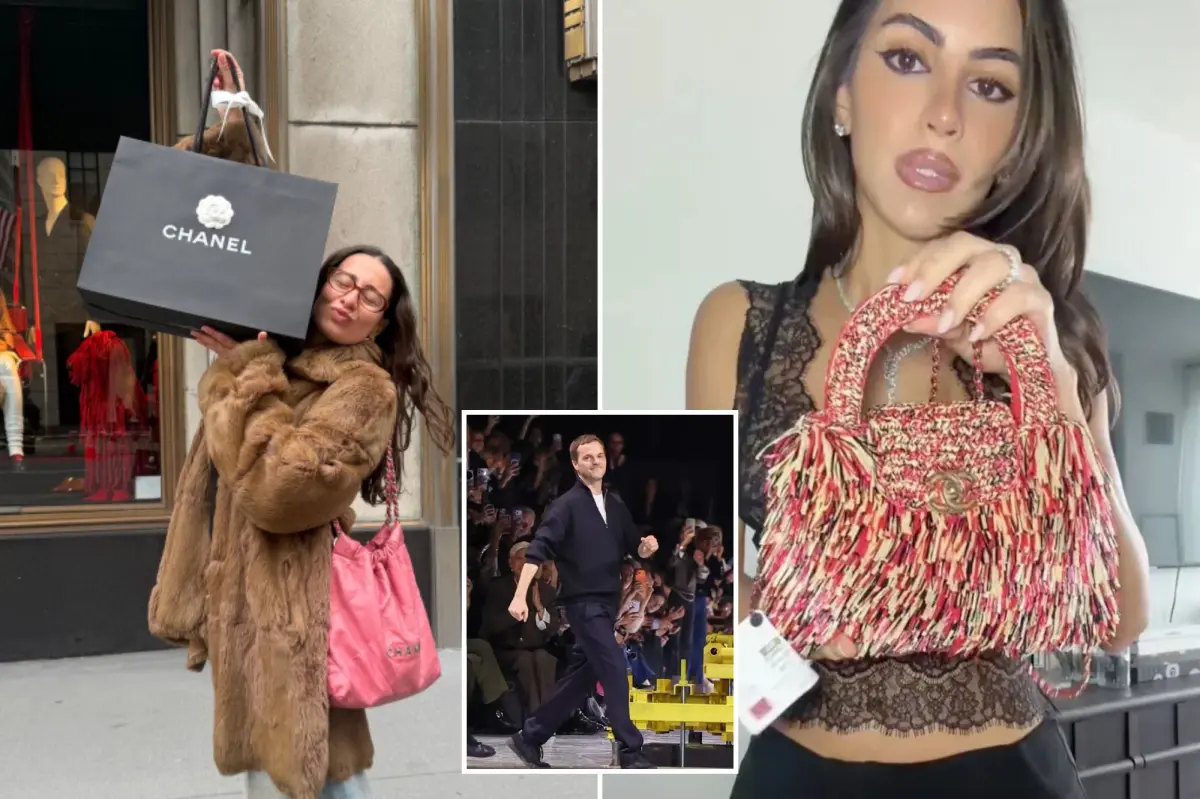
In the biting cold of a recent Friday afternoon, a line snaked down Madison Avenue in New York’s Upper East Side, wrapping around the corner like a determined snake chasing its prey. Sophie Cohen, a 28-year-old fashion enthusiast from downtown Manhattan, stood resolute among the bundled-up throng, her breath frosting in the air as she waited patiently for something far more precious than mere warmth. Dressed in her best layers—a cashmere scarf, a tailored coat from a lesser-known label, and boots that had seen better city slogs—she was on a mission for Chanel’s latest ballet flats in size 39.5: a stunning blend of pony-hair, calfskin, and lambskin that screamed extravagance at $1,500 a pair. These weren’t just shoes; they were the centerpiece of designer Matthieu Blazy’s 2026 collection, a burst of color and boldness that had ignited imaginations since their debut in Paris. Sophie, an influencer with a passion for timeless elegance mixed with a dash of edge, had fallen hard—obsessed, as she admitted to The Post, remembering how her screen-lit eyes widened during Fashion Week. “I couldn’t stop thinking about them,” she said, her voice echoing the thrill of discovery. Despite the numbing chill and the crowd of fellow devotees—from high-powered executives in fur-lined jackets to personal assistants clutching tote bags—the line was a badge of honor. People chatted animatedly, swapping stories of past hauls and fantasies of what these flats could transform: pair them with jeans for a casual strut or with midi dresses for evening glam. The wait felt endless, but Sophie embraced it, feeling part of a larger movement. She reflected on how fashion like this isn’t just about clothing; it’s about storytelling, wearing history on your feet. As the hours ticked by, she imagined the flats gracing magazine spreads or her own social feeds, elevating her from ordinary to iconic. Even the uncertainty of securing them didn’t faze her; failure would only fuel her next quest. When the doors opened, chaos erupted—not with anger, but with the electric hum of possibility. Associates dashed about like busy bees in a floral frenzy, shelves emptying faster than thoughts forming. It was here, in that whirlwind, that Sophie found not just shoes, but a fairy-tale moment: a stranger in line passed her the perfect pair that didn’t fit right, and like Cinderella, they slipped on flawlessly. Clutching them on the subway ride home, she felt a rush of joy, knowing she’d funded this indulgence with saved earnings and sold garments—her birthday gift to herself, versatile enough to pair with everything. This wasn’t mere shopping; it was a rite of passage, a reminder that in a world of routine, these moments of desire break the monotony, wrapping the soul in luxury’s warm embrace.
Shifting the tides for Chanel, a house long revered for its demure elegance, is Matthieu Blazy, a 41-year-old visionary from Paris who’s breathed fresh, flamboyant life into the brand since taking over a year ago. Stepping into the shoes of legends like Karl Lagerfeld and founder Gabrielle “Coco” Chanel, Blazy—previously at Bottega Veneta—is ditching the stark black-and-white austerity that defined Chanel in the 20th century, replacing it with maximalist magic. His 2026 collection bursts with playful patterns, vibrant hues, and silhouettes that demand attention, from turnlock jeans with a rebellious twist to mint-green pumps embossed like crocodile dreams and handbags that beg to be the center of a room. This isn’t just rebranding; it’s a calculated revival. In 2024, Chanel’s revenue dipped to $18.7 billion, a 4.3% drop from the year before, battered by inflationary pressures, tariffs, and a global economic crunch that left even affluent shoppers pinching pennies or skipping splurges altogether. Blazy’s funky injection—a youthful energy that honors the brand’s core while evolving it—seems poised to rejuvenate fortunes, attracting a new wave of spirited buyers through his haute couture, ready-to-wear, and accessory lines. Though Chanel representatives remained silent on specifics like sales data or demographic shifts in The Post’s inquiries, the buzz is undeniable. Blazy’s work is like a bridge between eras: nostalgic nods to Chanel’s past, like structured pearls and quilted leather, fused with modern whims—think graphic sweaters evoking superhero capes or skirts shimmering with upside-down skyscrapers. It’s accessible maximalism, where elegance meets eccentricity. For long-time fans, it might recall Coco’s own trailblazing spirit, that fearlessness to defy norms. Visitors to boutiques now leave not just with purchases, but with a sense of renewal, as if wearing Blazy is adopting a piece of his inventive soul. He transforms static luxury into wearable art, encouraging playfulness in a world often too serious. Critics might label it bold, but for the fashion-forward, it’s invigorating—a reminder that luxury can evolve without losing its soul, sparking conversations about identity, expression, and the joy of reinvention.
The fervor bubbled up dramatically in December with Chanel’s Métiers d’art 2026 show, staged dramatically on an abandoned NYC train platform downtown, a gritty canvas for glamour that drew Hollywood’s elite like moths to a flame. Hollywood’s hottest attended: stars A$AP Rocky and Margaret Qualley, ambassadors for the brand, mingled with chic icons Tilda Swinton, Kristen Stewart, Solange Knowles, Emily Ratajkowski, fashion pioneer Dapper Dan, Riley Keough, and even rocker Jon Bon Jovi. Boarding a stationary train, they were treated to Blazy’s edgy, sophisticated “cool girl” aesthetic—a Gotham-inspired fusion of urban grit and Parisian polish. Standouts included the “Clark Kent” ensemble: a Superman-themed sweater in bold blues, reds, and yellows peeking from beneath a plaid blazer, echoing kind disguise and unbridled power. There’s a fringed skirt stitched with sparkling, inverted Empire State Buildings, turning New York’s skyline into wearable whimsy, like wearing a city on your hips. This collection didn’t just showcase clothes; it embodied a philosophy of coolness—edgy yet approachable, blending street-savvy sensuality with high-society sheen. For attendees, it was immersive theater, the train’s stillness amplifying the movement’s quiet revolution. The “cool girl” archetype feels tangible, evoking the confident, creative women who navigate life with flair, from boardroom battles to late-night adventures. Blazy’s designs whisper rebellion against monotony, inviting wearers to embrace contradiction: sharp plaids with soft frills, remote dreams with everyday practicality. It’s fashion that tells stories—of resilience, of reigniting the sparkle in routine. The audience left with mouths agape, their collective excitement a harbinger of what was to come, as whispers spread about drops and delights.
By early March, the buzz peaked at Paris Fashion Week, where the full 2026 collection exploded into view, drawing hordes of glamour seekers like Sophie who couldn’t contain their anticipation. Sophie, upon seeing the pieces firsthand, felt a visceral rush. “The colors, the designs—he’s infused a youthful, cool energy into a classic like Chanel,” she beamed, her eyes lighting up at the memory.ética The flats she craved originated here, a whimsical synthesis of fabric and form that made Chanel feel contemporary again, iconic yet utterly now. Back in New York, the US drop unleashed pandemonium. Arriving early before opening, Sophie secured a spot among the first 20, braving the “freezing” cold for an hour of camaraderie with kindred spirits. They swapped tales of obsession: one executive dreamed of bag as a business accessory, another assistant envisioned earrings as subtle statements. Inside, once the virtual queue paired them with associates, chaos reigned—running staff, grabbing goods, mild disputes over coveted items—but Sophie emerged unscathed, her good fortune a testament to kismet. Buying them wasn’t impulsive; it was deliberate, funded by her thrift and sales, a birthday indulgence she clutches like a secret. On the subway, the flats became more than objects—they were triumphs, reminders of patience paying off. This rush-corner mirrored broader trends: fashion as extreme sport, where waiting isn’t boredom but bonding, a communal quest for beauty. It humanizes luxury, turning elites into everyday heroes enduring elements for ephemeral joy. In stores, the energy crackled with urgency, associates navigating the fray like conductors in an orchestra of desire. For Sophie, it bridged art and life, making her feel alive in a world of constants.
Not everyone dives into the fray, though—take Roma Abdesselam, a 29-year-old Tribeca influencer and self-proclaimed “Stay-At-Home-Daughter” who orchestrates her conquests from afar. Roma, with over $100,000 invested in Chanel ready-to-wear, enlisted her long-time sales associate—a confidante she chats with more than her family—for this “Hunger Games”-like battle. Her target: a $6,200 braided raffia bag in red, light beige, and black, accented with gold-tone metal—a statement piece that commands attention. She joked about splurging as therapy, filling voids without domestic obligations, channeling affections into expressive extravagance. The hunt proved fierce; she almost soured a friendship over $1,025 golden crystal stud earrings, snagged by a friend before her aide could intervene. Undeterred, her associate sourced treasures from Japan: the bag, earrings, a denim jacket, scarves, swimsuits—totaling $13,000. Roma relishes the exclusivity; these aren’t rerun items, limited editions that elevate wearer as connoisseur. Her beatitude about avoidance feels earned, grateful for delegation while acknowledging the thrills of lines as a once-in-a-lifetime rite. It’s a human contrast, Roma embodying effortless elitism, where wealth isn’t flaunted in chills but curated in comfort. Yet, she admires the ritual, seeing it as connective, even if hers is vicarious. Through Blazy, she finds pieces that “speak for itself,” sparking eyes in rooms, reaffirming her choices in solitude.
Then there’s Renia Jaz, a 60-year-old UK-based content creator who embodies the enduring appeal, standing in lines with the young at heart. Renia snapped up $1,450 black and beige heels, a black shopper bag, and unexpected earrings, lamenting sold-out jeans—her spree surpassing £8,000 ($10,500). No regrets; the draw is Blazy’s alchemy: modern freshness retaining Chanel’s elegance, playful flair making it wearable nostalgia. “Lighter, more current,” she says, reviving square-toe shoes for timeless allure. It’s a new chapter, versatile yet iconic, resonating across ages. For Renia, it’s personal—fashion as rejuvenation, echoing life’s phases. The lines, for her, are less about frenzy than community, sharing excitement with strangers in a shared language of style. This inclusivity defines Blazy’s impact: bridging generations, infusing high fashion with universal pull. As revenue lags recover, the human element shines—stories of obsession, kinship, indulgence. Chanel under Blazy isn’t static; it’s alive, evolving with society’s beats, inviting all to partake in its symphony of sartorial dreams, promising more moments of magic in futures untold. The excitement lingers, a testament to design’s power to unite, uplift, and surprise. In a cluttered world, these pieces offer clarity, luxury as lifeline, weaving threads of aspiration and actuality into timeless tapestries.