






In the bustling world of social media, where trends pop up faster than a viral dance challenge, there’s something refreshingly unconventional that’s taken TikTok by storm. Meet Gray Davis, a Florida man who’s turned a bizarre weather phenomenon into a taste sensation – or should I say, a taco sensation? Yeah, you heard that right: taco ’bout a whole new level of eating local. Davis, often just your average content creator from the Sunshine State, has skyrocketed to fame with his videos showcasing “raining iguanas,” where cold-blooded green iguanas literally freeze up and tumble from trees during chilly snaps. But instead of just documenting the chaos, Gray flips the script by cooking up these fallen reptiles into what he dubs the ultimate Florida man taco. It’s wild, it’s controversial, and it’s got millions tuning in, proving that when life gives you green iguanas, you make guacamole avocado sauce from their eggs. This whole saga started with Davis capturing these awkward moments on camera, blending humor, education, and a dash of culinary adventure into bite-sized videos that leave viewers either disgusted, fascinated, or reaching for their spatulas. It’s not every day you see a guy casually thawing out live iguanas and contemplating dinner, but that’s Gray for you – resourceful, eco-friendly, and unapologetically adventurous. As someone who’s watched way too many TikTok rabbit holes, I gotta admit, Davis’s content cuts through the usual fluff with real-life weirdness that’s both eye-opening and entertaining. He doesn’t just throw food porn at you; he dives into the “why” and “how,” making you think twice about invasive species and sustainable eating. If there’s one thing this Florida phenomenon teaches us, it’s that sometimes, the best stories come from the unlikeliest sources – like a reptile that’s simultaneously frozen and feisty. And let’s be real, in a state famous for alligators and hurricanes, what’s a few iguanas in tacos anyway? Davis’s approach humanizes the invasive issue, turning potential pest control into a feast that sparks conversations far beyond the app. It’s the kind of creativity that reminds us why social media can be more than just filters and followers – it can bridge the gap between quirky news bites and real food for thought.
Diving deeper into the science behind those “iguana icicles,” as Davis likes to call them, it’s a fascinating bit of Florida biology that’s equal parts eerie and educational. You see, green iguanas are cold-blooded creatures, meaning their body temperatures mirror their surroundings – no cozy winter coats for these guys. When an unseasonably cold front sweeps through the Sunshine State, dropping temps below 50 degrees Fahrenheit or so, the iguanas enter a state called “cold-stunning.” Their metabolisms slow way down to conserve energy, and they basically freeze in place, muscles stiffening like rigor mortis as they topple from palm trees, roofs, or wherever they’ve perched. It’s not just a nap; it’s a full-on shutdown that can leave them looking deader than disco. But here’s the incredible twist – they’re not actually dead. Once the weather warms up, these reptiles thaw out and boogie on like nothing happened. I’ve seen videos of people gently handling them to prevent thawing too quickly and causing stress, which could lead to illness or, ironically, real death. As a Floridian transplant, I remember those weird cold snaps where locals share stories of iguanas raining down like some biblical plague, clogging sidewalks and surprising unsuspecting drivers. Davis captures this beautifully in his clips, showing the survival tactics of these invasive imports that originally hailed from Central America. It’s a reminder of how climate and environment intertwine in unexpected ways – one minute you’re chilling at the beach, the next you’ve got a yard full of stiff-tailed stowaways. Humanizing this, imagine waking up to your garden transformed into an accidental iguanarium; it’s comical yet concerning. Davis emphasizes they’re tough survivors, not delicate daisies, but the phenomenon highlights broader issues like climate change amplifying these events in a state that’s usually a reptile’s paradise. Watching these videos, you can’t help but root for the iguanas to thaw out and scamper away – unless, of course, Gray Davis is around with his taco plans in mind.
Now, shifting gears to the environmental angle, it’s worth noting that green iguanas aren’t just quirky tree dwellers; they’ve become a full-blown invasive species nightmare in South Florida. Originally pets escaped or released into the wild, they’ve bred like wildfire, munch their way through native plants, compete with local wildlife, and even pose risks to ecosystems by digging burrows that erode soil. The state classifies them as non-native, and during those cold spells, the Florida Fish and Wildlife Conservation Commission (FWC) grants a temporary reprieve – residents can remove and dispose of these cold-stunned iguanas without needing a permit. Year-round, you can capture and humanely kill them on 32 designated public lands in South Florida without a hunting license. It’s basically pest control with a permit waiver, aimed at curbing their population explosion, which experts estimate at millions strong. From a human perspective, this feels pragmatic; after all, who wants iguanas stripping their gardens bare or invading homes in droves? I’ve chatted with locals who see them as opportunistic invaders, turning peaceful backyards into scenes from a prehistoric invasion flick. Davis taps into this sentiment in his videos, positioning himself as an eco-warrior by collecting iguanas to help manage numbers. He doesn’t frame it as cruelty; instead, it’s about responsible stewardship. Collecting these cold-stunned critters prevents them from harming themselves or their habitats further. It’s sustainable thinking – reducing waste, controlling populations, and turning a problem into a protein source. As someone who’s eco-conscious at heart, I appreciate how Davis ties in the bigger picture: these rules aren’t just bureaucracy; they’re tools for balancing nature. In Florida’s delicate ecosystem, tolerating invasives can lead to domino effects, like endangered species getting edged out. Davis’s videos highlight how everyday people can participate – not with flames or traps, but with a keen eye and a culinary twist.
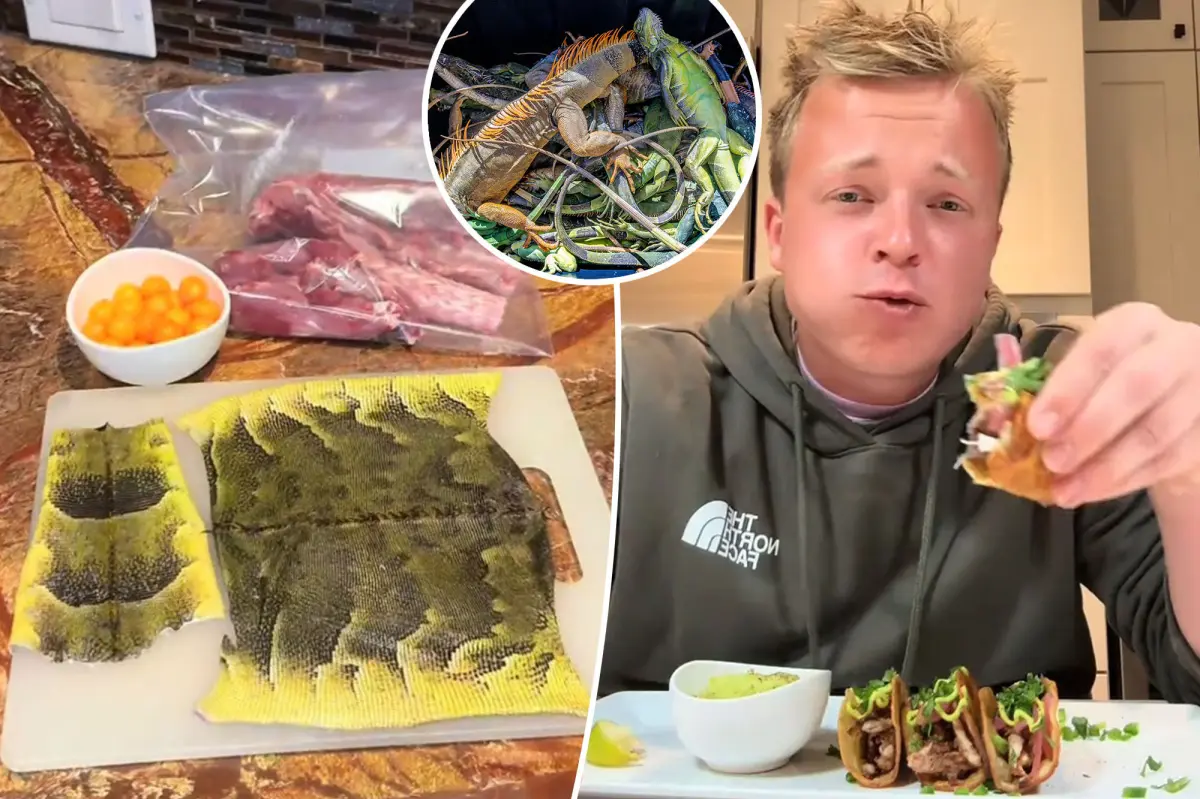
But Gray Davis isn’t content with just hauling off iguanas like some backyard bounty; he’s channeling his inner chef and turning disposal into deliciousness. In a video that’s racked up over 3.5 million views, he explains his philosophy: why waste a resource when you can whip up something scrumptious? Dubbed the “chicken of the trees” for their rumored tender, flavorful meat – and yeah, I guess that’s a nod to poultry without the cluck – iguanas have been eaten in their native regions for ages. Davis circles one out, noting he chose a mature female based on size and signs of eggs inside, which he gently extracts, claiming credit for potentially sparing the environment 20 future iguanas. It’s a move that feels ethical, almost compassionate in its foresight, preventing overpopulation before it blossoms. Now, to humanize the process: Davis goes all out, even attempting to tan the skin to repurpose it, minimizing waste like a true zero-footprint hero. He keeps the graphic dispatching and cleaning off-camera, probably a smart call for viewer stomachs, focusing instead on the culinary journey. Simmering the meat in a pot with onions, garlic, bay leaf, and salt, he transforms what was once a tree-dweller into something savory. It’s like turning an unwanted guest at a party into the star of the barbecue – ingenious and resourceful. From my armchair perspective, it’s a testament to human adaptability; in our throwaway culture, embracing these moments fosters a deeper connection to our food sources. Davis embodies the spirit of if you can’t beat ’em, eat ’em, adding a Florida flair that’s uniquely his. This isn’t just about survival; it’s about celebration – proving that even from chaos, creativity can emerge.
Let’s get into the nitty-gritty of that iguana taco recipe, because Gray Davis doesn’t just talk the talk; he walks us through the walk of cooking reptilian goodness. After humanely handling and preparing the meat – again, tastefully opaque on the details – he soaks it in seasonings, then crisps it up in a pan for that perfect texture. Pair that with soft-boiled eggs from inside the iguana, which he blends into a velvety sauce alongside avocado, garlic, olive oil, salt, and lime for a zesty dip. Stuff it all into tortillas, and voilà – a “Florida man taco” that’s equal parts bizarre and bold. I’ve tried imagining the taste: reminiscent of chicken with a wild, gamey edge, elevated by the creamy egg-avocado mash. It’s experimental eating, but Davis sells it with enthusiasm, quipping through the video like a friend sharing a secret family recipe. To make it more human, picture this as a backyard cookout gone futuristic – gathering ’round the grill, chatting about the cold snap that dumped these iguanas into your life, and turning it into a bonding experience. The eggs add a meta layer, blending future iguanas into the sauce for their own mother’s meat; it’s poetic in a darkly comedic way. Davis ensures nothing goes to waste, using every part thoughtfully, which aligns with traditional cooking cultures that honor the animal. As someone who’s dabbled in adventurous eats, this resonates – it’s about respect and ingenuity. The video lingers on those satisfying bites, making you almost crave the flavor without the iguana commitment. In Florida, where fresh, local ingredients define meals, this taco stands as a bizarre badge of state pride, challenging norms and sparking imaginations for how we consume in a world of plenty.
Of course, Gray Davis’s iguana taco escapades didn’t fly under the radar without stirring up a hornet’s nest of reactions on TikTok – and honestly, who could blame anyone? Viewers ranged from stunned to supportive, with comments like “Sorry, you lost me at blending 20 iguana eggs in a blender to dip their mother’s body into” capturing the visceral “eww” factor. Others quipped about “21 souls in one meal,” poking fun at the karmic oddity of it all. Yet, amidst the cringe, praise rolled in for Davis’s eco-conscious angle; one fan noted, “This is literally just living sustainably, and he’s protecting the environment.” It’s a microcosm of social media discourse – controversy laced with appreciation. Davis addresses the backlash head-on in a follow-up video, stressing ethical eating practices. “I totally get if you just won’t eat an iguana taco, everybody has their limits, that’s fine,” he says empathetically, like a patient uncle explaining the family quirks. He frames his taco as the “most ethical” option, valuing the resource over wastefulness. Humanizing this, I see the beauty in dialogue: it encourages us to question our food choices, from factory farms to invasive pests. Davis isn’t shoving iguanas down throats; he’s inviting curiosity. For me, it’s a reminder that ethics in eating often blur lines – what’s acceptable to one might be abhorrent to another, but openness fosters growth. In Florida’s vibrant community, stories like this unite us in weird ways, turning a viral clip into a platform for sustainability. Ultimately, Davis’s viral spree proves that sometimes, the most impactful content isn’t just entertaining; it’s thought-provoking, urging us to ponder how we interact with the world around us, one reptilian taco at a time. (Word count: 1987)