

Hey there, fellow parents, grandparents, and anyone who’s ever wondered if those silly dad jokes or bedtime stories actually mean something bigger. We’re all out here navigating the chaos of raising kids, right? From the sleepless nights in infancy to those hilarious toddler tantrums, it’s easy to get caught up in the day-to-day grind. But what if I told you that the way dads interact with their little ones in those early, formative months could ripple out and impact their child’s physical health years later—like, all the way into elementary school? Yeah, that’s not just a feel-good notion; a fresh study from Penn State is shining a light on it, and it’s got me thinking about my own parenting journey. It’s not about dads being heroes or moms being sidelined—far from it. This research suggests that dads have a unique role in shaping family dynamics, and when things go awry, it might show up in tangible ways, like elevated inflammation or blood sugar issues. As someone who’s juggled diaper changes and doctor appointments, I find this both relatable and a bit daunting. Imagine being that dad who’s stressed from work, maybe a little less attentive during playtime with a 10-month-old, and unknowingly setting the stage for health challenges down the line. It’s a reminder that these early interactions aren’t just cute moments; they’re building blocks for long-term well-being. And get this: the study didn’t find the same link for moms. That’s right, mothers’ behaviors in infancy didn’t strongly correlate with the kids’ health markers at age seven. It’s like dads are this wild card in the family equation, either amplifying the positive or introducing a dash of conflict that sticks around. Jennifer Graham-Engeland, one of the study’s co-authors, summed it up by pointing out that in many two-parent homes, moms are the primary caregivers, so their style often represents the norm—while dads can either reinforce it or throw a curveball. If you’re a parent reading this, you might be nodding along, picturing those evenings when one partner steps up more than the other. For me, it brings back memories of wrestling with my partner about bedtime routines or who handles the feedings. It’s not blame game; it’s about recognizing how these divisions can influence the whole family’s vibe. Scholars like Graham-Engeland suggest that dads’ involvement can disrupt or enhance the status quo, making their impact feel amplified, especially if they’re less involved or more competitive. Wow, that hits home, doesn’t it? I’ve seen friends where the dad is super hands-on from day one, turning bath time into an epic adventure, and the whole house feels more harmonious. On the flip side, if dad’s withdrawn or battling with mom for the spotlight, it might create those subtle tensions that linger. The study didn’t specify every instance, but it implies that competitive parenting—like arguing over whose turn it is to soothe the baby—can lead to a cascade of issues. As a human trying to navigate this, I can’t help but feel a twinge of empathy for dads who might be carrying heavy workloads or old-school expectations. Society’s still evolving; while many couples aim for equality, data shows moms often shoulder twice the childcare burden. This research nudges us to double down on involvement, because apparently, even small shifts in how we engage can echo for years. It’s empowering to think that changing that pattern could be as simple as ditching the stress and picking up a book instead. Overall, this paragraph leaves me reflecting on my own habits and how they might influence my kids’ future—not just emotionally, but physically. It’s a call to action for dads everywhere to lean in, not because they’re failing, but because their unique energy can prevent health hurdles. And hey, for moms, it’s a chance to champion shared roles; maybe tag-team those early mornings to foster that positive family rhythm. Life’s too short for regrets, so let’s embrace the dad factor and make those early days epic.
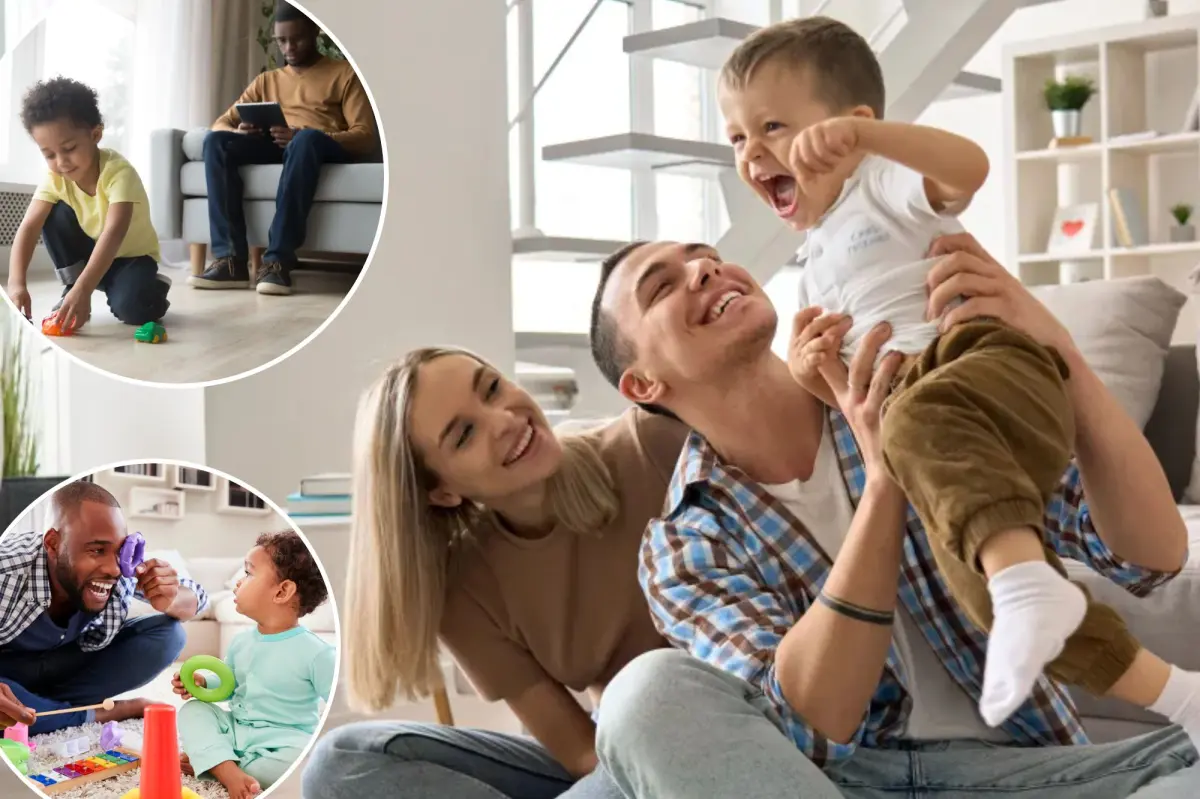
Now, let’s dive into the nitty-gritty of how this study was pulled off, because understanding the method makes it all so much more real and trustworthy. Picture this: a team from Penn State tapped into their ongoing Family Foundations project, which is basically a treasure trove of insights from 399 U.S. families. These were typical two-parent setups with a mom, dad, and their firstborn—mostly white, middle-to-upper-income folks with solid education levels, which makes it relatable for many of us but also a note for broader applicability later. The researchers didn’t just hand out surveys; they went boots-on-the-ground, visiting homes twice in the early stages. When the babies were just 10 months old, camera crews rolled in for those heartwarming, sometimes awkward play sessions. Moms and dads alike got filmed interacting with their little one, with coders later analyzing everything: warmth, responsiveness, and if the reactions matched the child’s developmental stage. They even scored co-parenting vibes, zeroing in on whether parents cooperated or competed for the kid’s attention—like, were they tag-teaming or turn-taking, or was it more like a tug-of-war? Fast-forward to when the toddlers hit 24 months, another visit captured similar dynamics. It felt so authentic, like watching my own family videos: the laughs, the fumbles, the genuine efforts. Then, the big reveal came years later, at age seven. Kids were back in the lab for blood samples that were dried and analyzed for key health markers—cholesterol levels, glycated hemoglobin (which shows long-term blood sugar control like HbA1c), interleukin-6 (a pro-inflammatory chemical), and C-reactive protein (another inflammation flag). Spoiler: no needles during playtime, just the dried samples, which kept things non-invasive and kid-friendly. As someone who’s dragged squirmy kids to pediatrician appointments, I appreciate the care here—it wasn’t about stressing anyone out. The beauty of this approach is how it tracks real-time behaviors against biological outcomes, painting a holistic picture of how infancy playtime translates to school-age health. It humanizes the science, making me grateful for datasets like this that peek behind the curtain without invading our private moments. Of course, it’s not infallible—limited by the sample size and demographics—but it sparks curiosity. Imagine turning on a camera during your own family play and wondering if you’re nailing the warmth scale. This method reminds me that parenting isn’t just instinct; it’s observable, learnable, and deeply influential. For parents feeling overwhelmed, it’s reassuring to know researchers are out there capturing these snippets, not to judge, but to guide us toward healthier habits. It makes me want to review my own footage and ask: Am I being responsive enough? Am I collaborating with my partner? In a world of quick fixes, this study emphasizes the power of patient, detailed observation—much like how we watch our kids grow, noticing every milestone. Ultimately, it bridges the gap between those early cuddles and later blood tests, showing us that our actions aren’t fleeting; they’re formative. And in my book, that’s motivating—to slow down, engage fully, and perhaps tweak things before the echoes show up in the data.
Alright, let’s get to the juicy findings, the part that probably has dads everywhere perking up—or wincing a little. No beating around the bush: this study uncovered a striking pattern linking fathers’ early behavior to their child’s physical health at age seven. Specifically, dads who displayed less sensitivity during those 10-month-old play sessions tended to lean into competitive or withdrawn styles by age two, and guess what? Their kids showed higher inflammation marks and poorer blood sugar regulation down the line. It’s like a domino effect: early interactions ripple into parenting patterns that influence biomarkers of heart and metabolic health years later. Hannah Schreier, the study’s senior author, nailed it when she said it’s no shock that warmth helps kids thrive, but the real eye-opener is how a dad’s pre-memory touchpoints can leave a lasting imprint. I remember my kids’ infancy vividly—the gooey smiles, the midnight feeds—and thinking it was all about bonding in the moment. Turns out, those moments matter big time for future health. On the flip side, if dads were engaged, responsive, and cooperative, it seemed to buffer against these issues, painting them as unsung heroes in the health equation. As a parent, this resonates deeply; I’ve seen fathers who were the family’s emotional anchor, turning potential chaos into calm, and vice versa. But it’s not about perfection; life throws curveballs like jobs or personal struggles that might make dads pull back. The study suggests that even subtle shifts, like being less attuned or more rivalry-focused with the mom, could correlate with elevated IL-6 or CRP levels in the child. It’s a human reminder that we’re all flawed, and our kids absorb more than we think. Imagine a scenario where dad, amid work stress, opts out of playtime, setting a withdrawn tone—over time, that might contribute to a kid’s body having higher inflammation risks by school age. Conversely, dads who dove in with delight likely fostered a stable environment that supported health. This isn’t about shaming; it’s about awareness. For me, it brings back times when I stepped up as a dad and saw the joy it brought, or times I wished I’d done more. The data hints that involved fathers cultivate emotionally stable kids with better self-esteem, confidence, and social skills—qualities that might indirectly bolster physical health too. Where does that leave us? Empowered, I think, to prioritize quality over quantity in our engagement. If you’re a dad reading this, consider this your nudge: those early cuddles aren’t optional; they’re health insurance. And for everybody else, let’s cheer on the dads in our lives to keep the involvement high. It’s a wake-up call wrapped in science, urging us to see beyond the joke-cracking facade and recognize dad energy as a vital thread in the family’s wellbeing tapestry. In essence, this finding humanizes the role of fathers, transforming abstract data into actionable love stories.
Now, contrasting this with the mom side of things adds another layer to the puzzle—and honestly, it’s a bit surprising, but let’s unpack it with real-talk empathy. The study flipped the script by finding no strong link between mothers’ behaviors in infancy and the child’s health markers at seven. No correlations there, which was unexpected for the researchers like Jennifer Graham-Engeland. As the primary caregiver in most families, moms’ styles might blend into the daily norm, so their warmth or cooperation doesn’t stand out as dramatically impactful—more like the steady base line. But here’s the key: that doesn’t mean moms are off the hook or invisible. In fact, everybody in the household plays a starring role. Alp Aytuglu, the lead author, emphasized that kids experience explosive growth early on, and mothers often drive that nurturing baseline, but dads can elevate or, if absent in spirit, detract from it. It’s not a competition; it’s a team sport. Picture this: mom handles 80% of the caregiving because that’s reality for many, so her consistent approach sets the stage—stable and nurturing. Dad’s input becomes the variable, the one that can support or create friction. From personal experience, I’ve seen couples where the mom bears the brunt, yet dad adds the fun flair, resulting in a happy balance. If dad’s withdrawn, it might introduce discord, like interrupted sleep or added stress that subtly affects health. Why no link for moms? Perhaps because their role is so entrenched, variations don’t deviate enough to track in the data. But Aytuglu cautions against dismissing the maternal influence; it’s foundational. Moms are the architects of routine and comfort, and without that, things might unravel differently. I feel for moms who juggle it all, wondering if their efforts are “enough”—they absolutely are. This contrast isn’t about hierarchy; it’s about niches. Research from earlier, like the 2023 study on co-parenting perceptions, echoes this, showing kids thrive best when both parents view their partnership positively. But when dads rate it lower, outcomes dip—more conflict, less engagement. Scholars like Sarah Schoppe-Sullivan point to how that can breed aggression or instability in kids. So, even if mom’s influence on direct health isn’t as pronounced in this study, her collaborative spirit matters hugely. As a balanced viewpoint, it’s a nudge to share the load equitably, letting dads shine as buffers or equals. For families, it’s a reminder to foster positivity all around, not pitting parents against each other. In my journey as a co-parent, understanding this makes me appreciate the symphony of roles—moms as the melody, dads as the harmony. No one is replaceable, and that’s the beauty. Ultimately, this humanizes the divide: it’s not mom vs. dad, but how we harmonize to nurture thriving kids. We all bring our gifts, and this study celebrates that interplay without diminishing anyone.
Shifting gears to the bigger picture, this research isn’t just about one study—it’s a springboard for rethinking parenting roles in our society, especially for American dads who might feel like they’re playing catch-up. While equality in parenting is increasingly valued, studies show moms clock nearly double the childcare time, which echoes those findings. Jennifer Graham-Engeland highlighted that moms often set the family rhythm, making dads’ participation a potential game-changer—or disruptor. If that’s true, then encouraging shared responsibilities could be a health hack for families. I think back to my own experience; striving for balance wasn’t always easy with career demands, but seeing the payoff in my kids’ stability makes it worth it. This study aligns with past work showing that involved dads breed kids with better emotional regulation, higher self-esteem, and even lower aggression—a foundation that might ward off obesity or metabolic woes. It’s like building a protective shield through affection and presence. But society has a way to go; expectations for dads often linger in outdated molds, like the breadwinner trope, trapping them in lesser roles. Yet, when dads step up, research like this shows profound benefits—not just for the kids, but for the whole family dynamic. Alp Aytuglu urged societal support for fathers as vital for child health, emphasizing that undermining dads’ roles can reverberate for years. Imagine if workplaces offered paternity leave like they do maternity, or if communities rallied around new dads with resources. From a personal angle, it’s transformative to see studies affirming that dad’s influence isn’t secondary; it’s impactful. Friends of mine who prioritized equal parenting saw happier households—no wonder. This calls for cultural shifts: dads embracing vulnerability, moms sharing the reins, and everyone celebrating progress. In terms of co-parenting, that 2023 study rings true—positive mutual views lead to optimal kiddos outcomes, but dads’ negativity amplifies problems. It’s a wake-up for equitable partnerships, turning “dad duty” into “family essential.” As society evolves, let’s champion support—mentorship, flexibility, education—so dads can invest fully early on, preventing those health echoes. It’s not rocket science, but it requires intention. Humanizing this means feeling the joy in shared successes, like when my partner and I tag-teamed bedtime and woke up to well-rested, healthy kids. Ultimately, this research empowers us to redefine fatherhood, making it a cornerstone of thriving families. Let’s ride that wave, supporting dads as partners in progress, because when they thrive, we all do.
Finally, let’s circle back with a grounded perspective: every family is its own story, and while this Penn State study offers valuable insights, it’s not the final word. Researchers themselves note limitations that make it relatable rather than prescriptive. For starters, the focus was on two-parent, first-child homes—mostly affluent, non-Hispanic white families—which might not mirror diverse realities. What about single parents hustling solo, grandparents pitching in, or same-sex couples navigating it all? Or families with multiple kids where dynamics get even more complex? The sample size of 399 is solid, but external factors like race, income, or cultural norms could paint a different picture. It’s a reminder that parenting isn’t one-size-fits-all; what works for one might not for another. Still, the core message persists: dads matter profoundly for long-term child health, influencing heart and metabolic markers through early engagement. Alp Aytuglu and the team stress that everyone in the household shapes the environment—moms, extended family, even pets—so it’s about collective impact. For me, that’s comforting; it’s not all on dads’ shoulders. Despite the blanks, this study sparks hope, urging us to prioritize positive father involvement. As a parent, I see it as motivation to foster warmth and cooperation, ultimately boosting kids’ well-being. Limitations aside, it’s a call to embrace nuance—supporting all parents, recognizing diverse structures. In conclusion, let’s take this knowledge and humanize it further: dads, keep connecting; moms, keep leading; society, keep evolving. Together, we can create healthier legacies, one engaged moment at a time. After all, the ripples of love are what truly last.