



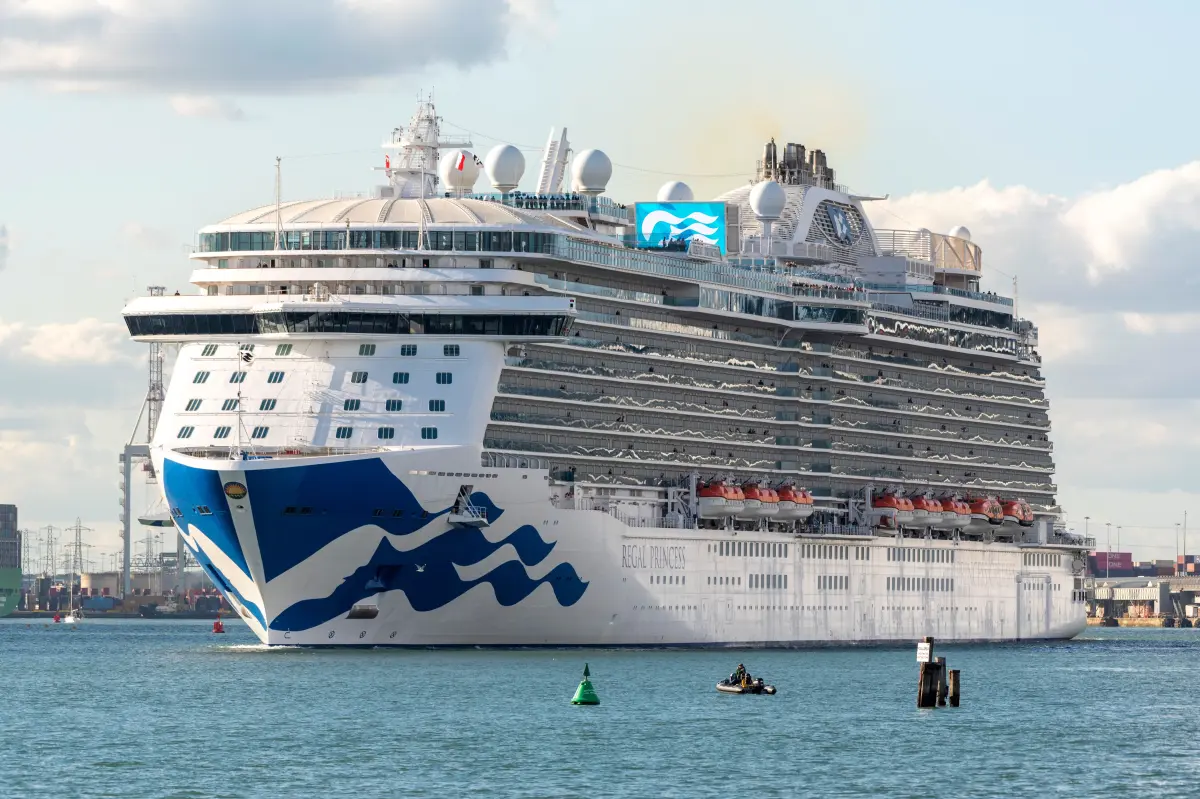
Imagine sailing on a sparkling cruise ship from Galveston, Texas, to the sunny shores of Cozumel, Mexico, with the warm Gulf waters stretching out like a vast blue playground. It’s February 23, and aboard the Regal Princess, passengers are enjoying a leisurely escape from everyday life—sipping cocktails on the deck, laughing in the vanity theater, or simply soaking in the ocean breeze. Families chatter about upcoming adventures in Honduras, retirees reflect on life’s journey, and young couples dream of romance under the stars. But this cruise is about to turn into something far more profound, a real-life drama that reminds us all of our shared humanity. As the ship glides through the water, a routine voyage takes an unexpected detour when the crew spots a tiny, distressed makeshift boat bobbing precariously in the waves. Cheers erupt from the passengers as they realize what’s unfolding—a classic tale of rescue at sea, straight out of adventure stories but all too real. Melody Almogabar Barr, a passenger with a heart full of curiosity, shares how she felt the ship shift, her first clue that something extraordinary was happening. “We knew something was going on because the ship started turning,” she told the Houston Chronicle later, her voice still echoing the excitement mixed with awe. Barr, a mother herself, thought about how vulnerable life can be out there, in the open ocean where currents and storms show no mercy. Under the UN Convention on the Law of the Sea, ships like the Regal Princess aren’t just luxurious liners; they’re obligated to help those in peril, regardless of who they are. It’s a rule born from centuries of seafaring wisdom, ensuring that no one is left to the mercy of the waves. As the ship altered course, passengers on deck wondered aloud, “What’s that little boat?”—a rusty, makeshift vessel with four souls aboard, looking every bit like something jury-rigged from scraps in a desperate bid to cross the Gulf. Photos that later surfaced on social media captured the scene vividly: four men, crouched low for balance, waving a white tarp like a makeshift flag of distress. Water sloshed over the sides as they bailed frantically, their faces a blend of exhaustion and hope. It’s easy to picture them—perhaps migrants chasing a better life, or fishermen caught in a bad turn—human beings with dreams, fears, and families waiting somewhere for news. Passengers like Barr watched from afar, hearts pounding, as the Regal Princess maneuvered skillfully to approach without capsizing either vessel. The crew, trained professionals with hearts of gold, tossed lines and ropes, guiding the four onboard with steady hands. Once safely aboard, these rescued individuals were whisked to the ship’s medical team for check-ups, wrapped in blankets against the chill, offered food and water to ward off dehydration. They weren’t just numbers; they were people, each with a story etched in the lines of their faces—tales of hardship, courage, and that universal spark of resilience. Whispered conversations broke out among the passengers: “Do you think they’re okay?” one woman asked her husband. “I hope they find help.” Barr recalled the packed theater exploding in applause when the captain announced the successful rescue, a wave of empathy washing over everyone. It’s moments like these that humanize travel, turning tourists into witnesses of kindness, reminding us that beneath the vacation sheen, we’re all connected. For the crew, it was just another day fulfilling their maritime duty—but for the passengers, it was a lesson in compassion that lingered long after the cheers faded. The ship’s statement from Princess Cruises praised the swift, professional response, highlighting how safety is paramount, not just for paying guests but for anyone adrift. As the cruise continued to Cozumel and beyond, those four individuals became part of the voyage’s unspoken narrative, a testament to the sea’s unpredictability and the goodwill it inspires.
Delving deeper into the passengers’ perspectives, it’s fascinating how this incident touched lives beyond the deck of the Regal Princess, weaving threads of empathy into the fabric of their holiday. Picture Melody Almogabar Barr, a Houston native with a family back home, sitting in the theater as the announcement crackled over the intercom: “Ladies and gentlemen, we’ve successfully rescued four individuals at sea.” The cheers were not just polite applause; they were genuine, heartfelt roars that echoed through the halls, blending relief and gratitude. Barr, speaking to the Houston Chronicle, described the palpable shift in energy aboard—the ship felt alive, pulsating with the thrill of doing good. “It is clear that this cruise ship has passengers that care about the well-being of others, and we are grateful to have been a part of that,” she said, her words reflecting a broader sentiment. For many travelers, this wasn’t just a story to tell friends later; it was a reminder of life’s fragility. One passenger, a retired teacher named Robert Kline from Birmingham, shared with Fox News Digital how he felt a surge of pride. “We’ve all seen those news stories about people in trouble on the water—makes you think about your own kids or grandkids,” he mused, leaning against the railing as the ship resumed course. Indeed, humanizing these moments means seeing beyond the headlines: the rescued were not faceless strangers but men with histories—perhaps fathers escaping economic hardship, or brothers dreaming of opportunity in Mexico. Social media posts from onboard captured the raw emotion; one video showed passengers excitedly pointing at the small boat, its metal and wood frame creaking under the strain, water pouring overboard like a bucket in a hurricane. A white sheet flapped wildly, a beacon of desperation in the open sea. Barr recalled how the wind whipped up, making everything feel more urgent, and how passengers helped by clearing decks or offering encouragement from afar. The medical evaluation onboard was thorough—these four were dried off, given hot meals, and reassured in simple comforts that spoke volumes. One of them, a young man in his twenties, later relayed through interpreters that they’d set out days ago from the Yucatan coast, only for their engine to fail. Stories like his personalize the rescue; it’s not abstract heroism but real people interacting with kindness. The ship’s crowd theater buzzed with conversations afterward—”Did you see how the crew handled it? Like pros,” one family joked. Even the kids aboard seemed to grasp the gravity, asking earnest questions that adults fumbled to answer. For Barr and others, this detour humanized the cruise, turning a paid getaway into an unforgettable lesson in empathy. Princess Cruises, in its statement, emphasized how such actions uphold maritime traditions, but for passengers, it was a living example of decency at sea, a story they’d carry home and share with friends, proving that travel can broaden hearts as much as horizons.
Now, zooming in on the visual and tactile details shared online, it’s these glimpses that truly bring the rescue to life, transforming cold news into a vivid, human drama. Photos splashed across social media depicted the distressed boat as a patchwork of rusted metal and weathered wood, lashed together with hope and desperation—far from the gleaming yachts that dot yacht clubs back home. Four men huddled onboard, their faces obscured by shadows but their postures telling tales of endurance: shoulders hunched against the relentless sun, hands gripping oars or fastening a tarp that served as both sail and signal. One image showed a small tarp—or perhaps a bedsheet—blowing in the wind, a makeshift flag fluttering defiantly as passengers aboard the Regal Princess leaned over rails, tossing ropes with precision. Water sloshed onboard the tiny vessel, spilling over the sides in rhythmic waves, and the men were bailing frantically, their movements a dance of survival. It’s heart-wrenching to imagine the fatigue in their arms, the burn of salt on their skin, the gnawing fear of being alone in the vast Gulf. For onlookers, these social media posts evoked empathy—comments flooded in like “God bless them,” and “Praying for safe passage.” Melody Almogabar Barr mentioned noticing the drama from afar, her instinct as a mom kicking in. “You could just tell they were exhausted,” she recalled, thinking of her own son’s energetic struggles. The boat’s condition spoke volumes: constructed hastily, perhaps from salvaged materials, it represented dreams deferred—men who might have navigated rough seas for better prospects on the other side. As the Regal Princess approached, the transfer unfolded with nautical grace: lines thrown, hands extended, bodies hoisted over the side. Aboard the luxury liner, these survivors blended into the crew’s care, their circumstantial attire contrasting with the polos and sundresses of the guests. One passenger captured a video of the moment, the cheers blending with gasps of relief. The Houston Chronicle reported how passengers cheered when the rescue ended, a collective exhale that united strangers into a community. Humanizing this means feeling the grit: the boat’s rust flaking in the humidity, the men’s sweat mixing with sea spray, the crew’s focus unwavering as waves rocked both vessels. Princess Cruises’ statement highlighted how all four were evaluated medically, their well-being prioritized—bandages for cuts, hydration drips for dehydration. It’s easy to empathize; these weren’t villains or statistics but individuals with families, perhaps texting loved ones from dry land later. The incident underscored maritime laws’ human side, where duty meets decency, turning a potential tragedy into a story of connection. For the passengers back aboard, these photos lingered, sparking dinnerside debates on immigration and aid, humanizing global issues through a lens of personal witness.
Broadening the lens to the broader implications, this rescue aligns with deep-seated maritime obligations that govern open waters worldwide, a framework that treats human life as paramount regardless of borders or backgrounds. Under the United Nations Convention on the Law of the Sea, vessels like the Regal Princess are not merely commercial ships but guardians of the sea, compelled to assist anyone in distress provided it doesn’t endanger the crew or passengers. This isn’t bureaucracy; it’s a humanitarian pact forged from stories of shipwrecks and salvages across centuries, ensuring that the ocean remains a shared space for all. Princess Cruises’ statement emphasized this, noting how the rescued were cared for onboard—fed, clothed with ship-issued basics, and tended medically—before transport to the next port. For these four individuals, it meant stepping from peril to safety, their makeshift boat abandoned to the waves as they boarded the floating palace. Cozumel, the ship’s next stop, became their gateway to local authorities and support services, a handoff from cruise line to shore that included emotional counseling and legal aid. Passengers aboard understood the gravity; one group discussed how these rules reflect a common good, humanizing laws into acts of kindness. Robert Kline, that retired teacher from earlier, mused on how different nationalities didn’t matter—it’s about people first. The crew’s professionalism shone through, their “unwavering commitment to safety” as praised by the line, blending training with heart. Imagine the captain’s voice over the intercom, calm yet commanding, guiding the operation while reassuring guests. The ship’s itinerary continued seamlessly: departing Galveston on February 22 for a seven-day voyage, touching Cozumel, Roatan, and back to Texas by March 1. Amid chats on deck, this rescue became a conversation starter, reminding folks that cruises aren’t just fun—they’re stages for real-world compassion. The boundary between tourism and aid blurred, with passengers feeling invested. Princess Cruises extended thanks to their team, reinforcing how such actions honor maritime traditions—the age-old sailors’ code of pulling together. For the rescued, this could mean new beginnings, their ordeal a chapter closed by unexpected heroes. Overall, it humanized a duty into a narrative of unity, proving how the sea binds us in shared vulnerability and savior.
Comparing this to a similar incident just days earlier adds layers of coincidence and continuity, painting a picture of the Gulf as a nexus of human journeys fraught with peril. On February 16, the Carnival Celebration, another cruise liner bound for Cozumel, encountered its own drama: five people on a sinking makeshift vessel, water flooding in as their rickety boat succumbed to the elements. Just like the Regal Princess, the Carnival crew sprang into action, rescuing all onboard and notifying the U.S. Coast Guard for guidance. The ship pressed on with its seven-day itinerary uninterrupted, a testament to seamless maritime expertise. Reports from outlets like Fox News highlighted how swiftly it was handled, the rescued evaluated and cared for without drama. Passengers shared stories of thrill and concern, their cruise elevated from relaxation to real adventure. Melody Almogabar Barr, drawing parallels, noted how these rescues—though unrelated—spotlighted migrant routes across the Gulf, matters of policy meeting heart. The makeshift boats appeared similar: rustic, overloaded relics of desperation, flags of cloth signaling distress. One survivor from the Carnival rescue later shared over a meal how gratitude overwhelmed him— offloading onto a luxury ship felt surreal. Social media buzzed with both incidents, users commenting on the string of rescues, boosting admiration for cruise lines. The Coast Guard’s involvement in the earlier case added structure, guiding through radio comms. Humanizing these, it’s stories of families reunited or aspirations reignited; the five on Carnival might have included siblings or friends chasing the same winds. Crews on both ships acted with professionalism, their actions echoing maritime lore without fanfare. Princess Cruises’ statement for Regal praised the tradition, while Carnival’s echoed similar sentiments. For passengers like Barr, these back-to-back tales fostered a sense of purpose aboard, turning watches into witnesses. The regional context—migrant crossings amid economic pressures—added depth; seas became metaphors for hope amidst hardship. Ultimately, these rescues underscored a cycle of aid, humanizing routine cruises into monuments of empathy, where lines in the Law of the Sea translate to lives saved.
In wrapping up this tale of oceanic intervention, one can’t help but feel a profound appreciation for the individuals who make such rescues possible, embodying the timeless spirit of human connection over the waves. Princess Cruises’ gratitude to the Regal Princess captain and crew was well-deserved, their swift, professional response turning potential tragedy into triumph. The ship’s departure from Galveston on February 22 signaled a voyage filled with unexpected meaning, its stops in Cozumel and Roatan now forever marked by this act of kindness. Passengers like Melody Almogabar Barr carried home stories not just of vacation fun but of collective humanity, where cheers in a theater symbolized global solidarity. Amidst maritime obligations enshrined in UN conventions, this incident highlighted how compassion knows no borders—the four rescued, transformed from distress to dignity. Their transport to authorities at the next port offered promising new chapters, guided by support services that humanize bureaucracy into care. Even as the ship returned to Texas on March 1, the echo of that rescue lingered, reminding us that at sea, we’re all equal in our needs. The Carnival rescue a week prior amplified this theme, a duo of good deeds underscoring the Gulf’s role in human migrations. Crews from both lines shone as unsung heroes, their actions a nod to seafaring legacies that prioritize life above all. For the rescued men—now safe and supported—the cruise ships became lifelines in a vast, unpredictable world. Social media chronicles kept the heart in the headlines, with passengers reflecting on shared vulnerabilities. Ultimately, this narrative isn’t just about ships and rescues; it’s about people—ordinary folks onboard and adrift—finding moments of grace amid the blue expanse. The sea, with its mighty swells and quiet depths, emerges as a great equalizer, teaching us that in the face of distress, humanity rises together. As cruises continue sailing, stories like these enrich our journeys, proving that the best adventures are those that touch the soul, leaving passengers not just tanned and rested, but inspired to care a little more. In a world of headlines and hashtags, the Regal Princess rescue stands as a beacon, a reminder that beneath the luxury of floating palaces lies the power of simple, profound kindness.