




The Santa Spoiler: A Community’s Response to One Neighbor’s Holiday Dampening
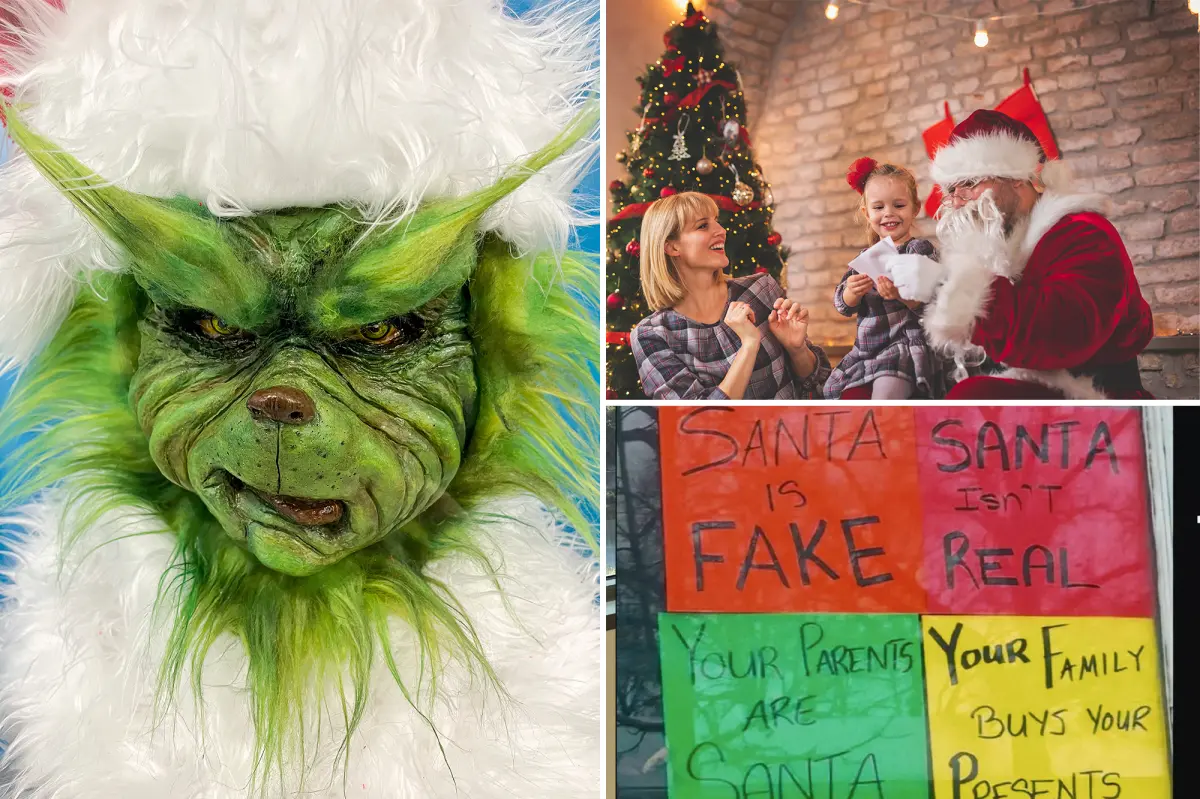
In a small Ontario community, what should have been a joyful preparation for the annual Santa Claus Parade turned into an unexpected controversy when one resident decided to take a stand against holiday magic. In Brantford, Canada, an unnamed homeowner displayed several handwritten signs in their windows with messages declaring “Santa is FAKE,” “Your Family Buys Your Presents,” and “Your parents are Santa.” What made this particularly problematic was the home’s location directly along the Santa Claus Parade route, where countless children would be passing by, eagerly awaiting a glimpse of the jolly old elf himself. This act of holiday rebellion didn’t go unnoticed, quickly transforming from a personal expression into a community concern that had local phones ringing with complaints to the Brantford Police Service.
The police responded promptly to the flood of calls from concerned parents and community members. Robin Matthews-Osmond, corporate communications manager for the Brantford Police Service, reported that officers spoke with the resident responsible for the signs, which were subsequently removed. While acknowledging that the signs weren’t technically illegal due to free speech protections and their placement on private property, Matthews-Osmond diplomatically noted, “While it isn’t illegal to be a ‘Grinch,’ we do encourage everyone to embrace the spirit of the season and help foster a positive, welcoming community, especially during events like the Santa Claus Parade.” The incident highlights the delicate balance between individual expression and community standards, particularly when children’s joy and innocence hang in the balance.
The community’s reaction to this modern-day Scrooge was swift and passionate, particularly online where parents and neighbors didn’t hold back their disapproval. Many expressed that while they respected the right to free expression on private property, this particular message seemed unnecessarily cruel, targeting children’s imaginations during what should be a magical time of year. “I get that everyone has the right to put whatever they want in their own window, but this just seems mean-spirited and pointless,” wrote one social media user. Others were more direct in their condemnation: “This is absolutely disgusting. You don’t get to crush someone’s spirit or ruin something for someone else just because you don’t like something.” Some responses took a humorous approach, suggesting the homeowner “had a bad childhood,” while others proposed more vindictive responses, with one commenter hoping the house would be egged and remain that way until spring thaw.
Interestingly, the incident wasn’t without its supporters. A small but vocal minority defended the homeowner’s right to post the Santa-debunking messages. These contrarians suggested that telling children the truth about Santa shouldn’t be considered offensive, with comments like “So, they told the truth instead of lying like everyone else. How dare they?” Others expressed surprise at the level of community response, particularly that police were involved, stating, “I can’t believe someone actually called the police about this. People are so incredibly uptight about a stupid joke.” This counterpoint highlights the ongoing debate about how and when children should learn the truth about cultural traditions like Santa Claus, and who gets to make those decisions – parents or others.
The Brantford incident touches on a sensitive issue that many parents face: protecting their children’s sense of wonder and maintaining control over how and when certain childhood myths are revealed. This isn’t an isolated concern, as evidenced by similar situations elsewhere. Kelly Bowron, a mother from the UK, previously shared her frustration when Google AI informed her 11-year-old son that Santa was “a fictional character,” unexpectedly disrupting family traditions. Similarly, a New York City mother named Natalie expressed sadness when her 7-year-old daughter’s belief in Santa was prematurely ended by an internet search. “Honestly, I felt quite sad about it,” she explained. “You think, as a parent, that it’s much more in your control about how your kids find out about these things.” These experiences reflect the challenges parents face in maintaining childhood innocence in an information-saturated world.
At its core, this incident represents more than just a disagreement about holiday traditions; it speaks to deeper questions about community values, parental rights, and the balance between truth and magic in childhood. While the signs have been removed and the Santa Claus Parade likely proceeded with all its intended joy and wonder, the conversation it sparked continues to resonate. How do we respect individual expression while protecting communal experiences? Who decides when and how children transition from believing in magical figures to understanding more complex realities? And perhaps most importantly, in a world often filled with cynicism and discord, what value should we place on preserving moments of childhood wonder and joy? The Brantford “Santa is FAKE” incident may seem small in the grand scheme of things, but it opens a window into these larger social questions that communities everywhere navigate, especially during times of tradition and celebration.