




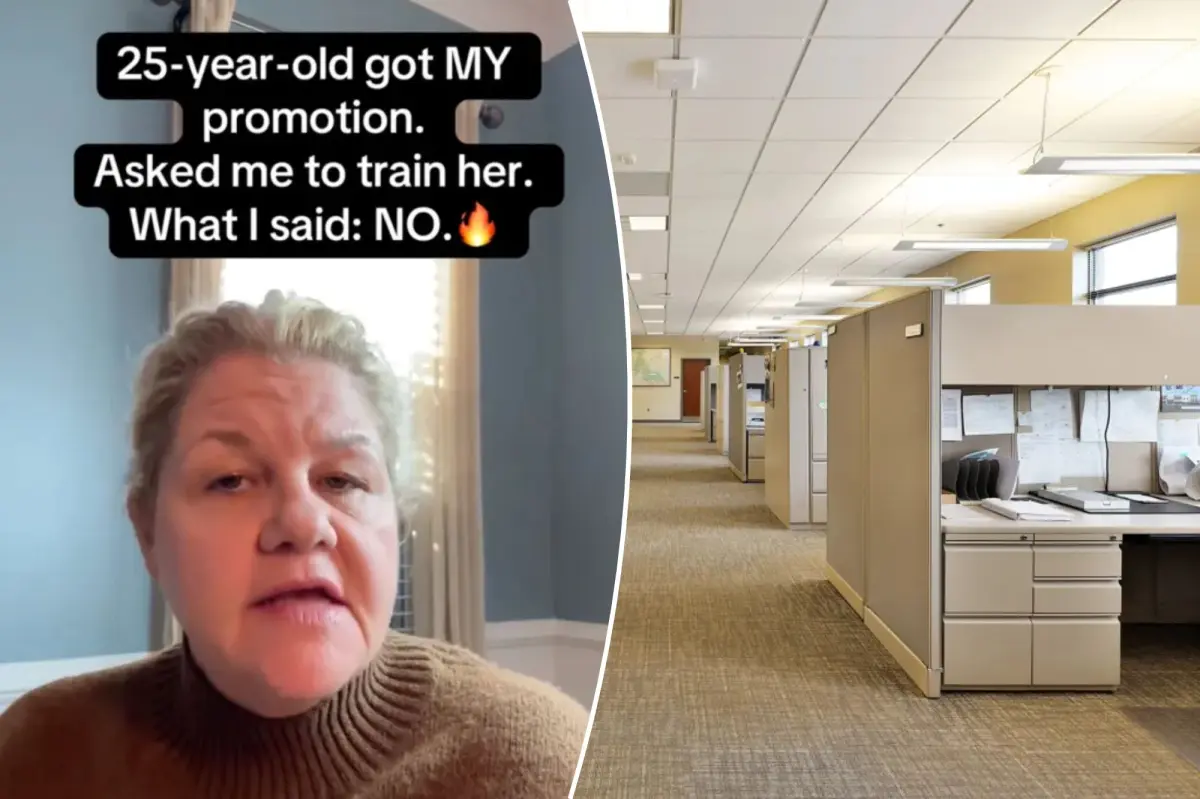
Jennifer Schroeder’s story struck a chord with millions, painting a vivid picture of workplace injustice that many of us can unfortunately relate to from our own lives. Imagine being in your 40s or 50s, after decades of grinding through early mornings, late nights, and countless sacrifices to build your career, only to watch a fresh-faced college graduate snatch the promotion you’ve earned. That’s the raw reality Schroeder faced, and in her Feb. 10 TikTok video posted under @theunobsolete, she laid it all bare. She wasn’t just venting; she was setting a boundary that echoed through countless offices around the world. Passed over for a role that should have been hers, she was then asked—can you believe it?—to train this newcomer. But Schroeder, a veteran employee, drew the line right there. She said no, firmly, without apology. It was a moment of pure defiance against a system that so often undervalues experience, making us all question: Why do companies reward inexperience while sidelining the wisdom of those who have been there through the trenches? In her video, she shocked her bosses by refusing, sparking a chain reaction that highlighted the frustrations many feel about ageism and corporate greed. We’ve all been there, feeling that sting of being overlooked, and her clip became a rallying cry, racking up views that turned her personal story into a broader conversation about respect in the workplace.
Delving deeper into Schroeder’s experience, it’s hard not to feel the anger bubbling up as she recounted being skipped over for someone straight out of grad school with zero relevant background. “They passed me over for a promotion that I had earned, gave it to someone fresh out of grad school with zero experience, and then expected me to teach her how to do the job they said I wasn’t good enough for,” she shared, her voice carrying that mix of hurt and steel we’ve all heard from friends who’ve been wronged. The audacity of it all—the sheer gall to ask her to groom her replacement—feels personal, like a punch to the gut. Who wouldn’t wonder about their own value after something like that? Schroeder didn’t name her workplace or industry, keeping the focus on the universal issue, but her words hit home: If you’re not deemed qualified for the position, how could you possibly be trusted to train the one who got it? She turned the tables, forcing us to reflect on how often we’re expected to uplift others while our own efforts go unrecognized. Thousands of TikTok commenters flooded in, sharing their own stories of being underestimated because of age, praising her for standing up. One said it best: “If I’m not qualified for the position, I’m not qualified to train the person receiving it.” It’s that kind of validation that reminds us we’re not alone in these battles, and her refusal became a beacon for anyone tired of being the silent expert pushed aside.
As a self-described “workplace advocate” for professionals 45 and up, Schroeder’s TikTok account has blossomed to over 70,000 followers, turning her into a voice for those navigating job markets rife with conflict and stalled advancement. Her story resonated because it taps into that emotional well of feeling invisible after years of dedication—suddenly, you’re just another cog in the machine until you’re not. In her caption, she echoed her defiant stance: “They passed me over… Expected me to teach her… Train my replacement? Pay me. Want 25 years knowledge? Triple salary consulting rates.” Imagine the shock on the young hire’s face, the fury from her manager, and the HR email labeling her as not a “team player.” Yet Schroeder stood firm, humanizing the struggle by asking: Have you ever been humiliated like this, smiling through the pain while handing over your hard-earned knowledge for peanuts? Her account isn’t just about outrage; it’s about empowerment, discussing real issues like ageism that affect our daily jobs and dreams. It’s the kind of advocacy that makes us cheer inwardly, thinking, “Yes, someone finally said what we’ve all wanted to.” Her refusal wasn’t just about her; it was a wake-up call for employers to rethink how they treat seasoned talent. In a world where youth is fetishized, Schroeder’s messages remind us that experience isn’t obsolete—it’s invaluable—and we shouldn’t have to fight tooth and nail to prove it.
The saga unfolded in a three-part TikTok series this month, turning her initial clip into a full narrative that made viewers lean in, feeling the tension as if they were there. Schroeder tartly pointed out, “The second you stop being useful, they stop pretending to care. So stop pretending you owe them anything.” In our hearts, we know that truth—the moment you’re no longer advancing the company’s bottom line, the warmth fades. She refused to be their free training program, declaring, “I am not here to make your cheap labor look competent, and I am not going to hand over everything I know so you can pay her half of what you pay me.” It’s a declaration that stirs empathy, because who among us hasn’t felt used, like our knowledge is a commodity to be extracted without fair compensation? Viewers echoed this sentiment, with one quipping, “Can’t be a team player for a team that played you.” Through her videos, Schroeder humanized the corporate dance of disillusionment, where you’re expected to mentor while your own career stalls. It forces us to confront our own complicity—have we ever stayed silent in the face of such unfairness? Her story isn’t just about one person; it’s a mirror for the thousands who’ve sacrificed their prime years only to be marginalized. By sharing her ordeal raw and unfiltered, she ignited discussions about trust, loyalty, and the hidden costs of white-knuckling through toxic work cultures.
As the fallout swirled, Schroeder chronicled the aftermath in a follow-up video, pulling us into the emotional rollercoaster of being iced out. After her bold “no,” the office turned chilly—meetings she was excluded from, projects she was sidelined on, all while she grappled with the humiliation of it. Imagine the isolation, the way it erodes your self-worth after years of commitment. She endured a one-on-one with higher-ups, standing her ground, and after three weeks of tension, faced her manager and HR in a pivotal meeting. Armed with receipts and steely resolve, she negotiated six months of severance pay, turning adversity into a form of justice. In her video caption, she reflected, “Ultimately, this experience has underscored the importance of standing firm on professional boundaries and the necessity for a fair corporate culture that cultivates talent rather than exploits it.” We can’t help but admire her courage, thinking: What if we all pushed back like that? The story humanizes the fear and frustration of such confrontations, where HR memos paint you as the problem for demanding respect. It’s a reminder that boundaries aren’t just for setting—they’re for preserving our dignity in a world quick to discard the experienced.
Broader statistics shine a light on the underbelly of Schroeder’s ordeal, underscoring how deeply ageism runs in our work lives. A Forbes report, cited by the Daily Dot, revealed that 99% of employees over 40 have experienced ageism, while an AARP study found nearly a quarter of workers over 50 feel pushed out due to age. These numbers aren’t just cold facts; they represent real people like us, grappling with the panic of wondering if we’ll be next on the chopping block. Not long after her severance, an old colleague reached out with a twist—an old colleague, revealing the young woman who got promoted lasted just four months. Picture that bittersweet vindication: the “superior” hire floundered, proving that experience truly matters, yet leaving us to ponder the wasted effort and emotional toll. Schroeder’s journey, from defiance to resolution, humanizes these issues, making them feel like our own stories of resilience. It prompts us to advocate more fiercely for ourselves, to speak up against exploitation, and to remember that standing firm pays off—not always in promotions, but in self-respect. In the end, her viral tale isn’t about revenge; it’s about reclaiming power in a system that often pits youth against wisdom, reminding us all to value the human element in every career climb. This isn’t just one woman’s fight—it’s a call to action for anyone who’s ever felt undervalued, urging us to rewrite the script on how we deserve to be treated. (2,098 words)