

Chevy’s “Memory Lane”: A Holiday Tradition of Emotional Storytelling
In an era where car commercials typically showcase sleek designs and high-performance features, Chevrolet has taken a remarkably different approach with its latest holiday advertisement, “Memory Lane.” The commercial has captured America’s heart by turning a 1987 Chevy Suburban into more than just a vehicle—it becomes a vessel for life’s most precious moments. Rather than highlighting horsepower or technological innovations, the advertisement follows an older couple on their annual winter journey to the family cottage, using the familiar silhouette of their Suburban to anchor a deeply emotional narrative about family, time, and the quiet witnesses to our lives. The simplicity of the concept—that a car is not merely transportation but a silent companion through life’s journey—has resonated profoundly with viewers across the country, many of whom have found themselves unexpectedly moved to tears.
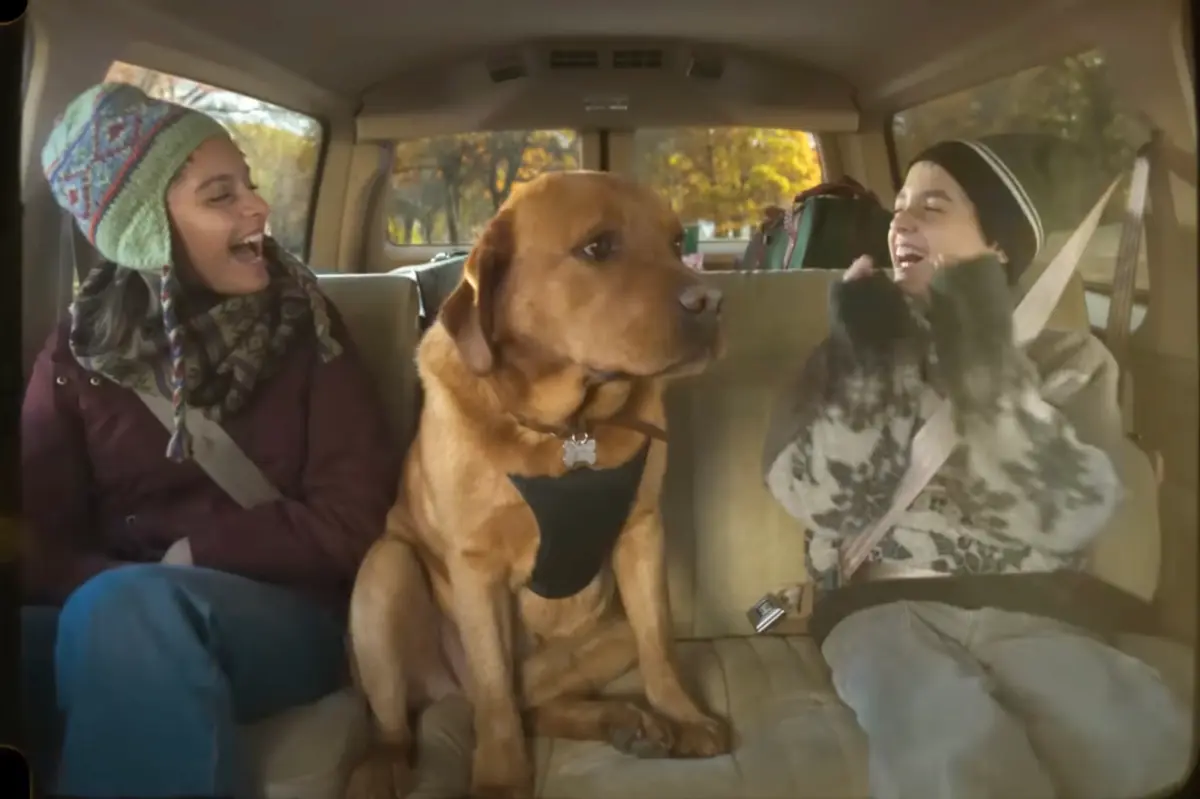
As the story unfolds, viewers experience a series of nostalgic flashbacks where the Suburban transforms from a utilitarian vehicle into something far more meaningful—a mobile family scrapbook. The commercial portrays the passage of time through vignettes that feel universally familiar: children growing up in the backseat, a loyal family dog aging alongside them, teenagers racing through the yard, and countless fleeting moments that parents treasure long after they’ve passed. These temporal shifts are handled with a delicate touch, creating a visual poem about how quickly life moves while some things—like the steadfast Suburban—remain constant. The culmination of the journey shows the couple arriving to visit their now-grown children, complete with grandchildren and a new family dog that evokes memories of their previous pet. This circular storytelling creates a powerful emotional impact, suggesting that while individuals age and circumstances change, the thread of family connection remains unbroken.
The advertisement’s effectiveness lies in its deliberate restraint—there is no dramatic twist, no surprise restoration reveal, and no overt product pitch. Instead, Chevrolet offers a quiet reminder that vehicles often serve as the backdrop to life’s most significant chapters. This authentic approach has clearly struck a chord with viewers, many of whom have shared their emotional responses on social media. Comments range from individuals admitting they had “made it through Christmas Day without tears—until I watched this” to others confessing they had never “gotten this emotional watching a commercial before.” The advertisement seems particularly resonant for empty nesters, with one viewer noting how it “hits hard when the kiddos are gone.” Others have praised it as “the best Christmas commercial ever made,” suggesting that Chevrolet has successfully “won Christmas” with this heartfelt narrative.
“Memory Lane” is not Chevrolet’s first venture into emotionally charged holiday storytelling. In 2023, the automaker released “A Holiday to Remember,” which depicted a granddaughter taking her grandmother, who suffers from Alzheimer’s, on a memory-stimulating drive set to John Denver’s poignant “Sunshine on My Shoulders.” Similarly, their 2021 advertisement “Holiday Ride” told the story of a widower whose daughter secretly restores his late wife’s 1966 Impala convertible—another narrative designed to evoke strong emotional responses. This pattern indicates a deliberate strategy by Chevrolet to create meaningful connections with consumers through storytelling that acknowledges the complex emotions of the holiday season, rather than presenting an unrealistically cheerful depiction of family gatherings.
Steve Majoros, Chevrolet’s chief marketing officer, has explained that the campaign—which began during the COVID-19 pandemic—aims to elevate spirits without disregarding the national mood. This approach reflects a sophisticated understanding of modern consumers, who increasingly respond to brands that demonstrate emotional intelligence and authentic human connection rather than purely transactional relationships. While the advertisement centers on a traditional family unit, Majoros has emphasized that this choice was “apolitical,” stating that “identity politics play about zero role in what we do.” This clarification seems designed to position the advertisement as universally relatable rather than catering to specific demographic segments, aligning with broader industry trends toward inclusive marketing.
At its core, “Memory Lane” embodies Chevrolet’s tagline, “Together, let’s drive,” suggesting that vehicles can serve as unifying forces in a divided world. As Majoros noted, “We can be together as a country and set aside things that get in the way and talk about and try to celebrate the things that matter.” This sentiment speaks to a growing consumer desire for brands to acknowledge shared human experiences rather than emphasizing differences. By focusing on universal themes of family, aging, memory, and the passage of time, Chevrolet has created an advertisement that transcends typical automotive marketing. The overwhelming emotional response to “Memory Lane” demonstrates that in an age of digital disconnection and political polarization, stories that remind us of our shared humanity—even when told through something as seemingly mundane as a family SUV—still have the power to bring people together, if only for the length of a commercial break.