

René Redzepi, the celebrated chef who built an empire on innovative Nordic cuisine, found himself in the eye of a storm just as his culinary dreams were poised for a new chapter. Known worldwide for his groundbreaking work at Noma in Copenhagen, Redzepi had always been the epitome of gastronomic brilliance—transforming humble foraged ingredients into exquisite dishes that dazzled the elite. But beneath the polished veneer of accolades and Michelin stars lay a darker reality, one that erupted into public consciousness with a damning exposé in The New York Times. Days before the launch of his highly anticipated Los Angeles pop-up, priced at a staggering $1,500 per person, Redzepi issued a heartfelt apology. He acknowledged that his past behavior—marked by what he once downplayed as mere “bumps”—had been harmful, causing deep trauma to those who worked under him. This groveling admission came not from a place of calculation, but from a man confronting the shadows of his own temper. For the employees who had endured physical abuse, this apology felt like a long-overdue acknowledgment, a moment where the chef’s hubris softened into vulnerability. Yet, it raised questions about timing: was this genuine remorse, or a strategic move to salvage his reputation amidst rising protests? Redzepi’s statement resonated with raw emotion: “To those who have suffered under my leadership, my bad judgment, or my anger, I am deeply sorry.” It humanized him in a way his celebrity persona rarely allowed, painting a picture of a man grappling with regret after a career built on intensity and innovation.
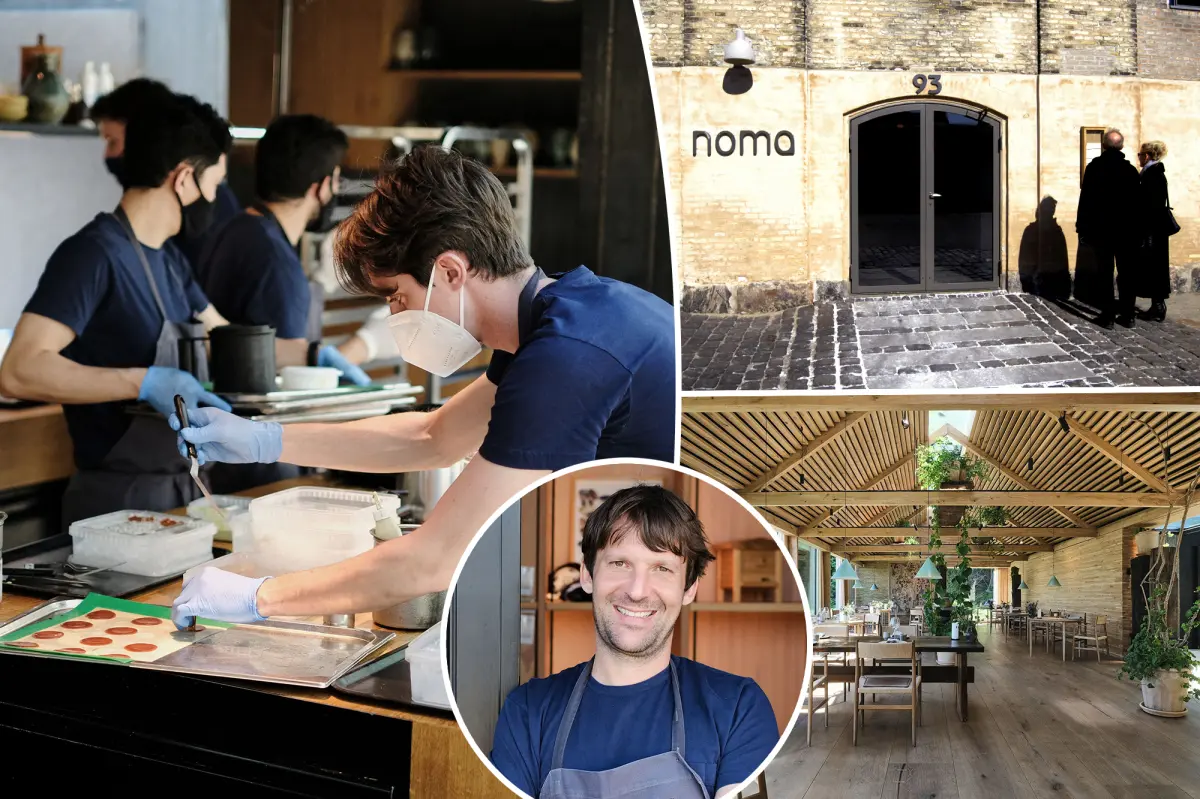
In the early 2000s, René Redzepi opened Noma in a historic Copenhagen warehouse, and it quickly became a beacon of culinary revolution. His “New Nordic” philosophy celebrated hyper-local, sustainable ingredients—think wild berries plucked from Danish forests, pine cones turned into flavor bombs, or reindeer brain custard dusted with bee pollen. These creations weren’t just food; they were art, drawing celebrities like Barack Obama and artists like Marina Abramović to a spot that redefined fine dining. Noma soared to the top, clinching Restaurant magazine’s No. 1 ranking a record five times and earning three Michelin stars, cementing Redzepi’s status as a superstar. But for the young chefs who flocked there, the dream often turned nightmarish. The kitchen was a pressure cooker where perfection was demanded, and failure wasn’t just a misstep—it was met with outbursts that left scars. Redzepi, with his intense drive, fostered a culture where employees lived in fear, balancing on a knife’s edge between creativity and cruelty. One anecdote that captures this duality is the story of a dessert that used ants—alive and wriggling—for their formic acid kick. It was ingenious, but it symbolized the high stakes: chefs experimented relentlessly, inspired by Redzepi’s vision, yet many paid with their well-being. The success story, so inspiring on paper, hid a human toll—exhaustion, anxiety, and a relentless grind that made Noma a bucket-list destination for diners but a battlefield for its staff.
The New York Times investigation peeled back the layers, revealing horror stories from 35 former employees who spoke of a toxic environment sustained from 2009 to 2017. These weren’t isolated incidents; they paint a vivid portrait of systemic abuse where verbal tirades escalated to physical violence. One female chef recounted being punched in the ribs so forcefully by Redzepi that she crumpled against a metal counter, her hip slicing open on the corner, blood pooling as tears streamed down her face. In that moment, she wasn’t just a chef; she was a person broken, left sobbing on a frigid kitchen floor, wondering if her passion for food was worth the pain. Male colleagues shared similarly chilling accounts, describing Redzepi unleashing his fury indiscriminately—punching chests in a row, even hitting interns fresh from gathering elderflowers who hadn’t erred. “Going to work felt like going to war,” one ex-employee confessed, capturing the dread that gripped them daily. They armored themselves mentally, forcing smiles and hiding vulnerabilities to avoid becoming the next target. This wasn’t mere bullying; it was a form of psychological warfare that eroded self-worth. Body shaming added another layer—public ridicule that dismantled egos, leaving chefs feeling humiliated and isolated. As humans, we can imagine the toll: sleepless nights, eroded relationships, a lost sense of identity amid the quest for gastronomic glory. The abuse bred a cycle of intimidation, where senior chefs mirrored Redzepi’s anger, turning subordinates into victims who feared blacklisting from other elite kitchens.
The whispers of misconduct, long simmering, boiled over with the launch of noma-abuse.com by whistleblower Jason White, a former fermentation lab lead. This digital dossier compiled testimonies from 56 staff members, amassing over 9 million views in weeks, transforming personal traumas into a collective outcry. It was a raw, unfiltered archive of human suffering—stories of mockery, like that of Turkish intern Mehmet Çekirge, who was ridiculed for his accent, called a “donkey” with gobbling noises echoing his steps. These actions weren’t just mean; they were dehumanizing, stripping away dignity in a profession that demands collaboration. Çekirge’s experience, shared poignantly, highlighted how Redzepi “raised a generation of bullies,” perpetuating a hierarchy of abuse that silenced dissent. For the victims, speaking out felt liberating yet terrifying, a step toward reclaiming their voices after years of suppression. The site became a testament to resilience, showing how everyday people—chefs, interns, foragers—banded together to expose a star’s fallibility. Even families bore the brunt: accounts of intense pressure leading to burnout and strained relationships underscored the ripple effect on loved ones far from the spotlight. Noma, now overhauled with HR systems and training, represented progress, but the scars lingered, reminding us that behind every celebrated institution are real people grappling with pain.
As Noma’s doors closed for a final time in 2023, Redzepi pivoted to global pop-ups, with Los Angeles marking a bold return under the glittering Paramour Estate in Silver Lake. The 16-week extravaganza, running from March to June, sold out instantly at $1,500 per head, attracting the world’s elite eager for a taste of his genius. Yet, this triumphant expansion was marred by impending backlash—a protest organized by former employees planned for opening night. They sought not just accountability but a reevaluation of Noma’s legacy, urging diners to confront the human cost behind the indulgence. Imagine the scene: affluent patrons arriving in luxury vehicles, champagne flutes in hand, only to face chants and placards that pierce the veneer of exclusivity. For Redzepi, distancing himself from daily operations, this pop-up symbolized reinvention—a chance to showcase evolution after therapy helped him “manage” his anger. He stepped back, hoping to focus on creativity without the rage that once defined his tenure. But the timing spoke volumes: was this a genuine commitment to change, or a way to shield his brand from scandal? The protesters, many still healing, embodied a quiet strength, turning a spectacle of excess into a platform for empathy and justice.
In reflecting on this saga, René Redzepi’s journey underscores the fragility of genius when unchecked power festers. From a pioneer celebrated for elevating foraging into fine art to a figure reckoning with abuse claims, his story is a cautionary tale of passion’s dark side. Employees who endured the worst now advocate for a kinder culinary world, their voices amplifying through media and online platforms. Redzepi’s apology, while sincere on the surface, comes amid his LA venture, prompting debate on accountability in an industry rife with hierarchy. Yet, beneath the controversy lies human redemption: Redzepi’s quest for better ways to lead hints at growth, therapy fostering self-awareness. For victims, healing begins with acknowledgment, their protest a testament to courage. As the pop-up unfolds, it compels us to ponder: can a chef reclaim his narrative, or must legacies be redefined by those harmed? This clash between fame and fallout reminds us that true innovation thrives not on fear, but on respect—making Noma’s rebirth not just about food, but about forging a path where everyone at the table feels valued. The future of haute cuisine hangs in balance, shaped by these voices seeking justice in a world of flavors and fury.