







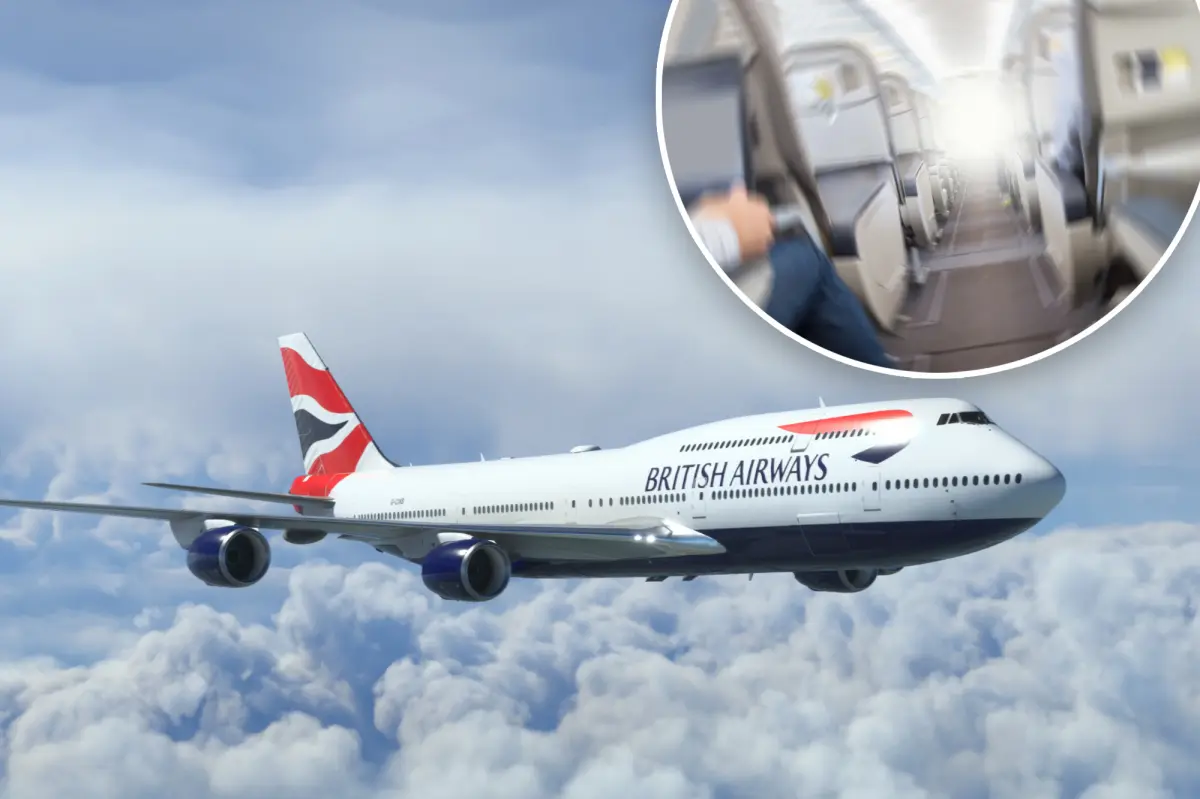
Severe Turbulence on British Airways Flight Leads to Injuries
A recent British Airways flight from Los Angeles to London became a harrowing experience when severe turbulence struck unexpectedly, resulting in serious injuries to passengers and crew. The December 6th incident highlights the increasing unpredictability of air travel conditions, even as airlines employ sophisticated technologies to anticipate and mitigate such dangers. Despite the flight crew’s precautionary measures, the sudden violent jolt caught some passengers unprepared, demonstrating how quickly routine air travel can turn dangerous. The incident serves as a sobering reminder of the importance of following safety protocols on flights, particularly keeping seatbelts fastened even when the skies appear calm.
The trouble began when the flight crew observed potential severe turbulence developing on their live weather application, despite initial briefing documents showing no indication of inclement weather. Taking immediate precautions, the captain activated the seatbelt sign and cabin crew worked quickly to secure the cabin. However, the aircraft soon encountered a powerful vertical jolt that sent unsecured occupants flying through the cabin. The consequences were serious: a crew member suffered a broken ankle while attempting to secure herself, and a passenger who had been asleep when the seatbelt sign was activated broke his ankle after leaving his seat. A third passenger lost consciousness during the frightening episode. The sudden violence of clear-air turbulence—which occurs without visual warning signs like storm clouds—made this incident particularly alarming for everyone aboard.
The response to the emergency showcased the professionalism of the flight crew and the value of having medically trained individuals on board. Doctors among the passengers stepped forward to assist the injured individuals, working alongside crew members who had medical training. They also received guidance from medical experts on the ground, enabling them to provide appropriate care while still in flight. After assessing the situation, the pilot considered diverting the aircraft but ultimately decided to continue to the planned destination at London Heathrow. Upon landing, emergency services were waiting to transport the injured passengers to hospital for further treatment. A British Airways spokesperson later emphasized, “Safety is always our priority, and our highly-skilled pilots and cabin crew are trained to manage rare events such as this.”
According to the Air Accidents Investigation Branch, this incident could have resulted in far more injuries had the seatbelt sign not been activated prior to the turbulence. Their assessment highlights how critical those few minutes of warning were in preventing what might have been a much more serious situation. “The event highlights the benefits of live weather app technology and ground-based medical services in assisting with crew decision-making,” a spokesperson noted. Indeed, the availability of real-time weather data allowed the flight crew to anticipate trouble before it struck, even though they couldn’t prevent it entirely. This incident pales in comparison to a more severe case from July, when turbulence on a Delta Air Lines flight to Europe caused multiple passengers to be violently thrown about the cabin, resulting in 18 hospitalizations.
The increasing frequency of such turbulence-related incidents has raised concerns among aviation experts and climate scientists alike. A 2023 study revealed a troubling trend: clear-air turbulence—which occurs at high altitudes without visible warning signs—has increased significantly in regions worldwide due to climate change. Particularly alarming is the finding that over the North Atlantic, one of the world’s busiest air corridors, the annual duration of severe turbulence increased by a staggering 55% between 1979 and 2020. This statistic suggests that what was once considered a rare occurrence may become increasingly common for air travelers, making adherence to safety protocols more important than ever before.
As climate change continues to alter atmospheric conditions, airlines and passengers must adapt to a new reality where unexpected turbulence becomes more frequent and potentially more violent. For airlines, this means continued investment in advanced weather detection technologies and crew training for turbulence management. For passengers, the lesson is simpler but equally important: always keep seatbelts fastened when seated, even during seemingly smooth flights. The British Airways incident serves as a stark reminder that turbulence can strike with little warning, and that a fastened seatbelt can mean the difference between walking away unharmed or suffering serious injuries. As we move into an era of increasingly unpredictable weather patterns affecting air travel, such precautions may no longer be just recommendations but essential safeguards for everyone who takes to the skies.