





Retail’s Renaissance: How Flagship Stores Are Energizing New York City
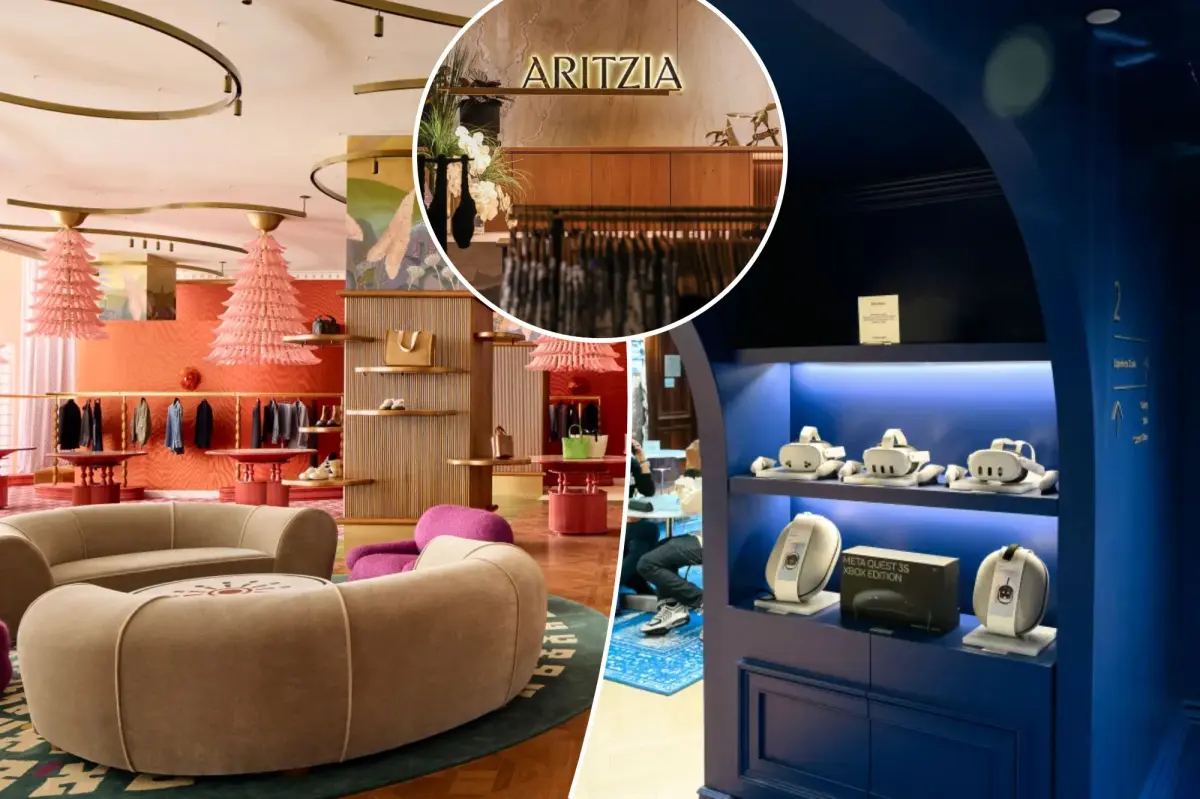
In today’s competitive economy, retail spaces must create memorable experiences to thrive. From Manhattan’s luxury corridors to trendy downtown neighborhoods, New York City is witnessing a retail revival where atmosphere and location are everything. Retailers are embracing immersive environments that complement rather than compete with online shopping, creating destinations that draw crowds and revitalize streetscapes. The transformation is visible everywhere—from the elegant renovation of Printemps at One Wall Street to Prada’s Fifth Avenue flagship, from Pop Mart in the Oculus to Meta’s virtual reality experiences on Fifth Avenue. These aren’t just stores; they’re attractions that contribute to the city’s energy and appeal.
Industry experts report an exceptional year for high-street retail, with prime locations generating multiple offers even while still occupied by current tenants. As CBRE’s Joe Hudson notes, nearly every high street has experienced an “unbelievable year.” This competitive environment has brands moving quickly and paying premiums for true flagship locations that offer the essential combination of foot traffic, visibility, and experiential elements impossible to recreate online. The converted retail space at One Wall Street housing Printemps exemplifies this trend, with Newmark’s Jackie Totolo describing the transformation as “monumental.” Other standout examples include the new Aritzia in the Flatiron District and Monos in SoHo’s Scholastic Building, now owned by Empire State Realty Trust, which plans additional amenities for office tenants. As attorney Clara Feldman of Blank Rome observes, “Niche brands want to be in SoHo where fashion and art come together,” highlighting how neighborhood identity remains crucial in retail strategy.
Generation Z’s growing economic power is driving much of this retail renaissance. According to Bank of America Global Research, Gen Z’s global income will reach a staggering $36 trillion within five years, with their spending projected to surge from $2.7 trillion in 2024 to $12.6 trillion by 2030. Robert Cohen of Newmark points out an unusual trend: “They continue to spend up in a down market.” This generation’s spending habits are reshaping retail categories, with second-hand luxury becoming a central high-street category through stores like The RealReal and Rebag. The influence extends uptown as well, where luxury clubs like Casa Tua and Maximes have created a “ripple effect” on Madison Avenue, attracting new shoppers and brands. Susan Alexandra is opening at 1088 Madison with experiential in-store elements, while French fashion company Sézane—already established in Nolita and Williamsburg—has leased space in the base of Naftali Group’s luxury Benson condominium at 1045 Madison Avenue.
Madison Avenue’s transformation continues northward, with brands that once competed for spaces in the 70s now vying for locations in the 80s. Tuckernuck at 1121 Madison Avenue exemplifies the home-like, curated retail experience that today’s shoppers desire, while luxury brands like Swarovski, Frédéric Malle, and Todd Snyder populate the base of the Bellemont at 1165 Madison Avenue. Sara Armet of Mantis, who co-organized the Holiday on Madison pop-up featuring over 60 emerging vendors, observes that “people aren’t just there to shop, they’re also coming to dine, exercise, be pampered, socialize and experience the city.” This holistic approach extends to Fifth Avenue, where Moncler will open near Apple’s iconic cube, and to Midtown, where luxury developments will soon host flagships for brands like Chanel. Meanwhile, Fifth Avenue is undergoing significant transformation with new luxury developments, including Gary Barnett’s 74-story tower at 655 Madison Avenue and LVMH’s planned 25-story building at 1 East 57th Street. Further south, a 1.6 million-square-foot office tower at 570 Fifth will feature Ikea at its base, introducing a different retail format to the luxury corridor.
The Meatpacking District continues its evolution with Baccarat moving from a temporary pop-up to a permanent location at 33 Ninth Avenue. As Clara Feldman notes, the luxury crystal brand is “trying to rebrand to a younger audience,” reflecting how even heritage brands must adapt to changing demographics. The Whitney Museum has bolstered the area’s appeal, and a forthcoming 600-unit apartment tower will add both office workers and residents eager to patronize local businesses. The district’s popularity has Armet predicting, “If you are not already in Meatpacking it will be on fire and whatever space is left the luxury brands will continue to fill.” Even previously struggling areas like the West 34th Street corridor are seeing improvement through strategic investments, with Vornado’s Penn District developments introducing new office tenants, fitness facilities, and dining options. Primark’s opening at 150 West 34th Street promises to create “excitement” in a market that Vornado chairman Steve Roth aims to transform from “junky retail” to “attractive, modern and exciting retail offerings.”
These retail transformations are not only revitalizing neighborhoods but also contributing significantly to public coffers. Major retail property transactions generate substantial tax revenue for the city and state. Recent examples include the Paris-based Ardian’s investment in Kering’s retail and office condominium at 717 Fifth Avenue, which was revalued at $900 million and generated over $17 million in transfer taxes for the city and state. Similarly, the $213 million sale of the Nike store at 529 Broadway in SoHo to Ikea contributed nearly $7 million in transfer taxes. Beyond the immediate transaction taxes, these properties provide ongoing revenue through property taxes that support vital city services. The largest office transfer of 2023, 590 Madison Avenue for $1.1 billion, added over $35 million to government coffers and will continue generating more than $25 million annually in property taxes. This symbiotic relationship between retail investment and public funding demonstrates how the sector’s health benefits the broader community, reinforcing the importance of New York City’s retail renaissance in the post-pandemic economy.