





Barbie: A Hidden History Beyond the Perfect Plastic Smile
For nearly seven decades, Barbie has stood as a cultural icon, marketed as a revolutionary alternative to the baby dolls that dominated the toy market before her arrival in 1959. The narrative most of us know is simple and empowering: Ruth Handler, co-founder of Mattel, created a grown-up fashion doll that would inspire girls to dream beyond motherhood. Yet according to Tarpley Hitt’s revealing new book, “Barbieland: The Unauthorized History,” this origin story is largely manufactured. The pristine image of Barbie as a groundbreaking original conceals a messier reality of corporate imitation, aggressive legal tactics, and strategic myth-building. Rather than being the visionary creation Mattel has long claimed, Hitt portrays Barbie as something far more ordinary in the business world: a successful knockoff elevated through brilliant marketing and ruthless corporate protection, resulting in a product that transformed from mere toy to cultural touchstone through carefully controlled storytelling rather than genuine innovation.
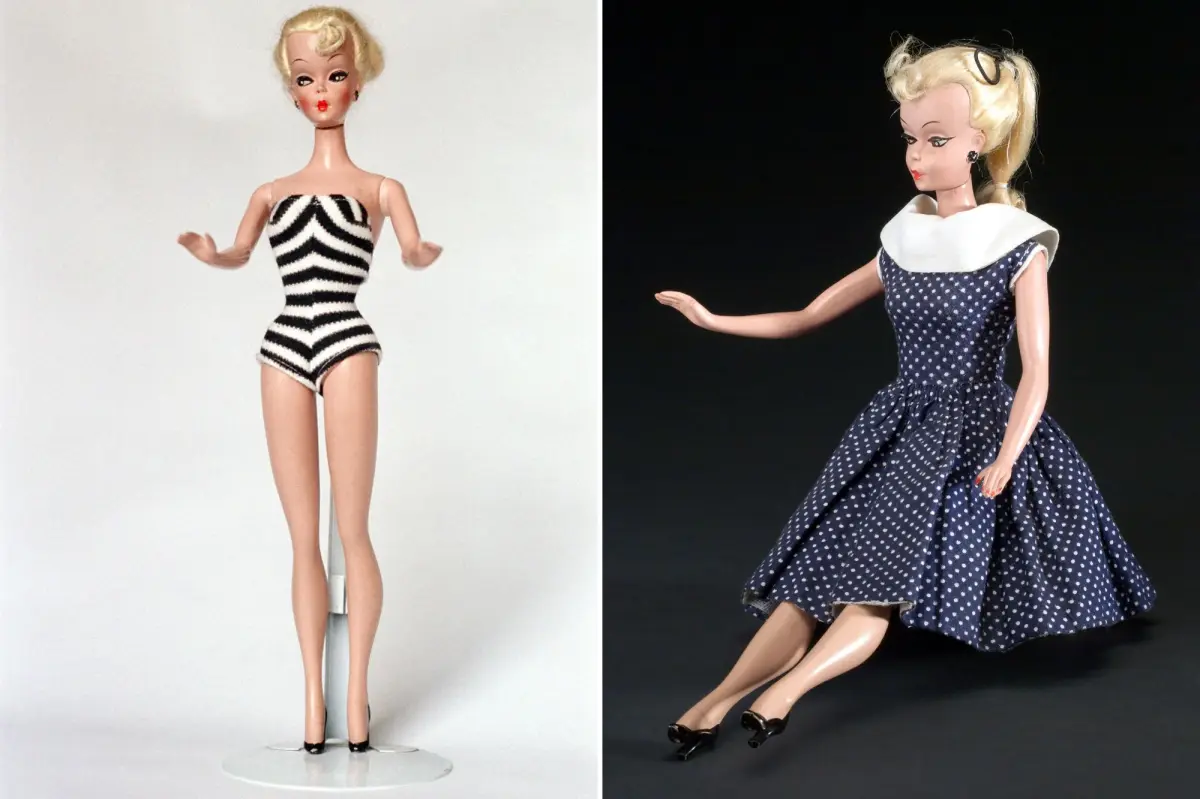
The most compelling revelation in Hitt’s account involves Bild Lilli, a German doll that predated Barbie and served as her unmistakable template. Lilli began as a risqué comic strip character in a German tabloid—a blonde bombshell whose gold-digging adventures often ended in comedic wardrobe mishaps. By 1955, Lilli had become a physical doll sold throughout Europe, and by 1958, she even starred in her own movie, decades before Margot Robbie would bring Barbie to theaters. According to Hitt, Ruth Handler’s encounter with a Lilli doll in Switzerland in 1956 was far more significant than Mattel has historically acknowledged. Handler allegedly instructed Mattel engineer Jack Ryan to copy the doll, slipping a Lilli into his briefcase before a trip to Japanese factories. By the time the German company secured its American patent for Lilli in 1960, Mattel had already sold approximately $1.5 million worth of Barbies. Eventually, Mattel purchased the worldwide rights to Lilli—not to develop the character, but to bury her existence and secure Barbie’s claim as the original adult fashion doll. This pattern of controlling the narrative around Barbie would become a defining characteristic of Mattel’s approach to their flagship product.
As Barbie grew into a global phenomenon, Mattel became increasingly protective of her image, exerting extraordinary control over any representation of their plastic star. When commissioning an “Art of Barbie” coffee table book in 1994, the company rejected photographer Nancy Burson’s contribution showing Barbie with crow’s feet and other signs of aging—imperfections were simply unacceptable for the doll’s carefully maintained image. Similarly, when actress Sharon Stone pitched a “Barbie” movie in the 1990s, she reported receiving “a lecture and an escort to the door.” Mattel demanded that any authorized representation of Barbie remain “identical to the doll as possible,” not just in appearance but in essence. Barbie could never be portrayed as flawed, limited, or anything less than perfect. This obsessive image control reflected not just typical brand protection but a deeper corporate anxiety about maintaining the mythological status of their flagship product. By preventing creative reinterpretations that might humanize or complicate Barbie, Mattel wasn’t simply protecting a toy—they were protecting an idealized symbol they had carefully constructed and sold to generations of consumers.
Mattel’s aggressive protection of Barbie extended well beyond rejecting unflattering portrayals, evolving into a pattern of litigious behavior that often appeared excessive even by corporate standards. When Europop band Aqua released their playfully satirical hit “Barbie Girl” in 1997, Mattel launched a lawsuit that became almost comically emblematic of corporate overreach. The judge, ruling against Mattel and in favor of the song as protected speech, advised the toy company “to chill”—a rare judicial suggestion that speaks volumes about how Mattel was perceived. Even more revealing was the company’s decade-long legal battle against MGA’s Bratz dolls following their 2001 debut. What began as Mattel’s claim that a former employee had conceived Bratz while working for them escalated dramatically when MGA counter-alleged that Mattel had engaged in corporate espionage. The ensuing legal drama exposed troubling tactics, including testimony from a self-proclaimed Mattel spy who admitted to using fake identities and business cards to infiltrate competitors’ showrooms. The jury ultimately found that Mattel had stolen from MGA rather than the reverse, resulting in an $85 million damage award against Mattel (though this was later overturned on procedural grounds). These legal battles reveal a company willing to go to extraordinary lengths to maintain market dominance, even when those tactics ultimately backfired both financially and in the court of public opinion.
Given this history of rigid image control, it seemed astonishing when Mattel approved Greta Gerwig’s 2023 “Barbie” film, which playfully critiques aspects of the doll’s legacy. The movie, starring Margot Robbie, portrays Barbie experiencing an existential crisis after discovering cellulite on her previously perfect plastic legs—precisely the kind of “flawed” portrayal the company had historically rejected. However, this apparent loosening of control came at a time when Mattel faced significant financial challenges and needed to reinvent its approach. By 2018, the company was struggling financially and had appointed a new CEO who envisioned transforming Mattel into an IP-driven company. This executive “understood that the screen was the medium on which Barbie’s future would be made,” recognizing that cultural relevance in the 21st century required adaptation. The film represents a calculated risk that paid off enormously, generating nearly $1.5 billion at the global box office and revitalizing the brand. Yet even as it seemed to embrace self-criticism, the movie ultimately reinforced Barbie’s central mythology: that this doll had fundamentally changed how girls envisioned their futures, expanding possibilities beyond motherhood to careers as designers, adventurers, businesswomen, and even presidents.
Despite all the revelations about corporate maneuvering and manufactured origin stories, Barbie’s cultural impact remains undeniable. As Hitt observes, she “had become not just a child’s accessory but a symbol, as synonymous with American consumerism as the Golden Arches and French fries.” Perhaps the most remarkable aspect of the Barbie phenomenon is how a plastic doll—created as a commercial product, designed to sell endless accessories and outfits—transcended her commercial origins to become a cultural touchstone that endures across generations. Like “diamonds or microplastics,” Barbie has achieved a kind of permanence in our collective consciousness. The true genius of Mattel wasn’t necessarily in creating an original doll, but in creating and sustaining a powerful myth around that doll—a myth so compelling that even when we learn of its fabricated elements, the emotional connection and cultural significance remain largely intact. In this sense, Barbie represents something fundamentally American: a commercial product elevated to iconic status through storytelling, marketing, and an uncanny ability to reinvent herself while somehow remaining essentially unchanged. Whether we see her as an empowering role model or a problematic reflection of impossible beauty standards likely says more about us than about the 11.5 inches of plastic that started it all.