




The Birth of a Timeless Tradition
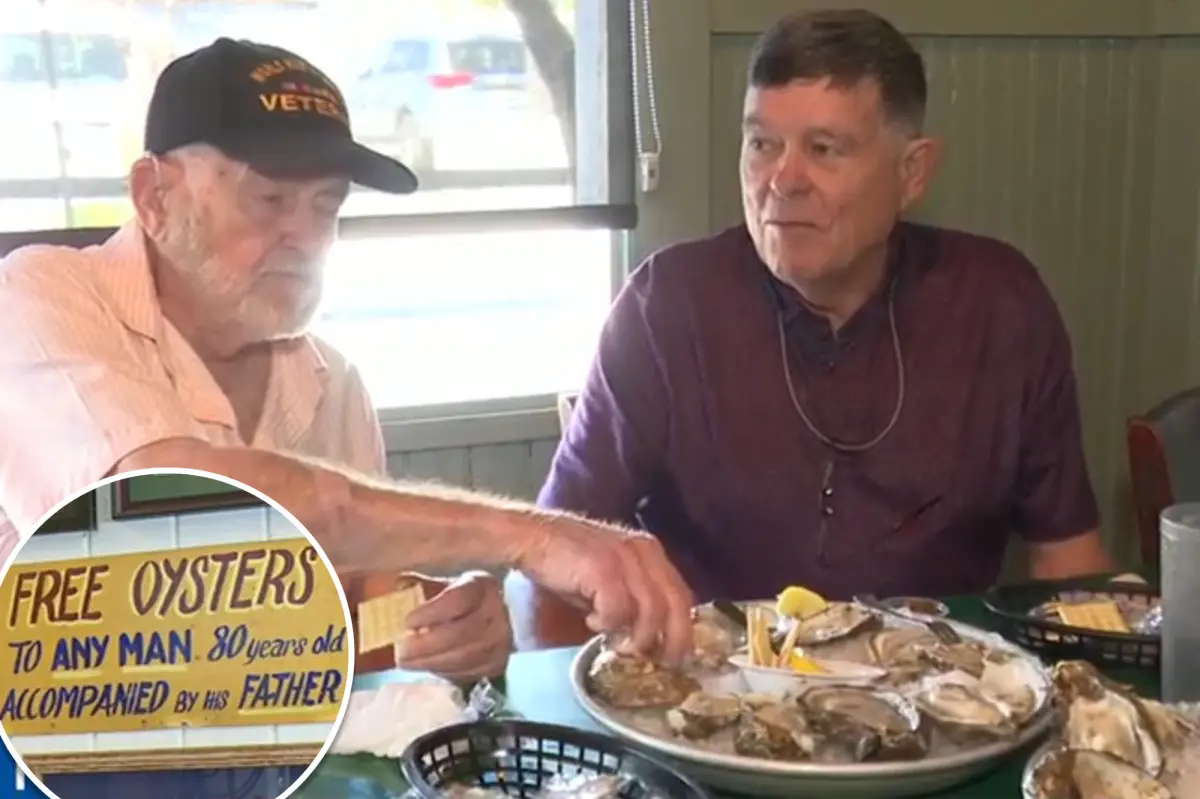
Imagine walking into a loved one’s home, only to find a quirky rule that’s been hanging there for generations—untouched, almost forgotten, but pulsing with the promise of something extraordinary. That’s essentially what happened on Jimmy Rush’s 80th birthday, a day that turned into a heartwarming testament to family bonds and patient anticipation. It all began at Wintzell’s Oyster House in Mobile, Alabama, a bustling spot known for its fresh, briny delicacies and a sign on the wall that’s been dangling like a forgotten treasure since the 1930s. The promise was simple yet profound: “Free oysters to any man 80 years old accompanied by his father.” For Jimmy, who had made an annual pilgrimage to this spot with his father, Jim, before joining the Mardi Gras parades since 1972, that sign wasn’t just text—it was a beacon of connection to the past, a nudge from history reminding him of the enduring ties between generations. As the years ticked by, that sign became more than decoration; it symbolized the quiet hopes of fathers and sons, wives and grandchildren, all wrapped in the salty air of expectation. Jimmy wasn’t alone in this dream. His family—spread out like roots of an old oak—had joked about it for decades, turning it into a running family tale, the kind that gets retold at reunions with laughter and a hint of wistfulness. They never doubted the someday, but life’s busy waves often pushed it aside. Yet, here they were, on a crisp October day in 2024, ready to challenge the impossible: an 80-year-old man walking in hand with his 99-year-old dad, both vibrant, both eager to claim what no one else had managed to. The restaurant, steeped in Southern charm with its wooden booths and the faint hum of shuckers working the raw bar, seemed to hold its breath. Jimmy’s younger brother, Carl, later reflected on how this moment felt like destiny unfolding. “It wasn’t just about oysters,” Carl said, his voice carrying the warmth of shared memories. “It was about proving that some things, like family, outlast time.” The Duke family—even though they’re the Rush clan—had woven this story into their DNA, making it a lighthearted saga that underscored the beauty of persistence. Jimmy, with his easy smile and steadfast demeanor, was no stranger to hard work; he’d spent his life building dreams, from wartime service echoes lingering in his father’s tales to everyday triumphs like seeing his sons grow into men. This birthday wasn’t just a number—it was a bridge, a way to honor the man who’d raised him. Jim, the patriarch at 99, had always been the steady hand, navigating storms of wars and personal losses with quiet strength. Their story wasn’t just about a meal; it was about legacy, about how small traditions can keep the flame of connection burning bright. As they approached the door, you could almost hear the whispers of history, urging them forward into this rare moment of comedic triumph and familial bliss.
Dreams Deferred and Revived
For Jimmy Rush, the journey to this milestone wasn’t a sudden decision but a tapestry woven from threads of longing and shared laughter over the years. Picture him and his father, Jim, stepping into Wintzell’s year after year, the scent of oysters mingling with the buzz of patrons, as they scanned that elusive sign behind the bar. Put up in the 1930s, during an era when Alabama bars were hubs of storytelling and tall tales, this promotion stood as a quirkyEaster egg in a place where deals were made and dreams dangled. Jimmy, whose birthday fell in October, had turned 80 without much fanfare in years past—until this one. “I’ve been eyeing that sign since I was a kid tagging along with Dad,” he later chuckled, his voice laced with the kind of nostalgia that warm hearts. It wasn’t about the free food, though the oysters were legendary for their plumpness and briny kick; it was the specificity that captivated. An 80-year-old man with his father? It sounded almost mythical, like something from a fairy tale where age renewed vitality rather than diminished it. The Rush family had adopted it as their personal legend, recounting it around Thanksgiving tables or at Christmas gatherings, turning it into a punchline that doubled as prophecy. “We’d laugh about it, saying, ‘One day, Jimmy, you’ll be 80, and Dad will still be kicking,’” Carl recalled, his words painting a picture of homespun joy. For decades, as Jim’s health held steady despite the wear of time—a military vet who’d fought in World War II and the Korean War—the family clung to this notion. Jimmy, with his even keel and family-oriented life, never let go of the hope. Married, with children and grandchildren scattering like falling leaves, he found solace in these traditions, using them as anchors in a world of change. For him, this wasn’t merely claiming a bargain; it was a rite of passage, a chance to celebrate not just the number 80 but the unbreakable bond with the man who’d taught him resilience. Jim, ever the stoic father, embodied that unspoken promise—always active, refusing to fade into the background. One could imagine the quiet conversations over those pree-parade meals, where dreams were planted like seeds, waiting for the right season to sprout. It was as if the sign was a mirror, reflecting not just a quirky deal but the Rush family’s commitment to each other, proving that some aspirations, though slow-burning, ignite with unparalleled warmth. In a media-saturated age where instant gratification rules, this story reminded us that true rewards come from patience, from letting ideas simmer like a good stew. Jimmy’s anticipation built like a crescendo, each annual visit deepening the itch to make it real. “I planned my whole 80th around it,” he admitted, his eyes twinkling with mischief. It was a testament to how small things—a weathered sign, a shared meal—can hold the power to unite generations, turning ordinary days into extraordinary memories.
A Celebration That Spans Generations
When Jimmy’s 80th birthday rolled around, it wasn’t just a date on the calendar—it was an event epic in scope, fueled by decades of collective dreaming. The Rush clan, ever the close-knit group, transformed this oyster outing into a grand affair, inviting about 60 family members and friends to witness history. Picture the scene: a bustling restaurant alive with chatter and clinking glasses, decorated not with balloons but with the anticipation of something legendary. Family members from near and far converged, their faces etched with a mix of excitement and amusement, because this wasn’t your average birthday bash—it was a family quest come to life. Carl, Jimmy’s brother and unofficial planner, had orchestrated it all, ensuring everyone was in on the secret. “We’ve been talking about it for 25, 30 years,” he shared, his voice echoing the sentiment of a tribe united. As they gathered outside Wintzell’s, the air thick with Mobile’s autumn chill, there was an undercurrent of emotion—pride, joy, and a touch of awe at defying the odds. Jimmy, usually unassuming, felt a surge of purpose; this day was bigger than him. It was an ode to his father, Jim, who at 99 stood tall despite the sands of time eroding some of his strength. The group posed for photos, laughter ringing out as they joked about being the first—and possibly last—to claim this prize. Inside, the oyster house was a symphony of smells: buttery garlic, tangy sauces, and the sharp snap of shells being cracked open. Tables groaned under platters of fresh catches, but Jimmy’s dozen free ones held a special place. As he bit into the first succulent oyster, savoring the rush of brine and sea, he thought of all the times he’d shared this ritual with Jim. births, marriages, losses—they’d weathered it together, and now, with this act, they were sealing another chapter. The family’s gathering wasn’t just celebratory; it was restorative, a reminder of why we cherish our kin. Grandchildren peppered their grandfather with questions, learning not just about oysters but about stories of old. Women whispered to each other about how this captured the essence of Southern hospitality, where tradition bows to the unbreakable. It was more than a meal—it was a feast for the soul, nourishing bonds that time couldn’t sever. Jimmy beamed throughout, his 80th etched not in candles but in slurp of perfectly shucked bivalves. “Never thought about any other birthdays,” he confessed later, underscoring how this one dwarfed the rest. The night unfolded with toasts, stories, and lingering hugs, painting a portrait of a family where loyalty isn’t inherited—it’s lived. In an era of fleeting connections, this event stood as a beacon, proving that with love and a little patience, milestones can bloom into lifelong legacies.
Claiming the Prize at Last
As the Rush family trooped into Wintzell’s Oyster House, the moment they’d awaited for generations poised to unfold like a well-told joke reaching its punchline. The restaurant staff, seasoned veterans of serving hungry crowds and cracking wise, initially treated it as business as usual. But when Jimmy approached the counter, 80 years young and accompanied by his spry 99-year-old father, eyes widened and whispers spread. “We felt like our dad was going to make it to 100 because he’s in great health,” Carl explained, his words carrying the weight of bet-hedged hopes. The bartender, wiping down the bar with a practiced motion, paused as Jimmy pointed to the sign and made his claim. Free oysters— a dozen plump ones—for an octogenarian with his father in tow. To confirm it wasn’t a hoax, the family asked if anyone else had ever succeeded. “Had anyone else done it? No one had,” Jimmy recounted, his grin broadening. The answer was unequivocal: they were the first, pioneers in this seafood saga. Jim, the nonagenarian World War II and Korean War veteran, stood beside him, his posture reflecting decades of discipline and quiet fortitude. “We’re the number ones,” he declared proudly to reporters later, his voice steady despite age’s whispers. The oysters arrived promptly, shucked with precision, their shells gleaming like treasures from the deep. Jimmy savored each one, but the real feast was the affirmation—the sign’s promise fulfilled. The restaurant buzzed with the tale; patrons leaned in, turning it into impromptu entertainment. “Most people read that sign and laugh,” Wintzell’s later posted on Facebook, capturing the intrigue. Yet here was Jimmy Rush, flanked by his father, transforming a rare tradition into a lived milestone. The free dozen wasn’t just sustenance; it was validation, a salty acknowledgment that family ties persevere. Jim, despite his age, radiated vitality, his stories of battles past adding depth to the occasion. He’d marched through hellish conflicts, emerging with a worldview forged in resilience, and now, this lighthearted victory felt like another badge of honor. For the brothers, it was a shared victory, a testament to their upbringing in a home where promises mattered. As they ate, conversations flowed—reminiscences of past visits, dreams for the future—making the meal more than nutritional; it was nourishing for the heart. The staff, amused and impressed, even joined in the banter, reminiscing about the sign’s origins in the Depression era, when such promotions were lures for repeat customers. Jimmy’s success wasn’t just a one-off; it resonated, sparking joy among strangers. In that intimate exchange, the restaurant became more than a venue—it was a stage for human connection, where age bowed to possibility. As shells piled up, so did the stories, weaving a tapestry of warmth that outlasted the tide of time.
Reflections from a Veteran’s Heart
In the aftermath of their triumphant claim, the Rush family shared reflections that painted Jim as not just a participant but the beating heart of the story. His 99 years were a testament to grit, a life lived with an earnest simplicity that defied statistics. “I’ve been very lucky,” he told Fox 10, his words simple yet profound, echoing the belief that longevity is a gift, not a guarantee. Carl, ever the devoted son, waxed poetic about their father’s health: great overall, save for fading eyesight that blurred the edges of his world. No medications anchored him; instead, he relied on a regimen of movement and mind, avoiding the shackles of pills. “He’s in great health,” Carl reiterated, pride swelling in his voice like a tide. Jim’s demeanor was one of quiet pride, a man who’d witnessed empires rise and fall, from the trenches of wars to the quiet victories of family life. As a World War II and Korean War veteran, he carried scars unseen, yet his optimism shone through. Asked about the secret to his long life, he didn’t cite diets or exercises—instead, he pointed upward. “Through my God,” he said, attributing his wellness to divine providence and a deliberate pace. “It worked out,” he added, a mantra of gratitude. For Jim, each day was a canvas, painted one stroke at a time, avoiding the rush that claimed so many. This philosophy wasn’t abstract; it was lived, evident in how he embraced family outings, his laughter a balm for sorrow. The family, gathered on his birthday, felt the ripple of his wisdom. They spoke of how he’d guided them through storms—financial woes, personal losses—always with a steady hand. Jim wasn’t boastful; his role was inspirational, a living example that age could be a companion, not an adversary. His sons, Jimmy and Carl, embodied his values: loyalty, patience, and joy in small things. As they recounted tales of his service—hard-fought battles, comrades lost— Jim sat humbly, his presence a reminder of sacrifice’s legacy. Yet, amidst the weighty memories, he infused levity, joking about their oyster victory. “We’re the number ones,” he’d say, his smile a testament to enduring spirit. To him, this deal wasn’t just a win; it was affirmation of a life well-lived, of promises kept across decades. The family’s bond, forged in shared experiences, grew stronger, nourished by his wisdom. In a world chasing fleeting highs, Jim’s story was a gentle rebuke—a call to cherish the present, to let faith and family be the true staples of survival.
Looking Ahead to Future Feasts
Even as the echoes of that triumphant birthday faded, the Rush family was already plotting their next chapter, blending hope with the unyielding pull of tradition. Carl, with two years until his own 80th, declared their intent boldly: “We will be back to do this all over again in October of 2028 when I turn 80.” By then, Jim would be 102—a century-old sentinel, assuming he held steadfast. “My dad says he’s going to make it, so that’s good enough for me,” Carl added, his optimism a mirror of the family’s creed. This wasn’t idle chatter; it was a pact, a way to extend the magic beyond one evening. They envisioned another gathering, perhaps larger, with the restaurant transformed into a reunion hall of cheers and clinking forks. Jim, ever the quiet motivator, affirmed his readiness to witness it. Despite the odds—centenarians are rare diamonds—he approached the future with the same calm certainty he’d shown in war zones. “God has been good to me,” he repeated, framing longevity as blessing rather than feat. The brothers dreamed aloud: maybe more family would tag along, turning it into a multigenerational ritual. Jimmy, now the keeper of this crown, felt a renewed sense of purpose, eager to pass the torch. “It’s our family legacy now,” he mused, imagining grandkids one day aiming for 80 with their fathers. The restaurant, too, seemed poised for more; Wintzell’s post on Facebook hinted at the sign’s newfound fame, perhaps inspiring others to pursue heartfelt quests. For the Rushes, this wasn’t closure—it was a beginning, a recurring adventure where age became an ally. They spoke of Jim’s journey, how his service instilled discipline that carried over to civilian life, enabling endurance through joy and trial. Family gatherings, once simple, now brimmed with anticipation. As 2028 loomed, plans solidified: birthdays themed around oysters, toasts to resilience. Jim’s presence anchored it all, his vintage tales a spice to the narrative. In this forward gaze, they found solace, knowing that with faith and kinship, milestones weren’t endings but continuations. The story of free oysters became a symbol of unyielding vitality, a family mantra that defied time’s march. And so, with hearts full and eyes sharp on the horizon, the Rushes embraced what came next, their bonds stronger, their laughter lingering like the ocean’s call. (Word count: 2006)