






Macy’s Bold Move into Ultra-Luxury Resale: What the Birkin Bag at Your Local Department Store Really Means
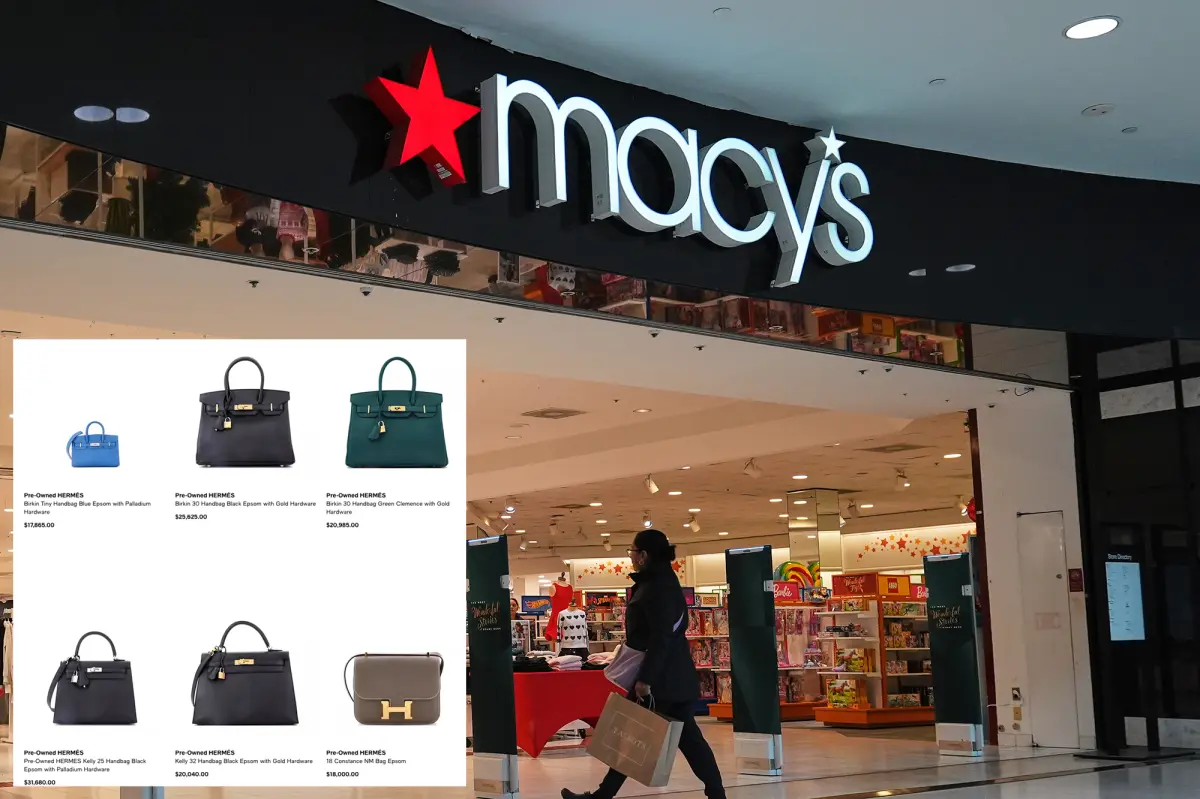
In a surprising retail strategy that has the fashion world buzzing, Macy’s has ventured into rarefied air by offering pre-owned Hermès Birkin bags on its website. This move represents a startling collision of worlds – the quintessential American department store known for accessible fashion and holiday parades now selling handbags that typically cost as much as a used car. Through a partnership with luxury resale platform Rebag, Macy’s online “Pre-owned Hermès” page features these coveted bags ranging from approximately $16,000 to over $33,000. It’s a jarring juxtaposition that has both shoppers and industry insiders questioning what this means for luxury retail and whether it signals economic uncertainty or simply a clever business pivot.
The Birkin bag has long represented the pinnacle of exclusivity in fashion – not merely because of its price tag (which starts above $10,000 at retail), but because of Hermès’ notoriously restrictive selling practices. The French luxury house famously requires potential Birkin owners to build relationships with sales associates over time, often spending tens of thousands on other Hermès products before being deemed worthy of the opportunity to purchase the iconic handbag. This artificial scarcity has created a mystique around the Birkin that transcends normal luxury goods, making it as much a status symbol as an accessory. For many fashion enthusiasts, seeing these bags suddenly available through Macy’s – even pre-owned ones – feels like watching a rare orchid bloom in a community garden: beautiful but somehow out of place.
This retail development isn’t occurring in a vacuum, however. According to Reddit discussions, Macy’s isn’t transforming into a luxury powerhouse overnight but rather expanding its marketplace approach through partnerships with authenticated resale platforms. The retailer joins others like Nordstrom and Bloomingdale’s who already work with Rebag to offer pre-owned luxury items to their customers. Some savvy shoppers point out that consumers might actually find better deals by shopping directly through Rebag rather than via Macy’s, suggesting this is more about brand positioning than bargain hunting. The resale partnership likely includes a verification process that protects both Macy’s reputation and customers from the notorious problem of counterfeit luxury goods – a critical consideration when selling items commanding five-figure price tags.
Behind this surprising merchandise mix lies what appears to be a calculated business strategy. Earlier this year, Robert Chavez, the former President and CEO of Hermès Americas, joined Macy’s Inc.’s Board of Directors as an independent director – a move that raised eyebrows among industry watchers. This strategic addition suggests Macy’s might be making a deliberate climb up the luxury ladder rather than a desperate grab at high-margin products. The timing coincides with what economists describe as a “K-shaped economy,” where affluent consumers continue spending freely on luxury goods while middle-class shoppers tighten their budgets. By offering authenticated pre-owned luxury items, Macy’s positions itself to capture some of the robust spending happening at the upper end of the market while potentially elevating its overall brand perception.
The visual and psychological impact of seeing Birkin bags sold through Macy’s creates a fascinating tension in the luxury market. For generations, the Birkin has represented wealth so exclusive it didn’t require advertising – just whispered waitlists, quiet approvals, and the occasional celebrity sighting. The bag’s scarcity was part of its appeal, with the difficulty of acquisition becoming almost as important as ownership itself. Now, this symbol of ultimate exclusivity is just a few clicks away on the same website where shoppers might buy bedsheets or holiday gifts. While these are pre-owned bags with authentication through Rebag, the availability through a mainstream retailer represents a democratization of luxury that some enthusiasts find unsettling. It raises questions about whether true luxury can maintain its allure when access barriers are lowered, even slightly.
This retail experiment comes at a time when the boundaries between luxury and mainstream shopping continue to blur across multiple channels. While Macy’s offers pre-owned Birkins for five-figure sums, Walmart simultaneously sells a $54.99 look-alike that provides the silhouette without the heritage or craftsmanship. This spectrum of accessibility reflects our complicated relationship with luxury in the modern economy – the desire for exclusive status symbols remains strong even as replicas and resale options proliferate. For Macy’s, the gambit represents a fascinating attempt to reposition itself in a challenging retail landscape, potentially attracting wealthy shoppers who might otherwise never consider the department store while generating buzz that benefits its overall brand. Whether this strategy succeeds depends on whether luxury shoppers embrace the convenience of department store luxury resale or reject it as diluting the exclusive experience they’ve come to expect when acquiring fashion’s most coveted treasures.