




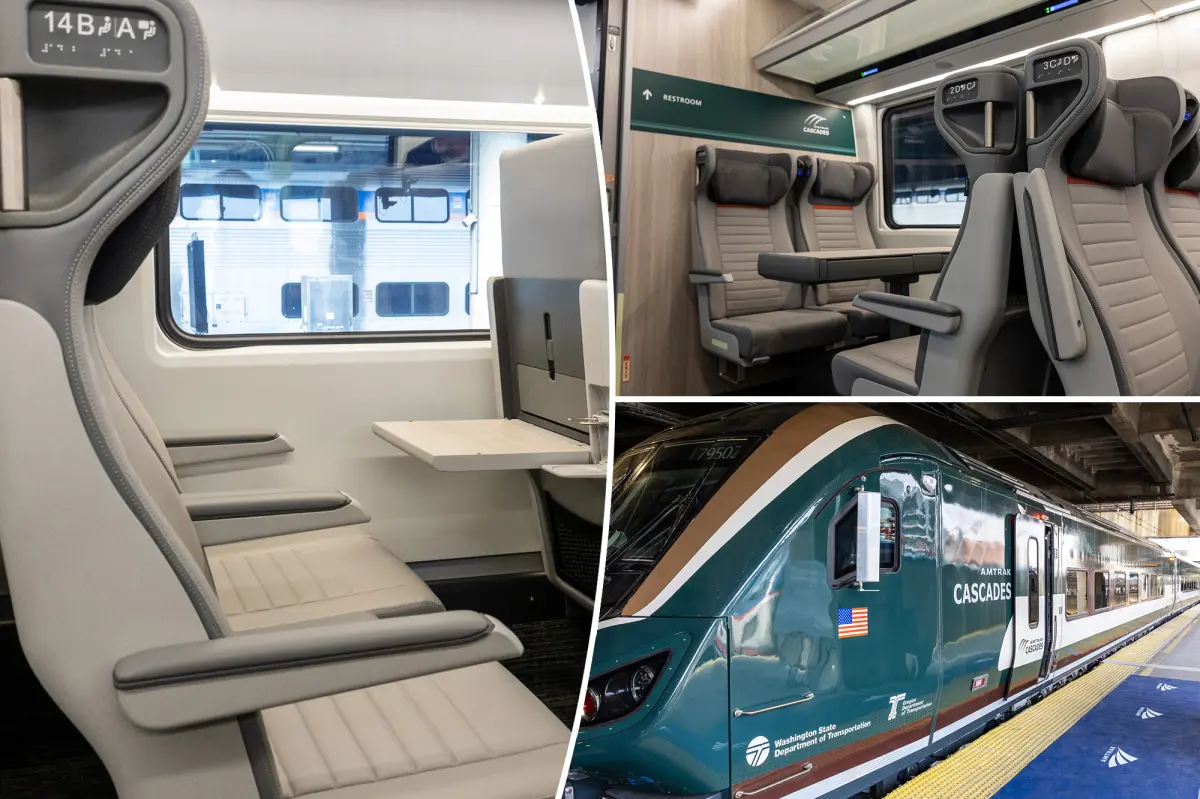
Embracing the Future of Travel: Amtrak’s Airo Fleet Takes Center Stage
Imagine stepping onto a train that’s not just a mode of transportation, but a cozy retreat on wheels, whisking you through stunning landscapes at speeds that make you feel like you’re flying without leaving the ground. As an avid traveler who’s spent countless hours watching the world blur by from rickety old railcars, I can’t help but get excited about Amtrak’s bold new leap forward—the Airo fleet. Recently unveiled by the rail giant, these high-tech trains promise to revolutionize train travel, turning what was once a utilitarian commute into something downright luxurious. Think of it as Amtrak’s love letter to passengers: a “modern passenger experience” crafted with safety, comfort, reliability, and sustainability at its core. They’re rolling out 83 of these beauties to replace aging trains that have been chugging along for over 50 years, trains that, quite frankly, have seen better days. If you’ve ever groaned at delays or cramped seats, this is your time to smile. The Airo isn’t just an upgrade; it’s a transformation. As someone who’s navigated Amtrak’s chaos during holiday rushes, I can tell you that these trains are poised to make every journey feel like a treat. Picture families reuniting over coffee in a lounge that’s more like a trendy café, or business travelers finally plugging in without hunting for an outlet. Amtrak’s vision is clear: make train travel irresistible again, blending nostalgia with cutting-edge innovation. From the moment I saw the first images, I was hooked—those sleek exteriors hint at interiors that feel worlds away from the old rattle-and-shake. It’s not just about getting from point A to B; it’s about the story unfolding through the window, the connections forged en route, and the earth-friendly promise that travel can be kinder to our planet. Dive in with me as we explore what makes the Airo fleet a game-changer, and why it might just steal your heart (and your next vacation plans).
Speed and Smarts: How the Airo Trains Redefine Efficiency on the Rails
Let’s talk numbers and nitty-gritty tech that really gets the heart racing—for passengers, that means less time stuck in transit and more time enjoying the ride. These Airo trains are engineered to soar up to 125 miles per hour, a speed that zips you through those long stretches with impressive gusto, shaving hours off journeys that once dragged on. Drawing from my own experiences dodging traffic in the Northeast or cruising the West Coast, I’ve always wished for a faster alternative to driving or flying, and the Airo delivers. But it’s the dual-power system that’s the real genius here: seamlessly switching between electric and diesel power, it eliminates the need for those pesky engine swaps that add downtime. Imagine boarding in New York’s bustling Moynihan Train Hall and arriving refreshed, without the typical delays that turn a short trip into a saga. This setup isn’t just convenient; it’s a nod to practicality, reducing wait times and making intermodal connectivity a breeze. For folks like me who count every minute on a business trip, this means more productivity and less stress. Sustainability fans, rejoice—the trains are a whopping 90% more fuel-efficient and produce far fewer particulate emissions when running on diesel compared to their predecessors. In an era where climate concerns are everyone’s business, Amtrak’s pushing environmentally responsible travel that doesn’t sacrifice performance. I’ve crunched the numbers myself, comparing gas-guzzling road trips to these greener giants, and it’s clear: the Airo isn’t just faster; it’s kinder to the earth. Passengers will notice the difference in real-time reliability, with systems designed to minimize breakdowns and maximize uptime. It’s like Amtrak borrowed a page from the airline playbook, blending high-speed thrills with the steadiness of rail. As we hurtle toward a future where every trip counts, these trains embody a smarter way to move about our vast country, making the impossible seem routine.
Inside the Airo: A Cocoon of Comfort Where Trains Become Sanctuaries
Step inside the Airo, and you’ll swear it’s not a train at all—more like a floating living room or a boutique hotel on tracks. Amtrak has poured heart into the interiors, crafting cabins that ditch the cramped, utilitarian vibe for something that’s truly inviting. I’ve spent my share of time on trains where seating felt like a penalty, but here, ergonomic chairs with moveable headrests, cup holders, and tablet slots make every seat a personal oasis. No more juggling coffee while fighting gravity; these trains have you covered. Reading lights, sturdy tray tables for laptops, and heaps of USB-C ports mean you can work, binge-watch, or daydream without interruption. Add in complimentary 5G Wi-Fi, and suddenly, that long haul from Boston to New York becomes a productive paradise. The cabins themselves evoke a lounge atmosphere—think soft lighting, ample space to stretch, and panoramic windows that frame the world like a moving masterpiece. I’ve gazed out at the Hudson Valley’s rolling hills on countless rides, but on the Airo, those views promise to be immersive, connecting you deeply with the landscape. It’s poetic, really, how a window can turn a commute into contemplation. Foodies, get ready: the redesigned Cafe Car is a revelation, a self-service haven styled like a chic NYC bistro. Gone are the days of greasy sandwiches from vending-esque contraptions; now, it’s fresh bites and drinks served with flair. As someone who’s munched on mediocre meals mid-route, this upgrade feels like a gourmet revolution. Amtrak didn’t stop there—spacious restaurants and contemporary service elevate dining to an art form. It’s all about making travel memorable, turning passive passengers into active enjoyers. Whether you’re a solo adventurer journaling by the window or a family creating memories over snacks, the Airo interiors foster connection in ways old trains never could.
Accessibility and Inclusivity: Trains for Everyone, No Exceptions
One of my biggest pet peeves with travel is when barriers make journeys frustrating for some, but Amtrak’s Airo fleet flips the script with a laser focus on accessibility that’s refreshingly inclusive. These trains aren’t just about flash; they’re designed to welcome all travelers with open arms. Think accessible restrooms that prioritize dignity and ease, vestibules that facilitate smooth boarding for those with mobility aids, and cafe cars equipped for-wheelchair users, complete with lifts that make entry effortless. I’ve encountered the struggles of navigating outdated railcars firsthand, so I appreciate how this transforms train travel into something equitable. For visually impaired passengers, audio announcements and tactile indicators provide guidance, while those with hearing challenges benefit from visual alerts. It’s human-centric design at its finest, ensuring no one feels left out. Seniors, families with young kids, or anyone needing a bit of help—the Airo makes travel a communal joy rather than a challenge. From a passenger’s perspective, this means more freedom to explore, whether you’re heading to work in the city or vacationing through the countryside. It ties into the broader theme of making trains competitive against planes or cars, where accessibility often lags. I’ve chatted with fellow riders who rally for these features, and Amtrak’s commitment resonates deeply—it’s a sign that modern travel embraces diversity. Beyond the physical, the psychological boost can’t be understated; knowing you’re traveling on trains that care about everyone fosters a sense of belonging. As we age or face varying abilities, features like wider aisles and scalable steps mean the Airo isn’t just a ride—it’s empowerment on rails. Passengers like me, who value inclusivity as much as efficiency, see this as a win for society. It’s travel that doesn’t discriminate, and that’s a comforting thought in an increasingly connected world.
Rollout Realities: Where and When the Airo Takes Flight
Timing is everything in travel, and Amtrak’s rollout for the Airo fleet has me eagerly marking calendars. The debut happened at a special preview event out west, and as of this summer, the first trains are hitting the tracks in the Pacific Northwest. Starting with the Cascades route, they’ll shuttle passengers between Seattle, Portland, Vancouver (British Columbia), and Eugene, Oregon, infusing a region known for its natural beauty with a dose of modern magic. I’ve traversed that corridor myself—those snowy peaks and coastal views are pure inspiration—and I can’t wait for locals to experience the upgrade. Farmers, tech workers, families—everyone stands to benefit from smoother, quicker rides. While we’re pumped for the Northwest, Northeast passengers are looking ahead to 2027 for their turn, kicking off with the Northeast Regional and Empire Service. After initial testing later in 2026, the fleet will expand to routes like the Virginia Service, Keystone Service, Downeaster, and beyond, covering the Maple Leaf, New Haven/Springfield, Palmetto, Carolinian, Pennsylvanian, Vermonter, Ethan Allen Express, and Adirondack. It’s a domino effect of excitement, transforming the Northeast spine with reliability that echoes the West Coast’s success. As someone who’s commuted through snowstorms on older routes, I envision fewer cancellations and more punctuality. Amtrak’s phased approach ensures no overwhelm—testing in 2026 allows fine-tuning for real-world quirks. This isn’t rushed; it’s deliberate, building anticipation like a well-timed suspense novel. By summer’s end this year, Pacific Northwest riders will be the first to taste the future, sharing stories that fuel the nation’s curiosity. For those of us in the East, it feels like a promise kept, a countdown to a travel renaissance. The rollouts mirror Amtrak’s growth narrative, starting small and scaling epic.
The Bigger Picture: Airo and Acela, Pioneering Amtrak’s Renaissance
Zooming out, the Airo fleet is just one piece of Amtrak’s ambitious puzzle, complementing last year’s NextGen Acela rollout and signaling a fundamental shift in how the company serves its customers. Where Acela zooms at 160 miles per hour on the premium Northeast Corridor with fewer stops—think express service between major hubs like New York and Washington D.C.—Airo handles regional routes with more flexibility, replacing those 50-year-old workhorses on stops galore. I’ve flown on Acela and admired its sleekness, but the Airo adds heart, bridging state-supported lines like Cascades with a passenger-first ethos. Together, they redefine travel: reshaping experiences today while fostering long-term growth. Amtrak’s message resonates with those disillusioned by crowded skies or bumper-to-bumper drives—these trains offer luxury without the rush. As a traveler nostalgic for rail’s golden age, I see this as redemption, blending speed with soul. Environmentally, it’s progress; economically, it boosts tourism and commerce. Neighbors sharing rides in lounge cars might spark conversations, friendships born of shared journeys. For me, the Airo symbolizes hope—trains that not only get you there but enrich the path. It’s exciting to think of future innovations building on this foundation, perhaps electrifying more lines. In a world craving connection, Amtrak’s Airo is a reminder that travel can be transformative, humbling, and utterly human. So, next time you board a train, imagine the possibilities; the Airo makes them real. As more trains roll out, I expect tales of love on rails, work-from-ride productivity, and a revived romance with American travel. Here’s to the journeys ahead—may they be as inspiring as they are efficient. The revolution is underway, and passengers like us are along for the exhilarating ride.