

Alex Honnold’s “Embarrassing” Payday for Daring Taipei 101 Free Climb
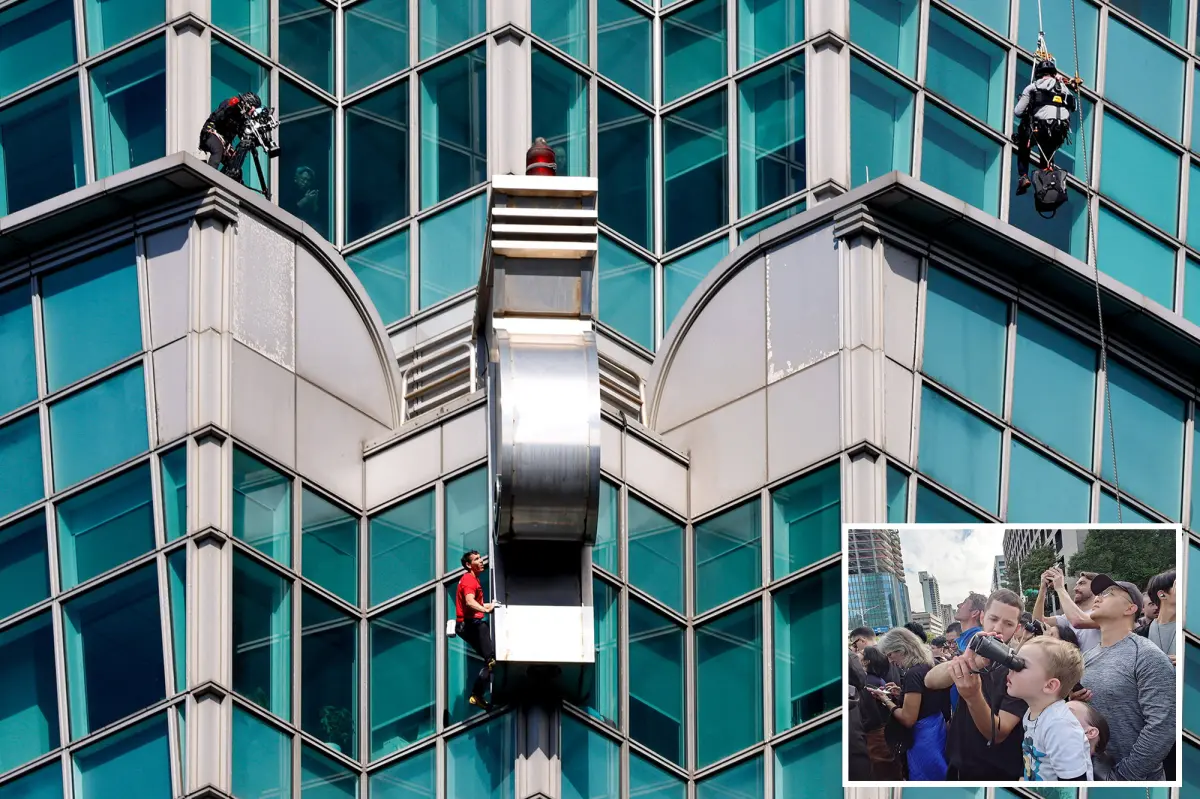
In a remarkable display of courage and skill, renowned American rock climber Alex Honnold recently conquered Taiwan’s Taipei 101 skyscraper without the safety of ropes or protective gear. The 40-year-old daredevil scaled the towering 1,667-foot structure in just over 90 minutes during a Netflix “Skyscraper Live” special. Despite the death-defying nature of his achievement, Honnold later described his compensation as “embarrassing” compared to what mainstream athletes earn. While he didn’t disclose the exact figure, he revealed it was in the “mid-six figures” – a sum he characterized as “embarrassingly small” when compared to the multi-million dollar contracts awarded to even relatively unknown Major League Baseball players. The contrast highlights the vast disparity in compensation between traditional sports and extreme athletic endeavors, regardless of their difficulty or the public interest they generate.
What makes Honnold’s climb particularly fascinating isn’t just the financial aspect, but his genuine passion for the art of climbing itself. In conversations following the event, he confessed he would have gladly undertaken the perilous ascent for free if the building management had simply granted permission. “If there was no TV program and the building gave me permission to go do the thing, I would do the thing because I know I can, and it’d be amazing,” Honnold told the New York Times. This sentiment reveals the true spirit of his pursuit – not one driven by financial reward, but by the intrinsic challenge and the pure exhilaration of accomplishing what most would consider impossible. His approach to climbing transcends the commercial aspects of the sport, representing a more primal connection to the challenge of conquering seemingly insurmountable obstacles.
The Taipei 101 climb adds to Honnold’s impressive portfolio of death-defying ascents. The Sacramento native previously made headlines with his ropeless, record-setting climb of Yosemite’s El Capitan, a feat so extraordinary it became the subject of the Oscar-winning documentary “Free Solo.” In 2022, he further pushed the boundaries of his sport by becoming the first to scale a 3,750-foot sheer cliff in Greenland alongside fellow climber Hazel Findlay. These accomplishments have cemented his reputation as one of the world’s premier free solo climbers, known for tackling vertical challenges that most professional climbers wouldn’t attempt even with safety equipment. His methodical approach to these seemingly reckless endeavors combines meticulous planning, exceptional physical conditioning, and an almost supernatural mental fortitude – qualities that have allowed him to repeatedly accomplish what many consider impossible.
The technical aspects of the Taipei 101 climb highlight the extraordinary difficulty of Honnold’s achievement. He ascended one corner of the massive structure using only small L-shaped outcroppings as footholds, periodically navigating around enormous ornamental structures and pulling himself upward with nothing but his bare hands. The most challenging section was the middle 64 floors, known as the “bamboo boxes,” which give the building its distinctive appearance. This section was divided into eight segments, each featuring eight floors of steep, overhanging climbing followed by balconies where Honnold could take brief rests. The climb required not just physical strength and endurance, but precise technique and unwavering concentration. A single mistake, a momentary lapse in focus, or an unexpected gust of wind could have resulted in disaster – facts that Honnold acknowledges but somehow manages to compartmentalize during his climbs.
Weather conditions added another layer of complexity to the already daunting challenge. Originally scheduled for Saturday, the climb had to be postponed by 24 hours due to rain, which would have made the building’s exterior dangerously slippery. Even on the day of the ascent, Honnold had to contend with significant wind, particularly at the higher elevations where gusts can be unpredictable and powerful. “It was very windy, so I was like, don’t fall off the spire. I was trying to balance nicely,” he recalled afterward. The Netflix broadcast included a 10-second delay – a sobering reminder of the very real dangers involved. Despite these challenges, Honnold maintained his composure throughout the climb, demonstrating the exceptional mental control that has become his trademark. As he reached the summit, wearing a simple red short-sleeve shirt, he celebrated his achievement by waving his arms above his head, taking in the panoramic view of Taipei from his lofty perch.
The aftermath of the climb revealed Honnold’s deeply appreciative nature and his ability to savor the unique perspectives his dangerous pursuit affords him. “What a view, it’s incredible, what a beautiful day,” he remarked after completing the ascent. “What an incredible position, what a beautiful way to see Taipei.” These words capture the essence of what drives Honnold beyond the physical challenge – the opportunity to experience the world from vantage points few will ever know. His climbs represent more than just athletic achievements; they’re spiritual journeys that connect him to the structures and landscapes he conquers in an intimate way. While the financial compensation may not match what traditional athletes receive, the rewards Honnold values most can’t be measured in dollars – the profound sense of accomplishment, the unparalleled views, and the knowledge that he has pushed the boundaries of what humans can achieve through determination, skill, and an uncommon relationship with fear. In this way, Honnold’s climbs transcend sport to become powerful statements about human potential and our capacity to overcome seemingly impossible challenges.