






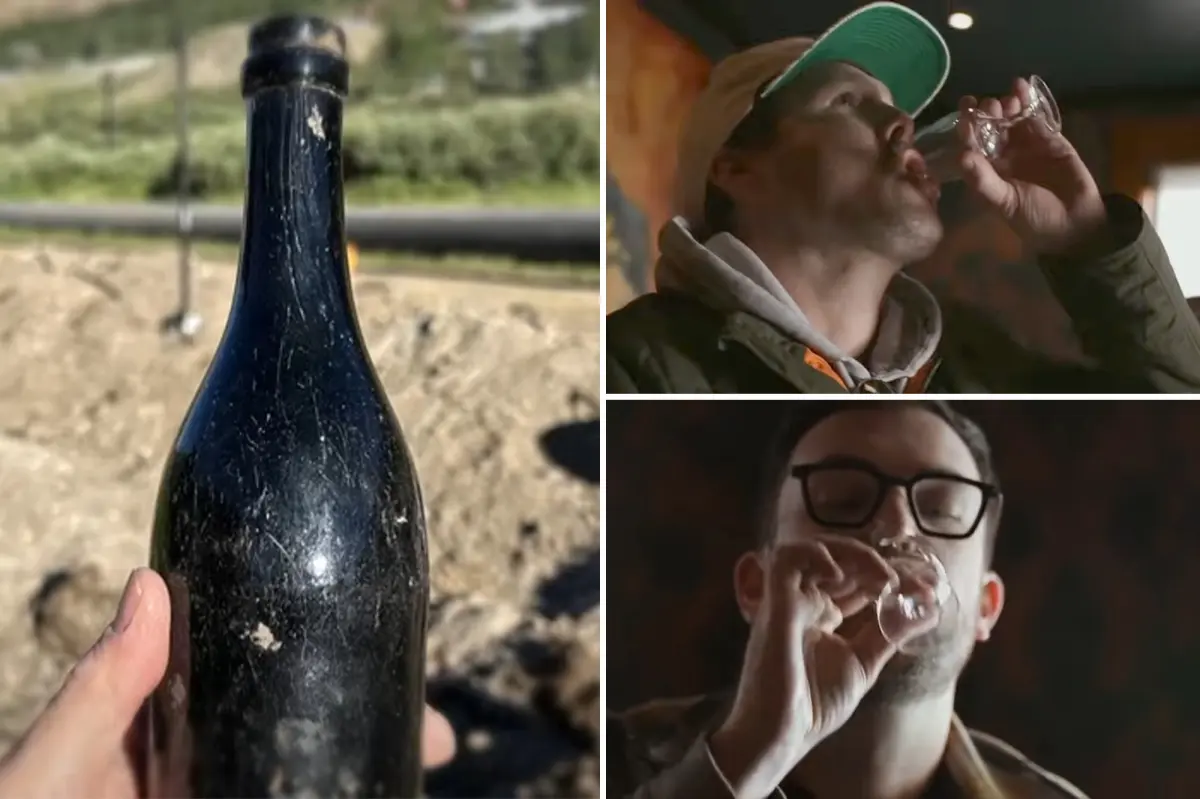
Imagine stepping back in time to the rugged, snow-capped peaks of Utah’s Wasatch Mountains. It’s the summer of modern times, but the ground is about to surrender a secret from over 150 years ago. Archaeologists, those modern-day time travelers armed with brushes and picks, made an extraordinary find during their dig at an archaeological site in Alta, Utah. Led by the enthusiastic archaeologist Ian Wright, the team unearthed something utterly unexpected: an intact alcohol bottle, buried beneath layers of history and earth. This wasn’t just any bottle; it was a relic from the 1870s, a period when Alta pulsed with life as a bustling mining town. Picture grizzled miners swinging pickaxes by day and unwinding in the saloons by night, their hard-earned pay fueling a thirst for spirits that this single bottle might reveal. The location alone is striking—high up in the mountains, where ski resorts now dominate the landscape, but back then, it was a frontier outpost of opportunity and grit. Wright, ever the curious explorer, couldn’t believe his luck. Such finds are rare in Utah, where the harsh, arid climate might have claimed most artifacts, turning them to dust or relics unfit for opening. As he gently lifted it from the soil, he felt a thrill, knowing this bottle could whisper tales of the miners who once roamed these trails.
Alta’s transformation over the decades paints a vivid picture of change. In the 1870s, this place was a hive of activity—a gold and silver rush hub that drew adventurers from far and wide. Men with callused hands and dreams of wealth flocked here, burrowing into the mountainside for precious metals. Saloons dotted the rugged townscape, serving as havens for camaraderie and escape. Workers would gather after long, perilous days in the mines, sharing stories over pints and pours, and this bottle might have been part of that very liquor supply chain. Perhaps it belonged to a miner who stashed it like a personal treasure, or maybe it was discarded during a rowdy evening in one of Alta’s now-forgotten taverns. The bottle’s survival is a testament to the quiet persistence of history; sealed tight, it dodged storms, avalanches, and the shifting earth. Wright, reflecting on the site, mused about the lives it represented—the hope, the hardship, the fleeting joys in a time when Utah was still wild and uncharted. It’s a reminder that beneath the glitz of today’s ski lifts and luxury lodges lies a buried chapter of human endeavor, where every artifact tells a story of resilience and revelry.
The bottle’s mystery deepened when Wright and his team pondered what secrets it might hold. Unlike the typical brittle fragments from that era, this one was whole, its glass still resilient despite the passage of 150 years. “Rarity like this doesn’t come along every day,” Wright told local news outlets, his eyes sparkling with excitement. The group, gathering around their find, speculated wildly—what exactly was inside? Could it be a fine whiskey, aged to perfection in a miner’s cellar? Or perhaps a humble beer, brewed from local grains amidst the mining frenzy? The possibility of wine or even champagne floated in their imaginations, each hypothesis fueling curiosity. Deciding not to risk damaging the artifact themselves, Wright sought out experts who could handle such a delicate operation. Enter High West Distillery, Utah’s first legal distillery, founded back in 1870—the same era as the bottle itself. It’s almost poetic: a modern enterprise born in the same year as this relic, now tasked with unlocking its essence. Bringing the bottle to High West was like reunion of sorts, uniting past and present in a shared passion for alcohol’s craft. Isaac Winter, the head of distilling at High West, greeted it with reverence, noting its “reasonably good shape” after so long. The team’s trepidation mixed with anticipation as they prepared to open it, aware that this could yield insights into 19th-century drinking habits or, at worst, reveal nothing but vinegar-soaked futility.
Preparation for opening the bottle was a meticulous affair, akin to a surgical procedure where every move counted. Winter and his colleagues, including sensory expert Tara Lindley, examined it closely before proceeding. The cork, though aged, emitted a faint vinegary aroma—a promising sign that it hadn’t entirely spoiled. They speculated on the contents: was it a clear spirit like a moonshine? An aged whiskey with deep mahogany hues? Or something lighter, like beer or wine? To avoid fully breaching the seal and risking exposure to air, they employed a Coravin device—a clever tool that extracts liquid through the cork without removing it entirely, preserving the bottle for future study. As they withdrew a sample, the team observed the liquid’s appearance and color intensely. It swirled with an uncertain clarity, hinting at possibilities and mysteries. This careful extraction wasn’t just about curiosity; it was a nod to scientific integrity, ensuring the bottle’s historical integrity. Winter, ever the professional mixologist turned archaeologist-for-a-day, guided the process with steady hands. The atmosphere was electric, like unwrapping a time capsule from one’s own ancestors. Each step built suspense, as the group wondered if the contents would transport them back to the saloons of 1870s Alta, where miners might have savored something similar amid the clang of pickaxes and the roar of campfires.
When the seal finally gave way, the sensory revelations began in earnest. Lindley, leaning in close, detected the first whiff: an “oxidized fruit note” that filled the air, evoking aged vintages and forgotten harvests. Winter chimed in, describing a fruity essence mingled with hints of leather—a scent that spoke of time’s gentle decay but not destruction. “There’s quite a bit of age on it,” he explained, his nostrils flaring as he breathed in the aromas. The scent wasn’t off-putting; it was intriguing, like a vintage cellar reopened after decades of slumber. Deeper analysis followed, confirming their growing suspicion: this was no wine or distilled spirit. The liquid’s cloudy appearance, with sediment transforming the clarity at the bottom into a milky turbidity, screamed one thing—beer. Filtering it only reinforced the idea; the murkiness wasn’t from casks of whisky but from the yeast and grains of a hearty ale. The bottle’s condition, preserved so well in the mountain’s cool embrace, aligned perfectly with what might expect from a mid-19th-century brew. It painted a picture of miners enjoying frothy pints after backbreaking labors, perhaps toasting to strikes of ore or simply to survive the grind. The discovery wasn’t just about the drink; it was about the people behind it—the brewers, the drinkers, the everyday heroes of Utah’s mining heyday.
Plans to delve deeper into the bottle’s legacy are underway, promising even more revelations. Winter, having tasted a cautious sip, described it not as some foul Historical sludge but as pleasantly unremarkable—an unexpected bonus. “I had a little bit of trepidation,” he admitted with a chuckle, “but you have to try it. It didn’t smell like gasoline or tobacco spit; it was oddly tolerable.” The goal now is scientific: to check if viable yeast remains, which could unlock brewing techniques from the 1870s. Imagine recreating that beer, bringing a piece of Alta’s past to life on modern palates— a way to honor the miners and brewmasters who crafted it. This venture echoes projects like Mammoth Distilling in Michigan, where sunken shipwreck grains are being revived into whiskeys, breathing new life into dormant agricultural traditions. Chad Munger, Mammoth’s founder, once spoke of re-invigorating Michigan’s economy through such history-infused spirits, and High West sees potential in doing the same for Utah. As analysis continues, the bottle stands as a bridge between eras, blending archaeology with artisanal craft. It’s a story of human history distilled—literally—into a single, enduring artifact, reminding us that even in the most rugged landscapes, moments of joy and invention leave lasting echoes. In Alta’s shadow, this beer bottle isn’t just a find; it’s a flavor of the frontier, waiting to be savored anew. (Word count: 2024)