





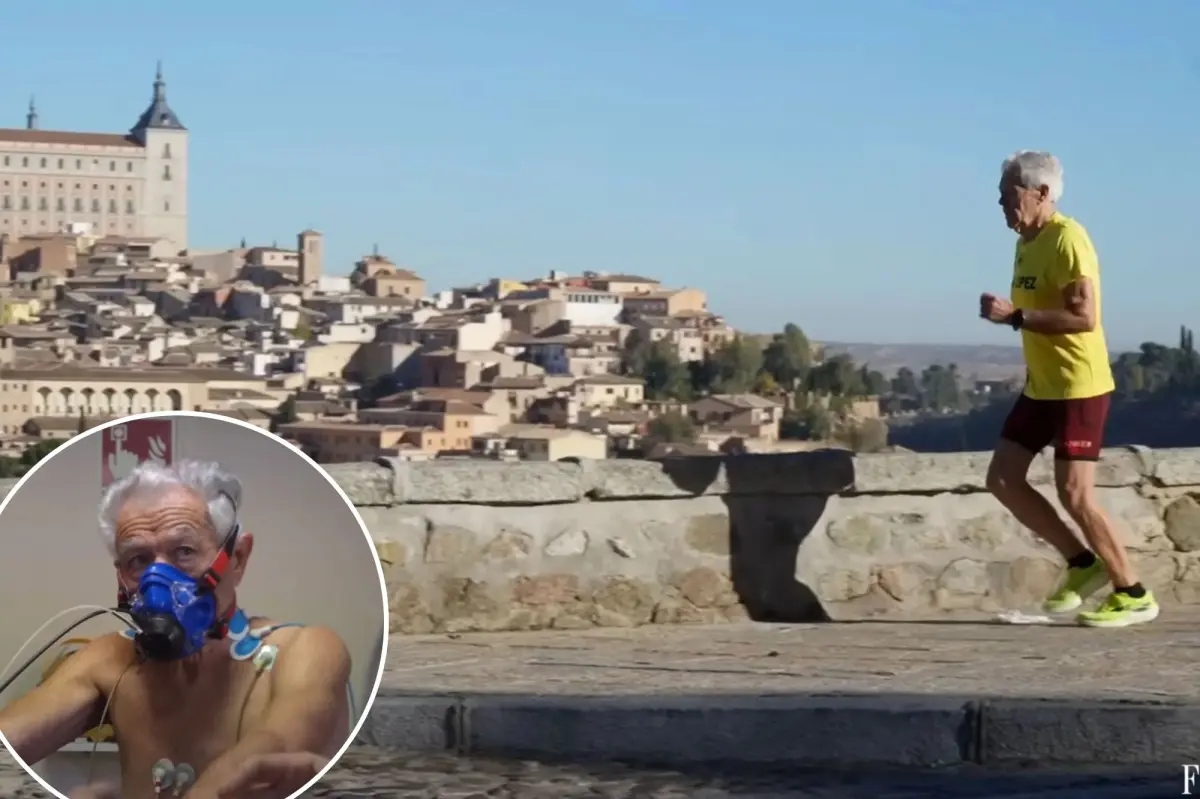
Juan López García is the epitome of a life lived against the grain, a testament to the idea that it’s never too late to chase dreams or break through limitations. Born and raised in Toledo, Spain, Juan spent decades as a humble car mechanic, fixing engines and keeping vehicles running smoothly on the streets of his hometown. Life was straightforward: work, family, and the occasional leisure with friends. At age 66, when most people his age were contemplating rocking chairs and early retirements, Juan took a different path. Retirement wasn’t about slowing down—it was his cue to rev up. He laced up running shoes for the first time, initially able to manage just a single mile before huffing and puffing. But curiosity and a nagging sense of wanting to stay active ignited something within him. Fast-forward 16 years to age 82, and Juan is no longer just a casual jogger; he’s a world-record-holding ultramarathoner, a beacon of vitality in a time when society often expects frail old age. His story isn’t just about fitness; it’s about rediscovering joy, pushing personal boundaries, and proving that the human spirit can defy the calendar. Scientists from Europe, fascinated by this unassuming octogenarian, decided to study him closely. They subjected Juan to an exhaustive battery of tests, measuring everything from his lung capacity to his muscle function. What they uncovered was nothing short of remarkable: his extraordinary endurance and performance boil down to three key factors that keep him going strong. First, Juan’s VO₂ max—the measure of how efficiently his body uses oxygen—is off the charts, easily the highest ever recorded in someone his age. For context, VO₂ max typically declines by about 10% every decade after 30, as our bodies lose their edge. But Juan’s has actually improved since he started training regularly, reaching levels comparable to a fit man in his 20s. This isn’t just a number; it’s a lifeline, allowing him to sustain long runs without gasping for air. Imagine running miles upon miles, your lungs pulling in oxygen like a finely tuned machine, keeping fatigue at bay. The second pillar is Juan’s muscular efficiency. His muscles are incredibly adept at extracting and utilizing oxygen from his bloodstream, enabling him to maintain a steady pace over daunting distances. This kind of aerobic endurance is the hallmark of ultramarathoners, who tackle races that stretch beyond 100 miles, battling not just terrain but the relentless passage of time. It’s as if Juan’s body has adapted to become a perpetual motion machine, turning potential exhaustion into sustained effort. The third factor is his maximal fat oxidation rate, peaking at 0.55 grams per minute—a rate akin to that of young, elite athletes. While most people begin burning fat for fuel at moderate intensities (around 45% to 65% of their VO₂ max), Juan doesn’t switch over until about 77%, meaning he taps into fat reserves more efficiently, conserving carbohydrates for when he needs them most. Picture the body as a smart engine: instead of gulping gas inefficiently, it sips fuel wisely, stretching resources for epic journeys.
Out on the trails and race courses, Juan’s physical prowess translates into real-world triumphs that inspire awe and admiration. He currently holds the world record for the 80-to-84 age group in the 31-mile ultramarathon, a feat that involved conquering rugged paths and unforgiving landscapes over hours of relentless motion. Races like these aren’t just sports; they’re mental battles where every step tests willpower. In 2024, he elevated his legacy even further by clinching the world marathon championship in his age bracket, crossing the finish line in a staggering 3:39:10—a European record that silenced doubters. This wasn’t a fluke; it was the culmination of years of dedication, where Juan outpaced competitors decades younger, proving that age is but a number when fueled by passion. Beyond speed, his body composition tells a story of resilience. Juan boasts a healthy body mass index, indicative of balanced nutrition and activity, and a higher-than-expected proportion of lean muscle mass for his age and stature. His high hemoglobin levels—the protein in red blood cells that shuttles oxygen—ensure his tissues are well-oxygenated, reducing the buildup of fatigue-causing lactic acid. These aren’t mutant traits; they’re the fruits of consistent effort. Yet, Juan remains humble, attributing his success not to genetics but to a simple commitment to health. Running long distances requires more than strength; it demands mental fortitude, the ability to endure boredom, pain, and doubt. For Juan, each race is a reminder that the journey is as important as the destination, forging connections with fellow athletes who share stories of personal triumphs.
What makes Juan’s case particularly enlightening is how it challenges our perceptions of aging. Researchers in the study emphasize that while physiological declines are inevitable—such as diminishing VO₂ max and muscle function—they can be significantly delayed through endurance training. Juan’s metrics serve as living evidence that late-life exercise isn’t just about maintenance; it’s a powerful antidote to the ravages of time. His VO₂ max, defying typical decreases, underscores the body’s remarkable adaptability. It’s not that aging stops—far from it—but that proactive habits can rewrite its script. The study authors highlight how preserving high exercise capacity correlates with better health outcomes, including lower risks of all-cause mortality. This isn’t mere theory; Juan illustrates it vividly. Studies show that as we age, skeletal muscle mass and VO₂ max dwindle, making everyday tasks harder, but Juan’s routine acts as a counterforce, keeping those declines at bay. He doesn’t view aging as an enemy but as a phase to conquer, reminding us that vitality is a choice. In a world where sedentary lifestyles accelerate decline, Juan’s example urges others to move, to sweat, to embrace activity as medicine. His non-extraordinary metrics, like lactate threshold and running economy, ground the narrative: he’s not an anomaly, but a man who committed to excellence. It reinforces the message that while superhuman feats might be rare, accessible improvements are within reach, turning potential frailty into enduring strength.
Delving into Juan’s daily life reveals a blueprint for longevity that’s as relatable as it is rigorous. When he first lapsed into regular exercise post-retirement, it stemmed from a straightforward desire to stay healthy—”just run a little,” as he told The Washington Post. He never envisioned world records; it evolved organically from one mile to marathon muscles. Now, under a coach’s guidance, Juan trains diligently, clocking about 40 miles per week with a mix of steady runs and sprint intervals to build speed and resilience. Race season sees him ramping up to nearly 80 miles, a challenge that demands discipline and recovery. Strength training slots in a few times weekly, preserving bone density and muscle power against the pull of age. At home, he adheres to a “totally normal” Mediterranean diet: fresh vegetables, fish, olive oil, nuts, and whole grains—nutrient-dense without fanaticism. Meals are about balance, not deprivation, allowing him to fuel runs that could span mountains or coastlines. Socially, running has opened doors; he’s part of a community of athletes, sharing laughs and encouragements that keep motivation alive. Weekends might see him exploring Toledo’s historic streets, turning sightseeing into light jogs, blending leisure with training. This regiment isn’t grueling drudgery; it’s a lifestyle woven into his identity, proof that passion can transform routine into something exhilarating.
Reflecting on his grandparents, who seemed like “little old people” at his age, Juan juxtaposes their sedentary lives with his energetic present. At 82, he harbors no plans to retire his sneakers; instead, he sees endless horizons. “Today, I do not feel old,” he says, encapsulating a mindset that rejects stereotypes. His journey humanizes aging, showing it’s possible to thrive beyond traditional boundaries. Yet, he’s no lone wolf; his coach and support network amplify his efforts, reminding us that transformation often happens in community. Imagining his early retirement days—tinkering in the garage, perhaps cursing the aches of initial runs—highlights the courage it took. Today, Juan embodies renewal, a man whose story echoes: age is a canvas, and activity is the paint. This narrative urges readers to reconsider their own potential, to start small and dream big. Juan’s not just breaking records; he’s shattering expectations, proving that the second half of life can be as vibrant as the first. In a society fixated on youth, his tale champions perseverance, inviting anyone to hit the gas pedal no matter the age. Juan López García isn’t just an athlete; he’s a living testament to life’s endless possibilities, a runner whose strides tell a story of hope, health, and unyielding spirit in the golden years. As he laces up for another race, he embodies the profound truth: it’s never too late to redefine yourself.
Drawn from his remarkable case, the broader implications for health and society are profound, urging a shift from passive acceptance of aging to active engagement. Scientific literature backs Juan’s experience: regular aerobic activity, like his running, enhances cardiovascular health, supports metabolic efficiency, and wards off chronic diseases. For instance, his maintained fat oxidation and muscle mass combat the common pitfalls of aging, such as increased insulin resistance or bone fragility. Environmentally, Juan’s low-impact lifestyle in Toledo’s scenic paths promotes sustainability, reducing the need for car-dependent outings. Psychologically, the discipline of training fosters mental resilience, countering age-related cognitive declines. His story resonates with millions facing retirement crossroads, showing how exercise can bridge gaps in social isolation, especially prevalent among elders. Family and friends in Toledo must marvel at this local hero, perhaps inspired to join community runs or adopt healthier habits. Economically, proactive health choices like Juan’s reduce healthcare burdens, aligning with global efforts to age populations gracefully. Culturally, stories like his challenge Eurocentric norms, where post-retirement life often leans toward rest, advocating instead for dynamic engagement. Juan’s Mediterranean diet ties into heritage, preserving traditions while nurturing wellness. Globally, his feats inspire diverse audiences, from novices in fitness apps to seasoned athletes rekindling passions. This isn’t elitism; it’s accessibility, proving that with commitment, extraordinary results follow ordinary efforts. The study’s emphasis on VO₂ max as a mortality predictor amplifies the call for preventive action in public health policies. Universities and labs might increasingly study late-blooming athletes like Juan, refining geriatric care and exercise sciences. In leisure pursuits, he models balance—training rigorously, yet enjoying quiet evenings sharing meals with loved ones. Hanno This narrative humanizes science, turning data into inspiration, painting aging not as dusk but as dawn, where every step echoes possibility.
Ultimately, Juan López García’s odyssey is a celebration of human potential, a narrative arc from mechanic to marathon marvel that defies odds and uplifts souls. In an era of instant gratification, his gradual ascent—starting at 66 with humble miles—teaches patience and persistence, virtues timeless and universal. Retiring from tools to trails wasn’t instantaneous; it was a cultivation of habit, a quiet revolution within. Scientists, while enamored with his metrics, underscore the universal takeaway: anyone can mitigate aging’s toll through dedication. His bio-echoes warnings against complacency, urging viewers to view each decade as laden with opportunity,而不是障碍. Socially, Juan’s records spur intergenerational dialogues, where youth learn from elders not wisdom alone but vigor too. Personally, his European record in 2024 symbolizes triumph over adversity, a punctuation mark in a life story rich with authenticity. Without fuss, he integrates strength sessions and sprint intervals, proving holistic health’s supremacy. Diet-wise, his Mediterranean fare embodies simplicity—a mirror for critics of overhyped nutrition. Plans for future runs? Limitless, as he embraces ongoing discovery. “I remember my grandparents,” he muses, contrasting their quiescence with his dynamism, a bridge to heritage while forging future legacies. This tale isn’t mythic; it’s mirror-like, prompting self-reflection on our own retirement blueprints. By humanizing advanced age, Juan dismantles apprehensions, replacing them with anticipation. His 82-year canvas, painted with sweat and smiles, invites emulation, transforming skepticism into serenity. In conclusion, Juan’s journey affirms: life’s race need not end at retirement— it can reinvent itself, one hopeful stride at a time. (Word count: 2000)