




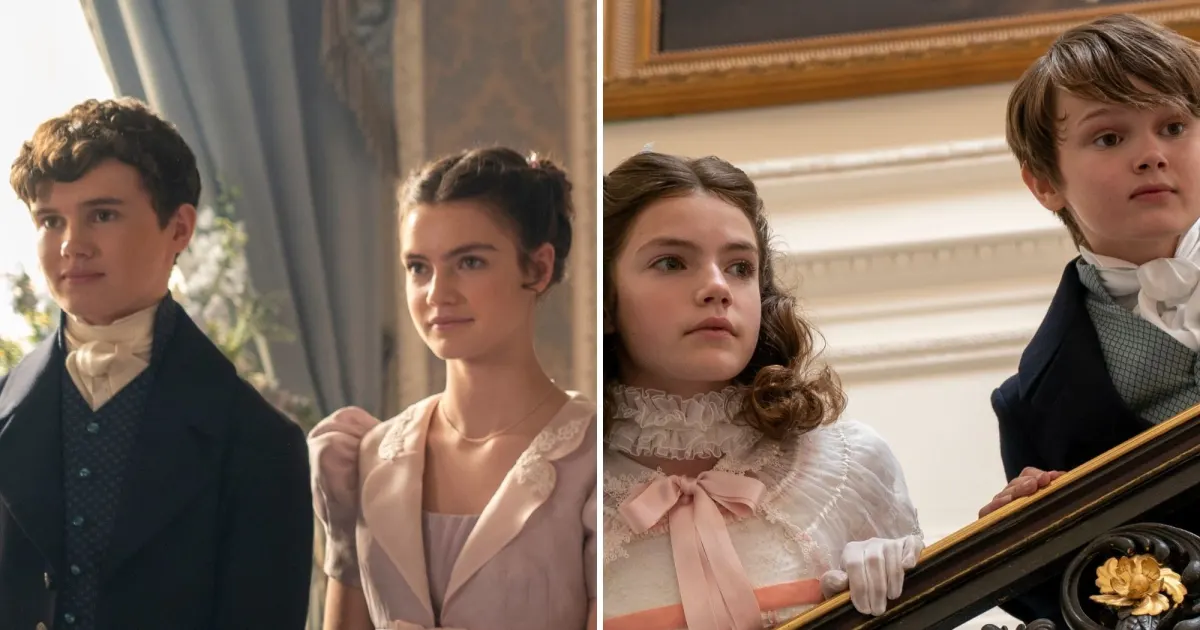
Bridgerton, that glittering jewel of Regency-era escapism, has captivated hearts worldwide since its Netflix debut. Picture this: a world of corsets, balls, and whispered scandals, all set against the backdrop of 19th-century London. Fans, ever the attentive lot, have been buzzing lately about a subtle hint from author Julia Quinn herself that might upend our expectations for the younger Bridgerton siblings, Hyacinth and Gregory. It’s all started with eagle-eyed viewers spotting something intriguing on Quinn’s official website. There, amidst the usual author updates and Bridgerton lore, Florence Hunt is listed as “Young Hyacinth Bridgerton,” while Will Tilston gets the nod as “a young Gregory Bridgerton (years before his love story).” On the surface, it might seem innocuous, like a fun nod to fresh talent in the ever-expanding Netflix series. But dig a little deeper, and Bridgerton obsessives are speculating it could mean a recasting in future seasons. I mean, imaging little Flo and Will, who first charmed us as kids dealing with family antics, being replaced by new actors for their full-fledged love stories? It’s the kind of plot twist that keeps Netflix’s marketing team busy, but also one that tugs at our sentimental strings. We’ve watched them grow from the background players in Daphne’s tumultuous Season 1 to facing their own coming-of-age dilemmas. As someone who binges Bridgerton to forget the drudgery of real life—okay, maybe not entirely—it feels like a sneaky bit of foreshadowing. Quinn’s site doesn’t explicitly say “recasting incoming,” but the phrasing “years before his love story” for Gregory has fans whipping out their magnifying glasses. It’s like finding a hidden Easter egg in a show that’s already packed with them. Bridgerton thrives on its fan community’s sharp eye, turning passive viewers into detectives. And honestly, in a series where even the Queen’s gossip sheet is a character, dropping hints like this just amplifies the anticipation. It reminds me of how the show builds tension through seemingly innocent details, like a misplaced glance or a well-timed smile. If recasting happens, it’ll be a bold move, ensuring the actors age convincingly with their characters. I can already imagine the debates: Will the new Hyacinth match Flo’s fiery spirit, or the Gregory actors capture Will’s earnest charm? It’s all part of what makes Bridgerton so addictive—every reveal feels like a personal invitation to the sprawa. But beyond the speculation, it’s a testament to how deeply invested we all are in this family’s saga. We’ve seen eight Bridgerton siblings, each destined for their own happily-ever-after, and it’s thrilling to think Hyacinth and Gregory might get the full spotlight soon. Quinn’s website tease isn’t just idle; it’s a gentle nudge that change is coming, in a show that’s as much about evolution as it is about eternal love.
Delving into Bridgerton’s narrative, it’s fascinating how the series dances hand-in-hand with Quinn’s book series, transforming print pages into visual splendor. At its core, Bridgerton revolves around the affluent Bridgerton family, each member’s quest for love unfolding against London’s high-society tapestry. Season 1 plunged viewers into Daphne Bridgerton’s (Phoebe Dynevor’s dazzling turn) whirlwind romance with Duke Simon Basset (Regé-Jean Page), straight from “The Duke and I.” It was electric—from forced engagements that fizzled with chemistry to horseback confessions that had us all swooning. The show nailed the Regency vibe with lush costumes and orchestral scores that make your heart race even now. Season 2 shifted focus to Anthony Bridgerton (Jonathan Bailey, exuding bossy broodiness), drawing from “The Viscount Who Loved Me.” We watched as Viscount Anthony clashed with Kate Sharma (Simone Ashley’s fierce independence), turning enemy vibes into a romance notched with tension and tenderness. Yet, not everything follows a neat sequence; Benedict Bridgerton (Luke Thompson, always the artistic enigma) graced the third Bridgerton novel, “An Offer From a Gentleman,” but his storyline with shopkeeper Sophie (Yerin Ha) didn’t bloom on screen until the recent Season 4. Instead, Season 3 leaped ahead, spotlighting Colin Bridgerton (Luke Newton’s gradual charm attack) and Penelope Featherington (Nicola Coughlan’s witty brilliance) from “Romancing Mister Bridgerton.” It was a masterclass in slow-burn longing, with Colin’s travels abroad and Penelope’s secret identity as Lady Whistledown adding layers of intrigue. This nonlinear approach keeps fans on their toes, mirroring real life’s unpredictability rather than a rigid lineup. Bridgerton isn’t just episodic; it’s interconnected, with family dynamics rippling through each season like whispers in a crowded ballroom. As a viewer, I love how it respects but doesn’t rigidly adhere to the source material—speeding things up, recombining elements to heighten drama. Take, for instance, how Eloise’s outspoken crusade in early seasons subtly tees up her own potential story, or how Francesca’s marriage looms as a quiet mystery. The series crafts this wealthy family’s world with such vibrancy that you feel invited, whether you’re sipping tea or dodging modern-day chaos. It’s as if Quinn and the showrunners are curators of a grand museum, adding modern flourishes like diverse casting and consent-focused plots that stay true to the era’s essence. Fans dissect every parallel, from book covers recreated in episodes to subtle Easter eggs nodding to Unaired plots. And amid it all, the hint of recasting Hyacinth and Gregory feels like a strategic pivot, ensuring fresh energy for characters previously sidelined. In a universe where love conquers all, Bridgerton’s adaptability reflects that deep bonds—of family, of creators, of audiences—endure through change. I find myself rooting for each romance as if these fictional folk were my longtime acquaintances, sharing in their triumphs and tribulations. It’s the joy of Bridgerton: not just romance, but resilience, packaged in frothy, addictive escapism that society desperately needs.
Recasting concerns have bubbled up in Bridgerton fandom, and Julia Quinn, the brilliant mind behind it all, has chimed in with reassuring grace. Quinn recently addressed these worries in an exclusive chat with Us Weekly, evoking warmth and pragmatism that got me thinking about the fleeting nature of childhood in showbiz. Picture her reflecting on Florence Hunt and Will Tilston, who started as 12 and 13-year-olds playing Hyacinth and Gregory in glimpses of Season 1 and 2. Back then, Quinn admits, predicting their adult portrayals felt uncertain—actors growing taller, voices deepening, just like any kid morphing into me teens. But fast-forward to now, with the pair hitting 18, and Quinn notes a charming scene at a premiere where they sipped wine, Will even with his girlfriend in tow. It’s endearing, isn’t it? These aren’t just kids anymore; they’re emerging young adults navigating their paths, much like the Bridgerton siblings themselves. Quinn explains that recasting might feel odd at first, but it’s commonplace in Hollywood—think child stars we see mature on screens everywhere. For Bridgerton, with Eloise Bridgerton (Claudia Jessie) and Philip Crane or Francesca (Hannah Dodd) and Michaela (Masali Baduza) slated for the next seasons, as confirmed by showrunner Jess Brownell, there’s breathing room. Filming spans years, so by Hyacinth and Gregory’s turn, those original actors will be in their 20s—prime recasting territory. As Quinn puts it, it’ll probably be okay, blending familiarity with fresh interpretations. I resonate with this; my own nostalgia for childhood favorites clashes with excitement for their growth, and here it mirrors Quinn’s writing experience. She shares how penning Gregory’s tale in “It’s In His Kiss” was tricky, requiring her to mature the boyish character in her mind. It’s a creative leap, letting go of the innocence to embrace adulthood’s complexities. Bridgerton’s charm lies in such authenticity, humanizing characters who start as rambunctious youths and evolve into lovers against societal norms. Quinn’s anecdotes paint her as a nurturing guardian of the series, willing to adapt alongside her creations. And honestly, imagining new faces for Hyacinth and Gregory stirs anticipation; it could inject new vigor, much like cast evolutions in past seasons. As a fan, I appreciate Quinn’s honesty—it turns potential drama into dialogue, reminding us Bridgerton thrives on change, just like love’s unpredictable journeys. In our ever-scrolling world, where timelines blur, her words ground the show in real emotions, making Fiora’s speculations feel less ominous and more organic.
Quinn dives deeper into the emotional hurdles of crafting Hyacinth and Gregory’s stories, revealing a writer’s vulnerability that endears her to fans like me. Writing those final Bridgerton tales—”It’s In His Kiss” for Hyacinth and “On the Way to the Wedding” for Gregory—was no easy feat, she confesses, because it forced her to confront the passage of time. These characters, introduced as kids, needed to bloom into adults for their romances, much like watching your own progeny grow up. Quinn likens it to a bittersweet farewell, where letting them mature in her imagination felt tough; she took several years just to conceptualize it, allowing time to blur the edges of their youth. It’s poignant, isn’t it? As Bridge Blanc Moms, we’ve seen Hyacinth’s playful mischief and Gregory’s earnest observations shine through in bits and pieces—him scooting around the house during stormy nights or her rivaling Eloise in sass. But Quinn’s struggle echoes our own; it’s hard to envision change for beloved figures, especially siblings who’ve been peripheral players in another blueprints. She recounts the relief in pushing through, crafting arcs that honor their roots while embracing new chapters. For Hyacinth, Quinn’s words hint at a spirited heroine navigating societal traps, her wit a sword against convention. Gregory, on the other hand, emerges as a romantic at heart, weary of seeing siblings pair off yet desperate for his own epic tale. It’s a twist on the typical Regency rake—he’s not the reluctant hero, but an eager one, dashing expectations. Quinn attributes this evolution to the brothers’ tales preceding him; having witnessed seven loves blossom, why wouldn’t he crave that joy, only to stumble into the wrong affection first? Such depth humanizes him, transforming potential apathy into earnest yearning. In imagining their futures, Quinn’s personal anecdotes make Bridgerton feel alive—its world shaped by heartfelt creation, not just plots. As a reader-turned-viewer, I feel connected, knowing authorial toil breathes life into these people. Recasting speculation aside, Quinn’s reflections underscore Bridgerton’s magic: characters grow, just like we do, through trials and triumphs. It’s a reminder that beneath the gowns and gossip lies profound humanity, making each season’s unveiling a shared emotional journey. Despite challenges, Quinn’s passion shines, promising stories worth the wait. Bridgerton isn’t merely escapism; it’s a mirror for life’s growth, inviting us to cheer for Hyacinth and Gregory as they step into their spotlight, flaws and all.
Looking ahead, Bridgerton’s roadmap sparkles with promise, with showrunner Jess Brownell mapping out seasons for Eloise Bridgerton and Philip Crane or Francesca and Michaela Stirling, possibly flipping the order to keep things fluid. This progression respects the books, weaving narratives that interlock like the gossamer threads of a fine web. But fans’ eyes, inevitably, drift to Gregory’s arc, teased tantalizingly by Quinn as a standout anomaly in the Regency romance canon. Unlike predecessors like Anthony’s guarded heart or Colin’s newfound confidence, Gregory Bridgerton starts as a wide-eyed idealist, bursting with romantic fervor after observing his family’s unions. Quinn, with her trademark wit, paints him as the ultimate believer in love’s power—”desperate to fall in love,” she describes, a classic hero subverted. He embodies hope’s innocence, rushing headlong into passion, only to misjudge his affections initially. It’s refreshing in a genre rife with wary suitors; Gregory’s eagerness mirrors today’s yearning for connection, laced with youthful impulsiveness. Imagining his season, I picture lush promenades and stolen moments, pivotal in bridging the Wagstaff family’s series to closure. Hyacinth, meanwhile, stands poised for mischief-laden endeavors, her fiery independence promising clashes with societal dictates. Together, they represent Bridgerton’s evolving spirit—embracing vulnerability amid victory’s gleam. Quinn’s excitement for these tales underscores their uniqueness; Gregory’s path diverges boldly, blending classic tropes with modern resonance. As the series marches on, I feel gratitude for this forward momentum, each installment a layered saga enhancing our understanding of the Bridgertons. Recasting hints add intrigue, potentially aligning actor ages with character maturation for authentic portrayals. Bridgerton’s allure thrives on such innovations, evolving from rigid adaptations to vibrant reimaginings. In awaiting Gregory’s debut, we anticipate not just romance, but redemption—his story a testament to love’s transformative dance.
In wrapping up this Bridgerton reverie, it’s impossible not to feel a surge of excitement for what’s unfolding. The series, currently streaming its heart out on Netflix, has become more than entertainment; it’s a cultural touchstone, blending historical flair with contemporary vibes that resonate deeply. Quinn’s subtle nod to recasting via her website—spotlighting young talents like Florence Hunt for Hyacinth and Will Tilston for Gregory—fuels speculation without dampening spirits, reminding us of Bridgerton’s adaptive charm. We’ve journeyed through seasons echoing her books, from Daphne’s debut to Francesca’s future, each chapter enriching the Bridgerton universe. Quinn’s candid reflections on writing and growing up characters humanize the process, turning authorial toil into relatable warmth. With Eloise and Francesca on the horizon, followed by Hyacinth and Gregory’s unique tales, fans are poised for more enchantment. Gregory’s romantic zeal, in particular, promises a fresh spin, eager and earnest in ways that echo our own hopes. As Bridgerton evolves, it entrusts us in love’s endless ballet, proving its magic endures. So, dear reader, if you’re as hooked as I am, dive back in—updates await, prophecies whirl, and love, always love, prevails.# Bridgerton Recasting Rumors: A Fan’s Excited Dive into Victorian Heartbeats
Bridgerton, that intoxicating whirl of 19th-century London with its ball gowns, scandals, and steamy romances, has fans buzzing once again, this time over whispers of recasting for the youngest Bridgerton siblings. As someone who’s lost countless hours scrolling through Regency fantasies to escape the chaos of modern life, I can hardly contain my glee at the latest rumors. It all kicked off when eagle-eyed fans noticed Julia Quinn’s official website quietly listing Florence Hunt as “Young Hyacinth Bridgerton” and Will Tilston as “a young Gregory Bridgerton (years before his love story).” At first glance, it might just seem like a fun shoutout to the actors who played the kids in early seasons, but Bridgerton enthusiasts are clicking their heels with speculation. Could this be a hint that Quinn envisions switching actors for the teens’ adult stories? It’s the kind of juicy gossip that Lady Whistledown herself would relish, turning fan theories into full-blown fever dreams. Picture little Flo, with her sharp wit and fearless spirit, and adorable Will, always tagging along with earnest charm—watching them grow from background cameos to central figures in their own seasons feels like a fairytale unfolding. In a show that’s all about family bonds and soaring romances, recasting could be a strategic flowering, letting young talents step in with that crisp, untarnished energy. I’ve imagined it countless times: a new Hyacinth bringing her precocious mischief to life, her fiery independence clashing against society’s rigid rules, or a fresh Gregory capturing that romantic urgency, his heart skipping eager beats ahead of his brothers’ guarded paths. It’s not just about visuals; it’s about authenticity in an era where actors age out like yesterday’s prom pictures. Quinn’s subtle website tease pokes at that nostalgia we feel for the originals, but it also stirs excitement for the unknown. Bridgerton thrives on such twists, after all—much like how Daphne and Simon’s forced engagement spiraled into passion. As a die-hard fan, this hint makes me feel like I’m part of an insider’s circle, debating possibilities over virtual tea. It humanizes the process too; these are real young people aging into their roles, and Bridgerton, ever the storyteller, evolves with them. If recasting happens, it won’t dim the sparkle— it’ll just add another layer of magic, transforming childhood whimsy into grown-up grandeur. In the end, it’s a testament to Bridgerton’s staying power: a series that keeps us longing for love’s next thrilling chapter.
Diving into Bridgerton’s world is like slipping into a velvet glove, where the wealthy Bridgerton family’s affairs unfold in elegant, scripted chaos against London’s gilded backdrop. The Netflix adaptation, inspired by Julia Quinn’s beloved novels, zeroes in on each sibling’s pursuit of true love, making every season a delicious fable of wit, passion, and societal snags. Season 1, pulling from “The Duke and I,” catapulted us into Daphne Bridgerton’s (Phoebe Dynevor) world, where her dazzling intellect and kind heart collided with Simon Basset’s (Regé-Jean Page) brooding scars. Their fake courtship morphed into genuine sparks, complete with the steamier undercurrents that had us fanning ourselves mid-binge. It set the tone for Bridgerton’s blend of Austen-esque manners and modern sensuality, all underscored by that hypnotic soundtrack. Season 2 flowed gracefully from “The Viscount Who Loved Me,” centering on Anthony Bridgerton (Jonathan Bailey), the stern eldest with his ironclad rules, finding solace with the vibrant Kate Sharma (Simone Ashley). Their enemies-to-lovers arc crackled with tension, her archery skills and his vulnerability creating fireworks that rivaled the season’s masquerade balls. Yet, the series plays its own melody—not strictly book-order. While Benedict Bridgerton (Luke Thompson), the artistic dreamer, starred in “An Offer From a Gentleman,” his tender connection with the disguised Sophie (Yerin Ha) was reserved for the heartfelt Season 4, a beautiful sideline that wove his subtle yearnings into the family’s tapestry. Instead, Season 3 vaulted to Colin Bridgerton (Luke Newton), the carefree traveler, and Penelope Featherington (Nicola Coughlan), the clever wallflower concealing her Lady Whistledown identity in “Romancing Mister Bridgerton.” Their slow-burn revelation, filled with secret letters and societal shipwrecks, underscored Bridgerton’s genius for subverting expectations, turning blushes into blazes. This nonlinear dance keeps the enchantment alive, reflecting real life’s unpredictable rhythms while honoring Quinn’s intricate plots. As a viewer, I cherish how each season peels back layers, from Daphne’s poise to Benedict’s inner turmoil, mirroring our own quests for connection. The recasting speculation for Hyacinth and Gregory adds a thrilling fringe—imagine shifting actors to echo their stories’ maturation, just as the series has adapted with time. Bridgerton isn’t boxed by chronology; it’s a living vignette, where Hyacinth’s playfulness and Gregory’s earnestness build toward fuller arcs.
Recasting chatter has Bridgerton devotees in a tizzy, but Julia Quinn, the gracious maestro behind the pen, offers comfort in her signature, down-to-earth style. In a candid February chat with Us Weekly, she smirked at the concerns, recalling how young Flo Hunt and Will Tilston embarked at mere 12 and 13 for those fleeting childhood glimpses. “If you’d asked me back then if they’d play them as adults, I’d have laughed,” she muses, her words dripping with that maternal fondness. Now, with them sipping wine at premieres—eighteen and worldly, Will even accompanied by his sweetheart—Quinn sees the natural tide of life. It’s relatable, isn’t it? We’ve all watched kids graduate from cute to captivating, and Bridgerton, ever the mirror for growth, nods to that evolution. With Eloise Bridgerton and Phillip Crane or Francesca Bridgerton and Michaela Stirling poised for the next seasons, as per showrunner Jess Brownell, time stretches generously. Filming’s meticulous pace means by Hyacinth and Gregory’s spotlight, those originals would be deep into their twenties—a prime moment for recast magic. Quinn shrugs, comparing it to child stars maturing on screens worldwide, from nostalgia to new roles. As someone who swoons over such transitions, I find her reassurance balm to my worries; it’s like handing a fan the reins, trusting we’ll embrace the change. She adds tenderly, “They’re going to be fine,” encapsulating Bridgerton’s ethos of hopeful adaptation. This isn’t about discarding the old; it’s nurturing the new, ensuring Hyacinth’s boldness and Gregory’s sincerity shine authentically. Quinn’s anecdotes remind us she’s not just a storyteller but a guardian, shaping futures amid life’s ebbs. In our fast-paced reality, her perspective grounds the drama, turning recasting from spectacle to serenity. Bridgerton pulses with heartbeats of humanity, where even casting shifts echo love’s metamorphic dance. I, for one, lean into the thrill, eager for Hyacinth and Gregory’s blossoming, come what may.
Julia Quinn’s reflections on crafting the younger Bridgerton spinoff tales reveal the vulnerable pulse beneath Bridgerton’s polished sheen, making her feel like a kindred confidante in my binge sessions. Penning “It’s In His Kiss” for Hyacinth and “On the Way to the Wedding” for Gregory wasn’t a breeze, she confesses—it’s akin to watching a fledgling bird test fledgling wings, a sweet sorrow as childhood innocence wings toward adulthood’s trials. “I had to let them grow up in my mind,” Quinn recalls, her voice echoing the emotional tug-of-war. Those years? They slipped by, but it still stung, crafting arcs for characters who’d scampered through earlier pages as playful pups. For Hyacinth, with her cheeky defiance and sharp tongue—recall her youthful pranks in Season 1’s family chaos—Quinn paints a heroine poised to challenge Regency norms, her spirit a beacon against stuffy expectations. Gregory, earnest and observant even as kiddo chaser in stormy nights, evolves into a romantic warrior, eager for passion’s embrace. Quinn’s struggle parallels ours; it’s hard parting with cherished youths, yet liberating. “Even after years, I had to force myself to age them,” she admits, a writer’s lament transformed into triumph. This depth humanizes the process, Bridgerton not merely plotted but pined over. Fan theories swirl, now tainted by genuine author heartache—recasting hints nod to this maturation, perhaps needing new faces to capture seasoned essences. As a reader, I marvel at how Quinn breathes life, her toil mirroring Bridgerton’s core: growth through grit. Waiting for these arcs feels personal, a shared yearning for resolution. Hyacinth and Gregory aren’t afterthoughts; they’re evolution’s crown jewels, promising stories layered with longing and lore.
Bridgerton’s horizon gleams with untapped whimsy, showrunner Jess Brownell unveiling Eloise Bridgerton and Phillip Crane or Francesca and Michaela Stirling as the looming duos, their order flexible to sustain the saga’s momentum. This foresight aligns with Quinn’s novels, threading narratives like constellations in London’s starry sky. Yet, Gregory’s prelude from Quinn tantalizes—a hero breaking molds, not the reluctant rake but a fervent dreamer, intoxicated by his siblings’ loves yet thwarted by mismatched affections. “He’s desperate to fall in love,” Quinn teases, painting him as a Regency romantic unbound, rallying against cynicism after eight witnessed unions. It’s a compelling pivot, blending classic tropes with earnest zeal; his tale promises missteps and magic, echoing our modern hunts for “the one.” Hyacinth’s arc beckons with spirited chaos, her boldness set for turbulent dances with destiny. These lingering chapters enrich the Bridgerton legacy, each sibling a brushstroke in a grand epic. With recasting whispers lingering, fresh portrayals could rejuvenate youthful vigor, mirroring Quinn’s literary maturation. The series, streaming vibrantly on Netflix, invites anticipation, bridging eras while championing amour’s eternal allure. As fans, we await, hearts aflutter, for Bridgerton’s next seductive revelation.
Bridgerton’s allure endures, now embellished by recasting murmurs for Hyacinth and Gregory, urging reflection on its adaptive charm. Julia Quinn’s website nods fuel fan fervor, hinting at evolved portrayals for maturing tales. Despite speculation, her assurances evoke optimism, portraying growth as natural magic. The series’ book-rooted journeys—from Daphne’s sparks to Colin and Penelope’s heartache—forge bonds transcending time. Eloise and Francesca’s forthcoming arcs promise depth, while Gregory’s romantic tenacity ignites excitement, his story a vibrant anomaly. Bridgerton streams on Netflix, inviting immersion in love’s timeless spree—a blissful escape for all.