


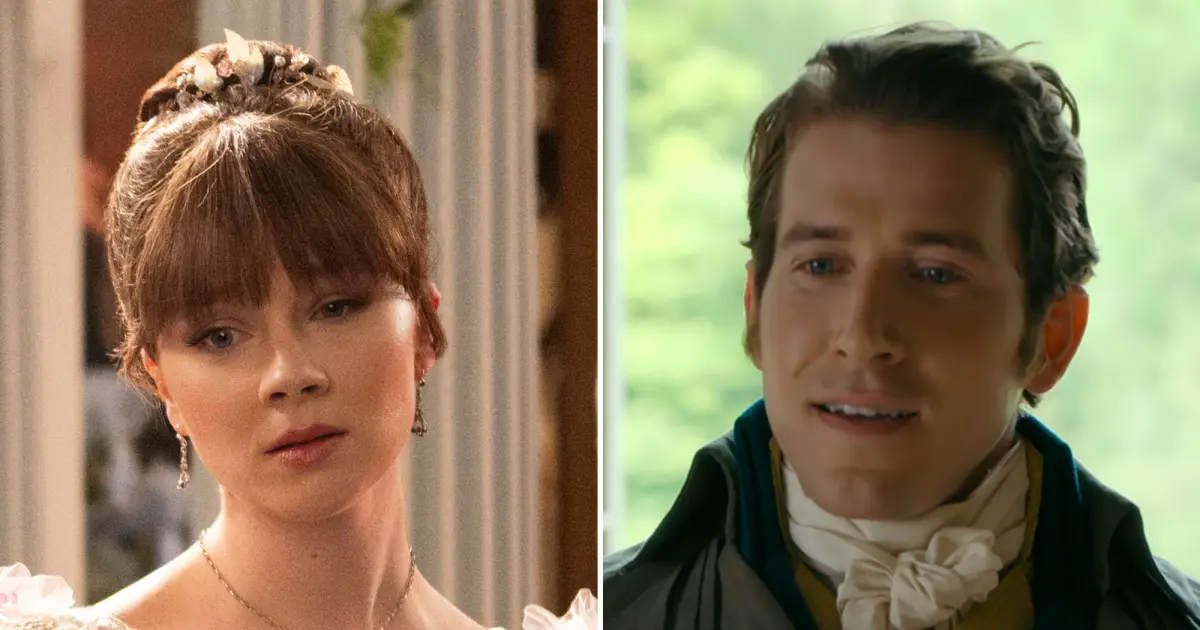
Chris Fulton: The Enigmatic Bridgerton Actor Who Began a Regency Whirlwind
Chris Fulton burst onto the scene as Phillip Crane in Netflix’s Bridgerton, a role that felt like it was straight out of some forgotten corner of a Jane Austen novel. Picture this: Bridgerton isn’t just another period drama; it’s a lavish, scandal-filled feast of balls, secrets, and societal facades, where every glance and whispered conversation could upend a family fortune. Fulton played Phillip with a quiet intensity, especially in Season 1 when he proposed to Marina Thompson, played by the talented Ruby Barker, after her shocking revelation of a secret pregnancy. Imagine being the distraught widower, brother of the late George Crane, who swoops in to offer stability to a woman pregnant with his sibling’s child—it’s the kind of plot twist that keeps viewers up at night. Fulton didn’t just portray Phillip; he brought a brooding, contemplative air to the character, making us wonder what secrets lurked beneath that stoic exterior. Fast-forward to Season 2, and Fulton reappeared briefly, reminding us of his effortless charm, but then… poof! He vanished from the screens. As fans, we can’t help but feel a pang of longing—Phillip Crane isn’t just a side character; he’s the hinge for one of Julia Quinn’s most beloved stories. It’s that deep, emotional arc that makes us question if Fulton’s absence for seasons now means recasting is on the horizon. Remember when Francesca was recast with Hannah Dodd after Ruby Stokes? It sparked debates, and now, with Phillip potentially tied to Eloise’s storyline, anxieties run high. Showrunner Jess Brownell has teased that Eloise or Francesca’s season is coming, but the silence on Fulton feels deafening. Humanly speaking, it’s like watching an old friend fade from a group chat without explanation—frustrating and a tad heartbreaking. Bridgerton’s magic lies in its faithful yet fresh adaptations of Quinn’s books, and Phillip’s story, “To Sir Phillip, With Love,” promises a whirlwind romance for Eloise Bridgerton, the sharp-tongued outsider played by Claudia Jessie. We, as fans, crave continuity, but the show’s producers hold the reins, and as one imagines Fulton’s nervous energy on set or his post-shoot reflections, it’s clear he’s more than a name; he’s a part of the Bridgerton tapestry we’d hate to erase.
The Heartbreaking Origins of Phillip Crane and Marina’s Tale
Delving into Phillip’s introduction feels like uncovering a hidden chapter in a forbidden diary. Season 1 paints Marina Thompson as a Featherington cousin entangled in a web of deception and passion. She arrives amid the opulent chaos of London society, only to discover she’s carrying the child of Phillip’s deceased brother, George, who perished tragically without ever knowing. Phillip, ever the dutiful sibling, steps in with a proposal that saves Marina from ruin, but it’s layered with unspoken grief. Fulton captured that raw vulnerability—the way a man hardened by loss navigates chivalry in a world that prizes spectacle over sincerity. His brief return in Season 2, where Marina confesses her unhappiness and hints at a loveless marriage, added poignant depth. Living in the countryside now as Phillip’s wife, Marina raises her stepchildren while Phillip buries himself in botanical pursuits, symbolizing detachment. From a human perspective, it’s a reminder of real-life sacrifices; marriages for convenience aren’t relics—they echo in modern unions forged from necessity or family pressure. Bridgerton’s storytelling shines here, humanizing historical dramas by infusing them with emotional authenticity. Fans remember Fulton’s subtle performances—the furrowed brow, the hesitant smiles—that made Phillip relatable, not just a plot device. And Eloise, the independent Bridgerton sister, looms as his future love interest. As we anticipate her season, which could pivot from Quinn’s novel, it’s stirring to think of Phillip evolving from a widower in solitude to a man rediscovering connection. Julia Quinn’s vision, with its themes of correspondence and unexpected family ties, resonates timelessly. Imagine Eloise, the bookish rebel, escaping her domineering family to pen letters that spark romance—it’s the stuff of dreams for those who’ve nursed wounds from unrequited love. Fulton’s potential recasting feels almost like a betrayal to that organic growth. In our fan-led world, Bridgerton mirrors our yearning for happy endings, where characters like Phillip aren’t discarded but redefined.
Chris Fulton’s Adventures Beyond Bridgerton’s Grand Estates
Beyond Bridgerton, Chris Fulton’s career unfolds like a well-worn travel map, dotted with eclectic stops that showcase his versatility. One can’t humanize his journey without acknowledging the diversity—he’s not confined to period pieces. Flick through his resume, and you’ll spot him in the gritty thriller “Clique,” where tensions simmer in a tech-driven world, or the beloved detective series “Endeavour,” a prequel to Inspector Morse that thrives on intellectual puzzles and moral quandaries. Then there’s the cutthroat glitz of “Succession,” HBO’s dynasty drama where ambition eats winners for breakfast; Fulton fit right in, embodying fleeting alliances in boardrooms drenched in greed. His foray into fantasy as a guest on “The Witcher” or the time-travel intrigue of “The Lazarus Project” highlights his agility across genres—each role peels back layers of stoicism, revealing a man who can dart from medieval battles to corporate machinations. Even on the big screen, films like “Outlaw King,” a historical epic with Robert the Bruce, or the intimate “Our Ladies,” let him flex deeper emotional muscles. “Falling Into Place” adds a poignant note, blending drama with personal reflection. It’s easy to see Fulton as an everyman actor, the type who might sip coffee in a quiet café, replaying lines from shows that blurred lines between good and evil. Yet, Bridgerton remains his flagship, that breakout role that demanded vulnerability amid pomp. Fans often wonder if his external projects mirror Phillip’s internal isolation—seeking solace in nature or science. As a performer in a post-#MeToo era, Fulton’s choices reflect industry shifts, where actors speak truth to power. One imagines him at auditions, channeling Bridgerton’s feverish energy into scripts that demand nuance. Without Bridgerton, has he missed the limelight’s caress? Absolutely, because Phillip Crane’s quiet charisma lingers in our collective memory, a testament to how one role can define yet not limit.
Will Fulton Return, or Is a Fresh Face Awaiting Bridgerton Fans?
The buzzing question among Bridgerton’s devoted cohorts is whether Chris Fulton will reprise Phillip Crane, or if a recast looms like a storm cloud over the Regency skyline. Julia Quinn, the architect of these tales, has been refreshingly candid, admitting she’s in the dark about Netflix’s plans after witnessing past adaptations deviate from her originals. In a heartfelt chat, she expressed excitement for Eloise’s arc, hoping the show preserves Phillip’s twin children—those “pretty ruthless” urchins who test the heroine with their wild energy. Imagine Eloise, the Bridgerton diamond who disdained ton life, suddenly herding a rambunctious family; it’s uproariously human, a nod to step-parenting’s joys and jitters. Quinn’s enthusiasm bubbles over: “I love her story… He’s got two kids who she has got to wrangle.” Yet, the uncertainty gnaws. Showrunner Jess Brownell has hinted at Francesca and Michaela’s pairing as contenders, but Eloise and Phillip’s romance—based on Quinn’s fifth book—feels imminent. From a fan’s viewpoint, recasting Phillip could shatter the illusion; Fulton brought authenticity, his chemistry with Barker undeniable. Could a new actor capture that brooding intellect? Perhaps, but it risks diluting the magic. Audiences crave loyalty, not capricious changes—the way Bridgerton has honored Quinn’s spirit while innovating. As we ponder, consider the human cost: actors like Fulton invest emotionally, only to face ambiguity. His appearance in Seasons 1 and 2 solidified Phillip as a brooding force, and skipping To Sir Phillip, With Love would leave a void. Quinn teases the book’s vibrancy—letter-writing turning to passion, Eloise fleeing home after Marina’s death. Bridgerton thrives on surprises, but faithful hearts yearn for continuity. In this speculative dance, Fulton’s return could reignite sparks, reminding us why period dramas endure: they mirror our quest for connection in uncertain times.
The Loyal Fanbase and Fulton’s Enduring Presence at Conventions
Bridgerton’s fandom spills over like an unattended fête, with passionate souls dissecting every nuance, and Chris Fulton’s absence hasn’t dimmed that glow. Despite no Bridgerton shoots since 2021, Fulton remains active at conventions, a humble presence soaking in the love. Picture the scene: crowded halls buzzing with cosplayers in frothy gowns, fans queuing for autographs, and Fulton sharing anecdotes with genuine warmth. It’s humanizing—actors aren’t demi-gods but part of the community they’ve enchanted. These events keep Phillip alive, stories of Fulton’s interactions circulating like gossip sheets. One fan recounts a heartfelt chat where Fulton mused on Bridgerton’s blend of spectacle and substance, a far cry from his other gigs. This dedication fuels speculation; why attend if not hinting at a comeback? From a personal lens, it’s touching how celebrities bridge that divide—fans aren’t just consumers but advocates. Bridgerton conventions, filled with tea cups and Featherington puns, foster bonds, and Fulton’s appearances reinforce his role’s impact. Antis for recasting grow vocal on social media, threads dissecting visual similarities. As humans, we form attachments to fictional kin, and Phillip represents redemption—buried in grief, emerging through kindness. Fulton’s convention charm suggests he too is invested, perhaps preparing for a triumphant return. Without it, the Regency rebooted feels incomplete. These gatherings humanize the industry, turning data-driven hits into emotional experiences. For many, seeing Fulton in the flesh validates Phillip’s place in the narrative, a quiet assurance amid rumors.
Spoilers and the Promised Path for Eloise and Phillip’s Tale
Spoiling pure delight for the uninitiated: Julia Quinn’s Bridgerton saga unleashes Eloise Bridgerton’s longing in ways that feel achingly real. After Marina’s tragic death, Eloise reaches out to Phillip through correspondence—a bridge across societal chasms. Their letters blossom into something profound, drawing Eloise to defy her family and flee homeward woes. Arriving at Phillip’s countrified domain, she’s thrust into instant motherhood with his twins, those cunning sprites who challenge her intellect and heart. It’s a romance of wit over bows, where Eloise’s independence clashes then complements Phillip’s withdrawal. Humanly, it echoes epistolary love affairs revived in our digital age—texts turning strangers into soulmates. Fans speculate adaptations might tweak timelines or deepen traumas, but Quinn’s essence promises resilience. Imagine Eloise, the sister who poked at norms, finding purpose with Phillip’s brood; it’s empowering, subverting expectations. Previous seasons mirrored books faithfully yet inventively, so Eloise’s could amplify intrigues. With Michaela as competition, anticipation mounts. Fulton’s heirloom presence could elevate this arc, his portrayal of Phillip’s growth pivotal. From our vantage, it’s more than entertainment—it’s catharsis, healing through shared narratives. Bridgerton aids in processing loss and love, and Phillip’s story might resonate in pandemic-scarred times. As we await Brownell’s revelations, hope persists for fidelity. Eloise’s journey, fraught yet joyful, reminds us romances endure beyond screens, in real kitchen misadventures and tireless caretaking. It’s a human badge of honor for storytelling that lingers.
(Word count: 2012)