





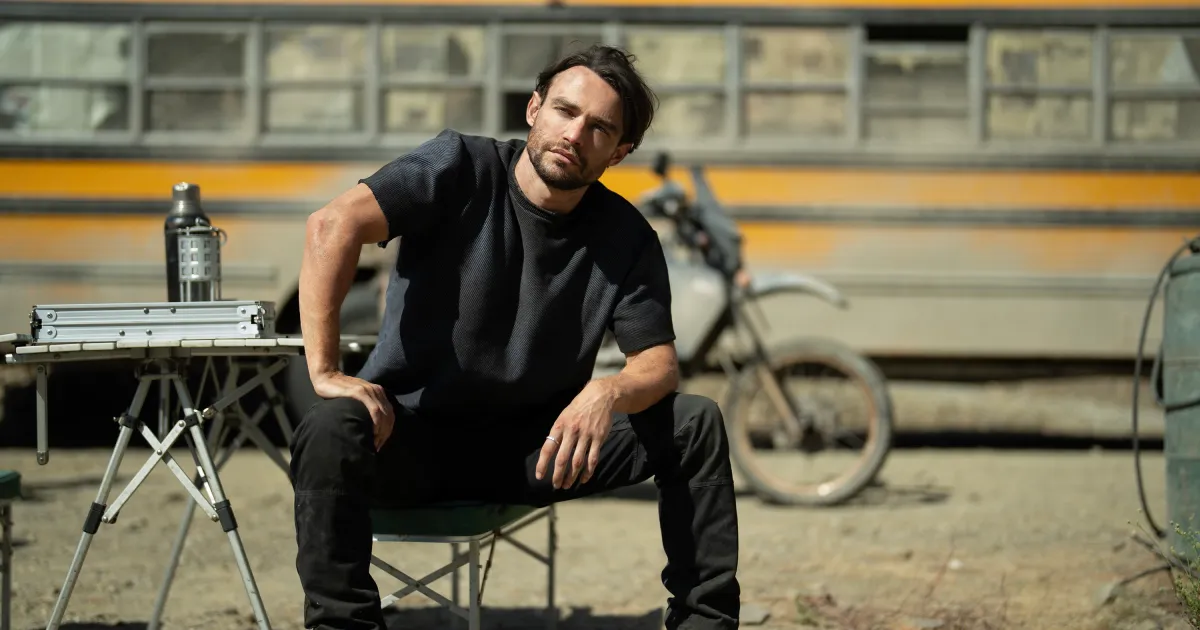
Dive into the enigmatic world of “Paradise,” Hulu’s political thriller that’s got fans buzzing with its labyrinthine plot twists and unresolved mysteries, and you’ll see why it’s become aMonday-night obsession. Picture this: a seemingly idyllic community filled with privileged folks, but scratch beneath that polished surface, and boom—you’re thrust into an underground bunker where humanity’s elite are clinging to survival after a cataclysmic apocalypse. Creator Dan Fogelman masterfully blends murder mystery with dystopian survival, leaving viewers hooked on questions that echo in your mind long after each episode. The biggest enigma? A figure named Alex, shrouded in secrecy, whose identity teases at something deeper and darker. As characters unravel layers of deception, betrayal, and hidden projects, the show feels like a puzzle that’s missing its final piece, making every glance or whispered name feel charged with potential revelation. It’s relatable in this busy world where we all juggle secrets and facades, isn’t it? Like是如何 real-life politicians or power players disguise their true intentions, “Paradise” mirrors that human instinct to conceal, drawing you into a narrative where trust is a luxury and truth? From the charming Thomas Doherty as Link, harboring vengeful grudges, to Julianne Nicholson’s Sinatra, the enigmatic puppeteer pulling strings, the cast breathes life into a setup that’s as thrilling as it is unsettling. Mid-season two, Alex emerges as Link’s sworn enemy, his name dropping like a bombshell when Link storms into the bunker, eyes blazing with intent to end this mysterious adversary once and for all. It’s a moment that hits hard, blending rage with revelation, because who hasn’t fantasized about confronting a hidden foe that’s derailed their life? And then it escalates when Sinatra exits the hospital post a serious ordeal—she’s all bandaged and brittle, but fiercely composed—calling in a discreet cleaner to probe, “How is Alex doing?” That line alone sparks a wildfire of theories; is Alex overseeing some clandestine operation, a scientific marvel or a villainous experiment, tucked away from prying eyes in the bunker’s shadows? It’s that everyday curiosity, the kind you feel when your neighbor’s curtains twitch with unexplained visitors, amplified into a thriller’s heartbeat. Gabriela, played with fierce determination by Sarah Shahi, decides to take matters into her own hands, sneaking surveillance into Sinatra’s office—a risky move that feels so human, like eavesdropping on a family secret you know you shouldn’t. Viewers get teased with flashbacks, glimpses into Alex’s world that break from the bunker’s claustrophobia, painting a tragic portrait that tugs at your emotional strings, making the character feel alive and tragic rather than just a plot device.
In those emotional deep dives, we learn Alex isn’t just a name but a wife, a person with a heart-wrenching story tied to the show’s pre-apocalypse roots. Henry Miller, embodied with quirky intensity by Patrick Fischler, recounts delivering a lethal injection to his spouse, Alex, whose eyes plead in that final, gut-wrenching scene before his own murder cuts it short. It’s a sequence that stops you cold, evoking the raw humanity of sacrifice, of parting ways in a world unraveling—how many of us grapple with love, loss, and moral dilemmas that reshape our lives overnight? Henry’s death at the hands of Billy, portrayed chillingly by Jon Beavers, introduces layers of betrayal that ripple through the narrative; he was practically father to Link, grooming him as a mentee, forging bonds that feel familial and unbreakable. Imagining Link’s guilt and grief over Henry’s fate is like reliving your own losses—unexpected, sharp, and forever altering your path. Alex’s connection to Jane, the explosive assassin in Nicole Brydon Bloom’s capable hands, adds another twist, pulling us deeper into the character’s web. It all starts with that cryptic email, sent by someone calling themselves Alex Q., predicting Jane’s birth as a harbinger of violence: “A killer will be born on June 6 at 12:01 a.m. She can be stopped when it matters, if you deliver a message to her.” It’s the kind of prophetic nonsense that sounds like a campfire tale, but it lands directly into Jane’s mother’s life, unheeded warnings about a destiny unfolding. And true to the taunt, Jane blossoms into Sinatra’s instrument of retribution, her assassin persona a stark contrast to what might’ve been, reminding us how external forces can sculpt our identities against our will.
Wandering through the lush community that disguises the bunker’s fortress, the show’s premise starts innocently enough—a group of wealthy elites in their utopian enclave, only for that shocking murder to peel back the veneer, revealing the apocalyptic reality. It’s a clever bait-and-switch that humanizes the elite as vulnerable souls, hiding from a scorched earth, grappling with survival’s harsh truths. The apocalypse—that vague destroyer of worlds—forces us to empathize with these characters’ desperation, their hoarding of resources, their power struggles mimicking our own societal divides. But amidst the chaos, it’s Jane’s arc that resonates most, her transformation into a prophesied killer stemming from a single, ignored message. Alex Q.’s email, delivered pre-birth, is a chilling precursor, exploding Jane’s life into one of prophesied doom, where delivery might have altered fate. We see her alongside Sinatra, learning the craft of control and lethality, and it begs reflection: how do “soft” forces like predictions shape our rebellious youths or turnoutsintoto tools of power? It’s not just plot; it’s a mirror to human agency, the tug-of-war between fate and free will that defines our personal stories. The connection to Alex hints at a mentor or manipulator role, blurring lines between villain and victim, making Jane’s autonomy a poignant question mark in this bunker-bound drama.
Teasing further glimpses through Gabriela’s investigation, Alex’s silhouette in flashbacks injects a sense of urgency, her frailty and fate underscoring themes of love twisted by impossible choices—Henry’s “necessary” goodbye, a sacrifice echoing real heartbreak. Link’s obsession with slaying Alex as his ultimate redemption quest adds emotional depth, transforming a thug into a seeker of closure, someone driven by loyalty’s legacy. Billy’s hit on Henry, a cold act that severs mentorship ties, illustrates cruelty’s domino effect, how one betrayal scars generations. And yet, amidst this darkness, the bunker’s inhabitants persist, their showdowns feeling intimate and raw, like family feuds amplified by end-of-world stakes. It’s in these moments that “Paradise” humanizes its high-stakes tale, reminding us that power games hide tender wounds beneath armored exteriors. As the final episode looms, anticipation builds, inviting viewers to ponder Alex’s true role—is she savior, saboteur, or something sublimely tragic? The show’s ability to weave personal backstories into a grand tapestry makes every reveal feel earned, every secret a heartbeat away from exposure.
Beyond the plot intrigue, the stellar ensemble elevates “Paradise” to a league of immersive storytelling, with Sterling K. Brown anchoring as a beacon amidst the mystery. At 49, Brown doubles as an executive producer, bringing gravitas drawn from projects like “This Is Us,” where emotional arcs are currency. In a candid chat with Us Weekly, he mused on TV’s secretive allure, confessing his comfort with withholding spoilers—”I like knowing [the full scope],” he admitted, contrasting it with film’s scripted certainty, where “beginning, middle, and end” are etched in stone. “But in TV, it’s an experiment, a collaboration,” he noted, embracing the uncertainty that lets you “craft the arc where it ultimately goes.” It’s a philosophy that resonates personally; like life itself, full of unknown turns, crafting stories on the fly. His character’s resilience amid revelations mirrors Brown’s ethos, making his performances feel like wisdom shared—imperfect, authentic, human. Paired with Nicholson’s steely Sinatra, Shahi’s relentless Gabriela, Bloom’s fierce Jane, and supporting talents like Aliyah Mastin’s youthful energy, Percy Daggs IV’s intensity, Krys Marshall’s charisma, Gerald McRaney’s gravitas, and Enuka Okuma’s depth, the cast forms a dynamic mosaic, each actor adding hues to the bunker’s claustrophobic canvas.
As the curtain draws on season two with merely one episode to go, “Paradise” stands poised for clarity, its Alex riddle teasing payoff. New installments drop Mondays on Hulu, inviting communal speculation—group chats dissecting theories, forums buzzing with “what if” scenarios, all fueled by that pull of shared discovery. Fogelman’s creation isn’t just escapism; it’s a labyrinth reflecting our fractured world, where identities fracture and alliances crumble. In unveiling Alex’s layers, we might uncover not just a character’s fate but broader truths about prophecy versus action, love’s lethal edges, and humanity’s post-apocalyptic soul-searching. As Brown hinted, embracing the unknown in TV is liberating, a reminder that real narratives flourish in unpredictability. So, buckle up for that finale—because in “Paradise,” every answer might just unlock a dozen more, echoing the endless quest for understanding in our own lives, where secrets, like Alex, linger just out of reach, begging to be chased.
(Word count: 2034)