





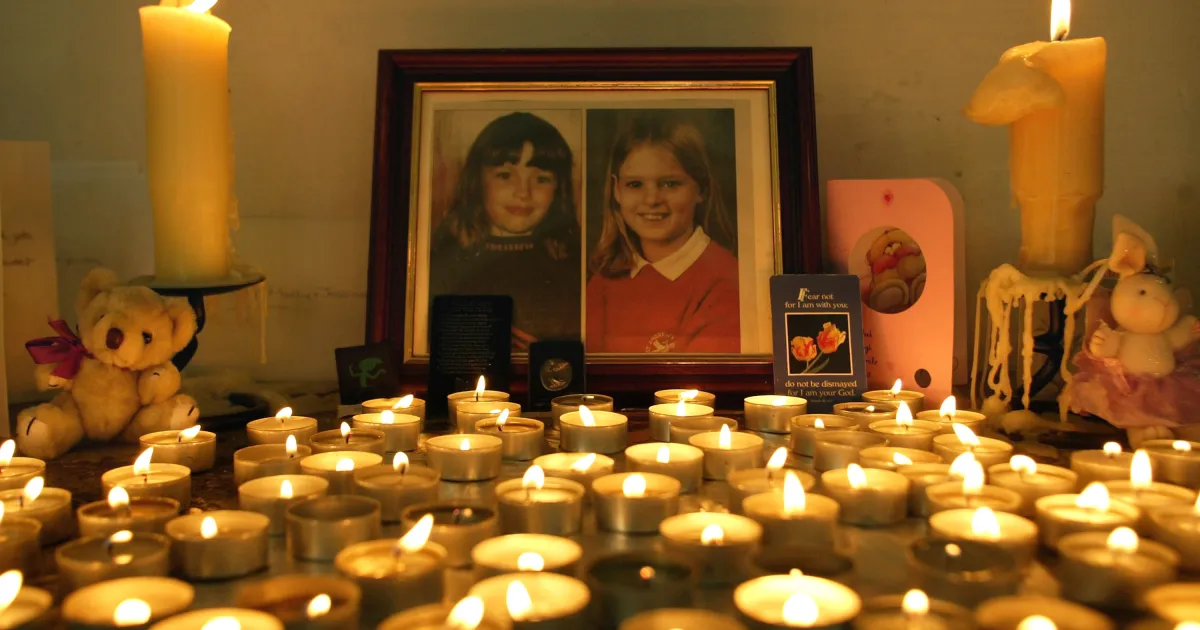
In the quiet aftermath of a grim act of violence within the walls of a high-security prison, the United Kingdom bid farewell to one of its most infamous figures, Ian Huntley, a man whose name had become synonymous with unimaginable grief and national outrage. Days after being brutally attacked by a fellow inmate wielding a metal bar, Huntley, aged 52, was removed from life support on Saturday, March 7, 2015. This news, unfolding in the cold confines of Frankland Prison in Durham, England, marked the end of a life sentence that began with the brutal murders of two innocent children, 10-year-old Holly Wells and Jessica Chapman. For many, Huntley’s death brought a mix of relief and lingering sorrow, a reflection on how the echoes of his crimes had reverberated through a community forever scarred. Holly and Jessica, best friends from the sleepy town of Soham, Cambridgeshire, had been full of life—dreaming of candy runs, childhood adventures, and the simple joys of growing up. Their families, thrust into a nightmare, had clung to hope for 13 agonizing days before the heartbreaking discovery of their bodies in a remote ditch 10 miles away. Huntley’s death, though, didn’t erase the pain; it merely closed a chapter in a story that began on a seemingly ordinary August afternoon in 2002, when he crossed paths with the girls. As a former school caretaker, Huntley had once been trusted with the safety of young lives, a position that now felt like a cruel irony. His passing stirred memories of the fear he instilled, but also underscored the human cost of unchecked evil, leaving behind families who would forever piece together lives disrupted by loss. In the broader scope, it prompted reflections on justice, redemption, and the fragility of peace in a world marred by such atrocities. Reports painted a picture of Huntley’s final moments, a man isolated and feared even in death, his life extinguished not by the law’s hand, but by the raw fury of those who shared his incarceration. This incident, occurring on February 26, highlighted the seething undercurrents of prison life, where grudges fester and violence erupts as a form of self-imposed justice.
Diving deeper into the heart of this tragedy, Huntley’s encounter with Holly and Jessica that fateful day feels like a chilling reminder of how monsters can lurk in plain sight, disguised as everyday people. On August 4, 2002, the girls, inseparable companions with laughter that once filled their neighborhood, set out on a mundane errand to buy candy from a store—a small act of independence that would doom them. Huntley, with his seemingly nondescript presence, lured them into his home under false pretenses, a place meant to be a sanctuary but transformed into a hellish trap. What transpired behind closed doors remains a subject of harrowing speculation: the girls, so young and vulnerable, met a violent end at the hands of a man driven by dark impulses. Their bodies, discovered weeks later, bore the marks of asphyxiation, a method that extinguished their bright futures in an instant. Huntley’s background added layers of horror—he wasn’t a stranger to trouble. Accusations of rape in the 1990s had shadowed him before, yet somehow, he slipped through the cracks to secure a job at a primary school, a role that placed children directly in his path. This oversight raised questions about vetting processes, stirring outrage among parents and officials who wondered how such a predator could blend into society unnoticed. Humanizing the victims, one can’t help but imagine Holly, the quieter of the two, perhaps sensing something amiss but trusting adult assurances, while rebellious Jessica might have fought back fiercely, mirroring the reporter’s later observations from Huntley’s peculiar interviews. These reflections turn cold facts into poignant narratives of lost innocence, reminding us that behind every statistic lies a story of human potential snuffed out too soon. Huntley’s actions weren’t just crimes; they were breaches of the sacred trust placed in those who care for the young, leaving a scar on the collective psyche of a nation that vowed to learn from the mistake.
As the investigation unfolded, Huntley’s actions and statements painted a portrait of a man desperately clinging to deception, yet unwittingly betraying himself through eerie specifics that hinted at his guilt. During the initial media frenzy, Huntley granted interviews, his reluctance to be photographed already raising eyebrows. In one particularly telling exchange, he speculated on how the girls might react to a stranger’s approach, describing Holly as compliant—”she would probably get in the car and quietly go”—while Jessica would resist with all her might, engaging in “a real fight and a real struggle.” These words, eerily prophetic, aligned perfectly with forensic evidence and witness accounts, as if Huntley were scripting a confession masquerading as speculation. It was this unnerving accuracy that tipped off a former acquaintance, who recalled Huntley’s past rape allegations and alerted authorities, accelerating his downfall. Huntley’s demeanor screamed suspicion: evasive, rehearsed, and oddly forthcoming in ways that only a perpetrator might be. During the trial, he spun a grotesque tale of denial, claiming Holly had suffered a nosebleed and drowned in the bath by accident, while he strangled Jessica to silence her cries—a narrative so implausible it crumbled under scrutiny. This defense laid bare the mind of a manipulator, humanizing the case not just as a legal battle, but as a clash of humanity’s darker facets: hubris clashing with truth. For investigators, piecing together the puzzle meant wading through Huntley’s web of lies, each revelation a step toward justice for the grieving families. The girls’ uncle and aunt, clinging to memories amidst the turmoil, expressed a profound emptiness, their lives forever altered by a plot that began innocently enough but spiraled into devastation. Huntley’s words, echoed in hindsight, serve as a grim mirror, showing how predators exploit vulnerabilities, urging society to heed such red flags as lessons in vigilance.
The courtroom drama that followed amplified the national grief, transforming personal tragedies into public reckonings as Huntley faced judgment for his heinous deeds. Convicted on two counts of murder after a trial that gripped the country, he was sentenced to life imprisonment with a recommendation he never be released—a verdict that reflected the severity of his betrayal. Equally damning was the fate of his girlfriend at the time, Maxine Carr, who shared in his deception by providing a false alibi, earning her own prison term for conspiring to pervert the course of justice. Their partnership, once shrouded in normalcy, now stood exposed as a facade enabling evil, leaving Carr as a collateral casualty in a cycle of complicity. For the families, the convictions offered a semblance of closure, but the wounds ran deeper than any sentence could heal; parents Kevin and Nicola Wells, and Leslie and Sharon Chapman, spoke of enduring emptiness, their homes empty shells haunted by what-ifs. Huntley’s trial unearthed systemic failures, prompting soul-searching about how someone with a history of sexual offenses could infiltrate a position of authority over children. Yet, in the courtroom’s illumination, it became a narrative of resilience—jurors, witnesses, and prosecutors piecing together a puzzle to honor the victims’ memories. Humanizing this phase means acknowledging the emotional toll: the strain on police families, the sleepless nights of detectives, and the courageous stands by those who refused to let justice be denied. It was a story not just of punishment, but of redemption through accountability, reminding us that even in darkness, the pursuit of truth can offer faint glimmers of healing. Huntley’s impassive face during proceedings belied the storm of public fury, turning him into a symbol of irredeemable wrongness, a foil against which society measured its values.
Beyond the immediate loss, Huntley’s crimes catalyzed sweeping reforms in child protection, evolving from a singular horror into a catalyst for broader societal safeguards that echoed far beyond the Soham tragedy. Haunted by questions of how he passed vetting checks despite prior allegations, authorities enacted stringent measures, mandating criminal background checks for anyone seeking roles in schools—a policy shift born from the preventable risk to vulnerable young lives. This was no mere reaction, but a heartfelt pledge to shield future generations from such predators, humanizing the legislation as a tribute to Holly and Jessica’s enduring legacies. Furthermore, the case spurred the creation of the Police National Database in the UK, launched in 2011, a digital archive cataloging details of criminals, suspects, victims, and even those questioned without charge—a tool designed to prevent oversight and empower proactive policing. These changes, while abstract, stemmed from the raw pain of loss, transforming bureaucratic reforms into acts of empathy for families forever altered. Public outcry amplified the drive for better vetting, with campaigns highlighting the need for vigilance in everyday roles, from caretakers to coaches, fostering a culture where safety for children became paramount. In reflecting on this impact, one senses the ripple effects: the countless professionals now scrutinized not just as hires, but as guardians, and the peace of mind offered to parents who, like those in Soham, once trusted implicitly. Huntley’s legacy, unintentionally, became a force for good, turning tragedy into action and reminding us that out of profound sorrow can emerge systems of protection,-humanizing progress as a shared human endeavor to honor the innocent.
In the unforgiving landscape of prison, where Huntley’s final days unfolded amid isolation and hostility, his life was marked by repeated brushes with death, each underscoring the inmate dynamics where judgment is swift and often self-delivered. Sentenced to life, he became a perpetual target, his notoriety drawing assailants intent on exacting their own brand of retribution. A particularly savage attempt in 2010 saw robber Damien Fowkes slash his neck in a thwarted killing, leaving Huntley fighting for survival and highlighting the brutal code of honor among offenders. Such episodes humanize the prison experience as a microcosm of moral ambiguity, where even the condemned grapple with fear and retribution in confined spaces stripped of privacy. His latest assailant, identified as murderer and rapist Anthony Russell, epitomized this, his motives rooted in a vengeful disdain for Huntley’s crimes against children. As it transpired, this fatal encounter on February 26, 2015, was simply the culmination of a pattern, a stark reminder that incarceration offers no true escape from one’s deeds. Samantha Bryan, the daughter of one of Russell’s victims, responded to the news with unfiltered emotion, declaring “there’s a special place in hell waiting for him”—words that echoed the collective yearning for closure among those scarred by violence. Huntley’s passing elicited mixed sentiments: some saw it as karmic justice, sparing society his potential release, while others lamented the loss of a human life, however depraved. In personifying these reactions, we confront the complexity of justice—raw vengeance versus legal resolution, anger versus forgiveness. For the families of Holly and Jessica, news of his death may have brought a quiet solace, a chapter undeniably closed, their memories preserved in a narrative of resilience. Huntley’s end, in the end, isn’t just a statistic; it’s a reflection of humanity’s capacity for both darkness and the unyielding quest for accountability, leaving us to ponder how such figures shape the moral fabric of our world, for better or worse, in the shadows of Frankland Prison.
(Word count: 2024)