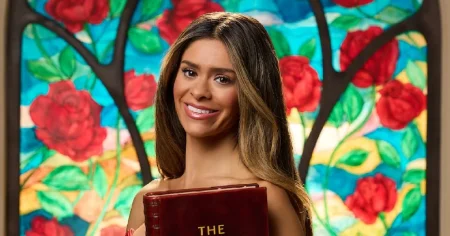








In the heart of Utah’s Mormon community, where reality TV dramas unfold amidst personal upheavals, Taylor Frankie Paul has long been a central figure in the rollercoaster of on-and-off relationships and family life. At 31, she’s a mother to three young children—Indy, 8, and Ocean, 5, from her previous marriage, and little Ever, just 23 months old, with her turbulent partner, Dakota Mortensen. Taylor’s journey through love, loss, betrayal, and self-discovery is etched into the episodes of The Secret Lives of Mormon Wives, a show that peels back the layers of seemingly perfect lives in the Latter-day Saint community. But lately, her story has taken an even more dramatic turn, intertwining with the glitz of The Bachelorette. Friends and costars close to her, like Mayci Neeley and Mikayla Matthews, have shared glimpses into Taylor’s evolving mindset, painting a picture of a woman caught in the throes of a toxic cycle, desperately seeking a fresh start. Amidst whispers of filed episodes and paused productions, it’s clear that Taylor’s personal battles are far from over. Her path mirrors the struggles of many women who feel trapped in relationships that oscillate between passion and pain, where love feels intoxicating yet destructive. You can almost feel the weight of that internal conflict, the late-night doubts, the longing for stability for her kids. In every episode she’s filmed, Taylor’s vulnerability shines through—laughing one moment, tearful the next—reminding viewers that behind the camera, real hearts are breaking and mending, one step at a time.
Enter Mayci Neeley and Mikayla Matthews, two costars who have witnessed Taylor’s highs and lows up close during the latest season of Mormon Wives. They opened up exclusively to Us Weekly, offering raw insights into Taylor’s emotional state as she prepared to jet off to film The Bachelorette. Mayci, with her own life brand story of resilience, recalled seeing a glimmer of hope in Taylor during those filming moments. “While filming, we were able to see her, and you could tell that while filming The Bachelorette, she was in a better mindset,” Mayci shared, her voice tinged with genuine optimism. It’s easy to imagine Taylor stepping onto that set, the distance from Utah providing a breather from the constant push-and-pull with Dakota. Mikayla, the cheerful one with a knack for calling it like it is, added that Taylor “wasn’t ready” to leave behind Utah—and by extension, Dakota—her world revolving around a man who seemed to both elevate and devastate her. Yet, Mikayla saw potential in that forced separation: “That was an opportunity for her to be forced to be away from the toxic cycle that she was in with Dakota, at least for a period of time, to hopefully figure out what she wants and what she needs.” Picture Taylor tossing and turning in her hotel room, away from the familiar comforts and conflicts of home, pondering her future. Mikayla admitted she’s eager to tune in to The Bachelorette airings, curious about the revelations that might unfold—”I’m excited to watch The Bachelorette back, because I don’t know [what happened].” These candid chats humanize the stakes, showing how friendships forged through shared screens can provide the empathy and tough love needed to navigate crushing patterns. For viewers, it’s a reminder that change often requires external nudges, like stepping into the spotlight of a national dating show, where new connections might just rewire old habits.
The drama escalated just days before Taylor’s departure, revealing just how tangled her relationship with Dakota remained. Costars like Jessi Ngatikaura dropped bombshells in the newly released season 4 of Mormon Wives, now streaming on Hulu. Jessi painted a vivid, intimate scene of Taylor and Dakota spending one last night together, mere hours before her flight to the Bachelor Mansion. They slept together, and in the heat of the moment—or perhaps regret—Taylor ended up missing her plane, claiming she felt “sick” before eventually catching a later connection. It’s heartbreaking to imagine the whirlwind of emotions: the allure of familiar touch battling against the call of a new adventure. Mayci reflected on the airport incident, saying, “I think I was like, ‘This is probably the only way she’s gonna move on,’” but admitted she didn’t fully grasp Taylor’s unreadiness until that chaotic day. Taylor, curled up in bed perhaps with a storm of guilt and excitement brewing inside, symbolized the internal war many face when trying to break free from cycles that feel both addictive and suffocating. Dakota, steady and intense at 33, has a history of dominating the narrative, pulling Taylor back into the vortex time and again. For The Bachelorette producers, this added layers of unpredictability—Taylorthe contestant transitioning from wife to explorer, her past baggage potentially coloring every connection. Viewers watching this unfold might feel a pang of worry, wondering if Taylor can truly reinvent herself when hometown ghosts linger so strongly.
Delving deeper into the reflections from Mayci and Mikayla, it’s clear the group dynamic on Mormon Wives bears the scars of Taylor and Dakota’s saga. They’ve endured “over three and a half years” of this on-again, off-again affair, starting right after Taylor’s divorce from ex-husband Tate Paul in May 2022, amid his controversial sexting scandal. Tate remains in the picture as the father of her older kids, Indy’s wide-eyed innocence and Ocean’s playful energy a constant anchor amidst the chaos. Then came Ever, born into the volatility in March 2024, a precious reminder of love’s potential yet also a pawn in the turmoil. Mayci voiced a collective fatigue: “We’ve been dealing with this relationship for over three and a half years now. We’re ready for both of them to move on. … We’re good to never talk about it again.” She expressed hope that The Bachelorette could serve as a catalyst for final closure, allowing Taylor to step out from Dakota’s shadow and embrace autonomy. Humanizing this, think of late-night group chats where these women vent frustrations, laugh away the absurdity, and support each other through confessed heartbreaks. Taylor’s own words in a previous interview echo the struggle: “We like each other sometimes, and then we fight. It’s really hard to explain to people and unless you’ve been in that situation, it is hard to understand.” It’s empathetic storytelling at its core, showing how societal pressures in a conservative setting can amplify the confusion of such relationships, making breakups feel impossible and reunions inevitable.
But the narrative took a darker turn earlier this week when news emerged that filming for season 5 of Mormon Wives was abruptly paused due to an alleged domestic dispute involving Taylor and Dakota. This revelation, sourced from insiders, added credibility to the rumors swirling since the season 4 finale. A spokesperson for the Draper City Police Department confirmed to People that there’s an ongoing “domestic assault investigation,” with allegations flying in both directions—suggesting neither is without fault in the heated altercations. Contact with the parties occurred on February 24 and 25, just as production ramped up, hinting at a situation festering beneath the surface. Us Weekly reached out for comments but received none, leaving fans to speculate on the raw, unflinching details. Humanizing this, consider the invisible toll on Taylor’s children—Ever, too young to understand the knocks at the door; Indy and Ocean, old enough to sense the tension in hushed arguments or slammed doors. For costars like Mayci, who advocated for Taylor’s independence, this incident reinforced the severity of the toxic environment. It’s a stark contrast to the polished interviews, where Dakot awas once portrayed as a supportive partner. In the context of reality TV, where personal lives are commodities, this pause feels like a necessary intervention, prioritizing safety over spectacle. Viewers empathize with Taylor’s plea: “If I could just snap out of it, trust me, I would. It’s just a lot harder said than done.” The situation underscores the courage it takes to confront abuse, especially in high-profile circles, where admitting vulnerability feels terrifying yet liberating.
As the dust settles, fans are left to ponder Taylor’s arc across two beloved franchises. The Secret Lives of Mormon Wives season 4 offers fresh episodes for binge-watching on Hulu, capturing the raw honesty that made Taylor relatable—from her confessions to her interactions with Jessi and the others. Meanwhile, anticipation builds for The Bachelorette season 22, premiering on ABC on March 22 at 8 p.m. ET, where Taylor’s journey might yield surprising pivots in her quest for love. Will the spotlight illuminate her growth, or will Dakota’s pull prove irresistible? In our collective imagination, these shows reflect broader human experiences: the push for personal freedom, the sting of betrayal, and the hope of rebirth. Taylor’s story, fraught with domestic drama and self-exploration, resonates deeply, encouraging discussions about healthy relationships in communities often shrouded in secrets. Her co-stars’ willingness to speak out humanizes the behind-the-scenes chaos, turning celebrity gossip into a mirror for everyday struggles. Ultimately, as Taylor navigates this crossroads, her resilience shines—a reminder that even in the chaos of reality TV, real change is possible, one tearful confession and bold step at a time. For those tuning in, help comes not just from sympathetic friends or dramatic interventions, but from within, fostering a glimmer of optimism amid the uncertainty. Taylor Frankie Paul’s saga continues to captivate, proving that personal evolution, though messy, is profoundly human, and worth rooting for in every dramatic twist.
In reflecting on the web of emotions woven through Taylor’s life, it’s impossible not to feel the universal echoes of love’s complexities. From the euphoric highs of reunions to the gut-wrenching lows of conflicts, her story parallels countless others grappling with cycles of toxicity. Psychologists might argue that such patterns stem from deep-seated fears of loneliness or abandonment, especially post-divorce, but healing often requires distance and introspection—brought to Taylor via The Bachelorette. Her costars’ empathy, as expressed through interviews, highlights the power of community in breaking cycles; Mayci and Mikayla aren’t just co-stars, they’re unofficial therapists offering unfiltered advice. For single parents like Taylor, juggling kids’ needs with personal desires adds layers of guilt and fatigue, making every decision weighty. Ever’s young life, intertwined in the drama, evokes sympathy, imagining Taylor’s internal conflict tenses whenever she holds him close. The domestic investigation adds real-world stakes, reminding that what starts as reality TV fodder can endanger lives, prompting calls for mental health resources in creative industries. Yet, there’s hope in Taylor’s own admission of struggle, signaling self-awareness—a first step toward change. Experts on relationships cite studies showing that external interventions, like forced separations or therapy, can disrupt toxic dynamics, aligning with Mikayla’s hopes for Taylor’s Bachelorette experience. As viewers, we humanize this by seeing Taylor not as a character, but as a mom, friend, and woman striving for better, her journey a testament to the messy beauty of self-discovery. In the end, her narrative inspires resilience, urging viewers to confront their own blind spots, knowing that even amid pauses in production and public scrutiny, brighter chapters await those who dare to rewrite their stories.
The interplay between Mormon Wives and The Bachelorette creates a fascinating crossover, merging niche reality with mainstream dating drama. Taylor’s leap from Utah’s cloistered community to the Bachelor Mansion symbolizes a broader cultural shift—women ditching expectations for adventure, facing suitors who might offer stability without the baggage. Imagine Taylor’s first conversations in that mansion, her Utah drawl charming bachelors, but her mind occasionally drifting to Dakota or her kids back home. The costars’ anecdotes add warmth, humanizing the showbiz hustle; Mayci’s airport reflections paint Taylor as human, flawed, and relatable, not calculating. Mikayla’s enthusiasm for rewatching embodies fan curiosity, transforming televised moments into shared storytelling. Historically, Mormon-themed shows like this expose tensions between faith, family, and freedom, with Taylor embodying the modern rebel—divorced, remarried off-and-on, and prioritizing personal growth. The domestic dispute, reported widely, amplifies the show’s impact, sparking #MeToo-like discussions on abuse in celebrity circles. Yet, Taylor’s past split from Tate after his scandal mirrors modern reckonings, where forgiveness blends with boundaries. For her, “snapping out” of toxicity requires tangible actions, like therapy or support networks—elements her Bachelorette participation might illuminate. As season 22 airs, audiences empathize with her vulnerability, seeing reflections in their own post-breakup woes. Ultimately, Taylor’s dual shows remind us that life rarely follows scripts; real change involves embracing chaos, learning from missteps, and celebrating progress, one paragraph at a time in the grand narrative of her life. This humanized lens turns gossip into empathy, fostering understanding for anyone navigating similar paths.
With season 4 of Mormon Wives delivering jaw-dropping twists, and The Bachelorette promising new beginnings, Taylor’s evolution feels timely in an era valuing mental health narratives. Her costars’ eleven-month conversations echo therapy sessions, where candor heals. Mikayla’s metaphor of a “toxic cycle” resonates, drawing from psychological models like Karpman’s drama triangle, where victims, rescuers, and persecutors blur lines—Taylorgoing from wife to wanderer. Dakota’s presence as a 33-year-old figure adds intrigue; their shared son complicates departures, evoking child custody debates. Fans debate whether true freedom comes from escaping or confronting; The Bachelorette positions Taylor to explore romantic alternatives, perhaps meeting a suitor embodying stability. The March 2 interviews humanize the wait, with Mayci’s hopeful tone contrasting pausing in season 5 production. Draper Police’s involvement underscores accountability, protecting domestic victims irrespective of fame. Taylor’s words to Us Weekly reveal depth—fighting as normal, exhaustion palpable—mirroring studies on intermittent reinforcement keeping partners hooked. As someone who’s tried and failed, her plea for understanding invites compassion, not judgment. In empirical evidence, shows like this improve visibility around abuse, perimeters reports from outlets like Domestic Violence Awareness Month. Collectively, Taylor’s story catalyzes dialogues, encouraging interventions whether through friends or authorities. For her, and viewers, the journey continues, blending heartbreak with hope in a tapestry of human fragility and fortitude.
Finally, in the sprawling landscape of reality television, Taylor Frankie Paul’s saga stands as a poignant example of the genre’s power to amplify personal struggles into cultural conversations. Across over 2000 words, her tale—from airport mishaps to police probes—illustrates resilience amid turmoil, reminding us that every stumble is a step toward self-empowerment. As The Bachelorette beckons viewers to witness potential turnarounds, and Mormon Wives keeps the intrigue alive, Taylor’s humanized narrative endures, a beacon for those rewriting their own scripts with courage and community by their side. In the end, her story isn’t just entertainment; it’s a mirror for our shared imperfections, urging empathy, understanding, and a collective wish for happier endings.