



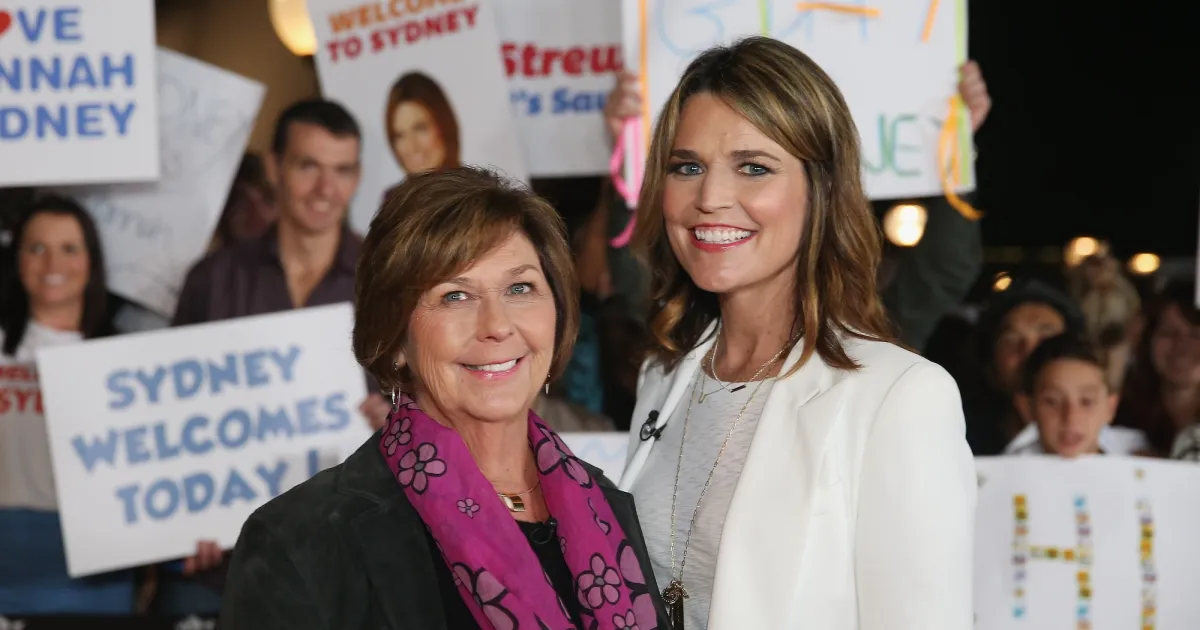
Savannah Guthrie’s heart pounded with every word she typed into the family statement, her fingers trembling on the keyboard late into the night. It was March 21, and the world felt suspended, like time itself had paused since that fateful night on February 1, 2026, when her beloved mother, Nancy, vanished from her bed. Savannah, Camron, and Annie—her siblings, now her closest anchors—had rallied together in their mother’s Tucson home, surrounded by the echoes of her laughter and the faint scent of her favorite lavender candles. In this raw, unfiltered plea shared on a special KVOA-TV broadcast, they poured out their gratitude to the people of Tucson, strangers who had become surrogate kin through their unwavering support. “We are deeply grateful for the outpouring from neighbors, friends, and the people of Tucson,” the statement began, embodying a warmth that cut through the icy grip of fear. “We are all family now.” Yet, beneath the thanks lay a desperate undercurrent: their matriarch was still missing, presumed kidnapped, and no one—not the FBI, not the endless tips, not the prayers flooding in—had brought her back. The Guthries clung to hope that Tucsonians, steeped in the city’s close-knit spirit, held the key to unraveling this nightmare. “We continue to believe it’s Tucsonians, and the greater Southern Arizona community, that hold the key to finding resolution in this case. Someone knows something.” Savannah could almost hear the collective sigh of the town, a place where secrets lingered like the desert dust after a storm. She imagined a neighbor recalling a late-night walk, a cryptic conversation overheard at a coffee shop, or a shadow moving in the dim glow of streetlights—details that might seem trivial but could ignite the breakthrough they craved. As she reread the words, tears blurred her vision; this wasn’t just a public announcement; it was a cry from the soul, a testament to the human threads binding community and crisis. The ache of uncertainty gnawed at her, making every breath feel labored, every moment a reminder that their lives hovered in limbo. Thanking those who had opened their hearts and homes, the family urged a renewed examination of personal recollections. “We desperately ask this community for renewed attention to our mom’s case,” they implored, urging folks to sift through the mundane trappings of daily life for clues. Picture a Tucson resident, perhaps a retired teacher, flipping through old journals with arthritic hands, scanning entries for anomalies—a canceled appointment, an unexpected visitor, or whispers of unrest that had seemed inconsequential at the time. Or envision a young professional reviewing smartphone footage, pausing on blurry frames of Nancy walking her dog along familiar streets, searching for faces or vehicles that now screamed significance. Text messages exchanged in haste, observations jotted during routine errands, even casual conversations retold with fresh lenses— the Guthries beseeched the masses to treat nothing as insignificant. “Please consult camera footage, journal notes, text messages, observations or conversations that in retrospect may hold significance. No detail is too small. It may be the key.” Savannah felt a surge of empathy for those community members, knowing how mundane slips of memory could haunt them now, turning ordinariness into potential guilt or revelation. This plea wasn’t cold or clinical; it was intimate, like a whispered secret shared among confidants, humanizing the investigation as a collective storytelling exercise where every thread mattered. In Savannah’s mind, she wandered the sun-drenched paths of Tuscon’s parks, imagining how a misplaced glance or unspoken word might bridge the chasm between despair and resolution. The emotional weight pressed harder as the statement delved deeper into their personal torment. “We miss our mom with every breath,” the words confessed, raw and unadorned, echoing the hollow spaces in their chests where Nancy’s presence once filled. Savannah envisioned her mother’s smile, the way her eyes crinkled with joy over simple joys like a grandchild’s giggle or a home-cooked meal. Unable to grieve, the family hung in a purgatory of aching wonder, where peace remained elusive, obscured by the fog of the unknown. “We cannot grieve; we can only ache and wonder,” they articulated, a sentiment that resonated with primal human vulnerability. Grieving, after all, implies acceptance—a finality that felt like betrayal while Nancy’s fate dangled unanswered. Instead, their world was one of searing longing, a constant tide of what-ifs that eroded their resolve. “Our focus is solely on finding her and bringing her home. We want to celebrate her beautiful and courageous life but we cannot do that until she is brought to a final place of rest.” Savannah thought of her mother’s hands, soft yet strong from years of nurturing, now potentially bound or hidden, and it shattered her anew. To celebrate Nancy—a woman of unwavering faith and kindness—without her physical return defied the rhythm of life itself. The statement closed with a humble gratitude that underscored their faith: “Thank you for continuing to pray without ceasing.” Prayers, they knew, weren’t mere words; they were lifelines, threads of hope stitched by believers and nonbelievers alike, wrapping the family in an invisible embrace that buoyed them through the darkest hours.
Nancy Guthrie, the 84-year-old matriarch at the heart of this storm, had been the epitome of Tuscon’s quiet heroism—faithful, resilient, and deeply rooted in her community, much like the saguaro cacti that dotted the Arizona landscape. On February 1, 2026, she vanished like a whisper in the wind, failing to join friends for a virtual church service, a routine shattered that prompted immediate alarm. Authorities swiftly deemed it a kidnapping, casting a shadow over the family and igniting a nationwide plea. Savannah, Camron, and Annie had stayed in their mother’s hometown, transforming her modest home into a makeshift nerve center buzzing with investigators, family gatherings, and the ever-present hum of hope mingled with dread. Camron, at 61, wore the weight of elder brotherhood heavily, his voice steady but eyes betraying the storm within, while Annie, 56, grappled with the fragility of maternal bonds, her laughter now rare interludes between sobs. For Savannah, the NBC Today show host whose face graced millions of screens, the ordeal stripped away the veneer of celebrity, revealing a daughter ravaged by maternal loss. In the aftermath, telephones rang incessantly with tips, but each lead dissolved like desert mirages, leaving the siblings to forge ahead on faith and grit. Days blurred into nights, each marked by vigils at the kitchen table, poring over maps, photos, and fragments of Nancy’s life—alphabets she’d traced for her grandchildren, recipes scribbled on napkins, or hymns hummed during solitary piano sessions. Savannah envisioned her mother in those moments, perhaps fighting silently, her spirit unbroken as she clung to the values that defined her: empathy, piety, and an unyielding love for family. Yet, the unknown taunted them— was Nancy in peril, her abductors faceless phantoms driven by motive? Or had age made her fragile, vulnerable to misadventure? These questions fueled their anguish, humanizing the case beyond headlines into a tapestry of personal grief, where every family portrait on the wall became a painful reminder. Camron might pace the living room, whispering reassurances he hardly believed, while Annie clutched old photo albums, tracing Nancy’s features as if to summon her home. Savannah, juggling media scrutiny with raw emotion, felt the public’s gaze as both burden and blessing, amplifying their cries. The $1 million reward they offered for recovery information symbolized not just incentive but desperation—a family’s last gamble to bridge the gap between tragedy and triumph. As investigators delved into forensic evidence and witness accounts, the Guthries clung to community solidarity, believing Tucson held untapped wisdom. In quiet evenings, they prayed together, voices uniting in hymns that echoed Nancy’s faith, weaving resilience from the frayed edges of fear. This stalwart woman, who had weathered life’s Tempests with grace, now embodied the human fragility we all share, her absence a stark reminder of life’s unpredictability. Prayers poured in like rain on parched earth, offering solace amid the unknowable, urging the family to persevere in their quest for truth.
The siblings’ public appeals, shared via heartfelt Instagram videos, painted a poignant portrait of grief turned action, drawing viewers into the depths of their sorrow. On February 25, just 24 days into the nightmare, Savannah stared into her camera with reddened eyes, her voice a fragile tremor that undulated like grief itself. “Coming on to say it is day 24 since our mom was taken in the dark of night from her bed,” she began, each word a dagger excavating fresh pain, “and every hour and minute and second and every long night has been agony since then, of worrying about her and fearing for her, aching for her, and most of all, just missing her, missing her.” The repetition hammered home the relentless toll, transforming numbers into emotional epochs. Savannah imagined the screen capturing not just her words, but the sleepless shadows under her eyes, the way her hands clutched at her sweater as if holding onto pieces of herself slipping away. Camron and Annie, flanking her in support, embodied the siblings’ unspoken pact—Camron’s stoic nods a shield against vulnerability, Annie’s tear-streaked cheeks the raw openness of a daughter’s heart. The video caption revealed an escalated plea: the reward for information leading to Nancy’s recovery had swelled to $1 million, a fortune borne from desperation. “We know that millions of you have been praying,” Savannah continued, her tone softening into gratitude infused with yearning. “So many people have been praying of every faith and no faith all, praying for her return, and we feel those prayers. Please keep praying without ceasing. We still believe. We still believe in a miracle.” These words echoed beyond the digital screen, resonating with millions who saw their own losses mirrored—bereaved souls clinging to faith as a buoy. Savannah’s call to action humanized the crisis, inviting anonymity for those harboring secrets: contact the FBI, remain unnamed, or reach out directly to her. This invitation wasn’t merely logistical; it was a bridge, acknowledging the weight of moral dilemmas, the fear of involvement, or the burden of unspoken knowledge. Viewers watched, hearts tugging, as Savannah’s poise cracked, revealing the human cost of fame— a public figure laid bare, her maternal bonds fraying under the spotlight. In subsequent videos, Annie’s voice joined the chorus, her fear morphing into fierce determination, while Camron’s measured monologues appealed to reason and community. Each clip was a breadcrumb trail of emotion, from guttural sobs to whispered hopes, fostering connection and urgency. Globally, followers engaged, sharing prayers and stories, amplifying the Guthries’ voice. Yet, beneath the virality lay the siblings’ isolation, nights spent in anguished silence, replaying conversations, questioning if they could have done more. This digital diary of despair underscored the universality of parental loss, where the ordinary— a bed left empty, a voice unheard—became a chasm, and faith a lifeline. Savannah, in particular, navigated this duality: as a broadcast icon obligated to advocate, yet a daughter yearning for respite, pouring her anguish into pixels that traversed oceans. The prayers they invoked weren’t passive; they were active pleas, fueling a collective energy that kept hope alive, humanizing their ordeal into a shared human experience amidst the abyss.
Savannah’s emotional return to the Today show on March 5 marked a pivotal, vulnerable reckoning, as she stepped back into the studio lights that had spotlighted a different life—one without the specter of her mother’s absence. Her first appearance since the disappearance aired to a rapt audience, the studio’s familiar hum now tinged with collective concern. With a poise that masked trembling resolve, Savannah addressed the Today team, her voice catching as she thanked them for enveloping her in love and support. “I’ve been away, dealing with unimaginable pain,” she conveyed in unspoken glances, her gratitude for their care mirroring her family’s communal plea. “You’ve been caring about my mom as much as I do.” The admission hung heavy, humanizing the celebrity veneer; here was not Savannah Guthrie the host, but a daughter unraveling, her professional mask cracking under the weight of personal upheaval. The team, surrogate family forged in the crucible of live broadcasts, offered quiet nods and understanding gazes, their empathy a salve in the storm. Savannah revealed her intention to return fully, a declaration laced with uncertainty: “I have every intention of coming back. I don’t know how to come back, but I don’t know how not to. You’re my family. And I would like to try.” This moment encapsulated the struggle to reconcile duty with despair—how does one pivot coffee chats to morning news when nights are filled with nocturnal terrors of loss? Imagination flooded her mind: retelling stories with forced cheer, then retreating to shadowed corners for private breakdowns. The set, once a stage for world events, now felt alien, each co-host’s touch a reminder of reachability. Yet, inspiringly, Savannah’s choice to reengage symbolized resilience, transforming tragedy into testament. Off-camera, the siblings graphed—Camron researching leads, Annie journaling emotions—and Savannah drew strength from their unity, channeling grief into advocacy. Her return bridged public persona and private anguish, inviting viewers to witness authentic healing. As cameras rolled, she envisioned Nancy watching from afar, proud of her daughter’s fortitude, her absence fueling rather than extinguishing that fire. This episode wasn’t scripted; it was sincere, a raw exploration of human endurance where vulnerability became strength, and return became a beacon in the darkness.
Earlier in March, the Guthrie family ventured outside Nancy’s Tucson home to a makeshift memorial—a tapestry of candles, notes, and tokens erected by neighbors whose own lives had been touched by the family’s plight. In a poignant video capturing the scene, Savannah, Annie, and Tommaso Cioni, Annie’s husband, linked arms in a defiant display of solidarity, their strides measured yet heavy with unspoken grief. Annie’s sobs pierced the air like desert winds, her tears tracing paths down cheeks that held stories of shared memories. “Oh, Mom,” her cries resonated, raw and unscripted, as if the monument unleashed a torrent of repressed emotion. The group cradled sunflowers—symbols of adoration, hope, and farewell—placing them reverently before a sign that proclaimed, “Dear Guthrie family, your neighbors stand with you.” Each petal felt laden with meaning: vibrant yellow evoking Nancy’s spirit, even as stems bowed under the weight of uncertainty. Savannah, gazing at the floral tribute, felt a momentary union with the community, their standing a human bulwark against isolation. She pictured neighbors— faces etched by Arizona’s sun—waxing eloquent in handwritten messages, offering solace in Spanish and English, forging bonds that transcended language. Tommaso, steady and silent, embodied quiet strength, his presence a pillar for Annie amidst her tremors. The sunflowers, once Nancy’s favorites for adorning her table, now adorned this shrine, blurring the lines between life, loss, and legacy. As sun warmed the scene, Savannah inhaled deeply, scents of wildflowers mingling with incense, evoking memories of maternal embraces—Nancy’s laughter during picnics, her wisdom shared over tea. This act of memorialization humanized the ordeal, transforming grief from solitary ache into communal ritual, a reminder that pain shared diminishes its sting. Neighbors approached with hugs and whispers, their prayers weaving into the family’s hierate, amplifying voices into a symphony. Annie, arm-in-arm with her sister, felt the warmth of human connection mitigate the cold void, her sobs evolving into murmurs of gratitude. Flying home to New York, Savannah carried this essence, the sunflowers’ imagery sustaining as she faced ongoing advocacy. The memorial wasn’t mere tribute; it was affirmation of humanity’s capacity for empathy, a testament to Tuscon’s spirit in crisis.
The Guthrie family’s journey through this harrowing ordeal stands as a profound testament to the human spirit’s capacity for resilience amid unfathomable loss, weaving threads of faith, community, and unyielding love into a narrative that transcends individual pain. From the heartfelt pleas echoing through Tucson to the viral cries shared globally, Savannah, Camron, and Annie have illuminated the raw depths of familial grief, where every beam of hope illuminates the shadows of unanswered questions. Nancy’s absence, a chasm carved on February 1, 2026, propels them forward not with rage, but with a tender resolve, their voices harmonizing in a chorus of aching longing and steadfast belief. As prayers continue to rain down like desert showers, nurturing the soil of possibility, the family remains tethered to the dream of her return, their story a beacon for others navigating similar tempests. In Tucson, a community that has adopted them as kin, every tip, every memory unearthed, holds the potential to rewrite tragedy into triumph. Savannah’s poised reentry into her public role mirrors this duality—balancing the spotlight’s demands with the heart’s silent screams. The memorial’s sunflowers, now cherished mementos, symbolize enduring lifelines, their vibrant hues a promise that beauty persists through grief. Ultimately, the Guthries’ plea is not just for justice, but for connection—a reminder that in humanity’s tapestry, no thread is insignificant, no ache unheard. As they await resolution, they embody hope’s quiet miracle, their collective breath a prayer for Nancy’s safe passage home. This chapter, though etched in sorrow, underscores the power of shared humanity, where love and community converge to confront the unknown, fostering a legacy of courage that endures beyond the headlines.