



Sarah Shahi’s Honest Journey Through Life’s Messiest Moments
Sarah Shahi’s newly released memoir, “Life Is Lifey: The A to Z’s on Navigating Life’s Messy Middle,” offers readers a refreshingly candid look into her personal struggles, transformations, and relationships. Released on January 27, the book serves as both a deeply personal account of Shahi’s life experiences and a guide for others navigating their own challenging transitions. The 46-year-old actress doesn’t hold back as she details her 18-year relationship with ex-husband Steve Howey, her subsequent romance with “Sex/Life” co-star Adam Demos, and the various relationships that shaped her understanding of love and self-worth. Throughout the memoir, Shahi weaves together painful memories and hard-earned wisdom, creating a narrative that feels like advice from a close friend who’s been through it all and emerged stronger on the other side.
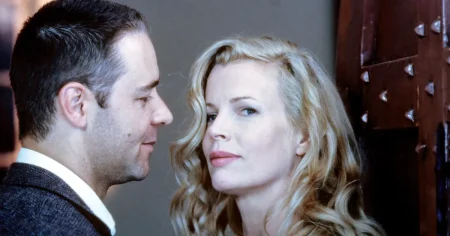
In a striking parallel between art and life, Shahi reveals how her role in Netflix’s “Sex/Life” – where she played an unfulfilled housewife – mirrored her own personal awakening. “While I was filming Sex/Life, I was going through my own personal transformation,” she writes, describing her 12-year marriage as “plagued by problems” beyond the show’s storyline of fantasy and desire. The memoir details her growing awareness that she was living “well below [her] full potential,” feeling “tired, bloated, and uninspired” in her daily routine. With remarkable vulnerability, she shares the moment she finally told Howey she wanted a divorce, her voice shaking as she declared, “I do love you, but I finally love myself more.” This decision, made when she was 40 years old after being with Howey since she was 22, marked a turning point in her life – one made all the more complicated by occurring just as the COVID pandemic forced the world into lockdown, limiting her ability to experience newfound freedom.
Despite the emotional weight of ending her marriage to Howey – with whom she shares three children – Shahi refuses to frame their relationship as a failure. “It worked out for both parties involved. There is no failure here,” she told Us Weekly in a January cover story. “I was in a relationship for 18 years and have three beautiful kids. It is by every definition a success to me.” This perspective reflects Shahi’s overall approach to life’s difficulties – finding growth and meaning even in painful transitions. She describes signing the final divorce papers as having “a piano dropped on my heart,” yet maintains that the decision “truly was best for everyone involved.” This nuanced view of relationships – acknowledging both their value and their natural conclusions – offers readers permission to honor their own complex feelings about life changes.
The memoir tackles sexuality with the same straightforwardness Shahi brings to discussing her relationships. She dedicates entire chapters to intimate topics like sexual pleasure and techniques, drawing from her own experiences to normalize discussions that often remain taboo. After “Sex/Life” premiered, Shahi writes that she was shocked to learn “how many women have never experienced an orgasm,” noting studies showing “up to half of women aren’t satisfied with how often they reach that biological imperative.” With characteristic humor, she shares insights from her “years of extensive personal research,” positioning sexual fulfillment as a pathway to becoming your “best self.” Similarly candid sections discuss dating mishaps – including an inappropriate text from a Warner Brothers executive – and lessons learned from various relationships. Through these stories, Shahi emphasizes the importance of setting boundaries and prioritizing self-respect, particularly for women who have been conditioned to put others’ needs before their own.
Interestingly, while Shahi openly discusses her divorce from Howey throughout the book, her relationship with Adam Demos – her “Sex/Life” co-star whom she dated for five years – receives no obvious mention in the memoir. This omission stands in contrast to her willingness to discuss the relationship with Us Weekly, where she acknowledged the unique challenge of going through a breakup that had played out in the public eye: “When things end, you feel like you’re going through it twice. You’re going through it emotionally on a personal level, and then you’re going through it again on a much bigger level.” Instead of focusing on Demos specifically, Shahi includes letters addressed to archetypal exes like “Mr. Situationship” and “Mr. Wino,” extracting universal lessons from these relationships that readers might apply to their own lives. In one particularly poignant passage, she writes to a former partner, “You were only ever capable of meeting me where you were, which was somewhere deep in the bottom of a glass” – a reflection on how substance abuse can undermine even the most promising connections.
Throughout “Life Is Lifey,” Shahi transforms her personal struggles – from childhood trauma to career challenges to romantic disappointments – into guidance for others facing similar crossroads. The title itself acknowledges the unpredictable nature of existence, embracing rather than fighting against life’s inherent messiness. What makes the memoir particularly compelling is Shahi’s refusal to position herself as having all the answers; instead, she presents herself as a fellow traveler who’s simply a few steps ahead on certain paths. By sharing both her mistakes (like cheating on a college boyfriend and developing bulimia from the guilt) and her triumphs (building a successful acting career despite doubters), she creates a narrative of continuous growth rather than perfect resolution. For readers in their own “messy middles,” Shahi’s story offers both comfort and courage – a reminder that transformation is possible at any age, and that loving yourself enough to make difficult changes might be the most important relationship skill of all.