

A Surprising Turn of Events for Golf’s Icon
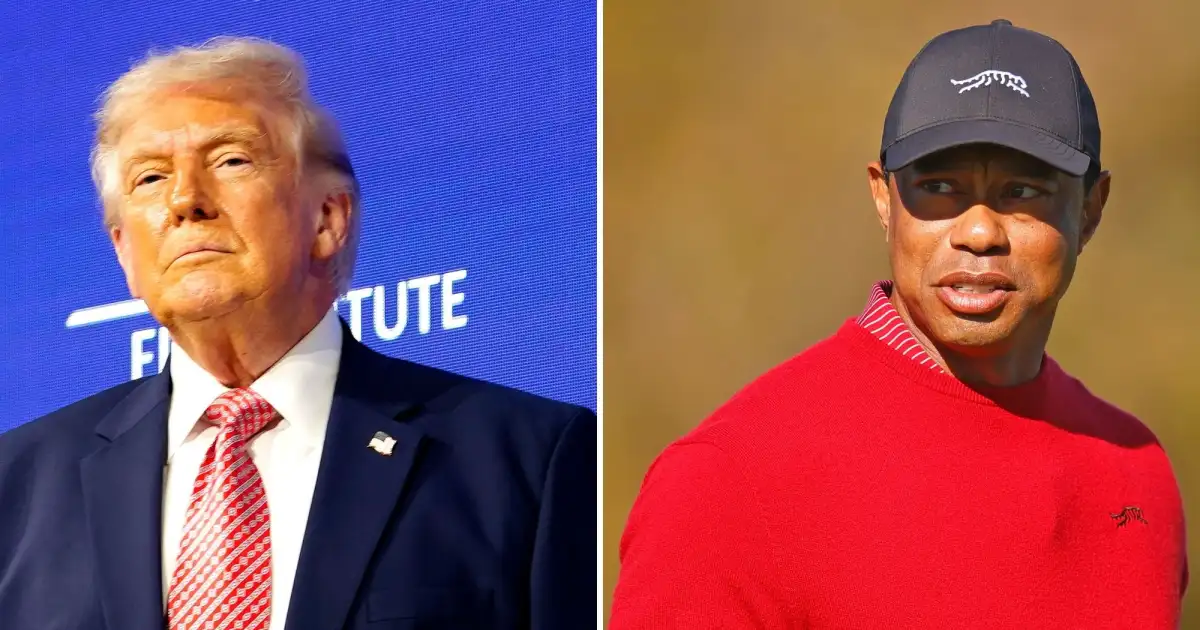
It was a shock to the world when news broke about Tiger Woods, the legendary golfer, being arrested for driving under the influence after a serious car accident in Jupiter, Florida. Imagine waking up on any ordinary Friday in March to headlines about one of the most celebrated athletes in history—someone whose precision on the golf course has inspired millions—now facing a deeply personal stumble. President Donald Trump, at 79, couldn’t hide his genuine concern when reporters cornered him about it. “I feel so bad,” he said, his voice tinged with sympathy, as if speaking about an old friend who’d hit a rough patch. Trump described Woods as “an amazing person, an amazing man,” reflecting on the complexities of fame and the human frailties that can affect even the strongest among us. He kept it brief, not wanting to delve too deeply into Woods’ “difficulty,” but his words carried a warmth that spoke volumes about their connection. It reminded everyone that behind the public personas, these figures are just people, capable of making mistakes that shake them to the core. The incident underscored the unpredictable nature of life, where even icons like Woods can find themselves at a crossroads, dealing with issues that no amount of success on the green can shield against.
Delving into their relationship adds a layer of personal history that humanizes both men. Trump and Woods have shared golf outings and public appearances that go back years, painting a picture of camaraderie born out of mutual respect for the sport they both love. Their last encounter was in 2025, a notable meeting at the White House involving big names from the PGA Tour and LIV Golf, where policy and passion collided. But Trump’s gesture that stands out most vividly was awarding Woods the Presidential Medal of Freedom in 2019—a nod to Woods’ enduring influence on athletics and perseverance through injuries that nearly ended his career multiple times. It’s easy to see why Trump feels a protective instinct; they’ve reconnected periodically, their friendship a bridge between politics and sports stardom. And then there’s the family angle: Woods’ girlfriend, Vanessa Trump, is the ex-wife of Trump’s son, Donald Jr. It’s a web of relationships that makes this incident feel almost like a plot twist in a family saga. Vanessa and her daughters, Kai, who’s 18 and navigating young adulthood, and Chloe, 11, just entering her teens, weren’t in the car—thankfully spared from the chaos. Yet, it highlights how personal turmoil can ripple outward, affecting those closest, reminding us that private lives are always intertwined with public scrutiny.
The crash itself was a startling scene, unfolding just before 2 p.m. on a seemingly routine afternoon. Woods was driving his Land Rover, a vehicle synonymous with luxury and precision, when it clipped a pickup truck towing a small trailer—a collision that flipped the SUV onto its side in a dramatic rollover. The sheriff’s account paints a vivid image: a pressure cleaner truck was ambling north on South Beach Road, preparing to turn into a driveway at a leisurely pace. Its driver glanced in the mirror and spotted the dark Land Rover approaching at speeds that seemed alarmingly high, overtaking him without room for error. The result was a jarring impact that sent Woods’ vehicle careening, forcing him to crawl out through the passenger door amidst the wreckage. It’s not just a story of metal and motion; it’s a moment that forces us to confront the dangers of impaired driving, especially when someone like Woods, admired for his focus and control, is behind the wheel. Property was damaged, but more importantly, lives hang in the balance in such events, turning a simple errand into a cautionary tale about the choices we make when judgment is clouded.
Sheriff John Budensiek’s recounting of the investigation adds sobering details, illustrating the professionalism of those who responded to the scene. He described how deputies arrived and immediately noted that Woods showed clear signs of impairment—erratic driving that led straight to the accident, a stark contrast to the golfer’s usual steadiness on the course. “Our DUI investigators came to the scene, and Mr. Woods did exemplify the signs of impairment,” Budensiek stated matter-of-factly, but with the gravity of someone who’s seen too many similar tragedies. The sequence of events was pieced together meticulously: the Land Rover’s high-speed approach, the pickup’s cautious slow-down, and the inevitable clash that left no doubt about what had transpired. Budensiek was careful not to guess exact speeds, but the narrative speaks to the recklessness that can stem from a bad decision amplified by impairment. This episode humanizes law enforcement too—they’re not just by-the-book responders; they’re guardians in communities where everyday roads become battlegrounds against savvy, protecting others from the fallout of personal woes. It’s a reminder that even in success stories, vulnerabilities lurk, and the system is there to intervene, not to humiliate, but to safeguard.
Woods’ handling of the situation post-crash reveals a man measured yet defiant, under intense pressure. Once identified, he was cautious with his words, offering just what’s necessary in the moment. He consented to a breathalyzer, blowing a clean triple zeros that showed no alcohol on his breath. But when asked for a urinalysis to check for other substances, he refused—a choice that led to the DUI charge, compounded by causing property damage and evading the test. Now held in Martin County Jail, Woods faces the reality of accountability, a stark detour from his triumphs. It’s heartbreaking to think of him in that constrained environment, far from the fairways he’s mastered. His refusal might stem from privacy concerns or the instinct to protect his reputation, but it underscores the legal weight of such decisions. In human terms, this is about a man at a low point, grappling with mistakes that could redefine his legacy. Fans worldwide empathize, knowing everyone has struggles—maybe sleep issues from past surgeries, or the weight of fame that Woods has carried since his teens. The charges aren’t just legal hurdles; they’re a pivot in a life story that begs for redemption and support.
Overall, this incident weaves a tapestry of sympathy, connection, and consequence, reminding us of our shared humanity. Trump’s heartfelt response draws us into their bond, while the crash details ground us in the harsh realities of impaired driving. Woods’ cherished status as a golfer transcends the field, making his misstep a teachable moment. As he navigates this setback, supported perhaps by family and friends like Vanessa, there’s hope for overcoming it—just as he’s battled back from career-threatening injuries before. It’s a narrative that encourages reflection: fame doesn’t immunize against life’s pitfalls, and strength lies in facing them head-on. For Woods, this could be another chapter in his inspiring comeback story, proving that even legends need grace. (Word count: 1,987)