






Skateboarding Legend Nyjah Huston Facing Recovery After Devastating Fall
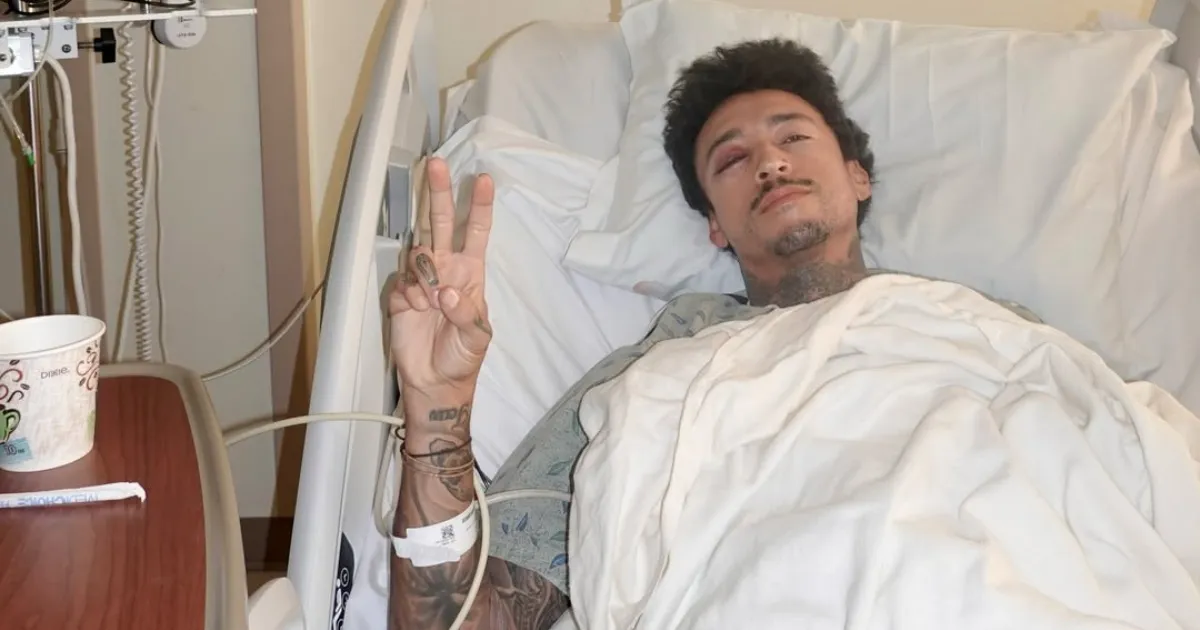
Olympic bronze medalist Nyjah Huston is confronting one of the most serious injuries of his illustrious skateboarding career after a severe accident in Tempe, Arizona over the New Year’s holiday. The 31-year-old star shared the sobering news via Instagram on January 5, revealing he suffered a fractured skull and eye socket following a failed attempt on what skaters call a “massive rail.” His post, which included images of his bruised face, served as a stark reminder of skateboarding’s inherent dangers despite his world-class abilities. “A harsh reminder how death defying skating massive rails can be,” Huston wrote, adding with characteristic resilience, “Taking it one day at a time… We live to fight another day.” The timing of this accident is particularly concerning as it could potentially impact his long-term career plans.
The skateboarding community quickly rallied around Huston following his announcement. Legendary skateboarder Tony Hawk offered words of encouragement, writing “Heavy. Stay strong; we know you’ll be back,” while fellow Olympic skateboarder Gustavo Ribeiro and skateboarding icon Ryan Sheckler added their own messages of support. The outpouring demonstrates the tight-knit nature of the skateboarding world, where competitors recognize and respect the risks they all face pursuing their passion. These expressions of solidarity highlight the dual nature of skateboarding as both an intensely individual pursuit and a community bound by shared experiences of triumph and injury. For athletes like Huston who push the boundaries of what’s possible, serious injuries are an unfortunate occupational hazard they must navigate throughout their careers.
Before this setback, Huston had made his Olympic intentions clear, expressing excitement about the upcoming 2028 Los Angeles Games. “I’m stoked for the L.A. Olympics. I’m definitely going to try my best to be there. I plan to be there,” he told Reuters last August. The Los Angeles Games hold special significance for Huston, who has made Southern California his home for many years and recognizes it as skateboarding’s spiritual heartland. “It helps having the extra motivation that it’s in Southern California where I’ve lived for so long and where skateboarding really thrives. It’s SoCal living,” he explained. While the severity of his current injuries raises questions about his Olympic future, Huston’s determination throughout his career suggests he will do everything possible to represent the United States for a third consecutive Olympics.
Huston’s journey to skateboarding stardom represents one of the sport’s most remarkable success stories. Born in Northern California, he developed his skills through pure dedication and natural talent, learning through the trial-and-error process that defines skateboarding progression. His extraordinary abilities were evident early – by age 7, he had secured his first sponsorship deal, and at just 10 years old, he won the prestigious Tampa Am competition in 2010, marking him as a prodigy. Since then, Huston has dominated competitive skateboarding, collecting multiple gold medals from the Street League Skateboarding (SLS) World Championships and X Games. His success stems partly from his philosophy toward the sport, which he articulated in a 2021 interview with E! News: “We’re really just going out there and it’s up to us on what we’re feeling that day and how hard we want to push ourselves. That’s the fun part about it compared to most other sports out there. There are so many ways to have fun with it and so many different things and ways to skate and ways to be creative.”
Beyond his skateboarding achievements, Huston has transcended the boundaries of action sports to become a cultural figure in his own right. His crossover appeal has earned him invitations to prestigious events like the Met Gala, where his distinctive style has made him a red carpet standout. He’s also made his mark in popular culture with appearances like his cameo in Green Day’s iconic “American Idiot” music video. These opportunities reflect skateboarding’s evolution from counterculture activity to mainstream phenomenon, with athletes like Huston serving as ambassadors who bridge different worlds. Despite his ventures into fashion and entertainment, Huston remains fundamentally connected to skateboarding’s essence – the constant search for new challenges and creative expression through urban architecture.
For Huston, skateboarding represents not just a sport but a unique perspective on the world. “We’re constantly looking on the side of the road for good stair sets or rails or ledges or whatever it is,” he explained to E! News. “We literally see things so differently, all the architecture and stuff. That’s the cool part about skateboarding. We’re out there skating stuff that’s not meant to be skated.” This viewpoint encapsulates skateboarding’s rebellious spirit and creative approach to urban environments – seeing possibility where others see ordinary structures. As Huston now faces the challenging road to recovery, this same innovative mindset will likely fuel his rehabilitation process. While his current injuries are serious and recovery timelines remain uncertain, the skateboarding world watches hopefully, knowing that if anyone possesses the determination and resilience to overcome such obstacles, it’s Nyjah Huston. His journey back to skateboarding excellence will be closely followed by fans worldwide who have witnessed his extraordinary career unfold through both triumphs and setbacks.